“There are some things in this world that are not for us to know, and some things that are for us to know but we are not allowed to know them.”
— A common saying within the society, reflecting the strict information control.

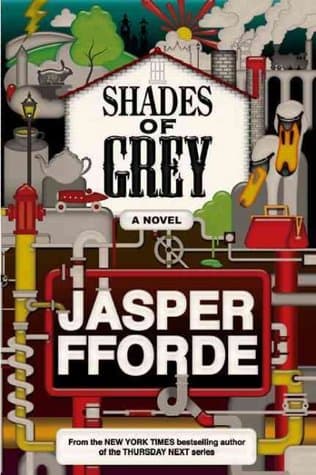
Jasper Fforde (2008)
Genre
Fantasy / Mystery / Science Fiction
Reading Time
10-12 hours
Key Themes
See below
Sign in to track this book
In a post-apocalyptic world where social hierarchy depends on the colors one can perceive, a low-caste 'Red' named Eddie uncovers a conspiracy when he falls for a 'Grey' who sees beyond their monochromatic reality.
Eddie Russet, a Red from the House of Red, moves to Vermillion in the Outer Fringes for a yearly 'color-seeing' test and to survey spoon use for the Color Control Agency. His father, a high-ranking Red, warns him about the Fringes. Eddie finds it hard to get used to Vermillion's strange customs and strict rules, especially the 'Swansong' ritual and the fear of night. He meets Jane, a smart and rebellious Grey who works at the local Resignation Centre. Society's rules say different castes should not mix, but Eddie likes her different ideas and intelligence, which make him question what he thought about the world.
As Eddie starts his spoon survey, he finds the job silly and useless. Villagers do not care about it. His talks with Jane become more frequent. She quietly shows him problems in the official history and how many rules do not make sense. She points out issues in the 'Great Leap Backwards' story and the supposed 'First Among Equals' who started their society. Eddie also learns about the 'chromatic scale' and the harsh punishments for 'hue-shifting' or being 'color-blind.' He starts to think that the social structure, based on color, aims to keep control rather than show truth, especially for the Greys.
Jane tells Eddie the truth about color perception: people only see their own color and those below it. Reds see Red, Orange sees Orange and Red, Yellow sees Yellow, Orange, and Red, and so on, up to Purple, who sees all colors. Greys, she says, are not color-blind but see a different, more basic spectrum that the colored castes cannot see. Eddie also sees the 'Swansong' for himself, a ritual where old or sick people are 'retired' to the 'Great Beyond,' which means they are killed. This practice, said to be for lack of resources, bothers Eddie and makes him trust the system even less.
Jane's doubts and his own growing questions make Eddie look into the story of 'Ultraviolet,' a mythical color said to be beyond Purple, and a forgotten past. They find old, banned books and items that suggest a high-tech civilization before the 'Great Leap Backwards,' a disaster that reset society. Jane thinks the current government hides this knowledge to stay in power. Their search makes them question the 'Rules,' which seem to stop independent thought and discovery. They start to suspect that the 'Great Leap Backwards' was not an accident but a planned act or a cover-up.
Through Jane's actions, Eddie sees more colors. He starts to see Green, a color beyond his natural Red, which is a big and strange experience. It makes him question who he is and his place in society. This new ability makes him an oddity and a threat to the current order. He also meets the 'Green Man,' a private and wise person who lives outside the towns. The Green Man confirms many of Jane's ideas about the world before the Leap and the real nature of their society, hinting at a bigger conspiracy and a resistance group.
As Eddie and Jane learn more, they get unwanted attention from the authorities, especially Colonel Magenta. Their discoveries become more dangerous to the current situation. Jane tells more about her past, including her link to a group of 'Un-Greys' who have special abilities and understand the world's true history better. She explains that the 'Great Leap Backwards' was a planned change to society, made to control people through color-based ranks and forced ignorance. The 'Rules' stop critical thinking and keep the ruling group, who know the truth, in power.
Knowing more about the past and the conspiracy, Eddie and Jane plan to tell the truth to everyone. They want to show that the color hierarchy is made up and that the 'Great Leap Backwards' was a lie. They try to gather the Greys and other unhappy people. They connect with 'Un-Greys'—people who see 'Ultraviolet' and other hidden parts of reality, who have been secretly keeping knowledge and planning for change. These Un-Greys have advanced technology and understand the world before the Leap, offering hope for a real revolution.
Eddie and Jane, with the Un-Greys' help, start their plan to change society. They want to publicly show that the color hierarchy is fake and that the ruling group spread lies. During a big public event, they try to show that color perception can change and that the 'Rules' are random. The conflict grows, and they show the 'Chroma-Shift,' a device or method that can temporarily let people see higher colors or even Ultraviolet. This news shocks the community, challenging society's structure and the Color Control Agency's power.
The public news causes a lot of trouble and confusion. Some accept the truth, but many resist, having been taught to accept the current order. The ruling group, led by Colonel Magenta and other high-ranking officials, fights back hard, trying to stop the rebellion and make Eddie and Jane look bad. People get hurt, and society's future is uncertain. Eddie, now fully dedicated, knows the fight for truth and freedom is not over. The book ends with the revolution started, but the outcome is unknown, making the reader think about the long and hard path ahead for society to get back its true colors and history.
The Protagonist
Transforms from a compliant, ignorant citizen into a defiant truth-seeker and revolutionary.
The Co-protagonist/Love Interest
Initially a cynical observer, she becomes an active leader in the burgeoning revolution.
The Antagonist
Maintains his oppressive stance, resisting all attempts at reform or revolution.
The Supporting
Remains a steadfast source of wisdom and support for the protagonists.
The Supporting
Remains a symbol of the privileged, largely unaffected by the brewing revolution.
The Supporting
Remains largely unchanged, representing the ingrained societal resistance to change.
The Mentioned
His historical narrative is debunked, revealing him as a tool of propaganda.
The Supporting
Emerges from the shadows to actively support the revolution.
The novel explores how perception, especially color perception, shapes identity. Characters' social standing, self-worth, and understanding of reality depend on the colors they see. Eddie's journey of seeing more colors shows how he grows in understanding his true identity and place. The theme questions if what we see is absolute truth, suggesting reality can be changed, as shown by society's ideas about color. The Greys, who 'see' differently, show that the color hierarchy is random and that other views are ignored.
“What you see is what you are. And what you are is what you can see.”
Fforde creates a society where a strict color-based system controls every part of life, from social status and benefits to behavior rules. The novel criticizes how such systems are made and kept through forced ignorance, propaganda ('The Great Leap Backwards'), and fear (the 'Swansong,' the dangers of night). The Color Control Agency and the 'Rules' control people, stopping them from moving up or thinking for themselves. The story shows the unfairness of a system that judges people by a random, unearned trait (color perception) instead of their worth or character, all to keep a ruling group in power.
“The Rules are there for a reason, Russet. They keep us safe. They keep us ordered. They keep us… colored.”
A main theme is how truth is hidden and ignorance spread to keep control. The official story of the 'Great Leap Backwards' and the 'First Among Equals' is a made-up tale to hide the true, high-tech past. The 'Rules,' often illogical, stop independent thought and questions. Eddie slowly learns the truth, helped by Jane's doubts and the Un-Greys' secret knowledge. The book looks at the dangers of believing without question and how telling the truth can break down an unfair system.
“Sometimes the truth isn't something you find, Russet. It's something you make.”
The conflict between following rules and rebelling drives much of the story. Eddie starts by following rules, but his talks with the rebellious Jane and seeing uncomfortable truths push him to dissent. Society stops rebellion with harsh punishments (demerits, expulsion, Swansong) and mind control. The Un-Greys are a long-standing, secret rebellion, keeping knowledge and planning for change. The novel examines the bravery needed to challenge a deep-rooted system and the personal costs of fighting for freedom and truth against big odds.
“To question is to betray. To think for oneself is to invite chaos.”
Despite the strict social classes, the growing relationship between Eddie, a Red, and Jane, a Grey, goes against society's divisions. Their connection goes beyond the artificial barriers of color and caste, showing that people can have empathy and love, which the system tries to stop. Their bond is not just romantic but also intellectual; they challenge each other and work together to find the truth. Their relationship shows that unity and understanding across social divides are possible, offering hope for a future where such fake differences do not matter.
“Perhaps the greatest color isn't one you see, but one you feel.”
The fundamental organizing principle of society, dictating status and perception.
This is the core world-building device. Society is strictly stratified by the color an individual can perceive, from Reds (lowest, seeing only red) to Purples (highest, seeing all colors). Greys are outside this spectrum, deemed 'color-blind' and lowest caste. This system dictates privilege, rules, and even perceived intelligence. It's a powerful metaphor for real-world social stratification based on arbitrary traits, serving to control the population and maintain the power of the ruling elite by limiting access to information and promoting a false sense of superiority.
A fabricated historical event used to control information and justify the current societal structure.
The 'Great Leap Backwards' is the official explanation for their technologically stunted society, presented as a catastrophic event that forced humanity to restart. This historical narrative is a powerful propaganda tool, used to suppress knowledge of the advanced 'pre-Leap' world and to discourage innovation or questioning of the current 'Rules.' Eddie and Jane's investigation reveals it to be a deliberate act or a massive cover-up, designed to create a controllable, ignorant populace. It functions as a foundational lie that underpins the entire oppressive regime.
A vast, often illogical, and ever-changing compendium of regulations governing all aspects of life.
The 'Rules' are an extensive and frequently contradictory set of regulations that govern every aspect of daily life, from spoon usage to social interactions. They are enforced by a system of merits and demerits, with severe penalties for infractions. This device highlights the absurdity and oppressive nature of the regime, designed not for logical governance but for social control. The constant need to consult the 'Rules' prevents independent thought and critical analysis, keeping the populace compliant and focused on trivialities rather than larger societal issues.
A euphemism for state-mandated euthanasia, presented as a dignified 'retirement'.
The 'Swansong' is a chilling plot device representing the ultimate control the state exerts over its citizens' lives. It's a ritual where individuals, typically the elderly or infirm, are forced to 'retire' to the 'Great Beyond,' which is a euphemism for euthanasia. This practice, justified by resource scarcity, is designed to eliminate 'unproductive' members of society and instill fear, reinforcing the absolute power of the ruling class. Witnessing a Swansong is a pivotal moment for Eddie, shattering his remaining illusions about the benevolence of the system.
A hidden technology or method capable of altering an individual's color perception.
This device, though not always explicitly named, refers to the means by which color perception can be temporarily or permanently altered, allowing individuals to see colors beyond their natural caste (e.g., Eddie seeing Green). It's a crucial plot device because it directly undermines the entire color-based hierarchy, proving that color perception is not an immutable, inherent trait but something that can be changed. Its revelation is a powerful tool for revolution, demonstrating that the system is a manufactured construct rather than a natural order.
“There are some things in this world that are not for us to know, and some things that are for us to know but we are not allowed to know them.”
— A common saying within the society, reflecting the strict information control.
“It is not the colour of your socks that matters, but the colour of your soul.”
— A hopeful sentiment expressed by Eddie Russett, contrasting with the society's obsession with chromatic status.
“The past is a foreign country; they do things differently there.”
— A rephrasing of a well-known quote, highlighting the vast difference between the modern society and the 'Previous'
“Every shade has its purpose, every purpose its shade.”
— A foundational belief of the society, justifying the chromatic hierarchy.
“Ignorance is strength. Freedom is slavery. War is peace.”
— Another well-known quote, subtly altered and used to illustrate the pervasive manipulation of information.
“The greatest trick the Devil ever pulled was convincing the world he didn't exist.”
— A reference to a classic quote, hinting at hidden truths and unseen forces at play.
“To question is to understand, and to understand is to become a threat.”
— Eddie's realization about the danger of independent thought in his society.
“The truth is out there, but it's been painted over.”
— A metaphorical statement about the deliberate obscuring of history and reality.
“A lie told often enough becomes the truth.”
— Reflecting the societal practice of repeating official narratives until they are accepted as fact.
“When you're told not to look, that's precisely when you should.”
— Eddie's growing defiance and curiosity, leading him to uncover secrets.
“The world is not what it seems, nor is it what it pretends to be.”
— A profound realization about the layers of deception and hidden realities.
“Sometimes the greatest rebellion is simply to see things as they are.”
— Highlighting the revolutionary act of perceiving the truth in a society built on lies.
“Colour is merely vibration. Meaning is what we give it.”
— A philosophical insight into the subjective nature of the chromatic hierarchy.
“The past is a jigsaw puzzle, and the pieces are scattered across the land, waiting to be found.”
— Describing the fragmented nature of historical knowledge and the effort required to reconstruct it.
Ready to see how well you understood this book? Take our interactive quiz with 10 questions.
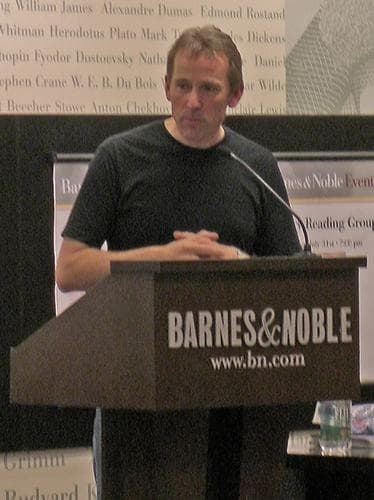
Biography coming soon.







