“What you see is what you get, but not always what you expect.”
— Dog-Woman reflecting on appearances and reality.


Jeanette Winterson (2013)
Genre
Literary Fiction / Fantasy / Historical Fiction
Reading Time
6-8 hours
Key Themes
See below
Sign in to track this book
A giant Dog-Woman rescues a foundling on the Thames. This novel takes readers through time and bawdy adventure, exploring love, truth, and the fluid nature of reality.
In 17th-century London, a very large woman known only as the Dog-Woman, who lives an unusual life by the Thames, finds a baby boy in a basket. Despite her initial hesitation, she takes him in and names him Jordan. The Dog-Woman is a very strong woman with practical wisdom, often seen with her pack of dogs. She raises Jordan with fierce love and an uncommon education, teaching him to see the world through her unique perspective, preparing him for a life that will be far from ordinary. Their early life together forms a bond that goes beyond typical family relationships, setting the stage for Jordan's future adventures and thoughts.
As Jordan grows, he shows a strong curiosity about the world beyond the Thames. He spends his youth watching the busy city, the ships, and the people, absorbing stories and knowledge. His unusual upbringing by the Dog-Woman, who encourages his independent thought, fuels his desire to understand reality, space, and time. He becomes especially interested in maps and exploration, dreaming of distant lands and other worlds. This period of his life is marked by a growing intellectual hunger and a romantic idealism, which will eventually lead him to search for the legendary Twelve Dancing Princesses and the very edge of the known world.
Driven by a strong desire to travel and a romantic ideal, Jordan decides to go on a dangerous journey to find the legendary Twelve Dancing Princesses. These princesses are not just folklore figures, but for Jordan, they represent a deep mystery, embodying beauty, freedom, and an elusive truth about love and existence. His quest takes him across vast oceans and through various fantastical places, blurring the lines between reality and myth. He meets many different characters, each with their own unique philosophies and stories, further shaping his understanding of the world. This journey is not just physical but an inner one, as Jordan deals with his own desires, identity, and the nature of love and obsession.
Throughout Jordan's story, the Dog-Woman offers her own fiercely independent and often wild philosophical rants. These parts contrast sharply with Jordan's more romantic and thoughtful journey, providing a grounding, yet equally rebellious, perspective. She speaks out against societal rules, especially those that oppress women, the hypocrisy of organized religion, and the absurdity of power structures. Her monologues are honest, bawdy, and show a deep sense of justice. She represents a wild, untamed femininity, challenging traditional ideas of beauty, morality, and strength. Her voice is a powerful counterpoint, anchoring the story's fantastical elements in sharp social commentary.
During his travels, Jordan finally meets the Twelve Dancing Princesses and falls in love with one of them, a figure of ethereal beauty and elusive charm. This love becomes the main focus of his quest, changing it from a general search for meaning into a deeply personal pursuit. His descriptions of his beloved are full of poetic longing and a sense of the sublime, yet also hint at the difficulties and perhaps impossibility of fully possessing another person. This relationship, or rather the pursuit of it, forces Jordan to confront desire, the limits of reality, and the challenges of true connection in a world where everything is constantly changing.
Mixed with Jordan's story, the voice of one of the princesses appears, offering a different view of their mythical existence. She speaks of her desire for freedom, her wish to escape the endless dancing and the limits of her enchanted world. Her story reveals the burdens of eternal beauty and the limitations of being an object of desire. She wants a life of agency and self-determination, separate from the romanticized image Jordan and others project onto her. This counter-narrative challenges Jordan's idealized vision, showing the complexities of gender roles and the objectification inherent in romantic pursuit, even in a fantastical setting.
A main feature of the novel is its fluid and often anachronistic handling of time and space. The story often collapses centuries, with characters and events from the 17th century existing alongside modern ideas and technology. This temporal fluidity is not just a style choice but a basic part of the book's exploration of reality and perception. Characters speak in ways that go beyond their historical settings, and the world itself seems to bend to imagination. This constant shifting creates a sense of timelessness, suggesting that certain human experiences, desires, and struggles are universal and go beyond specific historical contexts, blurring the lines between past, present, and future.
Throughout the story, the Dog-Woman remains a strong force against societal pressures. Her unconventional life, her large size, and her outspoken nature make her a target of fear and suspicion. She faces accusations of witchcraft and general moral wrongdoing from the more conservative parts of London society. Despite this, she remains defiant, refusing to conform or be silenced. Her resilience in the face of judgment highlights her role as a symbol of untamed nature and radical individuality. Her conflicts with authority figures show the widespread intolerance and narrow-mindedness of societies, both historical and contemporary, and comment strongly on the persecution of those who deviate from the norm.
After his many travels and encounters with the princesses, Jordan eventually returns, changed by his experiences. He has gained a deeper, though more complex, understanding of love, reality, and desire. However, the absolute truth or the definitive possession of his beloved remains out of reach, reflecting the novel's inherent slipperiness of meaning. His quest becomes less about finding a tangible object or person and more about self-discovery and accepting ambiguity. He carries with him the weight of his experiences, the beauty of his romantic ideals, and the lingering questions that continue to define his existence, reflecting the ongoing human search for meaning.
The novel consistently blurs the lines between fact and fiction, history and myth, inviting the reader to question the nature of storytelling and truth. Both Jordan and the Dog-Woman are unreliable narrators in their own ways, presenting their versions of events with passion. The shifting perspectives, anachronisms, and fantastical elements all contribute to a sense that reality is not fixed but a construct shaped by individual perception and narrative. Winterson uses this technique to suggest that stories are not just reflections of truth, but active creators of it, and that telling a story shapes what we believe to be real, making the reader an active participant in finding meaning.
In her final sections, the Dog-Woman offers moving and often funny thoughts on the lasting aspects of human existence. She thinks about the raw, vital forces of love and sex, the resilience of the human spirit, and the cyclical nature of life and death. Her perspective, though still bawdy and irreverent, takes on a deeper, almost mournful tone, as she considers her own death and the legacy of her unconventional life. She remains a powerful symbol of defiance and authenticity, ending her story by reaffirming the importance of living fully, embracing one's true nature, and challenging the limits imposed by society and conventional thought.
The novel does not offer a clear resolution but ends with a sense of ongoing movement and change. The quest for the princesses, the nature of love, and the limits of reality remain fluid and open to interpretation. The idea of the 'dance' – whether it's the princesses' eternal movement or the constant flux of life itself – becomes a main metaphor for the book's conclusion. It suggests that truth and meaning are not static destinations but continuous processes, always unfolding and redefining themselves. The ending reinforces the novel's core message: that imagination, desire, and storytelling are powerful forces that continually shape our world and our understanding of it.
The Protagonist/Supporting
She remains largely unchanged in her core beliefs, serving as a steadfast, unchanging force of nature and a consistent voice of rebellion against societal norms.
The Protagonist
Jordan transforms from an innocent, idealistic seeker into a more experienced, albeit still questioning, individual who understands the complexities and elusiveness of his desires.
The Supporting
Her arc is less about personal change and more about revealing the constraints of her existence and asserting her own desires against external idealization.
The Antagonist/Mentioned
He remains a static representation of moralistic authority and social repression.
The Supporting/Mentioned
He is a static character, serving as a representation of a facet of the Dog-Woman's life.
The Supporting
These characters are largely static, serving as episodic encounters that contribute to Jordan's evolving worldview.
The novel constantly questions what is real, blurring the lines between history, myth, and individual perception. Through anachronisms and shifting narratives, Winterson suggests that reality is not fixed but a construct shaped by imagination and storytelling. Jordan's quest for the princesses is a search for ultimate reality, while the Dog-Woman's practical yet fantastical worldview challenges traditional ideas. The book says that truth is subjective and fluid, making the reader question the reliability of any single narrative, as seen in the contrasting accounts of events and the presence of fantastical elements within a historical setting.
“What is real and what is not? It is a question I have asked myself many times. The answer, I think, is that we make it up as we go along.”
A central theme is the many-sided nature of love, sex, and desire, explored through the contrasting experiences of Jordan and the Dog-Woman. Jordan's romantic, idealized love for the Princess is a search for an ultimate, almost spiritual connection, bordering on obsession. The Dog-Woman, conversely, embodies a raw, earthy, and uninhibited sexuality, celebrating physical pleasure and rejecting societal limits on female desire. The novel looks at the complexities of longing, the elusiveness of true possession, and the societal pressures that shape how love and sex are seen and expressed, showing both their transcendent and physical aspects.
“To be loved is to be at home in the world. And yet, home is a place that is always being built.”
The struggle between freedom and various forms of confinement is a common theme. The Dog-Woman represents radical freedom, defying societal norms, gender expectations, and religious dogma, even as she faces persecution. Jordan seeks freedom through exploration and the pursuit of an idealized love, but finds himself confined by his own desires and the limits of reality. The Princesses, despite their magical existence, are confined by their eternal dance and their role as objects of desire. The novel examines how individuals deal with external pressures and internal limits, exploring the desire for liberation and the different ways characters try to break free from their personal and societal cages.
“I am a woman and I want my freedom. And if I cannot have it, then I will make it.”
Winterson challenges traditional gender roles and power dynamics through her characters. The Dog-Woman is a powerful, dominant female figure who defies patriarchal authority and redefines femininity outside of conventional beauty standards and submissiveness. Her monologues directly address the oppression of women and the hypocrisy of male-dominated society. Jordan's romantic quest, while seemingly traditional, is complicated by the Princess's own voice, which reveals the limits of being an object of desire. The novel critiques the historical and ongoing power imbalances between genders, supporting female agency and self-determination.
“A woman's place is in the home, they say. I say a woman's place is wherever she damn well pleases.”
The novel is deeply metafictional, always drawing attention to how it is made and the power of language. It shows how stories shape our understanding of the world, create reality, and pass meaning across generations. The narrative structure, with its shifting perspectives and anachronisms, highlights the subjective nature of truth and the author's ability to manipulate time and space through words. Both Jordan and the Dog-Woman are storytellers in their own right, crafting narratives that reflect their unique worldviews. The book celebrates the imaginative capacity of language to build worlds, define identities, and challenge traditional thought.
“Stories are like rivers, they flow from one place to another, carrying all sorts of things with them.”
The deliberate placement of elements from different historical periods together.
Winterson frequently employs anachronism, blending 17th-century London with modern sensibilities, objects, and ideas. This device challenges the reader's sense of linear time and historical accuracy, suggesting that certain human experiences and philosophical questions are timeless. It blurs the lines between past and present, creating a dreamlike, fantastical atmosphere where the conventional rules of history do not apply. This technique allows for a broader commentary on human nature, transcending specific historical contexts and emphasizing the enduring nature of themes like love, freedom, and the search for meaning.
The use of narrators whose credibility is compromised or subjective.
Both Jordan and the Dog-Woman can be considered unreliable narrators, each presenting their unique, often highly subjective, versions of events and philosophical interpretations. Jordan's narrative is steeped in romantic idealism and a quest for an elusive truth, while the Dog-Woman's is characterized by bawdiness, fierce independence, and a radical, often exaggerated, perspective. This unreliability forces the reader to actively engage with the text, question the nature of truth, and piece together meaning from multiple, sometimes contradictory, viewpoints. It underscores the novel's theme that reality is constructed through individual perception and storytelling.
A literary device where the text draws attention to its own status as a fictional construct.
Winterson frequently employs metafiction, reminding the reader that they are engaging with a story. This is evident in the Dog-Woman's direct addresses to the reader, the explicit discussions about storytelling, and the overt manipulation of narrative time and space. The novel self-consciously explores the act of writing and reading, questioning the boundaries between author, reader, and text. This device invites the reader to consider how stories are made, how they influence our understanding of the world, and how fiction can illuminate truths that conventional narratives might obscure. It makes the reader an active participant in the creation of meaning.
The reinterpretation and integration of classic myths and fairy tales.
The novel extensively reworks and integrates elements from traditional myths and folklore, most prominently the tale of the Twelve Dancing Princesses. These stories are not merely retold but are reimagined and infused with new meaning, serving as allegories for contemporary concerns. By placing these timeless narratives within a fractured historical context, Winterson explores their enduring psychological and philosophical resonance. This device allows her to delve into universal human desires, fears, and archetypes, while simultaneously critiquing and expanding upon their original interpretations, giving familiar tales a subversive and modern edge.
“What you see is what you get, but not always what you expect.”
— Dog-Woman reflecting on appearances and reality.
“I am a woman and a son of a bitch. I am a monster and a lover. I am a man and a mother.”
— Dog-Woman describing her multifaceted and paradoxical identity.
“There are no new desires, only new objects of desire.”
— A philosophical observation on human longing.
“The past is not a package to be wrapped up and put away. It is a living thing, a part of us, that we carry everywhere.”
— Jordan contemplating the pervasive influence of history.
“Love is not a place, it is a voyage.”
— A reflection on the dynamic nature of love.
“We are not made of flesh and bone, but of stories.”
— Emphasizing the narrative construction of human existence.
“Every secret takes on a life of its own, growing and twisting until it is no longer recognizable.”
— Dog-Woman discussing the nature of secrets and their consequences.
“The future is a foreign country; they do things differently there.”
— A twist on a famous saying, applied to the unknown future.
“What is normal anyway? It's just a setting on a washing machine.”
— A dismissive remark about societal norms.
“The world is full of invisible things, and not just the wind.”
— A recognition of the unseen forces and elements shaping reality.
“I was born with a caul over my face, which means I can see ghosts and talk to animals.”
— Dog-Woman introducing her unique mystical abilities.
“There is no such thing as a fixed point. Everything moves, even if it looks like it's standing still.”
— A philosophical statement on the constant flux of existence.
“Happiness is a garden, not a house. You have to tend it, water it, watch it grow.”
— A metaphor for the active cultivation of happiness.
“The greatest journey is the one you make inside yourself.”
— A reflection on introspection and self-discovery.
Ready to see how well you understood this book? Take our interactive quiz with 10 questions.
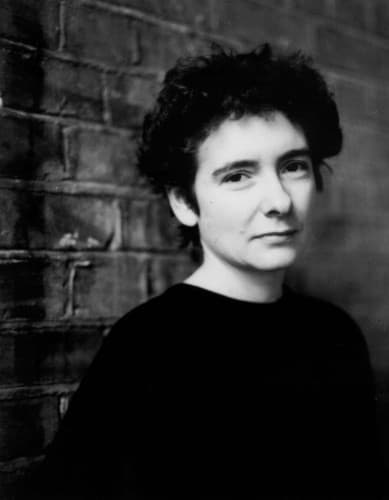
Jeanette Winterson is an English author. Her first book, Oranges Are Not the Only Fruit, was a semi-autobiographical novel about a sensitive teenage girl rebelling against convention. Other novels explore gender polarities and sexual identity and later ones the relations between humans and technology. She broadcasts and teaches creative writing. She has won a Whitbread Prize for a First Novel, a BAFTA Award for Best Drama, the John Llewellyn Rhys Prize, the E. M. Forster Award and the St. Louis Literary Award, and the Lambda Literary Award twice. She has received an Officer of the Order of the British Empire (OBE) and a Commander of the Order of the British Empire (CBE) for services to literature, and is a Fellow of the Royal Society of Literature.







