“The moon blew up without warning and for no apparent reason.”
— The opening line of the novel, setting the catastrophic event in motion.

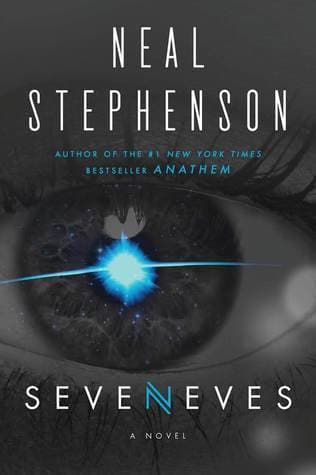
Neal Stephenson (2015)
Genre
Fantasy / Science Fiction
Reading Time
1500 min
Key Themes
See below
Sign in to track this book
When the moon shatters and Earth faces an extinction-level meteor storm, humanity launches a desperate, multi-generational exodus to the stars, only to return millennia later to a transformed, alien home world.
On a normal day, the Moon suddenly shatters into seven major pieces, an event called the 'Agent.' Dr. Dubois Harris, an astrophysicist and TV personality, quickly sees the coming danger: in two years, the fragments will start colliding and pulverizing each other, creating a 'Hard Rain' of meteoroids that will make Earth's surface unlivable for thousands of years. This apocalyptic forecast causes global panic and an international effort to save humanity by launching as many people and resources as possible into orbit. The International Space Station (ISS), renamed 'Cradle,' becomes the main point for this desperate escape, overseen by characters like Dinah MacQuarie, a robotics engineer, and Commander Ivy Xiao, the ISS leader.
In the two frantic years before the Hard Rain, humanity achieves a huge feat of engineering and cooperation. Thousands of launches deliver prefabricated modules, supplies, and chosen 'Arkies' (those selected for space) to the growing orbital habitat, which becomes a complex structure called the 'Cloud Ark.' Dinah MacQuarie is key in designing and putting in place the robotic systems for construction, while Moira Crewe, a geneticist, focuses on creating a viable human gene pool. Political tensions, lack of resources, and huge logistical problems constantly threaten the mission's success, but the shared goal of survival drives the project forward despite huge obstacles.
As the two-year deadline nears, the Moon fragments begin their destructive fall. The Hard Rain starts, turning Earth into a fiery inferno. The Cloud Ark, now a sprawling but fragile habitat, must cut all ties with the surface. Commander Ivy Xiao, with help from Dinah and other important personnel, manages the final closure and isolation of the Ark. The survivors watch in horror as their home planet is destroyed by fire and impacts, knowing that returning is no longer possible. The remaining population of the Cloud Ark, a diverse but limited group, now faces the challenge of long-term survival in the harsh vacuum of space, with limited resources and a quickly shrinking population.
After the Hard Rain, the Cloud Ark faces severe internal conflict. Resources become very scarce, especially breathable air and water. Political groups form, with figures like President Julia Blum supporting different survival plans. A major crisis happens when a rogue group, the 'Red-Handed,' tries to take control of vital resources, leading to violence and more division. To ensure the long-term survival of at least some humanity, a drastic plan is put into action: the 'Great Dispersion.' The Cloud Ark is intentionally broken apart, with smaller 'Arklet' vessels, each carrying a limited number of people and resources, sent on different paths to reduce the risk of one disaster wiping out everyone. This desperate measure further reduces the already small human population.
After the Great Dispersion and continued losses, the human population shrinks to a critical point. Through a series of tragic events, including sabotage and accidents, only a few women remain fertile and able to continue the species. Dr. Moira Crewe, the geneticist, takes on the huge task of ensuring genetic diversity from this tiny group. In the end, seven women are identified as the 'Seven Eves': Dinah, Ivy, Moira, Aïda, Tekla, Camilla, and Julia. These women, each with unique skills and genetic traits, become the sole ancestors of all future humanity. They must rebuild the species through a strict breeding program while living a precarious existence in orbit.
Five thousand years have passed. The descendants of the Seven Eves, organized into seven distinct 'races' (each named after their Eve), now number three billion people living in a huge, interconnected orbital habitat called 'New Earth.' Earth itself has changed dramatically; the Hard Rain created a new, dense atmosphere and a superheated, chaotic surface. The 'Spacers,' as orbital humanity is now known, have developed advanced technology and societal structures. The main goal of this new civilization is to return to Earth, now called 'Cradle,' and reclaim their ancestral home. A reconnaissance mission, led by characters like Kath Two and Hakone, is sent to check the planet's habitability and prepare for large-scale colonization.
The reconnaissance team, including Kath Two and her companion, finds Earth a very different place. The surface has a subterranean ecosystem of 'Diggers,' huge, worm-like creatures that have evolved to live in the hot, dense atmosphere. Above ground, they find the 'Swarm,' a complex, self-organizing cloud of microscopic organisms that is a new form of atmospheric life. The Diggers and the Swarm are both threats and opportunities for the returning Spacers. The Spacers realize that Earth's new environment needs completely new ways to survive and colonize, forcing them to adapt their advanced technology and understanding of life.
During their exploration, the Spacers find clues that not all humanity died in the Hard Rain. They find signs of a group that managed to survive on Earth's surface, adapting to the disaster. This discovery, centered around the 'Cleft'—a huge, protected canyon—challenges the Spacers' long-held belief that they were the only survivors. The existence of these 'Diggers' (not to be confused with the worm-like creatures) presents a big ethical and existential problem for the Spacers. The mission changes from just colonization to understanding and possibly reuniting with this lost branch of humanity, whose existence could change what it means to be human.
The Spacers eventually make direct contact with the descendants of the Earth-bound survivors, whom they also call 'Diggers' (a term that applies to both the subterranean creatures and these humans). These Earth-Diggers have evolved into a distinct society, physically and culturally different from the Spacers, adapted to living underground and processing Earth's unique environment. The first interactions are full of tension and misunderstanding, as both groups try to understand the other's existence and history. The Spacers, used to their technologically advanced and highly structured orbital society, find themselves challenged by the Diggers' more primal, yet resilient, way of life.
Despite initial conflicts, the Spacers and the Earth-Diggers slowly begin to bridge their differences. The Spacers, led by individuals like Kath Two, learn about the Diggers' cleverness in surviving Earth's harsh conditions, while the Diggers gain access to the Spacers' advanced knowledge and technology. The discovery of shared ancestry through genetic markers helps create a sense of unity. The ultimate goal becomes not just the colonization of Earth by the Spacers, but the integration and mutual understanding of both branches of humanity. The novel ends with the hopeful idea of a unified human future, with diverse societies coexisting and thriving on a transformed Earth and in orbit, showing humanity's lasting ability to adapt and survive.
The Supporting
From scientific prophet to a stoic observer of humanity's final days on Earth, accepting his own end.
The Protagonist
Transforms from a focused engineer to a reluctant leader, eventually becoming a genetic matriarch.
The Protagonist
Evolves from a military commander to a foundational leader of a new civilization, embodying resilience and sacrifice.
The Supporting
From a focused scientist to the architect of humanity's genetic future, carrying the burden of species perpetuation.
The Antagonist/Supporting
Transitions from a divisive political figure to a crucial, if controversial, matriarch of a future race.
The Supporting
From a capable cosmonaut to a genetic founder, representing the physical hardiness required for survival.
The Protagonist
Evolves from an explorer of a new world to a bridge-builder between two long-separated human cultures.
The Supporting
A dedicated explorer who adapts to Earth's new challenges, showcasing the resilience of his lineage.
The Supporting
Transitions from a wary leader of an isolated community to a key figure in the reunification of humanity.
The main theme of 'Seveneves' is humanity's great ability to survive and adapt in the face of huge catastrophe. From the initial rush to build the Cloud Ark, through the Great Dispersion, to the genetic bottleneck of the Seven Eves, and finally to the re-colonization of a radically changed Earth, the story consistently shows human ingenuity, determination, and the will to live. The evolution of the seven distinct races and their ability to thrive in different environments (orbital habitats and subterranean Earth) further emphasizes this theme. It shows that humanity can not only last but also do well in the most extreme conditions.
“The human race, after all, was not a race of angels. It was a race of survivors.”
Science and technology are both the reason for understanding the coming doom and the main way to survive. Dr. Dubois Harris's astrophysical calculations warn of the Hard Rain, while Dinah MacQuarie's robotics, Moira Crewe's genetics, and Ivy Xiao's engineering leadership are essential for building and maintaining the Cloud Ark. In the second part, advanced Spacer technology allows the return to Earth and interaction with its new ecosystems. The book celebrates scientific inquiry and technological innovation as necessary tools for overcoming existential threats, showing that knowledge is power when facing oblivion.
“Science is the only way out of this. Science is the only way in.”
Even when facing species-level extinction, human political and social divisions continue. The Cloud Ark is troubled by factionalism, resource disputes, and power struggles, shown by President Julia Blum's plans and the 'Red-Handed' rebellion. These conflicts lead to more losses and make the survival mission harder. However, the story also shows moments of cooperation and unity, such as the initial global effort to build the Ark and the eventual reconciliation between the orbital Spacers and the Earth-bound Diggers. The book explores the constant tension between humanity's destructive tendencies and its ability for collective action.
“The greatest danger wasn't the Hard Rain itself, but the human tendency to turn on each other when the chips were down.”
The novel looks deeply at what it means to be human over a long time. The Seven Eves and their genetic diversification into distinct 'races' bring up questions about identity, ancestry, and the future of human evolution. The physical and cultural differences between the orbital Spacers and the subterranean Earth-Diggers show how environment shapes humanity. The eventual reunification forces both groups to confront their shared origins and different paths, challenging their definitions of 'humanity' and suggesting a broader, more inclusive understanding of the species. The book proposes that humanity is not static but a constantly evolving entity.
“We are not the same people who left. We are what we became.”
The story is built around a grand cycle of destruction and rebirth. The shattering of the Moon and the Hard Rain are a catastrophic end, wiping out terrestrial life. However, this destruction makes way for a new beginning in orbit, and eventually, a transformed Earth. The planet itself undergoes a geological and atmospheric rebirth, creating new ecosystems. Humanity, too, experiences a rebirth through the Seven Eves, leading to a new civilization that eventually returns to a renewed home. This cyclical pattern shows that even from total devastation, new life and possibilities can emerge.
“The End of the World was just the beginning of the next one.”
The central apocalyptic event that drives the entire plot.
The Hard Rain is the meteoroid bombardment of Earth caused by the Moon's fragmentation. It serves as the ultimate ticking clock, forcing humanity's immediate and desperate actions in the first part of the book. It's not just a backdrop but an active force, shaping the environment, determining survival chances, and explaining Earth's transformed state in the second part. The inevitability and severity of the Hard Rain establish the high stakes and constant pressure on the characters, justifying the extreme measures taken for humanity's survival.
Splits the narrative into the immediate catastrophe and a future aftermath.
The novel is distinctly divided into two main parts: the first covers the two years leading up to the Hard Rain and the subsequent struggle for orbital survival, ending with the establishment of the Seven Eves. The second part jumps 5,000 years into the future, focusing on the descendants' return to Earth. This dual timeline allows Stephenson to explore both the immediate, frantic response to an apocalypse and the long-term societal, evolutionary, and environmental consequences, offering a comprehensive vision of humanity's past, present, and distant future.
A genetic bottleneck and the matriarchs of future humanity.
The Seven Eves are the seven women who, through a combination of chance, skill, and genetic engineering, become the sole progenitors of all future humanity. This device creates a profound genetic bottleneck, emphasizing the fragility of species survival and the immense responsibility placed upon these individuals. It serves as a powerful symbol of rebirth and the arbitrary nature of survival, while also providing a clear ancestral lineage for the distinct 'races' that emerge 5,000 years later, allowing for exploration of genetic and cultural evolution.
The orbital habitats representing humanity's temporary and then permanent home.
The Cloud Ark is the initial, hastily assembled orbital habitat built to escape the Hard Rain. It symbolizes humanity's desperate ingenuity and collective will to survive. Over 5,000 years, it evolves into 'New Earth', a vast, complex, and sustainable orbital civilization. These habitats serve as both a physical refuge and a crucible for human evolution, showcasing the development of advanced technology and new societal structures in an extraterrestrial environment. They are a testament to humanity's ability to create a new home when the old one is lost.
A parallel branch of humanity that evolved independently on Earth.
The discovery of the Earth-bound 'Diggers' in the second part of the novel is a significant plot device. It challenges the Spacers' assumption that they are the sole survivors of humanity and introduces a fascinating 'what if' scenario: how would humans evolve if they stayed on a ravaged Earth? This device creates narrative tension, provides a foil for the orbital Spacers, and allows for exploration of extreme adaptation, cultural divergence, and the ultimate question of what constitutes humanity when faced with different evolutionary paths.
“The moon blew up without warning and for no apparent reason.”
— The opening line of the novel, setting the catastrophic event in motion.
“We are all of us, in a sense, orphans.”
— Reflection on humanity's isolation and vulnerability after the moon's destruction.
“The hard part is not building a spaceship. The hard part is building a spaceship that can keep people alive for five thousand years.”
— Discussion about the challenges of long-term space habitation and the Cloud Ark project.
“In space, no one can hear you scream, but they can sure as hell see you on radar.”
— Observation about the visibility and vulnerability of spacecraft in orbit.
“The only thing more dangerous than a man with a gun is a man with a clipboard.”
— Commentary on bureaucracy and authority in crisis situations.
“Evolution is not a ladder; it's a bush.”
— Explanation of evolutionary biology, relevant to the novel's later themes of genetic divergence.
“We are the ark. We are the lifeboat. We are the future.”
— Motivational speech about humanity's role in preserving life after the apocalypse.
“The universe doesn't care about your feelings. It just is.”
— Reminder of the indifferent nature of cosmic forces amidst human struggles.
“In the long run, we are all dead. But in the very long run, we might not be.”
— Philosophical musing on mortality and the potential for human transcendence through technology.
“A leader is someone who can make hard decisions and live with the consequences.”
— Discussion of leadership qualities during the crisis of the Cloud Ark.
“The past is a foreign country; they do things differently there.”
— Reflection on how history and pre-apocalyptic Earth seem alien to future generations.
“Survival is not a given. It is a choice, made every day.”
— Emphasis on the active effort required to endure in harsh environments.
“We are not just saving ourselves. We are saving the idea of humanity.”
— Inspirational statement about preserving human culture and values beyond mere physical survival.
“In space, you learn to appreciate the simple things: a breath of air, a sip of water, a moment of silence.”
— Observation on the heightened value of basic necessities in the confined environment of spacecraft.
Ready to see how well you understood this book? Take our interactive quiz with 10 questions.
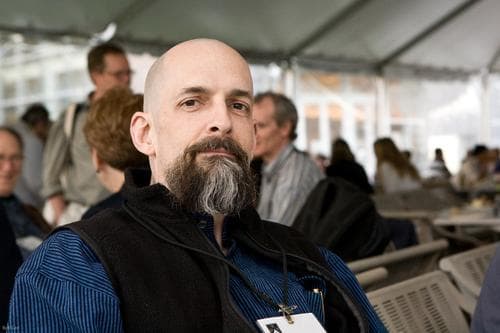
Neal Town Stephenson is an American writer known for his works of speculative fiction. His novels have been categorized as science fiction, historical fiction, cyberpunk, postcyberpunk, and baroque.







