
Barbara Cohen was an American author known for her historical fiction for young adults. Her most recognized work, "Seven Daughters and Seven Sons," published in 1985, is a retelling of an ancient Persian folktale. Cohen often explored themes of identity, family, and cultural heritage in her novels.
Archivist's Choice
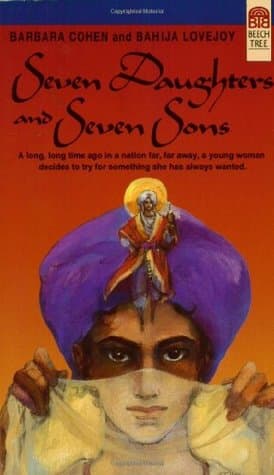
Seven Daughters and Seven Sons
Genre
Fantasy / Children's / Historical Fiction / Young Adult / Romance
Reading Time
12 Minutes
Key Themes
See below
Track Your Reading
Sign in to track this book
Disguised as a boy to build a business empire, a determined young woman in ancient Arabia falls for the prince who knows her only as a man.
Synopsis
In a land inspired by ancient Arabia, Buran, the eldest of seven daughters, defies societal expectations by refusing to be a burden on her impoverished family. Instead of marrying a man chosen by her father, she disguises herself as a boy named Buran and embarks on a perilous journey with a camel caravan to a distant city. There, she establishes a successful business as a merchant, proving her intelligence and entrepreneurial spirit. Her shop attracts the attention of the city's charming crown prince, Mahmud, with whom she begins to fall in love. Buran finds herself in a dilemma: reveal her true identity and risk losing her independence, her business, and potentially Mahmud's affection, or maintain her disguise and live a life of deception.
Difficulty
Easy
Pacing
Moderate
Mood
Empowering, Romantic, Adventurous, Hopeful
Plot Summary
A Father's Dilemma and a Daughter's Resolve
Mahmud, a skilled but poor weaver in a small Arab village, struggles with the expectation to provide dowries for his seven daughters. He tells his wife of his despair, and she reminds him of their daughters' intelligence and abilities. Buran, the youngest and most spirited daughter, overhears her father. She is frustrated by the limited roles for women and the idea that her worth depends only on marriage. Inspired by a merchant's story of earning a fortune, Buran plans to disguise herself as a boy and travel to a distant city to seek her own fortune, hoping to help her family and prove her own worth.
The Disguise and the Journey
Buran convinces her parents, after much argument and her mother's eventual support, to let her pursue her plan. Her father, though reluctant, agrees, seeing it as their only hope. With her mother's help, Buran crafts her disguise, cutting her hair short, binding her chest, and donning boy's clothing. She renames herself 'Nasr' (meaning 'victory' in Arabic) to solidify her new identity. With a small sum of money and her father's weaving tools and patterns, Buran joins a merchant caravan bound for the city of Baghdad, experiencing desert travel while maintaining her masculine facade.
Establishing a New Life in Baghdad
Upon arrival in Baghdad, Nasr faces the immediate challenge of finding lodging and establishing herself. She secures a small shop and living quarters and begins to ply her trade, demonstrating her father's weaving skills. Her unique designs and high-quality fabrics quickly attract customers. Nasr is a shrewd businesswoman, managing her finances carefully and building a reputation for honesty and craftsmanship. She navigates the male-dominated marketplace with confidence, adapting her speech and mannerisms to maintain her disguise, all while experiencing the grand city and its diverse inhabitants.
The Prince's Patronage
Among Nasr's growing clientele is a young man named Mahmud, who is captivated by the beauty and artistry of her woven goods. Unbeknownst to Nasr, Mahmud is the crown prince of Baghdad, often venturing out in disguise to observe his people and their crafts. He finds Nasr's shop a refreshing change from the more traditional merchants. Their interactions soon go beyond mere transactions; they develop a genuine friendship, discussing art, philosophy, and life. Nasr is drawn to Mahmud's intelligence, kindness, and genuine interest, while constantly fearing her true identity will be revealed.
Growing Affection and Internal Conflict
As their friendship blossoms, Nasr finds herself falling in love with Prince Mahmud. She cherishes their conversations and time together, but the deception weighs heavily on her heart. She yearns to reveal her true self but fears the consequences: losing Mahmud's friendship, her business, and potentially facing severe punishment for her fraud. Mahmud, too, is increasingly drawn to Nasr, admiring 'his' wisdom, wit, and gentle nature. These feelings confuse and disturb him as they are directed towards another 'man.' This internal conflict creates a tension between them.
The Sultan's Decree and Mahmud's Dilemma
The Sultan, Mahmud's father, begins to pressure his son to choose a wife and secure the royal succession. Mahmud, however, is preoccupied with his feelings for Nasr. In a moment of vulnerability, he confides in his father, expressing his deep affection for 'Nasr' and his confusion over these unconventional emotions. The Sultan, initially perplexed and concerned by his son's confession, advises Mahmud to truly understand his feelings and to seek clarity before making any decisions. This revelation from Mahmud both thrills and terrifies Nasr, as it confirms his feelings but also heightens the risk of exposure.
A Royal Invitation and a Desperate Hope
Driven by his strong feelings, Prince Mahmud invites Nasr to visit the royal palace, an unprecedented gesture for a common merchant. This invitation throws Buran into turmoil. She recognizes it as an important moment. The thought of revealing her true identity to Mahmud, confessing her love and the deception, fills her with both terror and a desperate hope. She knows that if she is to have any future with Mahmud, or even a chance at true happiness, she must find a way to unveil her secret. But the timing and manner of such a revelation are fraught with danger.
The Revelation and the Test
Summoning all her courage, Buran, at the palace, finally reveals her true identity to Prince Mahmud. She takes off her turban, lets down her hair, and explains her reasons for the disguise. Mahmud is initially stunned, then angry at the deception, but his anger is quickly overshadowed by relief and overwhelming joy that the person he loved is, in fact, a woman. He understands her motivations and admires her bravery. However, to prove her worth and ensure she is not merely a fortune-seeker, Mahmud, with the Sultan's guidance, devises a test: Buran must prove herself worthy of a prince's hand by completing a seemingly impossible task.
Buran's Final Challenge
The 'impossible task' given to Buran by Prince Mahmud (with the Sultan's approval) is to weave a tapestry that visually narrates her entire journey: from her village, her disguise as Nasr, her travels to Baghdad, her establishment of the weaving business, her friendship with Mahmud, and finally, the revelation of her true identity and their love. This task is designed to show her skill, her honesty, and the depth of her character and affection. Buran accepts the challenge with determination, pouring her heart and soul into the weaving, using her father's techniques and her own artistic vision to create a masterpiece.
Triumph and Union
Buran successfully completes the magnificent tapestry, each thread telling a part of her extraordinary story. When presented to the Sultan and Mahmud, its beauty and narrative power are undeniable. The tapestry shows Buran's exceptional talent, courage, integrity, and deep love for Mahmud. Impressed and moved, the Sultan gives his blessing, and Mahmud joyfully asks Buran to be his wife. Buran returns to her village, no longer as 'Nasr' but as herself, triumphant and celebrated. She shares her fortune with her family, ensuring her sisters' dowries, and eventually marries Prince Mahmud, becoming a beloved princess and proving that a woman's worth extends far beyond traditional expectations.
Principal Figures
Buran / Nasr
The Protagonist
Buran transforms from a frustrated village girl into a successful merchant and eventually a respected princess, proving her capability and challenging gender norms.
Mahmud (Prince)
The Supporting
Mahmud evolves from a dutiful prince to a man who follows his heart, challenging societal expectations for love and marriage.
Mahmud (Father)
The Supporting
He moves from despair and traditional views on women's roles to accepting and celebrating his daughter's extraordinary achievements.
Buran's Mother
The Supporting
She remains a constant source of strength and encouragement, witnessing her daughter's triumph.
The Sultan
The Supporting
He initially upholds tradition but ultimately prioritizes his son's happiness and recognizes true merit, regardless of social norms.
The Merchant
The Supporting
Serves as an initial inspiration, his role is fulfilled once Buran embarks on her journey.
Buran's Six Sisters
The Supporting
Their collective fate is improved by Buran's actions, allowing them to marry.
The Caravan Leader
The Supporting
A static character who facilitates Buran's journey to Baghdad.
Themes & Insights
Gender Roles and Expectations
The novel examines the rigid gender roles in ancient Arab society, where women are confined to the home and valued for their ability to marry and bear children. Buran's journey challenges these expectations, as she defies tradition to seek economic independence and personal fulfillment. Her success as 'Nasr' highlights the untapped potential of women and the arbitrary nature of these societal limits. The story argues for individual merit over gendered limitations.
“For the first time, Buran saw that a woman could do more than spin and weave and marry and bear children. A woman could be a merchant.”
Identity and Deception
Buran's disguise as 'Nasr' is central to the narrative, exploring identity, self-discovery, and the burden of deception. While her male persona grants her freedom and opportunity, it also creates an emotional gap, especially when she falls in love. The constant fear of exposure and the internal conflict between her true self and her assumed identity drive much of the plot. The story suggests that true happiness and love can only be found when one is authentic, even if that authenticity comes at a great risk.
“Every morning Nasr would look in the mirror and see Buran, and every evening Buran would see Nasr, and both of them wondered who was truly real.”
Courage and Resourcefulness
Buran shows immense courage and resourcefulness throughout her journey. From the initial decision to leave her village and disguise herself, to navigating the challenges of a bustling city, establishing a business, and eventually revealing her truth, her actions demonstrate bravery. Her resourcefulness is evident in her quick learning, her business acumen, and her ability to adapt to new environments. The novel celebrates individual initiative and the ability to overcome seemingly insurmountable obstacles through will and intelligence.
“She had traveled all this way. She had built a business. She had lived a lie. She would not fail now.”
Love and Acceptance
The romantic relationship between Buran and Prince Mahmud explores the nature of love and acceptance beyond superficial appearances and societal norms. Mahmud falls in love with 'Nasr' based on character, intellect, and kindness, challenging his own ideas of attraction. When Buran's true identity is revealed, his ability to overcome initial shock and anger, and to accept her for who she is and what she has done, highlights a deep and unconditional love. The story champions a love that values the inner person above all else.
“It was not a man I loved, my father, but the heart and mind within him. And if that heart and mind belong to a woman, then so be it.”
Family Duty and Sacrifice
Buran's initial motivation stems from a deep sense of family duty and a desire to help her father financially and secure her sisters' futures. Her entire arduous journey is a sacrifice made for her family's well-being. This theme highlights the importance of familial bonds and the lengths to which an individual might go to ensure their loved ones' prosperity. Her eventual return and sharing of her fortune fulfill this duty, demonstrating the impact of her personal sacrifice.
“She would do it for her father, for her mother, for all her sisters. She would do it for herself.”
Plot Devices & Literary Techniques
Disguise
Buran's male persona as 'Nasr'.
The central plot device is Buran's disguise as a young man named Nasr. This allows her to defy societal restrictions placed on women, enabling her to travel, engage in commerce, and achieve financial independence. The disguise creates both opportunities and profound internal and external conflicts, particularly in her relationship with Prince Mahmud. It is the catalyst for her adventures and the source of dramatic tension, as the threat of exposure constantly looms.
The 'Impossible' Task/Test
Buran's final challenge to weave her story.
After Buran reveals her true identity, Prince Mahmud (with the Sultan's counsel) sets an 'impossible' task for her: to weave a tapestry depicting her entire journey and love story. This device serves as a final trial of her character, skill, and honesty, proving her worthiness beyond her wealth or gender. It allows her to creatively and symbolically summarize her adventure, using her inherent talent to win acceptance and secure her future.
Mistaken Identity
Prince Mahmud's belief that 'Nasr' is a man.
This device creates both humor and poignant emotional conflict. Prince Mahmud falls in love with Buran while believing her to be a man, leading to his confusion and internal struggle over his feelings. This mistaken identity highlights the idea that love transcends physical appearance or gender, focusing instead on character and connection. It builds suspense leading up to the revelation and ultimately strengthens the theme of acceptance.
The Royal Disguise
Prince Mahmud often ventures out in commoner's clothes.
Prince Mahmud's habit of disguising himself as a commoner allows him to interact with his subjects, including Nasr, on a more personal and authentic level. This device facilitates his initial connection with Buran, as it removes the barriers of rank and allows for a genuine friendship to develop. It also subtly mirrors Buran's own disguise, suggesting a shared desire to transcend societal roles, albeit for different reasons.
Critical analysis
Notable Quotes
Quiz
Test Your Knowledge
Ready to see how well you understood this book? Take our interactive quiz with 10 questions.
10
Questions
~5
Minutes
?
Best Score
Key Questions (FAQ)
Seven Daughters and Seven Sons tells the story of Buran, a young woman in an ancient Arab nation who defies tradition. To escape an arranged marriage and pursue her own ambitions, she disguises herself as a boy and travels to a distant city to build a business.







