“The greatest truths are the simplest, and so are the most difficult to tell.”
— A reflection on the nature of truth and communication.

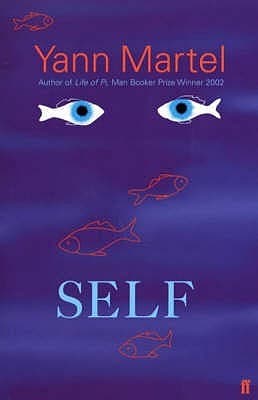
Yann Martel (1996)
Genre
Literary Fiction / Fantasy
Reading Time
300 min
Key Themes
See below
Sign in to track this book
Born intersex and later in a shocking accident, Self is a fantastical, gender-bending autobiography that blurs the lines of identity and reality.
The narrator, a boy named 'Self' (never explicitly named, only referred to as 'I'), is born in Montreal, Canada, in 1956. He is born with both male and female genitalia, a secret kept by his parents and himself. His early childhood is marked by extensive travel due to his father's diplomatic work. They live in places like Lisbon, Portugal, and Toronto, Canada, where 'Self' experiences the joys and confusions of a young boy, including first crushes and the awareness of his unique physical condition. His parents, particularly his mother, are loving but somewhat distant, leaving 'Self' to navigate much of his inner world alone.
'Self' enters adolescence grappling with his intersexuality. He develops crushes on girls, but his body creates internal turmoil and shame. He struggles with his own identity, feeling neither fully male nor fully female. Around age 14, after much deliberation and consultation with doctors, his parents decide it is best for him to undergo surgery to become fully male. This decision is made to give him a clearer path in life, but it leaves 'Self' with lingering questions about his original self and the part of him that was surgically removed.
'Self' attends the University of Toronto, where he studies literature and begins to write. He falls in love with a young woman named Sarah, his first significant romantic relationship after his surgery. Their relationship is passionate but also fraught with his lingering insecurities and the unarticulated shadow of his past. He explores his sexuality, attempting to fit into the conventional male role, but often feels a disconnect. These years are marked by intellectual curiosity, emotional intensity, and a continuous search for a complete sense of self that feels elusive despite his physical transformation.
After university, 'Self' travels extensively through Europe, working odd jobs and immersing himself in different cultures. He writes, reads, and observes, attempting to find meaning and a place for himself in the world. He spends time in various cities, including London and Paris, engaging in casual relationships and philosophical musings. During this period, he receives news of a severe car accident involving his parents in Portugal. This event is a turning point, forcing him to confront mortality and the fragility of his family, deepening his introspection about life's unpredictable nature.
Midway through the book, there is a sudden revelation: the narrator, 'Self,' is not male but female. The entire preceding narrative, where 'Self' has consistently identified and presented as male, is revealed to be a fabrication, a 'self' imagined by the female narrator. This twist recontextualizes all previous events, particularly the birth, the intersexuality, and the surgery. The narrator explains that she was born female and has constructed this elaborate male persona as a coping mechanism or an exploration of identity, perhaps even a form of literary experiment within her own mind.
Following the revelation, the narrative shifts, and the narrator begins to recount her actual life as a woman. She describes growing up female, her experiences with love, loss, and the challenges unique to her gender. This section directly contrasts with the imagined male life, showing the different ways she navigated the world, formed relationships, and perceived herself. The reader gains insight into the actual events that shaped her, revealing the discrepancies and parallels between her constructed male persona and her lived female reality. This part of the story explores themes of authenticity and the malleability of identity.
The narrator revisits the car accident involving her parents, but this time from her true female perspective. The emotional weight and consequences of the accident are explored more deeply, including her grief and the subsequent changes in her family dynamics. Her relationship with her parents, particularly her mother, is depicted with greater nuance, revealing the complexities of their bond and how her parents' lives influenced her own. This section emphasizes the lasting impact of family and loss on her journey of self-discovery, highlighting the emotional truths that underpin both her real and imagined lives.
The narrator describes her romantic relationships as a woman, including a significant love affair that shaped her. These relationships are depicted with honesty, exploring themes of intimacy, vulnerability, and heartbreak. She reflects on the challenges of finding connection, the pain of loss, and the enduring search for love and acceptance. These experiences are contrasted with the simpler, often more detached, relationships described in her male persona, offering a deeper look into the emotional landscape of her life and the complexities of human connection from a female perspective.
Throughout the narrative, both before and after the twist, the narrator's identity as a writer is central. She uses storytelling to process her experiences, explore different facets of her identity, and grapple with life's big questions. The creation of the male 'Self' can be seen as a literary act, a way for her to inhabit an alternative existence and understand herself more fully. Her reflections on writing, the nature of truth, and the power of imagination become prominent, highlighting the novel's meta-fictional elements.
In the latter part of the book, the narrator deeply explores the philosophical implications of her journey. She questions the fixedness of identity, the boundaries between truth and fiction, and how individuals construct their own realities. The entire novel is an extended meditation on what it means to be a 'self,' how much of it is innate, how much is performed, and how much is shaped by external circumstances and internal narratives. She reflects on the roles gender plays in shaping experience, suggesting that identity is a complex, multifaceted, and often fluid concept.
The Protagonist
The narrator's arc is a deconstruction and reconstruction of identity, moving from a fabricated male 'self' to revealing her true female self, ultimately embracing the fluidity and complexity of identity.
The Supporting
Her arc is largely static, serving as a consistent maternal figure and later a source of profound grief and reflection for the narrator.
The Supporting
His arc is largely static, serving as a consistent paternal figure and catalyst for the family's global movements.
The Supporting
Her arc is limited to her relationship with the male 'Self,' serving as a significant romantic touchstone in his early adulthood.
The Mentioned
Static, a professional figure facilitating a key life decision for the narrator.
The Supporting
These characters have limited individual arcs but collectively contribute to the narrator's emotional development and understanding of love.
The novel's central theme is the shifting and constructed nature of identity. The narrator's initial intersexuality, followed by the surgical decision to become male, and then the revelation that the narrator is actually female who imagined the male persona, all dismantle fixed notions of self. The book suggests that identity is not a static, inherent truth but a fluid, performative, and often narrative construct. This is evident in how 'Self' experiences different countries and cultures, adapting and changing, but most profoundly in the ultimate reveal that the entire 'male' life was an imagined 'self' by a female writer, blurring the lines between who we are and who we pretend or believe ourselves to be. The narrator constantly questions what makes a 'self' real.
“What is real? What is remembered? What is imagined? What is invented?”
Storytelling is both a subject and a method in *Self*. The narrator, a writer, uses the act of creating a fictional autobiography to explore identity, gender, and experience. The entire first half of the book, which we later learn is an imagined life, highlights the capacity of imagination to create entire realities. This theme suggests that narratives, whether personal or fictional, shape our understanding of ourselves and the world. The narrator's journey through different 'selves' shows how stories can be a powerful tool for self-discovery, coping, or even escaping from one's lived reality, demonstrating the thin veil between reality and fiction.
“I was a story, and stories can be told in different ways.”
Gender is a central theme, explored through the narrator's intersex birth, the decision to undergo gender-affirming surgery (in the imagined male life), and the ultimate revelation of the narrator's biological female sex. The novel scrutinizes how gender roles and expectations shape an individual's experiences, relationships, and self-perception. By presenting a life first as a 'male' and then as a 'female,' Martel highlights the differences in how the world perceives and treats individuals based on their gender. It questions whether gender is an innate essence or a social construct, influencing one's inner and outer life. The narrator's struggle to fit into prescribed gender roles, whether male or female, shows the often restrictive nature of societal expectations.
“I didn't know if I was a boy or a girl. I just knew I was me.”
Loss and grief appear in various forms throughout the novel. The narrator experiences the 'loss' of a part of their self through the gender-affirming surgery (in the imagined life), creating a lingering sense of incompleteness. More directly, the car accident involving the parents is a significant event that brings grief and forces the narrator to confront mortality and the fragility of life. This theme explores not only the sorrow associated with death but also the loss of innocence, the loss of certain possibilities, and the continuous process of shedding old 'selves' to embrace new ones. Grief becomes a catalyst for introspection and a deeper understanding of human connection.
“Grief is a house of a thousand rooms, and each one is empty.”
Throughout the narrative, the narrator searches for authenticity. This is initially seen in the struggle to reconcile the intersex body with societal expectations and the internal conflict following the surgery. After the twist, the entire preceding narrative shows the struggle for authentic selfhood. The female narrator's creation of a male persona can be interpreted as an attempt to find a 'truer' self or to understand aspects of experience not available to her as a woman. The novel ultimately questions what it means to live an authentic life, whether it's about adhering to biological facts, societal roles, or the narratives we create for ourselves.
“I was trying to find out what was real, what was me, beneath all the layers.”
The narrator's initial male persona is a deliberate fabrication, revealed mid-story.
The most prominent plot device is the unreliable narrator. For the entire first half of the book, the narrator presents as an intersex individual who becomes male. The shocking mid-book revelation that the narrator is, in fact, female and has imagined the male 'Self' completely recontextualizes everything that came before. This device forces the reader to question the nature of truth, memory, and subjective experience. It highlights how personal narratives can be constructed and manipulated, blurring the lines between autobiography and fiction, and drawing attention to the power of storytelling to shape identity.
The novel self-consciously draws attention to its own fictionality and the act of storytelling.
Metafiction is deeply embedded in *Self*. The narrator is a writer, and the act of writing is frequently discussed within the narrative. The very structure of the book, presenting a 'self' that is later revealed to be a fictional construct by the actual narrator, makes the novel aware of its own artificiality. This device invites the reader to consider the relationship between author, reader, and text, and how stories are made and consumed. It underscores the idea that life itself can be viewed as a story we tell ourselves, emphasizing the subjective and constructed nature of reality.
The story jumps between different periods of the narrator's life, and later, between imagined and real timelines.
While not strictly non-linear in a chaotic sense, the narrative frequently shifts between childhood, adolescence, and adulthood, often with reflective jumps. More significantly, after the twist, the narrative effectively becomes non-linear, as the 'true' female story revisits and reinterprets events previously described in the male persona. This device allows for a layered exploration of memory, experience, and the construction of identity over time. It helps to illustrate how past events are re-evaluated in light of new information and understanding, creating a complex tapestry of lived and imagined lives.
Frequent changes in location symbolize the narrator's constant search for identity and belonging.
The narrator's life is marked by extensive travel, from Montreal to Lisbon, Toronto, London, Paris, and other European cities. These geographical shifts are not merely settings but symbolic of the narrator's internal journey. Each new location represents a different phase of self-discovery, a new environment in which to try on an identity or grapple with existential questions. The constant movement reflects a lack of fixed belonging and a continuous search for a stable sense of self, mirroring the fluidity of the narrator's identity and her inability to settle into one prescribed role or place.
“The greatest truths are the simplest, and so are the most difficult to tell.”
— A reflection on the nature of truth and communication.
“To choose doubt as a philosophy of life is in itself a form of belief.”
— Exploring the paradoxical nature of doubt and belief.
“The world is an illusion, but it's an illusion with rules.”
— A character's musing on the nature of reality and its underlying structure.
“Memory is an ocean and I am a boat without oars.”
— A poignant description of being overwhelmed by memories.
“The truth will set you free, but first it will make you miserable.”
— A cynical yet realistic take on the impact of truth.
“Every life is a story, and every story is a life.”
— Emphasizing the interconnectedness of existence and narrative.
“We are all self-made, but only the lucky ones remember who made them.”
— A reflection on identity, self-creation, and memory.
“Fear is a wet blanket that smothers the fire of life.”
— A vivid metaphor describing the debilitating effect of fear.
“The greatest journey is the one within.”
— Highlighting the importance of introspection and self-discovery.
“To be truly alive is to live with a foot in the grave.”
— A paradoxical statement about embracing mortality to live fully.
“Love is not a feeling, it's an act. And it's an act of courage.”
— Defining love as an active choice rather than a passive emotion.
“Every ending is a beginning, if you know where to look.”
— An optimistic perspective on the cyclical nature of life and change.
“The universe doesn't care about your plans, only your presence.”
— A humbling reminder of the vastness of the universe and the importance of being present.
“Imagination is the only weapon in the war against reality.”
— Emphasizing the power of imagination to shape or escape reality.
Ready to see how well you understood this book? Take our interactive quiz with 10 questions.
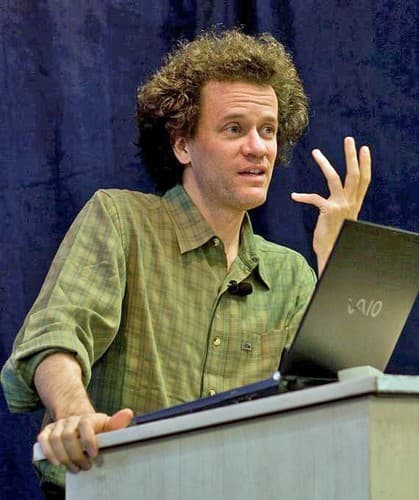
Yann Martel, is a Canadian author who wrote the Man Booker Prize–winning novel Life of Pi, an international bestseller published in more than 50 territories. It has sold more than 12 million copies worldwide and spent more than a year on the bestseller lists of the New York Times and The Globe and Mail, among many other best-selling lists. Life of Pi was adapted for a movie directed by Ang Lee, garnering four Oscars including Best Director and winning the Golden Globe Award for Best Original Score.







