“What do you want, you dope? Do you want to be like everybody else? Be the only one of your kind. Be an individual! Be a person! You are a man, aren't you?”
— Wilhelm's father, Dr. Adler, tries to offer advice, albeit with a harsh tone.


Saul Bellow (1956)
Genre
Literary Fiction
Reading Time
90 min
Key Themes
See below
Sign in to track this book
On one day in New York City, Tommy Wilhelm, a failed actor and salesman, faces his past and his problems in a desperate, funny, and sad search for self-worth.
Wilhelm Adler, a portly man in his mid-forties, wakes in his room at the Hotel Gloriana on New York's Upper West Side, a hotel where his father, Dr. Adler, also lives. Wilhelm, who prefers to be called Tommy, is worried about money and his failing career. He has invested his last savings in a commodities market venture with Dr. Tamkin, a questionable psychiatrist and self-proclaimed philosopher he met at the hotel. Tommy thinks about his past failures: his acting career, his bad marriage to Margaret, and his inability to find steady work. His father constantly criticizes his choices and money problems, making Tommy feel worse about himself. This morning, he is especially worried about the market and the money he gave to Tamkin, his last hope for things to get better.
Tommy joins his father, Dr. Adler, for breakfast in the hotel dining room. Their interaction is tense, as always. Dr. Adler, a successful retired doctor, is well-dressed and seems superior, while Tommy feels messy and inadequate. Their conversation quickly turns into Dr. Adler's usual complaints about Tommy's choices: his divorce from Margaret, his financial instability, and his inability to 'make something of himself.' Tommy tries to explain his situation and his investment with Tamkin, hoping for understanding or even financial help, but his father dismisses him and offers only more criticism. This strengthens Tommy's feelings of failure and his inability to please his demanding father.
After the disheartening breakfast, Tommy looks for Dr. Tamkin, wanting news about their investment. He finds Tamkin talking loudly in the hotel lobby, surrounded by other residents. Tamkin, a man of dramatic gestures, presents himself as a multi-talented person: a psychologist, a philosopher, an inventor, and a financial expert. He speaks in a mix of profound-sounding sayings and practical advice, often contradicting himself. Tamkin assures Tommy that their investments are doing well, despite no clear proof, and continues to offer his unique wisdom. Tommy, desperate for a solution to his money problems, clings to Tamkin's words, even with a growing unease about the man's honesty and the actual state of his money. Tamkin's charming but elusive nature keeps Tommy hopeful but increasingly anxious.
Tommy gets a call from his estranged wife, Margaret, who lives in Philadelphia with their two sons. Margaret, a manipulative woman, will not grant Tommy a divorce without a large financial settlement, which he cannot afford. She uses their children to pressure him, reminding him of his duties and her own struggles. This call adds more stress to Tommy's already overwhelming day. He feels trapped by her demands and unable to move forward with his life, especially his desire to marry his current girlfriend, Olive. Margaret's constant pursuit of money and her refusal to compromise show Tommy's inability to control his own life and escape his past burdens, further cementing his feelings of helplessness and financial despair. The call leaves him feeling drained and more aware of his difficult position.
Tommy goes with Dr. Tamkin to the New York Mercantile Exchange. The busy, chaotic trading floor overwhelms Tommy, a sharp contrast to his own failing life. Tamkin, however, seems comfortable, making quick decisions and placing orders. Tommy watches, fascinated and increasingly anxious, as Tamkin trades their money. Tamkin offers explanations and philosophical thoughts about the market, but Tommy struggles to understand the complex deals. He trusts Tamkin completely, hoping for a miraculous recovery of his money. As the day progresses, Tamkin's initial optimism fades, and Tommy's anxiety grows, his future depending on the market's unpredictable movements and Tamkin's questionable expertise. The noise and energy of the exchange amplify his feelings of vulnerability.
During a brief lunch break, Dr. Tamkin shares his theories with Tommy, especially his idea of the 'real' and 'pretended' self. Tamkin says everyone has a 'pretended' self, the identity they show the world, and a 'real' self, their true inner being. He suggests Tommy, like many, is too focused on his 'pretended' self, always trying to meet outside expectations and failing to recognize his true desires. Tamkin encourages Tommy to accept his 'real' self and stop seeking outside approval. While Tommy finds some of Tamkin's ideas interesting, he suspects Tamkin himself is a master of the 'pretended' self, using his theories to manipulate. This talk provides a momentary break from money worries, but also highlights Tamkin's mysterious and possibly deceptive nature.
Back at the exchange, the market turns against their positions. Small losses quickly grow. Tommy, who has been watching, becomes agitated. He presses Tamkin for details, but Tamkin remains vague, offering reassurances and philosophical sayings. Tommy's thoughts are filled with self-blame, regret, and panic. He realizes his entire savings, his last chance at financial stability, are quickly disappearing. The chaotic energy of the trading floor now feels threatening, reflecting his inner turmoil. He starts to suspect Tamkin is not as smart as he claims, or perhaps even dishonest. The hope he had placed in Tamkin and the market turns into despair as his impending financial ruin becomes clear. He feels helpless as his fate is decided by forces beyond his control.
As losses grow and their investment is wiped out, Tommy confronts Dr. Tamkin, demanding answers. Tamkin offers no good explanations, only more evasive remarks and a sudden need to deal with a 'personal matter.' He assures Tommy he will return soon. Tommy waits anxiously, but Tamkin never reappears. Tommy realizes he has been swindled. His entire remaining money is gone, stolen by the charming con artist. This betrayal is devastating, confirming his deepest fears of inadequacy and his inability to make good decisions. He is left alone, financially ruined, and utterly exposed. The feeling of loss goes beyond the money; it's a loss of trust, hope, and any remaining self-respect he had. He is left with nothing but the bitter taste of his own gullibility.
After losing his money, a desperate Tommy goes to his father, Dr. Adler, seeking help. He tries to explain what happened, hoping for sympathy or financial aid. However, Dr. Adler is unsympathetic and dismissive. He repeats his long-held belief that Tommy is a failure, criticizing his lack of foresight and poor choices, especially his trust in Tamkin. Dr. Adler refuses to lend him any money, saying he has his own financial duties and that Tommy must learn to stand on his own. This rejection from his own father is a crushing blow, confirming Tommy's deepest fears of being unloved and unsupported. It shows the deep emotional distance between them and leaves Tommy feeling utterly alone and without any family support, increasing his despair and isolation.
Wandering aimlessly and feeling lost after his father's rejection, Tommy finds a funeral home where a service for a stranger is taking place. He enters the viewing room and sees the deceased man in the casket. Overwhelmed by his own grief, despair, and a lifetime of disappointments, Tommy begins to weep uncontrollably. He is not mourning the stranger, but his own life, his failures, his lost potential, and the heavy weight of his unfulfilled existence. The tears flow freely, an emotional release. This moment of raw, public grief, witnessed by strangers, allows Tommy to finally acknowledge his deepest sorrows without pretense. It is a powerful experience, a recognition of his shared humanity and mortality, and perhaps a first step towards true self-acceptance, even in deep sorrow.
As Tommy continues to weep at the funeral, he feels a deep connection. The anonymous deceased man, the other mourners, and even the city sounds outside blend into a larger picture of human experience. He feels intense empathy, not just for the dead man, but for all humanity's struggles and sorrows. This moment goes beyond his personal failures and financial ruin, offering a glimpse into universal suffering and the value of life itself. The tears, at first from personal despair, turn into a recognition of how all beings are connected. It is a spiritual awakening of sorts, a realization that despite his individual pain, he is part of something larger, a universal current of life and death, joy and sorrow. This unexpected insight offers a glimmer of meaning amidst his personal desolation.
Tommy's weeping at the funeral home continues, deep and unrestrained. The tears are no longer only for his specific losses, but for a general human condition, for life's brevity and suffering's inevitability. This long, intense emotional release marks a breaking point, a moment where the accumulated pressures and disappointments of his life finally find an outlet. It is a surrender to his true feelings, a shedding of the 'pretended self' that Dr. Tamkin spoke of. In this raw, vulnerable state, Tommy feels a strange peace. He is no longer fighting his circumstances or trying to project an image of success. He is simply experiencing himself, fully and honestly, in his grief. This moment of deep self-acceptance, born from despair, marks a turning point, suggesting future growth and a deeper understanding of what it means to truly 'seize the day,' not through superficial success, but by embracing the full range of human experience.
The Protagonist
Tommy moves from a state of intense anxiety, self-pity, and financial desperation to a moment of profound, cathartic emotional release and self-acceptance, recognizing his shared humanity despite his failures.
The Supporting
Dr. Adler remains largely static, representing an unchanging, critical force in Tommy's life, never offering the validation his son desperately seeks.
The Antagonist/Supporting
Tamkin is a static character, serving as a catalyst for Tommy's financial ruin and emotional breakdown, ultimately revealing his true nature as a fraud.
The Supporting/Mentioned
Margaret remains a constant, unseen obstacle, symbolizing Tommy's inability to escape the burdens of his past.
The Mentioned
Rappaport's role is static, serving as a background figure who reflects the broader vulnerability of the hotel residents.
The Mentioned
Olive remains a distant hope for Tommy, her presence highlighting his desire for a new life.
Tommy's entire day is driven by his desperate need to prove his worth, both to himself and to others, especially his father. He constantly seeks outside approval through financial success or his father's acceptance. His past failures in acting and marriage contribute to a deep feeling of inadequacy. The novel explores how hard it is to build a stable identity in a world that often measures worth by material success. Tommy's struggle to balance his 'real' self with his 'pretended' self, as Tamkin discusses, is central to his journey. His eventual breakdown at the funeral home, where he drops all pretense, shows a key step toward true self-acceptance, even in failure.
“What do I want to be? I don't know. What do I want to be? I'm not a kid anymore. I'm a man. I'm a man, and I'm a failure. That's what I am.”
The tense relationship between Tommy and his father, Dr. Adler, is a major theme. Dr. Adler's constant criticism, lack of empathy, and focus on traditional success have deeply affected Tommy's self-esteem. Tommy longs for his father's approval and financial help but consistently receives only judgment and scorn. This dynamic shows the destructive power of parental expectations and the lasting psychological harm they can cause. Dr. Adler represents a father figure who cannot understand or accept his son's weaknesses, forcing Tommy to face his failures alone. His father's rejection after losing his money is a turning point, pushing Tommy to his emotional limit.
“He wanted to be loved, but he could not say the words. He wanted to be helped, but he could not ask for it. He wanted to be understood, but he could not explain himself.”
The novel criticizes the American obsession with material success and the idea that wealth equals happiness or worth. Tommy's desperate pursuit of money through the commodities market, his father's respect for financial stability, and Margaret's demands for a settlement all highlight this theme. Dr. Tamkin, with his grand statements and ultimately fraudulent schemes, embodies the deceptive appeal of quick riches. The hotel itself, with its older residents clinging to past glories or illusions of wealth, is a small example of this societal value system. Tommy's financial ruin strips away these illusions, forcing him to confront the emptiness of a life defined only by money.
“Oh, Father, what do I want with money? Just let me out of this. Let me out of this, Father, and I'll go to work. I'll take any job. I'll clean the streets.”
Tommy is constantly burdened by his past failures: his acting career, his bad marriage to Margaret, and his inability to find steady work. These past events stop him from moving forward, emotionally and financially. He is paralyzed by regret and a sense of missed chances. His inability to finalize his divorce from Margaret due to money problems further traps him. The story emphasizes how unresolved issues and past decisions can haunt a person, making it hard to 'seize the day' and accept new possibilities. Tommy's journey is one of struggling to break free from these historical chains.
“He had a right to be happy, but he was afraid of happiness. He had a right to be free, but he was bound by his own past.”
Beneath Tommy's immediate financial and family worries is a deeper anxiety about his life's meaning and his place in the world. His constant self-questioning and feelings of isolation reflect a deep sense of loneliness. However, the novel ends with an unexpected moment of deep human connection at the funeral home. In his raw grief for a stranger, Tommy goes beyond his personal suffering and feels a universal empathy for humanity. This suggests that true meaning and connection can be found not in external achievements, but in the shared experience of suffering and the recognition of our common mortality. It's a moment of 'seizing the day' not through success, but through authentic emotional experience.
“He was weeping. He was weeping and it was his own life that he was weeping for. The tears were for him. For his own life. For his own death. For his own humanity.”
A narrative technique that mirrors the character's continuous flow of thoughts and feelings.
The novel is largely told through Wilhelm's stream of consciousness, providing direct access to his anxieties, self-recriminations, memories, and hopes. This technique immerses the reader in Tommy's subjective experience, revealing his inner turmoil, his fragmented thoughts, and his desperate search for meaning. It allows Bellow to explore Tommy's psychological state in depth, showing rather than telling his emotional distress and the constant internal dialogue that plagues him. This device is crucial for understanding Tommy's character and the intense pressure he feels throughout the single day the story covers.
The entire narrative unfolds within a compressed 24-hour period.
The story takes place over the course of a single, climactic day in Tommy's life. This compressed timeframe intensifies the drama and heightens the sense of urgency, as Tommy's fate seems to be decided within these few hours. It forces a concentrated focus on his immediate anxieties and decisions, making every interaction and event feel momentous. The single-day structure also allows for a deep dive into Tommy's psychological state, as past events and long-standing conflicts are brought to the surface and confronted within this intense period, culminating in his emotional breakdown and potential breakthrough.
The hotel represents a transient, liminal space for its residents.
The Hotel Gloriana serves as a significant symbol. It is a residential hotel for many elderly or transient individuals, including Tommy and his father. It represents a place where people are either in the twilight of their lives, clinging to past glories, or, like Tommy, in a state of limbo, unable to find a stable place in the world. It's a place of temporary residence, reflecting the impermanence and uncertainty of its inhabitants' lives. The hotel's somewhat faded grandeur and its mix of residents also highlight themes of aging, loneliness, and the search for connection in a fragmented society, mirroring Tommy's own existential unease.
The chaotic trading floor symbolizes life's unpredictable nature and Tommy's lack of control.
The New York Mercantile Exchange, where Tommy loses his money, functions as a powerful metaphor for the unpredictable and often cruel forces that govern Tommy's life. The chaotic, noisy environment, driven by speculation and chance, reflects Tommy's own internal turmoil and his lack of control over his destiny. His passive observation of the trades, his inability to understand the market, and his ultimate ruin mirror his broader inability to navigate the complexities of his life. It symbolizes the arbitrary nature of fortune and the dangers of placing one's faith in external, uncontrollable forces for self-worth and salvation.
The unexpected visit to the funeral home provides a moment of profound emotional release.
The funeral home serves as the ultimate catalyst for Tommy's emotional breakthrough. Stumbling into a stranger's funeral, Tommy experiences a profound catharsis, weeping not just for his own losses but for the universal human condition. This setting, representing death and mourning, paradoxically becomes a place of life and spiritual awakening for Tommy. It allows him to shed his 'pretended self' and embrace his 'real' self in a moment of raw, uninhibited grief. It symbolizes a stripping away of all pretense and a confrontation with fundamental human realities, leading to a moment of profound, if sorrowful, self-acceptance and connection to humanity.
“What do you want, you dope? Do you want to be like everybody else? Be the only one of your kind. Be an individual! Be a person! You are a man, aren't you?”
— Wilhelm's father, Dr. Adler, tries to offer advice, albeit with a harsh tone.
“He was a man to whom things did not happen. He was a man to whom he happened.”
— A reflection on Wilhelm's passive role in his own life.
“He had to do something, but he did not know what. He had to change his life, but he did not know how.”
— Wilhelm's internal struggle and sense of paralysis.
“The world, the real world, was a terrible place, full of terrible things, and it was getting worse all the time.”
— Wilhelm's pessimistic view of his surroundings and society.
“A human being, any human being, is a world, a universe, and in that universe there are other universes, and in them still others.”
— A philosophical reflection on the complexity of individuals.
“He was a man who had lost his name, his money, his wife, his children, his profession, his health, his youth, his dreams, his hopes, his future.”
— A poignant summary of Wilhelm's many losses.
“The greatest part of our misery comes from our efforts to escape from it.”
— A commentary on the human tendency to exacerbate suffering through avoidance.
“He often wondered what kind of life he would have had if he had not been born into this one.”
— Wilhelm's recurring thoughts about alternative paths and regrets.
“He felt a great flow of grief go out of him, and tears that he had been holding back for twenty years.”
— Wilhelm's emotional release at the end of the novella, amidst a stranger's funeral.
“It was a time when he had to be strong, but he was weak. It was a time when he had to be brave, but he was afraid.”
— Wilhelm's self-assessment of his inability to meet life's challenges.
“He had always been a man of projects, of schemes, of plans, but none of them had ever come to anything.”
— A reflection on Wilhelm's history of failed ambitions.
“He was a man who longed for peace, but he found only strife.”
— Wilhelm's constant search for tranquility amidst his chaotic life.
“He had a sense of being watched, of being judged, of being found wanting.”
— Wilhelm's pervasive feeling of external scrutiny and self-doubt.
“He felt as if he were trying to swim in a sea of molasses.”
— A metaphor for Wilhelm's feeling of being trapped and unable to move forward.
Ready to see how well you understood this book? Take our interactive quiz with 10 questions.
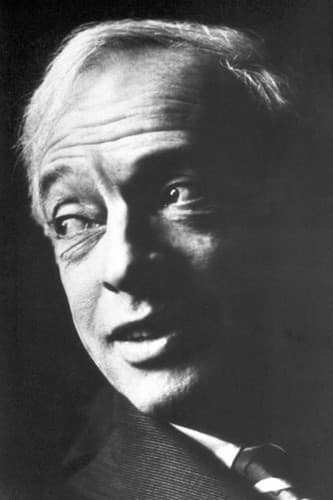
Saul Bellow was a Canadian–American writer. For his literary work, Bellow was awarded the Pulitzer Prize, the Nobel Prize for Literature, and the National Medal of Arts. He is the only writer to win the National Book Award for Fiction three times, and he received the National Book Foundation's lifetime Medal for Distinguished Contribution to American Letters in 1990.







