“I say, 'God, I need a sign. I'm not asking for a burning bush, just a little flicker.'”
— Kim's internal thoughts as she decides to plant lima beans.

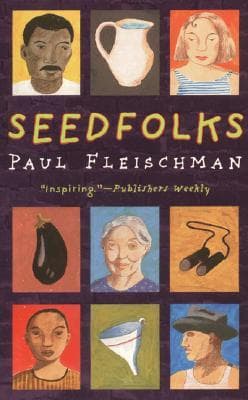
Paul Fleischman (1997)
Genre
Children's / Young Adult
Reading Time
60 min
Key Themes
See below
Sign in to track this book
In a neglected Cleveland lot, a Vietnamese girl's single act of planting lima beans grows into a community garden, connecting thirteen strangers who find purpose and belonging.
Kim, a nine-year-old Vietnamese-American girl, lives in an immigrant neighborhood in Cleveland. In April, she plants six lima beans in a trash-filled lot near her home. She wants to remember her father, a farmer in Vietnam who died before she was born. She digs small holes, places the seeds, and covers them, hoping to create a tribute her father might see. This act starts the community garden.
Ana, an elderly Romanian woman who has lived in the neighborhood for decades, watches Kim from her apartment. Because of her poor eyesight and the neighborhood's decline, she first thinks Kim is burying drugs or money. Curious and feeling responsible, Ana rushes out, digs up the beans, and realizes her mistake. Ashamed, she reburies them, promising to protect them. She becomes the garden's first accidental guardian.
Wendell, an elderly white school janitor, is Ana's neighbor. Ana calls him for help after realizing her mistake with Kim's plants. Wendell feels overwhelmed by the constant tragedies in his life, including the loss of his wife and son, and the neighborhood's problems. However, Ana's request for help with the lima bean plants moves him. He gets water for the struggling plants, seeing a small chance to make a positive difference.
Gonzalo, a young Guatemalan boy, describes his family's challenges adapting to American culture, especially his great-uncle Juan, who is confused in the new environment. Gonzalo sees how the garden starts to connect cultures and give people purpose. When his great-uncle Juan, who was a farmer in Guatemala, starts working in the garden, he changes from helpless to a respected elder. This shows the garden's power to restore dignity and connect people to their heritage, regardless of language.
Leona, an African-American woman, sees the few struggling plants in the lot and wants to act against the trash. After the city doesn't respond, she takes a bag of the lot's garbage, including a rat, to a city council meeting and dumps it on the table. Her bold action prompts officials to provide tools and a dumpster for a clean-up. This officially turns the vacant lot into a usable garden space.
Sam, an optimistic, elderly Jewish man and retired peace activist, sees the garden as a symbol of community and harmony. He hires a Puerto Rican teenager to help him plant pumpkins and other easy vegetables. Sam actively tries to break down social barriers, starting conversations with people from different backgrounds. He sees the garden as a place where people can connect and overcome biases, building understanding and cooperation among the diverse gardeners.
Virgil, a young Haitian-American boy, and his taxi-driver father are new gardeners. Virgil's father is ambitious and sees the garden as a way to earn money, so he plants a large crop of lettuce. Virgil helps his father, but also feels pressure and worries about failure. Their lettuce thrives at first but then wilts in the summer heat, teaching them about farming challenges and nature's unpredictability, but also showing their shared effort.
Sae Young, a Korean woman, tells of being robbed twice and her resulting fear and isolation. She finds comfort in the garden, which reminds her of her childhood in Korea. Though shy at first, she slowly opens up, finding solace in the shared work and quiet company of other gardeners. The garden becomes a safe place where she feels connected to humanity again, helping her overcome fear and loneliness.
Curtis, a muscular young African-American man, wants to win back his ex-girlfriend, Lateesha, whom he had taken for granted. He decides to plant her favorite tomatoes in the garden. To protect them, he hires a homeless teenager, Royce, to guard his plants, giving Royce a sleeping bag and some money. This act of care, driven by his desire to reconcile with Lateesha, shows his growth and new responsibility.
Nora, an English nurse, brings her elderly, disabled patient, Mr. Myles, to the garden. Mr. Myles, in a wheelchair, first seems withdrawn. However, as they spend time in the garden, surrounded by nature and community, Mr. Myles shows signs of life, offering advice and helping to plant. Nora sees his change, realizing the garden's healing power to bring joy and connection to those who feel isolated, affirming community's importance.
Maricela, a pregnant sixteen-year-old Latina girl, feels lost and resentful. She is in a program for pregnant teenagers and is brought to the garden by her counselor, Leona. Maricela initially feels out of place and alone, struggling with her identity and future. However, through talking with other gardeners, especially older women, she begins to feel accepted. The garden helps her connect with life's cycle and find hope for her future and her child's.
Amir, an Indian immigrant and fabric store owner, describes the garden's beauty as it grows through the summer. He tells how the garden becomes a center for the diverse community, a place where people from different backgrounds gather, share stories, and overcome initial suspicions. He recalls a moment when a Puerto Rican man and a Vietnamese woman, initially wary, bond over gardening, showing the garden's power to build inter-ethnic friendship.
Florence, an African-American woman whose ancestors were Ohio pioneers, is the final narrator. She watches the garden as winter approaches, noting how plants die back and gardeners leave, but the garden's spirit remains. She thinks about life's cycles and the resilience of nature and people. Florence collects seeds from the dried plants, ensuring the garden's return next spring. This symbolizes the lasting impact of the community's shared work.
The Protagonist/Catalyst
Kim begins as an isolated child seeking personal connection and becomes the unintentional founder of a thriving community space.
The Supporting
Ana moves from suspicion and isolation to becoming a guardian of the garden and an active participant in the community.
The Supporting
Wendell moves from passive grief to active participation, finding a small measure of hope and purpose.
The Supporting
Gonzalo observes the garden's ability to bridge cultural gaps and restore dignity, particularly for his great-uncle.
The Supporting
Leona transforms from an individual observer to an effective community organizer, leading the initial clean-up effort.
The Supporting
Sam actively champions the garden as a place for social connection and community building.
The Supporting
Curtis evolves from a self-absorbed individual to one demonstrating responsibility and genuine affection through his gardening efforts.
The Supporting
Amir experiences and articulates the garden's transformative power in uniting diverse individuals.
The Supporting/Narrator
Florence provides a reflective, historical perspective, emphasizing the garden's enduring legacy and the promise of renewal.
A main theme of 'Seedfolks' is the power of community to connect diverse individuals. The garden helps break down barriers of race, age, and language. At first, characters are isolated, like Ana watching from her window or Sae Young feeling fearful after being robbed. But the shared goal of gardening makes them interact, leading to understanding and support. For example, Sam actively tries to connect people, and Amir sees unlikely friendships form, like the Puerto Rican man and Vietnamese woman sharing gardening tips. The garden becomes a symbol of their collective effort and shared humanity.
“A garden is a grand teacher. It teaches patience and careful watchfulness; it teaches industry and thrift; above all it teaches entire trust.”
The garden symbolizes hope and renewal in a neglected urban area. Kim's act of planting, driven by grief, starts a chain reaction of hope. Characters like Wendell, burdened by loss, find purpose in tending plants. Maricela, a pregnant teenager feeling hopeless, finds acceptance and a connection to life's cycle in the garden. The transformation of a trash-filled lot into a living space shows that even in despair, new life and possibilities can emerge, offering a fresh start for both the land and its people.
“The garden was a place to grow things, but it was also a place to grow people.”
Many characters in 'Seedfolks' are immigrants or children of immigrants, and the book explores their struggles with identity and fitting in. Gonzalo describes the challenges his great-uncle Juan faces, feeling lost until he reconnects with his farming identity in the garden. Sae Young, a Korean immigrant, finds comfort and belonging in the garden after experiencing isolation and fear. The garden provides common ground where diverse cultural practices, especially farming traditions, are shared and valued. This allows individuals to keep parts of their heritage while joining a new community. It becomes a place where their unique identities are celebrated.
“Neighbors change. But a garden, once planted, is a garden forever.”
Nature, specifically gardening, has great power to heal, connect, and transform. The simple act of planting a seed brings people together. The natural cycles of growth and decay, seen in Virgil's wilting lettuce or Florence's thoughts on winter, teach patience, resilience, and acceptance of life's changes. The garden offers a therapeutic escape from city problems and personal hardship, as Mr. Myles finds new life. It shows how connecting with the earth can ground people, foster responsibility, and deepen appreciation for life.
“A seed is a miracle of creation.”
Each chapter is told by a different character, offering unique perspectives.
The novel employs a unique narrative structure where each of the thirteen chapters is narrated in the first person by a different character. This device allows the reader to experience the growth of the garden and the community from a multitude of cultural, generational, and personal viewpoints. It emphasizes the diversity of the neighborhood and how each individual's unique background and experiences contribute to the collective story, fostering empathy and understanding. This fragmented yet interconnected storytelling mirrors the patchwork nature of the garden itself.
The garden represents community, hope, and the cycle of life.
The community garden is the central symbolic element of the novel. It initially represents a neglected urban space, but through collective effort, it transforms into a vibrant symbol of hope, renewal, and inter-ethnic harmony. The act of planting seeds symbolizes new beginnings and the potential for growth, both literally for the plants and metaphorically for the characters and their relationships. The garden's ability to bring diverse people together to cultivate life reflects the growth of a strong, interconnected community, overcoming initial prejudices and isolation.
Kim's initial planting of lima beans serves as the catalyst for the entire story.
The six lima beans that Kim plants are not just a crop; they are the literal 'seed' of the entire narrative. This seemingly small, personal act of remembrance for her father becomes the catalyst that draws in Ana, then Wendell, and eventually the entire neighborhood. The vulnerability of these initial plants, and Ana's subsequent protection of them, highlights how a tiny, individual action can have profound, far-reaching consequences, sparking a movement that transforms a desolate space and brings a diverse community together.
The story unfolds over a year, mirroring the natural cycles of growth and change.
The narrative of 'Seedfolks' follows the natural progression of seasons, beginning in April with Kim's planting and concluding the following winter with Florence's observations. This device underscores the themes of growth, change, and renewal. The flourishing of the garden during spring and summer reflects the burgeoning community spirit, while the decline in winter symbolizes the temporary dormancy but also the promise of future rebirth. The cyclical nature of the seasons mirrors the enduring resilience of the community and the ongoing process of life and death.
“I say, 'God, I need a sign. I'm not asking for a burning bush, just a little flicker.'”
— Kim's internal thoughts as she decides to plant lima beans.
“The first thing I did was try to find a place to plant my seeds. It was hard to find a good spot.”
— Kim's initial struggle to find fertile ground in the vacant lot.
“A man needs a place to plant his heart, even if it's just a garden.”
— Gonzalo reflects on Tío Juan's transformation through gardening.
“He didn't speak English. I didn't speak his language. But we understood each other perfectly.”
— Ana observes the interaction between Tío Juan and the garden.
“We were a bunch of strangers, all working together, even if we didn't know each other's names.”
— Wendell's observation of the diverse group in the garden.
“The garden was like a magnet. It pulled people in.”
— Sae Young reflects on how the garden attracted different people.
“I realized that she wasn't just planting seeds. She was planting hope.”
— Sam's realization about the significance of Kim's actions.
“It was like a little piece of home, right here in the middle of the city.”
— Virgil's mother's feelings about their garden plot.
“The garden was proof that you could make something beautiful out of nothing.”
— Curtis's thoughts on the transformation of the vacant lot.
“You can't just plant a seed and walk away. You have to tend it.”
— Leona's wisdom about the effort required for gardening and life.
“The garden was a place where people could leave their worries behind.”
— Maricela's perspective on the garden's therapeutic effect.
“It didn't matter what color your skin was, or what language you spoke. In the garden, we were all just gardeners.”
— Amir's reflection on the garden as a unifying force.
“I saw a whole new world opening up, right there in the middle of the city.”
— Florence's final thoughts on the future of the garden.
Ready to see how well you understood this book? Take our interactive quiz with 10 questions.

Biography coming soon.
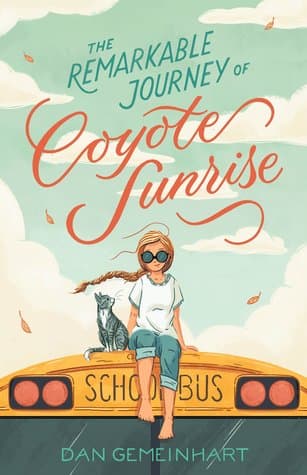
Dan Gemeinhart
4.5

Kate O'Hearn
4.4
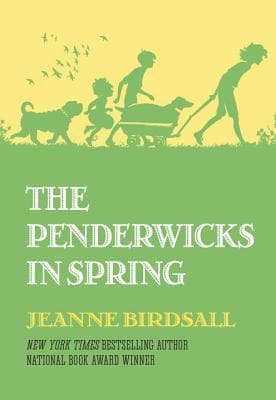
Jeanne Birdsall
4.4

Jen Wang
4.4

Wendelin Van Draanen
4.3

John Marsden
4.3

Chris Van Allsburg
4.3
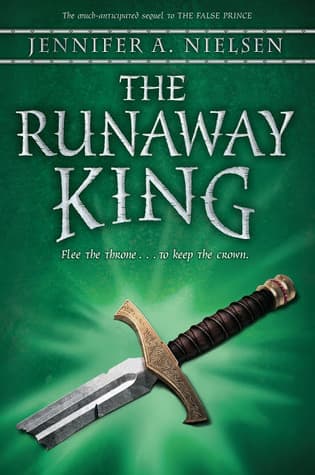
Jennifer A. Nielsen
4.2