“There’s always another secret.”
— Kelsier's famous mantra, often repeated throughout the Cosmere.

Brandon Sanderson (2016)
Genre
Fantasy
Reading Time
120 min
Key Themes
See below
Sign in to track this book
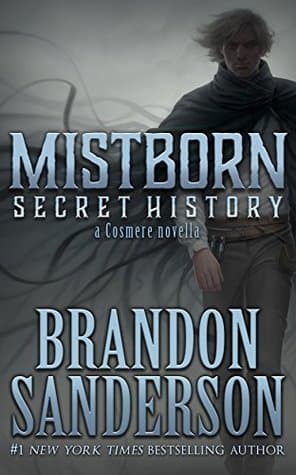
Follow a spectral Kelsier after his death as he uncovers the true forces behind Scadrial's destiny and the gods who control it.
Immediately after the Lord Ruler kills him in Luthadel, Kelsier wakes up as a Cognitive Shadow, a spiritual remnant tied to the Cognitive Realm. He sees his own funeral and Vin and Elend's grief, feeling frustrated that he cannot interact with the physical world. A mysterious, hooded figure approaches him, revealing himself as Preservation, one of the two Shards of Adonalsium that created Scadrial. Preservation explains Kelsier's state and the serious cosmic issues from the Lord Ruler's defeat and Ruin's coming threat.
Preservation, weak and dying, tells Kelsier about the Cosmere, other Shards, and the old agreement with Ruin to create Scadrial. He explains that Ruin has been manipulating events for centuries, including the Lord Ruler's rule, and is now ready to escape its prison at the Well of Ascension. Preservation asks Kelsier to watch and, if possible, influence events to stop Ruin, even though Kelsier's powers in the Cognitive Realm are very limited. Kelsier, always a rebel, accepts this new mission, driven by his hate for tyranny and his wish to protect his friends.
Kelsier watches Vin's journey to the Well of Ascension, seeing her struggles with the Terrismen and Ruin's growing influence. He sees her being tricked by the false 'Hero of Ages' prophecy, twisted by Ruin to ensure its release. Kelsier feels helpless as he watches Vin decide to release the power from the Well, accidentally freeing Ruin. He tries to warn her, to scream at her, but his voice is unheard in the physical realm. This moment deeply frustrates Kelsier, making him want to find a way to interact with the world.
After Ruin's release, Kelsier has his first direct, though non-physical, meeting with the evil Shard. Ruin taunts Kelsier, saying it has always known about Kelsier's presence in the Cognitive Realm and has been manipulating events on Scadrial for thousands of years. Ruin shows its power by subtly influencing people's thoughts and actions, further showing Kelsier's helplessness. This meeting strengthens Kelsier's resolve to fight Ruin, even from his spectral state, and he begins to actively look for ways to intervene.
Wanting to understand his new existence and find a way to fight Ruin, Kelsier explores the Cognitive Realm. He eventually finds a hidden fortress, a pocket dimension within the Cognitive Realm, inhabited by the Ire. These beings are Elantrians, powerful individuals from another world, Sel, who are trying to steal Preservation's power for themselves. Kelsier, always seeing opportunities, sees a way to gain power and influence.
Kelsier watches the Ire's plan to channel Preservation's power, which is now gathering around Vin. Realizing their interference could doom Scadrial, Kelsier uses his limited abilities to subtly disrupt their efforts. He gets their attention, creating a distraction that allows Vin to fully take Preservation's power, stopping the Ire from stealing it. This is Kelsier's first important, though indirect, intervention in the physical world, showing his continued importance.
Kelsier watches with dread and hope as Vin, now with Preservation's full power, faces Ruin in a final battle. He sees the destruction Ruin causes and the sacrifices his friends make. He is in the Cognitive Realm when Vin makes the ultimate sacrifice, using the last of Preservation's power to trap Ruin. Kelsier then sees Sazed, who, by taking up both Shards, becomes Harmony, the new god of Scadrial. Kelsier feels a deep sense of closure and a new understanding of the Cosmere.
After becoming Harmony, Sazed talks directly with Kelsier, acknowledging his vital role in the events. Harmony explains that Kelsier, as a Cognitive Shadow sustained by Preservation's power, can keep existing. Harmony offers Kelsier a new goal: to find other Shards and protect Scadrial from outside threats. Kelsier, taking on his new role as a 'Cognitive Shadow with a mission,' begins a journey into the wider Cosmere, leaving Scadrial but always watching. He keeps one secret: the ability to touch the physical realm.
The story hints at Kelsier's future work, especially his eventual creation of the Ghostbloods, an organization focused on understanding and manipulating the Cosmere. His experiences in the Cognitive Realm, his interactions with the Ire, and his new knowledge of Shards and Investiture set the stage for his continued influence across the Cosmere. The story ends with Kelsier, still himself, showing the spirit of a survivor who refuses to stay dead and keeps fighting for what he believes in, even on a cosmic scale.
The Protagonist
From a vengeful revolutionary, Kelsier evolves into a cosmic guardian, embracing a larger role in the Cosmere while retaining his core personality.
The Supporting
Preservation's arc concludes with its ultimate sacrifice, merging with Ruin to form Harmony, fulfilling its purpose.
The Antagonist
Ruin's arc culminates in its final defeat and absorption by Sazed, becoming part of Harmony.
The Supporting
Vin's arc of becoming the Hero of Ages and making the ultimate sacrifice is viewed through Kelsier's perspective.
The Supporting
Sazed's arc culminates in his ascension to godhood, becoming Harmony and setting a new cosmic order.
The Mentioned
Their attempt to steal Preservation's power is foiled by Kelsier, preventing a major cosmic interference.
The story explores what happens after death in the Cosmere, specifically the idea of Cognitive Shadows. Kelsier's continued existence as a Cognitive Shadow challenges traditional ideas of death, showing that it is not always a final end. His initial frustration at his helplessness and his later adaptation highlight the big change in his being. This theme is key to Kelsier's character arc, as he must accept his new, ethereal existence and find meaning in it. His ability to live on past physical death shows his strong will and connection to Investiture.
“'There's always another secret.'”
The narrative looks at the complex relationship between the cosmic powers of the Shards (Preservation and Ruin) and the free will of mortals. Kelsier sees how Ruin subtly manipulates individuals and events, twisting prophecies and influencing thoughts. His own struggle to intervene shows the limits of even powerful beings when Shardic influence is present. The story questions how much control individuals truly have when god-like entities are involved, and how even small, indirect actions (like Kelsier's) can have big cosmic effects, leading to Sazed's unique ascension as Harmony.
“'Ruin has been guiding this for centuries, Kelsier. Every step. Every decision. Every prophecy.'”
Kelsier's journey is about finding purpose after what he thought was his end. Without his body and unable to fight directly, he first struggles with helplessness. However, his natural drive to protect Scadrial and its people makes him look for new ways to help. His acceptance of Preservation's mission and his eventual role as a 'Cognitive Shadow with a mission' show a strong will to keep fighting for what he believes in, even in a new form. This theme connects with his 'Survivor' persona, proving his spirit is unbreakable, no matter his physical state.
“'I died, but I didn’t stop fighting.'”
Secret History acts as an important link, expanding the Mistborn world into the larger Cosmere. Through Kelsier's experiences, readers learn about Cognitive Shadows, Shards, Investiture, and other worlds (like Sel, through the Ire). The story reveals that Scadrial is not alone but part of a vast, connected universe. This theme changes the view from one planet's struggle to a grander cosmic story, setting up future Cosmere series and giving new meaning to events from the original trilogy within a much larger framework.
“'There are other worlds, Kelsier. Other Shards. Other dangers.'”
A spiritual remnant of a deceased individual, tethered to the Cognitive Realm.
Kelsier's existence as a Cognitive Shadow is the central plot device. It allows him to persist after death, observe events, and interact indirectly with the Cosmere. This state grants him unique perceptions and limited abilities within the Cognitive Realm, but prevents direct physical interaction, creating dramatic tension and forcing him to find creative solutions. It's a key concept for understanding the nature of Investiture and consciousness in the Cosmere, explaining how powerful individuals can endure beyond their physical bodies.
An alternate dimension where thoughts and intentions have physical form.
This realm serves as Kelsier's primary setting and playground. It is a dimension where the 'beads' of the physical world manifest and where the thoughts and spirits of sentient beings coalesce. Kelsier's ability to traverse and perceive within Shadesmar allows him to witness events on Scadrial, encounter other entities like the Ire, and learn about the wider Cosmere. It provides the mechanism for his continued involvement in the story and his eventual journey beyond Scadrial.
Fragments of a shattered cosmic entity, embodying fundamental forces.
The Shards of Adonalsium, specifically Preservation and Ruin, are the driving forces behind the events of the Mistborn trilogy and Kelsier's post-mortem journey. Their existence and conflict define Scadrial's reality and Kelsier's mission. Understanding their nature, their powers, and their limitations is crucial to the plot. This device elevates the stakes from a planetary conflict to a cosmic struggle for existence, revealing the true scale of the forces at play in the Cosmere.
Subtle and overt links to other worlds and stories within Brandon Sanderson's universe.
This novella is a masterclass in Cosmere connections. It explicitly introduces concepts and characters (like the Ire from Sel) that link Mistborn to other series. These connections serve to expand the reader's understanding of the larger fictional universe, hinting at a grander narrative and interconnected conflicts across different planets. It rewards long-time readers with answers and teases future developments, transforming individual series into chapters of a unified epic.
“There’s always another secret.”
— Kelsier's famous mantra, often repeated throughout the Cosmere.
“I am, unfortunately, the Hero of Ages.”
— Sarcastic remark from Sazed as he takes on a new, immense responsibility.
“The most important words a man can say are, 'I will do better.'”
— Kaladin's father, Lirin, often says this, emphasizing growth and self-improvement.
“Journey before destination.”
— The First Ideal of the Knights Radiant, a core philosophy in The Stormlight Archive.
“Life before death, strength before weakness, journey before destination.”
— The full First Ideal of the Knights Radiant.
“The purpose of a storyteller is not to tell you how to think, but to give you questions to think upon.”
— Hoid's perspective on the role of stories and art.
“A man can only be judged by what he does, not by what he says.”
— A common theme in many of Sanderson's works, emphasizing action over words.
“The greatest enemy is not the one who stands against you, but the one who stands beside you and betrays you.”
— A reflection on betrayal and trust, often seen in political intrigue in his books.
“Sometimes, the only way to win is to change the rules.”
— Kelsier's approach to seemingly impossible situations.
“The past is a memory, the future a dream. The present is all we have.”
— A philosophical reflection on time and living in the moment.
“Expectation is the thief of joy.”
— A lesson about managing expectations to avoid disappointment.
“Sometimes, the best way to save someone is to let them save themselves.”
— A difficult lesson in allowing others to grow and overcome their own challenges.
“The measure of a man is not how many times he falls, but how many times he gets back up.”
— A common inspirational message about resilience and perseverance.
“It is not the strength of the body that matters, but the strength of the spirit.”
— Emphasizing inner fortitude over physical might.
Ready to see how well you understood this book? Take our interactive quiz with 10 questions.
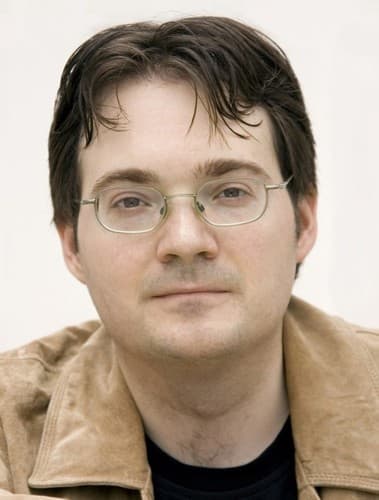
Brandon Sanderson is a prolific American author of epic fantasy and science fiction. He is best known for his expansive Cosmere universe, featuring series like Mistborn and The Stormlight Archive, as well as his completion of Robert Jordan's Wheel of Time series. Sanderson's intricate magic systems and compelling world-building have earned him a dedicated global fanbase and critical acclaim.







