“The only way a human being can properly make a decision is to know all of the facts.”
— Speaking about the limitations of individual decision-making vs. the Seldon Plan.


Isaac Asimov (1953)
Genre
Fantasy / Science Fiction
Reading Time
300 min
Key Themes
See below
Sign in to track this book
As the formidable Mule closes in, the galaxy's fate depends on finding the Second Foundation, a quest that throws a sharp 14-year-old girl into a dangerous game of minds and empires.
Decades after the Mule's conquest of the First Foundation, Dr. Toran Darell, a physicist on Terminus, leads a secret group including Dr. Elvett Semic and Pelleas Anthor. They believe the Second Foundation exists and holds the key to restoring the Seldon Plan. Their main goal is to find and neutralize it, fearing its mental powers could impose a tyranny worse than the Mule's. Darell develops a device to detect mental influence, testing it on his daughter, Arkady. He suspects the Second Foundation is manipulating events and individuals, even within their own group, and believes finding its physical location is the only way to protect humanity from its hidden control.
Arkady Darell, a fourteen-year-old, overhears her father's discussions and becomes interested in the Second Foundation. Curious and wanting to help, she decides to find it herself. She tells her elderly neighbor, Homir Munn, a librarian and expert on the Mule, who Dr. Darell's group has tasked to search for clues on Kalgan, the Mule's former capital. Arkady hides on Munn's ship, eventually revealing herself. Unknown to them, the Mule, now aging but still powerful, is also searching for the Second Foundation, feeling its influence and wanting to crush it to secure his legacy. He sends agents to track Munn and Arkady.
On Kalgan, Homir Munn is brought before Lord Stettin, the current ruler of the Kalganian Empire and the Mule's successor. Stettin, ambitious, sees the First Foundation as a rival and the Second Foundation as a mythical threat. He questions Munn about the Second Foundation, hoping to gain information for his expansionist plans. During the interrogation, Munn, under subtle mental influence, declares that the Second Foundation does not exist. This declaration misleads Stettin and the Mule's remaining agents, but it also makes Arkady and the First Foundation doubt Munn's true loyalties.
After Munn's declaration, Arkady is in a difficult position on Kalgan. She is befriended by Bail Channis, a young General serving Lord Stettin, who seems sympathetic. Channis, however, is secretly an agent of the First Foundation, placed to observe Stettin and potentially find the Second Foundation. He helps Arkady escape Kalgan, taking her to the planet Tazenda, a remote world. Arkady believes Tazenda might be the Second Foundation's location, based on fragmented information and intuition. Channis, while helping her, maintains his hidden agenda, constantly evaluating her actions.
During Arkady and Channis's journey, the Mule, disguised as a common citizen named Magnifico Giganticus, the former court jester, confronts them. He is old and dying, his powers fading but still strong. He reveals his true identity and his desperate search for the Second Foundation, believing it to be the only force capable of defeating him or ensuring his legacy. The Mule explains that he has been tracking them, sensing subtle mental influence from Arkady, which he mistakenly attributes to her being a Second Foundationer. He pursues them relentlessly, driven by a final attempt to uncover and destroy his hidden enemy.
On Tazenda, the Mule corners Channis and Arkady. A tense mental battle takes place between the Mule and Channis. The Mule tries to overwhelm Channis with emotional manipulation, while Channis, seemingly using his own developing mental abilities, resists and tries to outmaneuver the Warlord. During their confrontation, Channis appears to reveal that Tazenda is indeed the Second Foundation's location. The Mule, believing he has finally cornered his nemesis, prepares for a final assault. This revelation, however, is a carefully planned deception, designed to mislead the Mule and the First Foundationers, setting the stage for a deeper twist.
Just as the Mule is about to deliver a final mental blow, the First Speaker of the Second Foundation appears. He reveals that 'Bail Channis' is actually a trained agent of the Second Foundation, and the entire confrontation was a trap. The First Speaker explains that Channis was sent to draw out the Mule and make him believe he had found the Second Foundation on Tazenda. The First Speaker then engages the Mule in a mental battle, easily overpowering the dying Warlord. He subtly 'adjusts' the Mule's mind, neutralizing his threat and erasing his memory of the Second Foundation's true nature and location, ensuring the Seldon Plan stays on track.
Arkady Darell returns to Terminus, hailed as a hero. She believes she has found the Second Foundation on Tazenda and helped defeat the Mule. Her father, Dr. Darell, and his colleagues are relieved, believing the threat of the Second Foundation has been neutralized or understood. They celebrate the apparent triumph of the First Foundation's ingenuity and the restoration of the Seldon Plan. This apparent success is a crucial part of the Second Foundation's plan, allowing the First Foundation to believe they are in control, while subtly being guided.
Decades pass. The First Foundation has recovered from the Mule's reign and is again a thriving power. However, a new generation of scientists, led by Dr. Stettin Palver, begins to question the previous generation's certainty about the Second Foundation's location. They re-examine historical data, particularly the events around Arkady's journey and the Mule's defeat. They suspect that the 'discovery' of Tazenda was a misdirection and that the true Second Foundation remains hidden, continuing its subtle manipulation of galactic events. This renewed search reflects the First Foundation's paranoia and self-preservation.
Dr. Palver and his group devise a plan to lure out and identify the Second Foundationers. They spread misinformation, leak false leads, and create urgency, hoping to provoke a response from their hidden manipulators. Their strategy involves a simulated 'crisis' within the First Foundation's leadership, designed to force the Second Foundation to intervene. They also develop advanced mentalic detectors, more sophisticated than Darell's original device, hoping to pinpoint any mental interference. The tension builds as they await a sign from their unseen adversary, convinced they are close to uncovering the truth.
In a twist, it is revealed that the First Speaker of the Second Foundation has been living on Terminus all along, disguised as Preem Palver, Dr. Stettin Palver's unassuming elderly neighbor. He had subtly guided Stettin's research and manipulated events from within the First Foundation. His true identity is unveiled during a confrontation where he demonstrates his mental powers, revealing that the Second Foundation's true strength is not in a physical location but in its members, who are strategically placed throughout the galaxy, including the very heart of the First Foundation. This revelation shatters the First Foundation's assumptions.
The First Speaker explains the true nature and purpose of the Second Foundation: to guide the Seldon Plan through its later, more delicate stages. He reveals that the First Foundation, with its focus on physical science and empire-building, is a necessary but crude instrument, while the Second Foundation, made of mental scientists, provides the subtle course corrections needed to ensure humanity's peaceful return to empire. He clarifies that the 'discovery' of Tazenda and the defeat of the Mule were all carefully orchestrated events to maintain the illusion of the First Foundation's autonomy while keeping the Second Foundation hidden and safe from detection.
The First Speaker engages in a mental battle with the assembled First Foundationers who suspect him. He demonstrates his overwhelming mental abilities, not to dominate, but to subtly influence their perceptions and memories. He reveals that several members of Palver's group, including Dr. Darell, were under his subtle influence for years, their actions guided to serve the Seldon Plan. The First Speaker's display is a masterclass in mental manipulation, showing the vast power of the Second Foundation and leaving the First Foundationers bewildered and convinced of his superiority, but also ensuring their continued belief in their own self-determination.
The First Speaker explains that the true location of the Second Foundation is not a single planet, but a concept, an organization of individuals scattered across the galaxy, with its 'capital' being the location of the First Speaker himself. He clarifies that the phrase 'at the opposite end of the galaxy' from Terminus, as stated by Seldon, refers not to physical distance but to philosophical and scientific opposition: the First Foundation representing physical science and the Second Foundation representing mental science. This reinterpretation changes the First Foundation's understanding of their hidden guardians.
After successfully reasserting control and subtly adjusting the perceptions of the First Foundation leaders, the First Speaker retreats, leaving them believing they have finally understood the Second Foundation's role and location. The ultimate victory belongs to the Second Foundation, which continues its hidden work of guiding humanity towards the Second Galactic Empire. The First Foundation remains a powerful, independent entity, but its trajectory is subtly steered by the mental scientists, ensuring the Seldon Plan's eventual success and the avoidance of a prolonged dark age. The secret of the Second Foundation's true nature remains safe, ensuring its long-term effectiveness.
The Protagonist/Antagonist (depending on perspective)
Remains largely static in his role as the ultimate guiding force, his arc is one of revelation of his power and purpose.
The Supporting
Starts as a determined pursuer of the Second Foundation, ultimately believes he has succeeded, but remains unknowingly manipulated.
The Supporting
Begins as an independent seeker, becomes an unwitting tool, and ends believing she has achieved a significant victory.
The Antagonist
From a powerful conqueror to a dying, desperate pursuer, ultimately defeated and mentally neutralized.
The Supporting
From a seemingly minor character to a key player in the Second Foundation's plan, revealing his true identity and purpose.
The Supporting
Travels with Arkady, makes a critical misdirection under influence, and returns to Terminus, his true allegiance obscured.
The Supporting
Attempts to consolidate power and find the Second Foundation, but is ultimately outmaneuvered and sidelined.
The Protagonist
Begins as a skeptical investigator, almost discovers the truth, but ultimately accepts a manipulated version of reality.
The central theme explores whether humanity has free will or if its destiny is subtly guided by the Second Foundation. The First Foundation values autonomy and scientific progress, seeing the Second Foundation's mental influence as tyranny. Conversely, the Second Foundation believes its guidance is necessary to prevent a prolonged dark age, arguing that true freedom exists only within a stable society. The story blurs these lines, showing characters making choices they believe are their own, but which are part of a larger, orchestrated plan, raising questions about the illusion of choice.
“"The First Foundation is a physical science, and the Second Foundation is a mental science. They are two halves of one whole, and neither can exist without the other, nor fulfill the Seldon Plan alone."”
The novel highlights how knowledge, especially controlling information, is a supreme power. Both Foundations rely on information—the Seldon Plan's predictions for the First, and the subtle manipulation of facts for the Second. The Second Foundation's existence depends on keeping its true nature and location secret. Misdirection, false clues (like Tazenda), and crafted narratives are its main weapons. The First Foundation's struggle to find the Second Foundation is a struggle to gain complete knowledge, believing that with it comes control, only to find that even their discoveries are part of a controlled narrative.
“"The Second Foundation is at the other end of the galaxy. That is all you need to know, and all you can be allowed to know."”
Asimov frames the conflict between the two Foundations as a contrast between physical and mental science. The First Foundation, on Terminus, embodies technology, engineering, and traditional scientific method. Its strength is tangible progress and material power. The Second Foundation, in contrast, represents mastery of the human mind, psychology, and mental manipulation. Their power is intangible, subtle, and focused on guiding societal evolution. The book explores the strengths and limits of both approaches, suggesting that both are important, but that mental science, with its ability to influence human behavior, holds the ultimate guiding hand in the long term, as Seldon envisioned.
“"The First Foundation was to be the repository of physical science; the Second, of mental science. The one was to be the spear, the other the mind behind the spear."”
A recurring theme is that what seems to be a victory or a conclusion is often just another step in a larger, more complex plan. The First Foundation repeatedly believes it has found or neutralized the Second Foundation, only for the truth to be a deeper layer of deception. Arkady's 'discovery' of Tazenda and the First Foundation's subsequent triumph are carefully orchestrated illusions. This theme shows the Second Foundation's patient, long-term strategy and its willingness to sacrifice short-term perceptions for the Seldon Plan's ultimate success, demonstrating that true power often lies in unseen, continuous influence rather than overt displays.
“"We have been working for decades to make you believe that you have found us, and that you have defeated us."”
Hari Seldon's psychohistorical blueprint for guiding humanity.
The Seldon Plan is the overarching framework of the entire Foundation series. It is a mathematical prediction of humanity's future, designed to minimize the duration of a galactic dark age. In 'Second Foundation,' the plan acts as a constant, unseen force, dictating the actions of the Second Foundation and providing the ultimate justification for their manipulations. It creates a sense of predetermined destiny, even as characters struggle for free will. The plan's success is the Second Foundation's sole purpose, making it a powerful motivational and narrative device that shapes all events.
The power to read, influence, and alter minds.
Mentalic abilities are central to the conflict and mystery of 'Second Foundation.' The Mule uses his powers for emotional manipulation and conquest, while the Second Foundation uses them for subtle guidance, persuasion, and the 'adjustment' of individuals' minds and memories. This device creates an atmosphere of paranoia and distrust, as characters constantly question who is truly in control of their thoughts and actions. It also highlights the inherent danger and ethical dilemmas associated with such power, as the Second Foundation uses it to achieve its goals, even if it means infringing on individual autonomy.
The elusive secret of the Second Foundation's true whereabouts.
The search for the Second Foundation's hidden location is the primary driver of the plot. Hari Seldon's cryptic clue about it being 'at the opposite end of the galaxy' from Terminus fuels decades of speculation and investigation. This device creates suspense and mystery, as both the First Foundation and the Mule desperately try to uncover it. The ultimate revelation that the 'location' is not a physical place but a philosophical concept, and that the First Speaker was on Terminus all along, is a brilliant twist that redefines the entire premise of the search and the nature of the Second Foundation.
The strategic use of false information and manipulated events to mislead adversaries.
The Second Foundation masterfully employs decoys and misdirection to protect its true identity and location. The entire 'discovery' of Tazenda as the Second Foundation's base, and Bail Channis's role as a seemingly independent agent, are elaborate deceptions designed to fool the Mule and the First Foundation. This device showcases the Second Foundation's strategic brilliance and its understanding of human psychology, allowing it to control the narrative and guide events without revealing its true hand. It reinforces the theme of the illusion of control and the long game being played.
“The only way a human being can properly make a decision is to know all of the facts.”
— Speaking about the limitations of individual decision-making vs. the Seldon Plan.
“Never let your sense of morals prevent you from doing what is right!”
— Preem Palver advising Arkady Darell on navigating complex situations.
“The greatest enemy of truth is very often not the lie—deliberate, contrived, and dishonest—but the myth—persistent, persuasive, and unrealistic.”
— A reflection on the nature of societal beliefs and their impact.
“Violence is the last refuge of the incompetent.”
— The First Speaker's internal monologue about the use of force.
“The human mind is not a terribly logical instrument.”
— A statement about the complexities of human thought processes.
“When you have eliminated the impossible, whatever remains, however improbable, must be the truth.”
— A classic Sherlock Holmes quote, used by a character in the book, reflecting analytical thought.
“The First Foundation rules by technology, the Second by mind.”
— A concise comparison of the two Foundations' methods of influence.
“A good plan violently executed now is better than a perfect plan next week.”
— A pragmatic view on action and timing.
“All knowledge is a product of its time.”
— Speaking about the evolving nature of understanding and science.
“It is the chief characteristic of the human brain to be a pattern-seeking instrument.”
— Discussing how humans interpret and organize information.
“The greatest strength of the Second Foundation is its anonymity.”
— Highlighting the strategic advantage of the Second Foundation's hidden nature.
“No one is so thoroughly a villain as he who is a villain in his own mind.”
— A psychological insight into self-perception and morality.
“The future is always a little more complicated than you think.”
— A general observation on the unpredictability of events.
“There are no eternal facts, as there are no absolute truths.”
— A philosophical statement on the relative nature of knowledge.
Ready to see how well you understood this book? Take our interactive quiz with 10 questions.
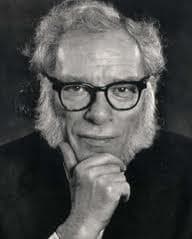
Isaac Asimov was an American writer and professor of biochemistry at Boston University. During his lifetime, Asimov was considered one of the "Big Three" science fiction writers, along with Robert A. Heinlein and Arthur C. Clarke. A prolific writer, he wrote or edited more than 500 books. He also wrote an estimated 90,000 letters and postcards. Best known for his hard science fiction, Asimov also wrote mysteries and fantasy, as well as much non-fiction.







