“It wasn't a dream, not exactly. It was more like a memory of a dream, hazy and shimmering at the edges, but with certain details as sharp as broken glass.”
— Tess recalling a recurring 'dream' about the ocean.

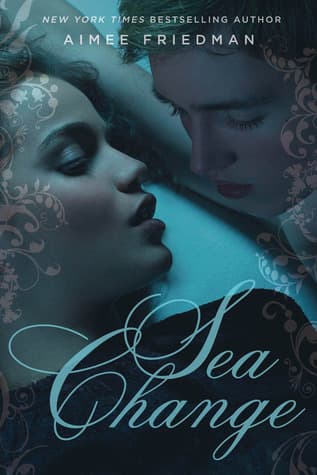
Aimee Friedman (2009)
Genre
Fantasy / Young Adult
Reading Time
6-7 hours
Key Themes
See below
Sign in to track this book
A heartbroken science whiz finds her logical world upended by ancient island magic and a mysterious boy, forcing her to question everything she believes about love, friendship, and reality.
Sixteen-year-old Miranda Merchant arrives on the remote and somewhat dilapidated Selkie Island with her mother, Eleanor, to clear out her recently deceased grandmother's house. Miranda is emotionally raw from a recent breakup with her boyfriend, Matt, and a painful falling out with her best friend, Sarah, who betrayed her. The island feels isolated and eerie, a stark contrast to her familiar mainland life. Her grandmother, Evelyn, was an eccentric figure, and her house is filled with peculiar items and a distinct smell of salt and old things. Miranda's scientific and logical mind struggles to reconcile the island's strange atmosphere with her rational worldview, setting a tone of mystery and unease for her summer.
While exploring the island, Miranda meets Leo, a charming and mysterious local boy. He works at the island's general store and has an unusual intensity. Their initial interactions are a mix of flirtation and a sense of underlying secrets. Miranda also starts to notice the island's peculiarities: the unusually cold ocean, the abundance of seals, and the hushed, almost superstitious way the locals speak of the sea. She observes that many islanders, including Leo, have strikingly blue eyes and a certain elusive quality. These observations begin to chip away at her strictly scientific understanding of the world, making her question what is real on Selkie Island.
While sifting through her grandmother Evelyn's belongings, Miranda discovers a hidden journal. The entries are cryptic, filled with musings about the sea, love, and a strange longing. Evelyn's writings often mention a 'sea-change' and hint at a secret connected to the island's history. Alongside the journal, Miranda finds old books and folktales about selkies – mythical creatures who are seals in the water and humans on land. Miranda, a staunch believer in science, initially dismisses these stories as mere folklore, but her grandmother's conviction in the journal makes her pause. She begins to wonder if there is more to these tales than she initially thought.
Miranda spends more time with Leo, and their connection grows stronger. He takes her to secluded spots on the island, including a hidden cove, and introduces her to the island's unique beauty. Despite her attraction to him, Miranda senses that Leo is holding back, and there is an aura of sadness and mystery around him. Simultaneously, Miranda finds herself increasingly drawn to the ocean, feeling an almost magnetic pull towards it, especially at night. She experiences strange dreams and a heightened sensitivity to the sea's rhythm, which she struggles to rationalize with her scientific background.
Eleanor, Miranda's mother, observes her daughter's growing fascination with the island and Leo with concern. She reveals fragments of Evelyn's past, describing her grandmother's deep, almost obsessive connection to the sea and a lost love. Eleanor warns Miranda to be careful, implying that the island has a way of drawing people in and not letting them go, suggesting it was responsible for Evelyn's eccentricities and eventual disappearance. This conversation adds another layer of foreboding to the island, making Miranda question if her grandmother's stories were more than just old wives' tales and if her own experiences are a repetition of Evelyn's past.
During an intense moment, Leo finally reveals his secret to Miranda: he is a selkie. He shows her his sealskin and explains the selkie lore – their ability to shed their skin and live as humans on land, but their inherent longing for the sea. He confesses that he is bound to the ocean and can only stay on land for a limited time. This revelation shatters Miranda's scientific worldview, forcing her to confront the existence of magic and myth. She grapples with the implications of loving someone who belongs to a different world, understanding the challenges their relationship would face.
After Leo's revelation, Miranda experiences a shift. She realizes that her strong connection to the ocean, her grandmother's journal entries, and even her own physical sensations are not just coincidences. She discovers that she, too, has selkie blood, inherited from Evelyn. This heritage manifests as a growing urge to return to the sea, a deep longing that mirrors Leo's. Miranda is faced with an impossible choice: embrace her selkie nature and join Leo in the ocean, leaving her human life behind, or deny her heritage and remain on land, forever separated from the boy she loves and a part of herself she never knew existed.
As a fierce storm rages, mirroring Miranda's internal turmoil, she confronts her mother, Eleanor, about the selkie heritage. Eleanor, initially resistant, finally admits the truth: Evelyn was a selkie, and Miranda carries the same blood. Eleanor had tried to protect Miranda from this truth, fearing the heartbreak and loss that came with loving a selkie and the inevitable pull of the sea. The storm intensifies, creating a powerful, symbolic backdrop for Miranda's emotional reckoning. This confrontation forces both mother and daughter to acknowledge the deep, mystical secrets that have shaped their family for generations.
After much internal struggle and a heart-wrenching conversation with Leo, Miranda makes her decision. Despite her love for Leo and the allure of the sea, she chooses to remain human, to live a life on land. This decision is incredibly difficult, as it means saying a painful goodbye to Leo. Their farewell is bittersweet, filled with love and sorrow, as they both understand the impossibility of their worlds truly merging. Miranda accepts that their paths diverge, even as a part of her will always long for the ocean and the boy who showed her the magic of the world.
At the end of the summer, Miranda leaves Selkie Island with her mother. She is no longer the same girl who arrived, heartbroken and cynical. Her experiences with Leo and the island's magic have opened her mind to possibilities beyond science and logic. While she carries the pain of leaving Leo, she also carries a deeper understanding of herself, her family's history, and the interconnectedness of the world. She embraces a more open-minded perspective, recognizing that not everything can be explained by reason. The island has left an indelible mark on her, forever changing her perception of reality and her place within it.
The Protagonist
Miranda transforms from a skeptical, heartbroken girl into an open-minded young woman who accepts the existence of magic and embraces her complex heritage, making a mature choice about her future.
The Love Interest / Supporting
Leo remains largely consistent in his selkie nature and longing for the sea, but he opens up emotionally to Miranda, sharing his vulnerable truth.
The Supporting
Eleanor moves from a position of secrecy and protection to one of openness and acceptance of her family's magical past.
The Mentioned / Guiding Force
Her arc is retrospective, revealed through her journal and family stories, showing her embrace of her selkie nature and love.
The Mentioned
Matt's role is static, serving as a catalyst for Miranda's journey rather than having his own arc.
The Mentioned
Sarah's role is static, serving as a catalyst for Miranda's journey rather than having her own arc.
Miranda, a staunch believer in scientific fact, constantly struggles to reconcile the mysterious occurrences on Selkie Island with her rational worldview. This theme is central as she encounters selkie lore, Leo's true nature, and her own inexplicable connection to the ocean. Her grandmother's journal, filled with mystical musings, directly challenges Miranda's initial skepticism. The island acts as a crucible, forcing her to confront the limitations of pure logic and embrace the possibility of magic and the unknown. This conflict culminates in her acceptance of her heritage and the existence of selkies, expanding her understanding of reality.
““The island was a living, breathing entity, and it had secrets that science couldn't explain.””
Selkie Island, with its ancient legends and hidden truths, represents the captivating yet perilous nature of the unknown. Miranda is drawn to the island's mysteries and to Leo, who embodies this allure. However, her mother's warnings and the tragic undertones of Evelyn's story highlight the potential dangers of embracing a world beyond human understanding. The ocean itself symbolizes this theme – beautiful and inviting, yet vast, unpredictable, and capable of claiming those who venture too deep. Miranda's ultimate choice reflects her navigation of this allure and her decision about how much of the unknown she is willing to integrate into her life.
““There was a wildness to the island, an untamed beauty that whispered of forgotten things and ancient magic.””
Miranda's journey on Selkie Island is one of self-discovery and finding where she truly belongs. Initially, she feels adrift due to her recent heartbreak and betrayal. As she uncovers her selkie heritage, she grapples with a dual identity – human and selkie – and the question of which world is her true home. This theme is mirrored in Leo, who is torn between his life on land with Miranda and his inherent need to return to the sea. Her grandmother Evelyn's story also reflects this struggle, having chosen a life connected to the sea. Miranda's ultimate decision to remain human, while acknowledging her heritage, solidifies her sense of self and belonging in the human world, albeit with a profound new understanding.
““How could I be both? How could I belong to two worlds that were so fundamentally different?””
The novel explores the sacrifices required by love, particularly when it transcends different worlds. Miranda and Leo's love story is central to this theme, as their selkie-human dynamic presents insurmountable challenges. Leo's inherent need to return to the sea and Miranda's desire for a human life force them to confront the painful reality that love alone cannot overcome fundamental differences. Her grandmother Evelyn's story is an example of the sacrifices made for love across these worlds. Miranda's final decision to let Leo go, despite her deep feelings, is an act of love and self-preservation, recognizing that true love sometimes means accepting separation for the well-being of both.
““Sometimes, love wasn't about holding on. Sometimes, it was about letting go, even when it broke your heart.””
A cryptic journal that serves as a guide and foreshadows Miranda's own journey.
Evelyn's journal acts as a key plot device, providing Miranda with crucial clues about the island's secrets and the selkie legend. Its cryptic entries and emotional depth not only reveal Evelyn's past love and heritage but also subtly foreshadow Miranda's own experiences and growing connection to the sea. The journal bridges the gap between the mundane and the magical, slowly eroding Miranda's skepticism and preparing her for the truth about Leo and her own lineage. It's a tangible link to the past that directly influences the present narrative.
A foundational myth that provides the magical framework for the story.
The selkie legend is the central magical element of the narrative. Introduced through local folklore and Evelyn's journal, it provides the supernatural explanation for Leo's identity and Miranda's heritage. This device allows for the exploration of themes like dual identity, the call of the wild, and forbidden love. The specific rules and characteristics of selkies – their sealskins, their longing for the sea, and their human forms – create the core conflict and romantic tension, defining the boundaries and consequences of Miranda's choices.
A mysterious and isolated location that acts as a character and catalyst for change.
Selkie Island is more than just a backdrop; it functions as a character itself, imbued with an ancient, mystical presence. Its isolation from the mainland emphasizes Miranda's detachment from her former life, while its unique environment – the cold ocean, the seals, the local superstitions – creates an atmosphere conducive to magic and mystery. The island actively influences Miranda, drawing her in and challenging her perceptions, making it a crucial catalyst for her transformation and the unfolding of the supernatural plot.
A powerful, almost sentient force that draws characters to their selkie heritage.
The 'ocean's call' is a metaphorical and literal plot device representing the irresistible pull of the selkie world. For Leo, it's an inherent longing that dictates his life. For Miranda, it starts as a subtle fascination, growing into a strong, almost physical urge as her selkie heritage awakens. This device creates internal conflict for Miranda, forcing her to choose between her human life and her magical lineage. It also explains Evelyn's past actions and underscores the deep, inescapable connection selkies have to the sea, driving much of the story's emotional and plot tension.
“It wasn't a dream, not exactly. It was more like a memory of a dream, hazy and shimmering at the edges, but with certain details as sharp as broken glass.”
— Tess recalling a recurring 'dream' about the ocean.
“The ocean doesn't just hold water; it holds secrets. And sometimes, it gives them back.”
— A local fisherman's ominous remark to Tess.
“There's a difference between wanting something and knowing you need it. I was starting to feel the latter, deep in my bones.”
— Tess's growing connection to the sea and its pull.
“You can't outrun what's inside you. It'll always catch up.”
— A warning given to Tess about her true nature.
“The sea calls to some people. It whispers their names when no one else can hear.”
— A character explaining the allure of the ocean.
“Sometimes the most beautiful things are also the most dangerous.”
— Tess reflecting on the siren's song and the ocean's allure.
“It felt like I was shedding an old skin, not just physically, but every part of me.”
— Tess experiencing her transformation.
“Fear can be a compass, pointing you to what truly matters.”
— Tess confronting her fears about her new reality.
“The truth is rarely simple, and never convenient.”
— A character discussing the complexities of the secrets surrounding Tess.
“You can't choose your origins, but you can choose what you do with them.”
— Tess grappling with her heritage and future.
“The world isn't always what it seems on the surface. There are layers, hidden beneath.”
— Tess realizing the hidden magical world beneath the mundane.
“Love isn't about perfectly matching pieces; it's about finding someone who understands the missing ones.”
— Tess reflecting on her relationship and connections.
“Every wave leaves a mark, even if you can't see it immediately.”
— A metaphor for the lasting impact of experiences and change.
“To truly belong, sometimes you have to let go of everything you thought you were.”
— Tess accepting her new identity and place in the world.
Ready to see how well you understood this book? Take our interactive quiz with 10 questions.

Aimee Friedman is a contemporary fiction author known for her compelling young adult novels. Her notable works include "The Year My Sister Got Lucky," "Sea Change," and "Two Summers." Friedman's writing often explores themes of family, identity, and the complexities of adolescence with a sensitive and engaging style.







