“Our deeds determine us, as much as we determine our deeds.”
— From the story "Amos Barton", reflecting on moral responsibility.


George Eliot (1858)
Genre
Literary Fiction
Reading Time
525 min
Key Themes
See below
Sign in to track this book
Explore the quiet dramas and moral complexities of 19th-century English clergy and their parishioners, showing the humor, heartbreak, and resilience in ordinary lives.
The story introduces Reverend Amos Barton, the new curate of Shepperton. He has limited intellect and social graces but is truly pious. He is married to Milly, a gentle and beautiful woman, and they have six children, with another expected. Despite his good intentions, Amos is not well-liked by his parishioners, who find his sermons dull and his manners awkward. His financial struggles are constant, made worse by his large family and small salary. The story quickly shows the difference between Amos's internal problems and the often harsh, superficial judgments of the Shepperton community, setting up the misfortunes that will happen to him and his family.
Amos, trying to improve his social standing and perhaps get a better living, invites the Countess Czerlaski, a fashionable but questionable Polish woman, to stay at the parsonage. The Countess, with her exotic stories and dramatic style, at first impresses Milly and the children. However, her presence soon causes scandal and gossip among the Shepperton parishioners, who view her with suspicion. Amos, unaware of the social damage, remains sure of the Countess's good intentions and his own wisdom in befriending her, further separating him from his community and increasing his family's isolation.
The Countess Czerlaski eventually leaves, leaving unpaid debts and social embarrassment for Amos. Milly's health quickly declines after the birth of their seventh child. She suffers from a fever and weakness, her gentle spirit fading under the weight of her many burdens. Despite Amos's genuine, if clumsy, devotion, and the occasional kindness of a few parishioners, Milly dies, leaving Amos a widower with seven young children. Her death is a deep tragedy for the family and a moment of rare, true sympathy from the previously critical Shepperton community, who now see Amos's grief instead of his faults.
Amos is completely devastated by Milly's death, struggling with his grief and the overwhelming responsibility of raising his large family alone. The children, especially the younger ones, deeply miss their mother. The community, moved by the tragedy, offers some practical help, including clothing and food. However, Amos's financial situation remains bad, and his emotional state makes it hard for him to do his duties well. He is eventually offered a curacy in a distant manufacturing town, a less desirable position but one that offers a fresh start. He leaves Shepperton, a sadder but perhaps wiser man, taking his children to an uncertain future.
The second story begins by introducing the elderly Reverend Maynard Gilfil, the vicar of Knebley. He is shown as a rather unusual, solitary, and somewhat gruff bachelor, known for his love of dogs and his peculiar habits. His parishioners, while respecting his kindness and honesty, find him a bit odd. The story then goes back in time, promising to reveal the hidden romantic tragedy that shaped his character and led to his present solitude. This setup immediately creates a sad and reflective mood, inviting the reader to discover Gilfil's past.
The story goes back to Mr. Gilfil's youth, when he was a tutor for Sir Christopher Cheverel at Cheverel Manor. Living there is Caterina Sarti, called Tina, a beautiful and musically talented Italian orphan adopted by Sir Christopher and Lady Cheverel. Tina is delicate and sensitive, deeply devoted to her benefactors. Young Maynard Gilfil, though at first somewhat overlooked, quickly develops a deep and lasting love for Tina, watching her with quiet adoration that contrasts with her more showy suitor, Captain Anthony Wybrow.
Tina becomes deeply in love with Captain Anthony Wybrow, Sir Christopher's handsome and charming nephew and heir. Wybrow, a superficial and selfish man, flirts with Tina and even makes vague promises of marriage, despite being secretly engaged to the wealthy Miss Assher. Tina, innocent and passionate, believes his declarations, while Gilfil watches heartbroken, aware of Wybrow's dishonesty. Wybrow's manipulation and Tina's growing despair create strong dramatic tension, with Gilfil caught in the middle, unable to warn Tina without breaking a trust or causing her more pain.
The tension ends when Wybrow is found dead, seemingly from a heart attack, shortly after a tense argument with Tina. Tina, already fragile, is overwhelmed by shock and grief. Her emotional distress leads to a severe illness, during which she raves about Wybrow and their secret engagement. This revelation deeply upsets Sir Christopher and Lady Cheverel, who had planned for Tina to marry Gilfil. Gilfil, despite his own pain, remains devoted to Tina, nursing her through her illness and offering constant support, even as she at first rejects his love.
After recovering and thinking, Tina, seeing Gilfil's lasting love and kindness, eventually agrees to marry him. They share a short time of quiet happiness as Mr. and Mrs. Gilfil, finding comfort and mutual affection. However, Tina's delicate health, weakened by her past emotional trouble, cannot last. She falls ill again and dies young, leaving Gilfil a heartbroken widower. Her death confirms his solitary and somewhat sad character, explaining the older Mr. Gilfil's unusual ways introduced at the start of the story, forever marked by the memory of his lost love.
The last story is set in the manufacturing town of Milby and focuses on Janet Dempster, a gentle, intelligent, and very sensitive woman trapped in a marriage to Robert Dempster, a prominent but tyrannical, alcoholic lawyer. Robert subjects Janet to verbal abuse, public shame, and emotional cruelty, often fueled by drink. Janet, in turn, has sought comfort in alcohol, creating a cycle of despair and self-blame. The town knows of Dempster's behavior, but few intervene, leaving Janet alone in her suffering, though she keeps up appearances.
A major change comes to Milby with the arrival of the new evangelical curate, Edgar Tryan. Tryan is a devout, earnest, and kind man, dedicated to improving his parishioners' spiritual lives. His passionate preaching and genuine care attract many, including Janet, who finds his sermons deeply moving and relevant to her own problems. Despite initial doubt and opposition from some of the more traditional parishioners, Tryan's influence begins to grow. Janet, inspired by his message of repentance and redemption, starts to confide in him and seek spiritual guidance, beginning her journey toward sobriety and self-worth.
Robert Dempster's alcoholism and abusive behavior get worse, reaching a peak when he physically assaults Janet, locking her out of their home in a drunken rage. This public humiliation is a turning point for Janet, strengthening her decision to seek help and escape her self-destructive patterns. Soon after, Dempster falls while drunk, getting a head injury that eventually leads to his death. His death, though sad, frees Janet from her oppressive marriage, allowing her to fully embrace the path of spiritual and personal recovery she had started with Mr. Tryan's guidance.
Free from her husband, Janet changes greatly. She commits herself to sobriety, charity, and spiritual growth, becoming a source of hope and support for others in Milby. She forms a deep, non-romantic friendship with Mr. Tryan, who continues to guide her. However, Mr. Tryan, whose health has always been delicate, begins to show signs of consumption. Despite his own suffering, he continues his ministry with constant devotion, inspiring Janet and the community. Their bond grows stronger, based on mutual respect and shared faith.
Mr. Tryan's illness gets worse quickly, and he eventually dies, leaving a deep emptiness in Milby and in Janet's life. His death is a moment of deep sadness for Janet, but it also strengthens her commitment to the principles he taught her. She continues to live a life of active faith and compassion, carrying on his legacy of service to the community. Janet's journey from a despairing, abused woman to a strong, kind figure shows the story's themes of repentance, redemption, and the lasting power of faith and human connection, even after loss.
The Protagonist
Amos begins as a somewhat oblivious and struggling curate and ends as a grieving widower forced to leave Shepperton, having learned humility through his misfortunes.
The Supporting
Milly endures increasing hardship and illness, ultimately succumbing to her burdens, her death serving as a catalyst for community reflection.
The Protagonist
From a young, lovelorn tutor, Gilfil becomes a devoted husband for a brief period, then an enduringly melancholic widower whose past heartbreak defines his later life.
The Protagonist
Tina evolves from a passionate, naive girl to a heartbroken and mentally fragile woman, finding brief solace and love before her early demise.
The Antagonist
Wybrow remains consistently shallow and manipulative throughout his brief appearance, his death serving as a dramatic turning point.
The Protagonist
Janet begins as a despairing, abused woman seeking solace in alcohol, then undergoes a profound spiritual and personal transformation, becoming a strong, compassionate, and redeemed figure.
The Antagonist
Dempster's character consistently deteriorates through escalating alcoholism and abuse, culminating in his death.
The Supporting
Tryan arrives as a dedicated but initially controversial curate, becoming a spiritual beacon for Janet and the community before his premature death due to illness.
The Supporting
Sir Christopher remains a consistently benevolent figure, striving for the happiness of those under his care.
The Mentioned
The Countess is a static character, serving as a catalyst for Amos's social misfortunes.
This theme is clear throughout the 'Scenes', especially in 'Amos Barton' and 'Janet's Repentance'. Eliot shows the superficiality and harshness of small-town judgment, often contrasting outward appearances with inner struggles. Amos Barton is judged for his awkwardness and dull sermons, while his true piety and love for his family are ignored. Janet Dempster's suffering is made worse by the town's gossip and the quiet acceptance of her husband's abuse, with few offering real help. Eliot criticizes communities that value social rules over true compassion and understanding, showing the human cost of such narrow views.
“The Shepperton parishioners generally thought Mr. Barton a good man, but a poor preacher; and they were not inclined to make any further allowances for him.”
This theme is most strongly explored in 'Janet's Repentance'. Janet's journey from despair and alcoholism, caused by her abusive marriage, to spiritual and personal renewal is central to the story. Guided by the kind Mr. Tryan, she faces her past, embraces faith, and finds the strength to overcome her destructive habits. Her transformation shows Eliot's belief in the possibility of moral growth and redemption, even for those who have fallen furthest. The theme suggests that true repentance involves not just regret, but a fundamental change in character and a commitment to a life of compassion and service.
“It is a truth very little understood, and very lightly estimated, that the human heart is a world of its own, with a full apparatus of sensations, thoughts, and emotions, which are but partially expressed in the life of the individual.”
Each story explores the deep impact of love, its loss, and the resulting grief. In 'Amos Barton', the love between Amos and Milly, and Amos's devastating grief after her death, is central. In 'Mr. Gilfil's Love Story', Tina's passionate but betrayed love for Wybrow, and Gilfil's lasting, unreturned love for Tina, lead to deep heartbreak and ultimately shape Gilfil's entire life. The story ends with Gilfil's sorrow after Tina's early death. These stories highlight how fragile human happiness is and how personal tragedy leaves a lasting mark on individuals, shaping their characters and futures.
“The only happiness a man can have is to love and be loved.”
As the title suggests, the stories give a close look into the lives and challenges of Anglican clergymen in country England. Eliot explores the different effectiveness and personal struggles of her curates and vicars. Amos Barton shows the well-meaning but often ineffective clergyman, struggling with financial hardship and social awkwardness. Mr. Gilfil represents the quiet, devoted pastor whose personal tragedy shapes his ministry. Mr. Tryan embodies the enthusiastic, self-sacrificing evangelical, dedicated to spiritual reform despite personal illness and community opposition. Eliot shows the human side of the clergy, their good qualities, flaws, and the specific pressures of their calling.
“A man who had to preach to a congregation of farmers and tradesmen, and who was himself a farmer and tradesman, had no business to be a fine gentleman.”
Amidst the harsh realities and social judgments, Eliot consistently shows the saving power of true compassion and kindness. While Amos Barton faces much criticism, the rare acts of charity and sympathy shown to him after Milly's death are deeply moving. Mr. Gilfil's steady and selfless love for Tina, even when she cannot return it, ultimately offers her comfort and a short time of happiness. Most importantly, Mr. Tryan's constant empathy and spiritual guidance are what start Janet Dempster's deep redemption, showing how one person's true care can change another's life. These acts of kindness contrast with the prevailing social indifference.
“It is a good thing to be rich, and a good thing to be strong, but it is a better thing to be beloved of many friends.”
A highly intrusive and morally observant narrator who guides the reader's understanding.
Eliot employs an omniscient, often didactic, narrator who not only recounts the events but also frequently interjects with direct addresses to the reader, moral reflections, and psychological insights. This narrator guides the reader's judgment, often challenging superficial social opinions and revealing the complex inner lives of characters. For example, the narrator explicitly defends Amos Barton's sincere heart despite his shortcomings, and elucidates Janet Dempster's internal struggles. This narrative voice creates a strong sense of authorial presence and moral authority, shaping the reader's sympathy and understanding of the characters' 'humble experience'.
Used in 'Mr. Gilfil's Love Story' to reveal the past tragedy that shaped a character.
In 'Mr. Gilfil's Love Story', Eliot uses a prominent flashback. The story begins by introducing the eccentric, elderly Reverend Gilfil in the present day, then immediately shifts to his youth to narrate the tragic love story that profoundly influenced his character. This framing device creates immediate intrigue, prompting the reader to understand the origins of Gilfil's current melancholic disposition. It allows Eliot to explore the long-term consequences of past events and to reveal the hidden depths of a seemingly ordinary individual, adding layers of pathos and psychological complexity to his character.
Detailed and unvarnished portrayal of everyday life in provincial Victorian England.
Eliot's 'Scenes of Clerical Life' is a prime example of social realism. The stories are meticulously detailed in their depiction of provincial life, from the mundane routines of a curate's family to the intricacies of village gossip and the social stratification of small towns like Shepperton and Milby. She portrays characters with a blend of their virtues and flaws, avoiding romanticization. The financial struggles of the Bartons, the social dynamics at Cheverel Manor, and the grim reality of domestic abuse in Milby are all presented with an unflinching honesty that emphasizes the 'humble experience of an ordinary fellow-mortal', making the world of the stories feel tangible and authentic.
Used to highlight the gap between appearance and reality, and expose social absurdities.
Eliot frequently employs irony, both dramatic and situational, to underscore her themes. In 'Amos Barton', there is irony in Amos's sincere belief that the Countess Czerlaski will elevate his social standing, when in reality her presence only exacerbates his social isolation and financial woes. The narrator often uses verbal irony to comment on the characters' foibles or the community's narrow-mindedness, subtly critiquing social conventions. This ironic detachment allows Eliot to expose the absurdities and hypocrisies of provincial life while still maintaining a compassionate stance towards her characters, particularly those who suffer from societal judgment.
“Our deeds determine us, as much as we determine our deeds.”
— From the story "Amos Barton", reflecting on moral responsibility.
“The happiest women, like the happiest nations, have no history.”
— From "The Sad Fortunes of the Reverend Amos Barton", commenting on domestic life.
“It is a very hard thing to say the exact truth, even about your own immediate feelings—much harder than to say something fine about them which is not the exact truth.”
— From "Janet's Repentance", discussing emotional honesty.
“The golden moments in the stream of life rush past us, and we see nothing but sand; the angels come to visit us, and we only know them when they are gone.”
— From "Mr. Gilfil's Love-Story", lamenting missed opportunities.
“There is no despair so absolute as that which comes with the first moments of our first great sorrow, when we have not yet known what it is to have suffered and be healed, to have despaired and have recovered hope.”
— From "Janet's Repentance", describing emotional pain.
“The only failure a man ought to fear is failure in cleaving to the purpose he sees to be best.”
— From "Amos Barton", on moral conviction.
“We are all apt to believe what the world believes about us.”
— From "Janet's Repentance", on social perception.
“The beginning of compunction is the beginning of a new life.”
— From "Janet's Repentance", on repentance and change.
“It is seldom that the miserable can help regarding their misery as a wrong inflicted by those who are less miserable.”
— From "The Sad Fortunes of the Reverend Amos Barton", on human resentment.
“The responsibility of tolerance lies with those who have the wider vision.”
— From "Mr. Gilfil's Love-Story", on moral leadership.
“A difference of taste in jokes is a great strain on the affections.”
— From "Amos Barton", on marital discord.
“The years between fifty and seventy are the hardest. You are always being asked to do things, and yet you are not decrepit enough to turn them down.”
— From "Mr. Gilfil's Love-Story", on aging and social expectations.
“There is no private life which has not been determined by a wider public life.”
— From "Janet's Repentance", on social influence.
“The first condition of human goodness is something to love; the second, something to reverence.”
— From "Amos Barton", on moral foundations.
Ready to see how well you understood this book? Take our interactive quiz with 10 questions.
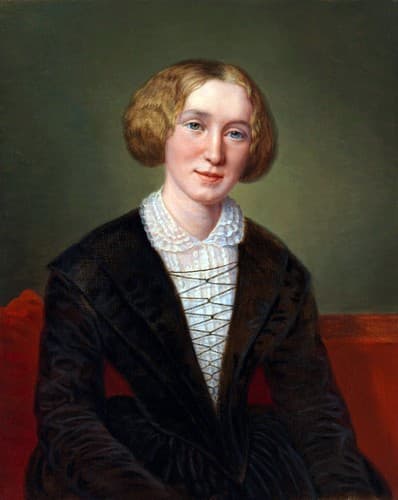
Mary Ann Evans, known by her pen name George Eliot, was an English novelist, poet, journalist, translator, and one of the leading writers of the Victorian era. She wrote seven novels: Adam Bede (1859), The Mill on the Floss (1860), Silas Marner (1861), Romola (1862–63), Felix Holt, the Radical (1866), Middlemarch (1871–72) and Daniel Deronda (1876). Like Charles Dickens and Thomas Hardy, she emerged from provincial England; most of her works are set there. Her works are known for their realism, psychological insight, sense of place and detailed depiction of the countryside.







