“The thing sat up and started to unwrap the scarf from around its neck.”
— From 'The Green Ribbon,' as the mysterious girl Jenny's secret is finally revealed.

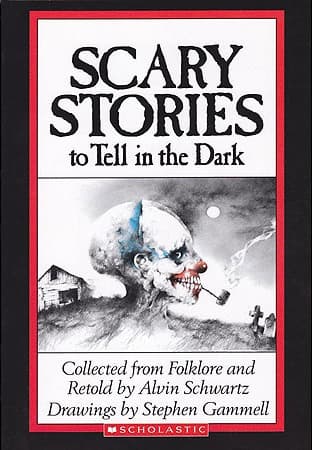
Alvin Schwartz (1605)
Genre
Fantasy / Children's / Young Adult
Reading Time
90-120 min (for all stories)
Key Themes
See below
Sign in to track this book
This collection of American folklore offers chilling tales of vengeful ghosts, reanimated corpses, and bloody apparitions, alongside haunting illustrations designed to unnerve readers in the dark.
A young boy digging for vegetables in his garden finds a severed human toe. He takes it home, and his mother cooks it for supper. The boy and his family eat the mysterious toe. Later that night, as the boy lies in bed, a ghostly voice calls out from outside, repeating, 'Where's my T-O-E?' The voice gets closer, moving from outside to the porch, then up the stairs, and finally outside the boy's bedroom door. The spirit eventually enters the room, standing over the terrified boy, and demands, 'YOU'VE GOT IT!'
A brave man accepts a challenge to spend a night alone in a notoriously haunted house. The house is rumored to have a bloody head fall down the chimney every night at midnight. The man settles in, determined to prove his courage. At midnight, a bloody head tumbles down the chimney. Undeterred, the man calmly picks up the head and places it on the mantelpiece. He makes it through the night, having faced the horror without flinching, though the experience leaves a lasting impression.
A group of teenagers dares a girl named Lucy to prove her bravery by spending a night in a graveyard. To make the dare harder, she must stick a knife into the dirt of a specific grave. Lucy agrees. In the dark, she reaches the grave and plunges the knife into the earth. However, when she tries to leave, she feels a pull, as if something is holding her back. Terrified, she screams and collapses. Her friends find her the next morning, dead from fright. It turns out she had accidentally stuck the knife through the hem of her skirt, pinning herself to the grave.
A farmer buys a new horse at a market. The horse seems strong and healthy. He takes it home and puts it to work. However, the horse starts acting strangely, making odd noises and movements, especially at night. One evening, the farmer hears a strange sound from the barn. Investigating, he discovers that the horse is not a horse at all, but a reanimated skeleton, held together by magic. The 'horse' then collapses into a pile of bones, revealing the sinister nature of his purchase.
A teenage girl is babysitting two young children in a large, isolated house. She gets a series of unsettling phone calls where a deep voice repeatedly asks, 'Have you checked the children?' At first, she thinks it's a prank. But the calls become more frequent and threatening. Frightened, she calls the police. The police trace the call and tell her it's coming from *inside the house*. The babysitter realizes with horror that the caller is in the house with her and the children, leading to a terrifying discovery.
This entry is a grim poem or song, often recited around campfires. It describes, with vivid and gruesome images, the process of bodily decomposition after death. The lyrics explain how a body will be placed in a hearse, taken to the grave, and then slowly consumed by worms and other creatures. It highlights the certainty and unpleasantness of physical decay, painting a stark picture of what happens to the human form after life. The song is a chilling reminder of mortality.
A woman is driving alone at night on a deserted road when she notices a car behind her flashing its high beams repeatedly. She becomes uneasy, thinking the driver is aggressive. She speeds up, but the car continues to follow, its high beams still flashing. Eventually, she pulls into a gas station, and the other car pulls in right behind her. The driver of the second car, a man, rushes to her window, yelling for her to get out. He reveals that a killer was hiding in her back seat, and every time the killer rose to attack, he flashed his high beams to make the killer duck back down.
A woman keeps a pet snake that she loves. One day, the snake gets sick and stops eating. Concerned, she takes it to the veterinarian. The vet examines the snake and gives a shocking diagnosis: the snake is not a normal pet snake, but a highly venomous viper that has been growing. The vet explains that the snake needs to be killed immediately for her safety. The woman is devastated by the news and the need to part with her beloved, yet deadly, pet.
A girl notices a small, red spot on her cheek. At first, she thinks it's a pimple or a bug bite. But the spot grows larger and itches intensely. Despite her attempts to treat it, the spot worsens, becoming more painful and discolored. Eventually, unable to bear the discomfort, she sees a doctor. The doctor examines the spot and, to her horror, reveals that it is not a simple blemish but a nest of spider eggs that have hatched under her skin. The spiders then begin to crawl out of the 'spot' on her face.
Two farmers, tired of their scarecrow, Harold, being ineffective, decide to create a new, more frightening one. They mock Harold, kicking him before discarding him. However, Harold, imbued with a sinister life, slowly begins to reanimate. Over several nights, the farmers hear strange noises and experience unsettling events. Eventually, Harold fully comes to life, a grotesque figure made of straw and old clothes, and takes a terrifying revenge on the farmers for their cruelty, pursuing them with a chilling menace.
A family moves into an old house, unaware it is haunted. Soon after, they hear strange noises and experience unsettling events. At night, they hear ghostly voices repeating, 'We want our bones!' The family is terrified but tries to ignore the apparitions, but the voices grow louder. Eventually, they discover that the previous inhabitants were murdered and buried beneath the floorboards. The ghosts are those victims, demanding their remains be found and properly laid to rest, causing the family distress until the bones are unearthed.
A young boy is strictly forbidden by his parents from entering the attic of their old house. His curiosity gets the better of him. One day, while his parents are out, he sneaks upstairs and opens the attic door. Inside, it's dark and dusty. As he explores, he finds an old trunk. When he opens it, he finds not forgotten treasures, but a decomposed human corpse. The sudden, horrifying discovery sends him into a panic, and he quickly slams the trunk shut, traumatized by the attic's secret.
The Protagonist
He transforms from an unwitting participant in a strange meal to a terrified victim pursued by a supernatural entity.
The Protagonist
He maintains his composure throughout a terrifying ordeal, confirming his reputation for bravery.
The Protagonist/Victim
She begins as confident and daring but ends as a victim of her own fear and a simple accident.
The Protagonist/Victim
He transitions from a shrewd buyer to a terrified witness of the supernatural.
The Protagonist/Victim
She moves from annoyance to growing fear, culminating in the shocking discovery of an intruder.
The Antagonist
Transforms from an inanimate object to a terrifying, vengeful entity.
The Protagonist/Victim
She shifts from feeling harassed to realizing she was in mortal danger and was unknowingly saved.
The Protagonist/Victim
She moves from doting pet owner to a heartbroken individual forced to confront a deadly reality.
Many stories in the collection play on the fear of what is hidden or what seems harmless but is secretly dangerous. This theme builds suspense by suggesting danger is always present, even when not visible. For example, in 'The Babysitter,' the caller is inside the house, turning an outside threat into an inescapable inside one. Similarly, in 'High Beams,' a hidden killer in the back seat goes unnoticed by the victim until a stranger helps. The 'new horse' also shows this, appearing normal but being a reanimated skeleton.
“'Have you checked the children?'”
Several tales warn against exploring the unknown or ignoring warnings. Characters who are too curious or break rules often face bad results. Lucy in 'The Girl Who Stood On A Grave' dies from fright after taking a dare in a graveyard. The boy in 'The Attic' is traumatized by finding a corpse after disobeying his parents' strict warning. These stories suggest some secrets are best left alone and some boundaries should not be crossed, showing the danger of youthful carelessness.
“'You're not supposed to go up there,'”
A main theme is the intense fear caused by physical decay, dismemberment, and harm to the human body. Stories like 'The Big Toe' and 'The Red Spot' directly show readers disturbing physical problems and infestations. 'The Hearse Song' is a poetic look at the gruesome process of decomposition. These narratives tap into basic fears about the body's fragility and the unsettling nature of its corruption, often using vivid images to create a strong sense of disgust and terror.
“'The worms crawl in, the worms crawl out, the worms play pinochle on your snout.'”
Many stories feature supernatural beings or reanimated creatures seeking revenge for past wrongs or mistreatment. This theme explores the idea that actions have lasting consequences, even after death. The ghost in 'The Big Toe' seeks its missing appendage from those who ate it. Harold, the scarecrow, comes to life to get revenge on the farmers who mistreated him. The 'Guests' in the haunted house demand their bones, seeking a proper resting place after being murdered. These tales suggest that justice, often violent and terrifying, will eventually come.
“'WHERE'S MY T-O-E?!'”
Gradual escalation of tension leading to a sudden, startling revelation.
This device is expertly used to create maximum suspense before a terrifying payoff. Stories like 'The Big Toe' and 'The Babysitter' exemplify this. In 'The Big Toe,' the ghost's voice gets progressively closer, building unbearable tension before its final, direct confrontation. In 'The Babysitter,' the phone calls become more frequent and ominous, leading to the shocking revelation that the caller is inside the house. This slow burn of dread, followed by a sudden fright, is a hallmark of the collection.
Introducing horror into seemingly ordinary or comforting elements.
This device subverts expectations by turning everyday objects, animals, or situations into sources of terror. The 'new horse' is a prime example, initially appearing as a normal farm animal before revealing its skeletal, reanimated nature. The beloved pet snake in 'The Viper' turns out to be a deadly threat. Even the simple act of digging in a garden in 'The Big Toe' yields a horrifying discovery. This device makes the mundane terrifying, suggesting that danger can lurk in the most unexpected and trusted places, eroding a sense of security.
A plot turn where the outcome is contrary to what was expected, often with tragic results.
This device adds a layer of dark cleverness to the horror, often making the resolution even more unsettling. The most prominent example is 'The Girl Who Stood On A Grave,' where Lucy's death from fright is caused not by a ghost, but by her own skirt being pinned to the ground by her knife. In 'High Beams,' the perceived aggressor flashing his lights turns out to be a protector, highlighting a terrifying misunderstanding. These twists often reveal a more mundane, yet equally horrifying, truth behind the supernatural facade.
Repetitive phrases or actions that build dread and hint at future horrors.
This device is effectively used to create a sense of impending doom and make the audience anticipate the inevitable. The repeated question, 'Where's my T-O-E?' in 'The Big Toe' or 'Have you checked the children?' in 'The Babysitter' are classic examples. These phrases, delivered with increasing intensity and proximity, serve as a chilling countdown to the story's climax. The repetition drills the threat into the listener's mind, making the final reveal or confrontation even more impactful and terrifying due to the prolonged anticipation.
“The thing sat up and started to unwrap the scarf from around its neck.”
— From 'The Green Ribbon,' as the mysterious girl Jenny's secret is finally revealed.
“He began to dig. Soon his shovel hit something solid. He dug around it and pulled it out of the grave. It was a skull.”
— From 'The Hearse Song,' detailing the macabre discovery by the gravedigger.
“I'm coming to get you!”
— The repeated menacing line from 'The Big Toe,' as the voice pursues the boy.
“There was a girl who was always bragging about how brave she was. She said she wasn't afraid of anything.”
— Opening line of 'The Girl Who Cried Monster,' setting up the character's overconfidence.
“Then he felt something cold and clammy touch his face. He opened his eyes, and there was a skeleton bending over him.”
— From 'The Haunted House,' describing the terrifying encounter in the dark.
“She opened the door just a crack. No one was there. She opened it a little wider. Still no one.”
— From 'The Babysitter,' building suspense as the babysitter investigates strange noises.
“The wind howled and whistled through the trees. The moon was full, and the shadows danced.”
— Descriptive setting from 'High Beams,' establishing an eerie atmosphere.
“He knew it was there, watching him, waiting.”
— From 'The Hook,' referring to the unseen assailant stalking the teenagers.
“They say if you go into the woods at night, you can still hear her crying.”
— Concluding line from 'The Wendigo,' leaving a lasting sense of dread.
“She heard a scratching sound, like fingernails on a chalkboard.”
— From 'The Red Spot,' a sensory detail intensifying the horror.
“It was a dark and stormy night.”
— A classic opening line, used in several stories to set a gothic mood.
“The coffin lid slowly began to rise.”
— From 'The Coffin,' a moment of extreme tension and fear of the undead.
“And the farmer saw the light of a lantern coming toward him. Slowly, steadily, it came closer and closer.”
— From 'The Golden Arm,' building suspense as the ghost approaches.
Ready to see how well you understood this book? Take our interactive quiz with 10 questions.
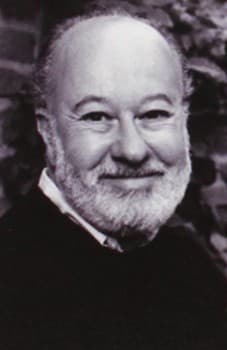
Alvin Schwartz was a renowned American author celebrated for his collections of folklore and urban legends, most notably the "Scary Stories to Tell in the Dark" series. These books, filled with chilling tales and accompanied by memorable illustrations, became a staple for young readers seeking spooky adventures. Schwartz's work tapped into traditional storytelling, making him a significant figure in children's literature.







