“It’s funny how sometimes the things you’re most afraid of are the things that end up saving you.”
— Lily reflecting on her initial reluctance to join the dance class.

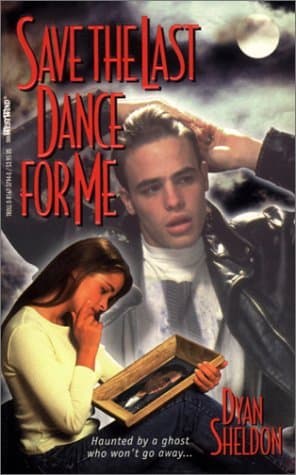
Dyan Sheldon (1993)
Genre
Young Adult / Romance
Reading Time
240 min
Key Themes
See below
Sign in to track this book
A fed-up teen unearths a 1959 tragedy to give her ghostly, big-brother-like housemate the peace he desperately needs, and herself a moment of quiet.
Angel, a modern teenager, lives in a house haunted by BJ, a charming but infuriating ghost from 1959. BJ constantly teases her, criticizes her fashion, and interferes with her life, acting like an overprotective older brother. Angel is the only one who can see or hear him. Her daily life is interrupted by a new neighbor, Brad, a handsome boy. Angel is immediately drawn to him, much to BJ's disapproval, who tries to sabotage any potential romance. BJ's presence, though irritating, is constant in Angel's life, and she often talks to him out loud, confusing her friends and family.
BJ's interference in Angel's life increases with Brad's arrival. He gives her unwanted fashion advice, comments on her conversations, and even tries to trip Brad. Angel finds herself in awkward situations, trying to explain her strange behaviors, like talking to herself or reacting to invisible nudges. Despite her frustration, Angel feels a strange connection to BJ. He is always there, a constant, if annoying, companion. She wishes he would disappear but also feels a sense of affection for the mischievous ghost who has been part of her life for as long as she can remember.
While cleaning the attic, Angel finds an old shoebox with vintage items, including a photo of a young man who looks like BJ. The box also contains a dance card, a corsage, and a newspaper clipping about a 1959 accident involving a local boy named Bradley Johnson — BJ. This discovery makes Angel curious. She realizes that BJ is not just a random ghost; he is a person with a history, a life cut short. The items link to his past, a past he rarely talks about, and Angel feels a sudden urge to understand his death.
Driven by curiosity, Angel begins to investigate BJ's death. She visits the local library, looking through old newspaper archives and microfilms from 1959. The articles confirm the basic facts: Bradley Johnson, a popular high school student, died in a car accident. However, the details are vague, and Angel senses there is more to the story. She feels a responsibility to BJ, a need to understand the truth behind his death. BJ, initially dismissive, becomes agitated as Angel digs deeper, his usual playful mood replaced by quietness, hinting at unresolved issues from his past.
Angel's research leads her to discover that BJ had close friends. She tracks down one of them, Mrs. Henderson, an elderly woman who was BJ's girlfriend, Brenda, in 1959. Angel nervously approaches Mrs. Henderson, explaining her unusual connection to BJ. Mrs. Henderson, though skeptical at first, is convinced by Angel's earnestness and accurate descriptions of BJ's personality. Brenda shares stories about BJ's life, his dreams, and the world of 1950s teenagers, painting a picture of a boy full of life. These conversations deepen Angel's understanding of BJ, not just as a ghost, but as a person with a rich, tragic history.
During their conversations, Mrs. Henderson (Brenda) reveals the painful truth about the night BJ died. It was the night of the big school dance. BJ and Brenda argued about his flirting with another girl. In anger and jealousy, Brenda refused to dance with him, telling him to 'save the last dance for someone else.' BJ, upset, stormed out and drove off, leading to the fatal accident. Brenda has carried the guilt of their argument and her harsh words for decades, believing her actions contributed to his death. This revelation impacts Angel, who begins to understand the depth of BJ's sorrow and his inability to move on.
Angel realizes that BJ's constant presence and his inability to leave are not just about Brenda's guilt, but his own. BJ has been reliving that night, tormented by his argument with Brenda and the reckless decision to drive away in anger. He feels responsible for his own death and the pain he caused. His playful teasing and interference with Angel's life were a distraction, a way to avoid confronting painful memories. Angel understands that BJ is not just a ghost haunting a house; he is a soul trapped by unresolved emotions, unable to find peace until he confronts and accepts what happened.
With the truth uncovered, Angel feels a strong urge to help BJ find closure. She believes that for BJ to move on, he needs to experience a resolution to that fateful night. Inspired by the dance card she found, Angel plans to recreate a 1950s-themed dance in her backyard. She enlists her friends, including Brad, to help organize the event, complete with vintage decorations and music. Her goal is to create an environment where BJ can finally confront his past, perhaps even have that 'last dance' he never got to have, and release himself from the guilt that has bound him to the house for so long.
The night of the dance arrives, and Angel's backyard is transformed into a 1950s scene. Brenda (Mrs. Henderson) is also present, invited by Angel. As the music plays, Angel dances with BJ, guiding him through the steps, while also having a heartfelt conversation. She encourages him to acknowledge his regrets and to forgive himself. During a slow dance, Brenda, seeing Angel dancing alone, feels a strong sense of BJ's presence. Angel helps a silent, emotional farewell between BJ and Brenda, allowing them both to express their unspoken apologies and find peace. It is a moment of letting go and forgiveness.
After the emotional dance and silent farewell, Angel feels BJ's presence fade. He gives her one last, gentle nudge, a final sign of his departure, and then he is gone. The house, once filled with his chatter and mischief, now feels quiet and empty, but also peaceful. Angel feels a mix of sadness and relief. She has helped her ghostly friend find peace, and in doing so, has found her own path. With BJ gone, Angel is free to fully embrace her own life, without constant ghostly interference. Her relationship with Brad, complicated by BJ's antics, can now grow without obstruction, marking a new beginning for her.
The Protagonist
Angel evolves from a frustrated teenager tolerating a ghost to a compassionate young woman who actively helps a lost soul find peace, maturing in her understanding of life and loss.
The Supporting Character/Deuteragonist
BJ's arc is one of finding peace and release, moving from a mischievous, trapped spirit to a soul finally able to cross over after confronting his past and forgiving himself.
The Supporting Character
Brad's arc is less about personal transformation and more about his role in supporting Angel's journey, evolving from a crush to a deeper romantic connection as he accepts Angel's unusual life.
The Supporting Character
Brenda's arc is one of long-awaited release and forgiveness, finally shedding the guilt she carried for decades after confronting the past through Angel.
The Mentioned/Minor Supporting
Static, they remain unaware of BJ's presence throughout the story.
The novel explores grief and guilt, for both the living and the deceased. BJ is trapped not by the house, but by his guilt over his argument with Brenda and his reckless actions. Brenda carries decades of guilt for her harsh words. Angel's journey to uncover the truth and help with closure allows both BJ and Brenda to confront and release these burdens. This highlights that forgiveness is essential for moving forward. The recreation of the dance symbolizes forgiveness and letting go.
““Sometimes, the hardest person to forgive is yourself.””
The story shows how the past, even decades old, influences the present. BJ's 1959 tragedy prevents him from moving on, trapping him in Angel's house and affecting her current life and relationships. The unresolved emotions from that era show up in his meddling and his inability to find peace. Angel's investigation into the past is a necessary step to free both BJ and herself from the past's constraints, allowing the present to unfold unburdened. The contrast of 1950s culture with modern teenage life further emphasizes this theme.
““He was stuck, a record playing the same sad song over and over, and I was the only one who could hear it.””
Despite their different eras and the fact that one is a ghost, Angel and BJ develop a deep connection. Angel's initial annoyance turns into empathy as she understands BJ's sorrow. Her willingness to spend time and effort solving his mystery shows strong compassion. This theme extends to her relationship with Brenda, where Angel acts as a bridge, connecting past and present to help healing. The story suggests that true connection goes beyond physical boundaries and time, rooted in understanding and a desire to ease suffering.
““He was a ghost, sure, but he was also a person, and he deserved to be remembered, to be understood.””
Angel's journey is about helping BJ and her own self-discovery. Living with a ghost forces her to navigate unusual social situations and become resilient. By helping BJ find peace, she also clears a path for her own future, free from his constant interference. Her relationship with Brad, initially complicated by BJ, can grow once BJ is gone, symbolizing her ability to fully embrace her own life and choices without the lingering influence of the past. Her quest to solve BJ's mystery empowers her and strengthens her sense of self.
““It was time for me to dance my own dance, without a ghost looking over my shoulder.””
A ghost only visible to the protagonist.
BJ's existence as a ghost visible only to Angel serves as a central plot device. This creates both comedic situations (Angel talking to herself, reacting to invisible nudges) and emotional depth. It isolates Angel in her experience, making her quest to help BJ uniquely hers. It also allows for direct interaction and dialogue between the past (BJ) and the present (Angel), facilitating the exposition of BJ's backstory and his emotional state. The 'unseen' nature highlights the personal burden and responsibility Angel feels towards BJ.
A physical artifact from the past that triggers the plot.
The discovery of BJ's old shoebox containing his photograph, a dance card, and a newspaper clipping is the catalyst for Angel's investigation. These tangible links to BJ's past provide the initial clues and ignite Angel's curiosity. The dance card, in particular, becomes a powerful symbol and a key element in Angel's plan for BJ's closure, literally shaping the climax of the story. Without these specific artifacts, Angel might never have delved into BJ's tragic history.
A character who holds key information from the past.
Brenda (Mrs. Henderson) functions as the primary witness to the events of 1959. Her testimony is crucial for uncovering the full truth behind BJ's death and the lingering guilt. Without her first-hand account, Angel would only have fragmented information from archives. Brenda's presence also provides an emotional connection to the past, allowing for a poignant moment of reconciliation and closure for both her and BJ, facilitated by Angel. She is the living link to the unresolved past.
An event designed to symbolically resolve past trauma.
The 1950s-themed dance organized by Angel is a powerful plot device that serves as the climax and a symbolic resolution. It's not just a party; it's a carefully crafted environment designed to allow BJ to confront and release his past trauma. By recreating the setting of his final, tragic night, Angel provides BJ with a chance for a different ending, a 'last dance' that brings closure and forgiveness. This event literally brings the past into the present to heal the wounds of time.
“It’s funny how sometimes the things you’re most afraid of are the things that end up saving you.”
— Lily reflecting on her initial reluctance to join the dance class.
“Sometimes you have to let go of the picture in your head of what you think things should be, and just let them be what they are.”
— Lily struggling with her expectations versus reality of a situation.
“Being brave isn't about not being scared. It's about being scared and doing it anyway.”
— A mentor figure giving advice to Lily about facing her anxieties.
“The best kind of magic is the kind you make yourself.”
— Lily realizing her own agency in creating positive change in her life.
“You don't need a prince to save you. You can save yourself.”
— A strong female character challenging traditional fairy tale narratives.
“Life isn't about waiting for the storm to pass, it's about learning to dance in the rain.”
— A character encouraging resilience and finding joy amidst difficulties.
“Sometimes the right person comes along when you least expect it, and sometimes they're someone you've known all along.”
— Lily pondering the nature of romantic relationships and unexpected connections.
“It's okay to not have all the answers. It's okay to be a work in progress.”
— Lily finding comfort in the idea that personal growth is an ongoing journey.
“The greatest adventures often begin with a single, hesitant step.”
— Lily's initial trepidation about trying something new leading to a significant experience.
“Don't ever let anyone tell you that you're not good enough. Believe in yourself, even when no one else does.”
— A supportive friend offering encouragement to Lily.
“Sometimes the quietest voices have the most important things to say.”
— Lily observing a shy character's insightful contributions.
“You can't force a connection, it has to bloom naturally.”
— Lily realizing the organic nature of genuine friendships and relationships.
“The past is a place of reference, not a place of residence.”
— A character advising Lily to move forward from past mistakes or regrets.
“True strength isn't about how much you can lift, but about how much you can overcome.”
— Lily reflecting on emotional resilience rather than just physical strength.
Ready to see how well you understood this book? Take our interactive quiz with 10 questions.