“Sometimes you have to let go of the picture of what you thought things would be like and just enjoy what they are.”
— Charlie reflecting on the changes to her family and the wedding preparations.

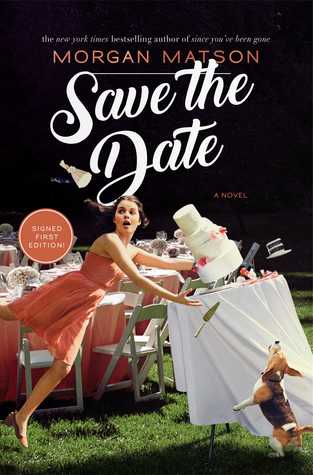
Morgan Matson (2018)
Genre
Young Adult / Romance
Reading Time
8-10 hours
Key Themes
See below
Sign in to track this book
As her childhood home faces sale, Charlie tries to make her family's last wedding weekend perfect, but it falls apart into a funny mess, forcing her to accept change and the future.
Seventeen-year-old Charlie Grant is excited for her oldest sister Linnie's wedding at their family home, a house in rural Connecticut that will soon be sold. This weekend is the first time in years all four of her older siblings—Linnie, Mike, JJ, and Danny—will be together. Charlie, a cartoonist, hopes to draw the event, saving these last moments before everything changes. She wants to make the weekend perfect, ignoring her own college decisions and the arrival of her childhood crush, Jesse Foster, who is now a groomsman. However, small problems quickly appear, hinting at the disaster to come.
As the Grant family and wedding guests arrive, Charlie's plan for a perfect weekend starts to fall apart. Her brother Danny brings an awful girlfriend, Tiffany, upsetting everyone. A stray dog, later named Barky, shows up and is noisy. The house alarm keeps going off, causing constant trouble. Charlie's childhood crush, Jesse Foster, is there, creating tension. Amidst the growing chaos, Charlie is drawn to the wedding planner's nephew, Bill, who is charming and helpful. These early problems show the challenges the family will face before Linnie's wedding.
The wedding weekend continues to worsen. Linnie's fiancé, Ben, finds his tuxedo missing, leading to a frantic search. The Grants' neighbor, Mr. Henderson, seems to want to ruin the wedding, complaining about noise and threatening to call the police. The papergirl, who dislikes the Grant family, keeps delivering the newspaper to the wrong house and causes small annoyances. Charlie, overwhelmed, struggles to stay positive. She talks to Bill, finding comfort in his calm way amidst the chaos, while also dealing with her feelings for Jesse.
A big rainstorm hits the Grant home, making outdoor wedding plans harder. The bad weather forces guests inside, increasing family tensions. Relatives who haven't spoken in years are forced to be close, leading to awkward moments. Charlie watches her siblings more closely, realizing their lives have changed in ways she hadn't understood. She sees Linnie's stress, Mike's quiet problems, JJ's attempts to impress, and Danny's unawareness. These observations challenge Charlie's perfect idea of her family, making her see their adult lives.
Just when things seem bad enough, the Justice of the Peace cannot be found. Frantic calls and searches follow, adding huge pressure to Linnie and Ben. Charlie, seeing her sister's worry, feels the weight of the disaster. The family works together, trying to find a replacement, but options are few due to the last-minute need and the storm. This event shows the family's ability to unite in a crisis, despite their differences, and makes Charlie step up to help solve the problem.
The wedding band arrives with a 'covers only' rule, disappointing Linnie, who wanted original music. This small but important detail further breaks her vision for the perfect wedding. Meanwhile, the odd group of wedding guests, including quirky relatives and friends, add to the comedy. Charlie, with her sketchbook, watches everyone, drawing their absurd and endearing qualities. The interactions among guests show the complex dynamics of the Grant family and their friends, giving Charlie lots of material for her art.
Amidst the growing chaos, Charlie finally deals with her long-standing feelings for Jesse Foster. However, her connection with Bill, the wedding planner's nephew, becomes clear. She struggles with what she expected versus what she feels. The Grant family has to make big changes to the wedding. The outdoor ceremony is moved inside, and other plans are changed due to the problems. These changes, initially upsetting, lead to unexpected moments of closeness and laughter, showing the family's strength and ability to adapt.
The wedding day arrives, and Linnie and Ben's ceremony happens. It is not the perfect event Charlie had imagined, but it has an improvised charm and real emotion that makes it special. The family works together, with different members helping to fill gaps and solve last-minute problems. Charlie, with her sketchbook, captures the real, beautiful moments of the day – the laughter, the tears, and the love that connects her family. The wedding, despite its flaws, becomes a celebration of love and family, and their ability to find joy in chaos.
As the wedding ends, Charlie's view changes. She realizes that her search for a 'perfect' last weekend was about trying to stop time and prevent change. Seeing her family handle the chaos with humor, strength, and love, she understands that true happiness does not come from perfect ideals but from accepting the messy, unpredictable reality of life. She accepts that her family will change, and that the house, though loved, is just a place for their memories, not the memories themselves. This helps her look to her own future with new clarity.
With the wedding done, Charlie accepts her family home being sold. She understands that while the house holds many memories, the people in it are what truly matter. She also finds clarity about her college decisions, no longer feeling pressure to hold onto the past. Most importantly, Charlie fully accepts her feelings for Bill, seeing their real connection. She realizes that holding onto the past means missing out on the exciting possibilities of the future, for herself and for her family. The weekend, though chaotic, leads to new beginnings.
The Protagonist
Charlie learns to accept change, realizing that true happiness isn't found in clinging to the past but in embracing the present and future, and that her family's love transcends their physical home.
The Supporting
Linnie learns to let go of her need for perfection, finding joy in the improvised and heartfelt nature of her wedding despite the many mishaps.
The Love Interest
Bill remains a steady and supportive presence, helping Charlie to navigate her emotional turmoil and ultimately choose a path towards her future.
The Supporting
Jesse remains largely static, serving as a catalyst for Charlie's self-discovery and her realization that her heart lies elsewhere.
The Supporting
Mike's arc is subtle, revealing his individual struggles and demonstrating that even the 'stable' siblings have their own challenges, prompting Charlie's empathy.
The Supporting
Danny remains largely consistent, providing comic relief and demonstrating the enduring, if sometimes exasperating, nature of sibling relationships.
The Supporting
JJ's arc shows his underlying vulnerabilities beneath his confident exterior, contributing to Charlie's evolving understanding of her family's complexities.
The Mentioned
Mr. Henderson remains a consistent source of minor conflict, never truly changing, but his complaints become part of the background noise of the chaotic weekend.
Charlie's main problem is trying to keep the past, especially her perfect idea of her family and their life in their childhood home. The house sale and Linnie's wedding mean big changes she fears. Through the chaotic weekend, Charlie learns that trying to stop time does not work and that happiness comes from accepting life's natural flow. The many wedding problems make her realize that perfection is not needed for joy, and that her family's love is not tied to a place or a moment. This shows in her initial refusal to think about college or her future, and her eventual acceptance of Bill.
“Sometimes, trying to keep everything like it was in the past means missing out on the future.”
Charlie starts the book with an idealized view of her older siblings and family. She expects a perfect reunion. However, as the wedding weekend progresses, she sees the adult complexities, tensions, and individual problems of each family member—Linnie's stress, Mike's quiet worries, Danny's bad choices, and JJ's insecurities. The fighting relatives and unexpected problems make her see her family not as a perfect unit, but as flawed, loving people living their own lives. This change in view lets her appreciate their strength and love more, even in chaos, as seen when they all work together despite the missing Justice of the Peace.
“Families were like that. Messy. Complicated. And worth it.”
Charlie starts the weekend still liking Jesse Foster, who represents a familiar past. However, the chaotic wedding leads her to an unexpected connection with Bill, the wedding planner's nephew. Bill's calm way, observation skills, and humor in the disaster draw Charlie in. This theme shows how real connection can grow in unexpected situations and with unexpected people, challenging Charlie's ideas of romance. Her journey from wanting Jesse to having real feelings for Bill is a core part of her personal growth.
“Maybe the best things didn't come from careful planning, but from happy accidents.”
The entire wedding weekend shows the beauty found in imperfection. From the lost tuxedo and the broken alarm to the uncooperative band and the missing Justice of the Peace, nothing goes as planned. Charlie, at first upset by each problem, slowly learns to appreciate the improvised charm and real moments that come from the chaos. The wedding, far from the perfect event Linnie and Charlie imagined, becomes a unique and heartfelt celebration, proving that real joy can be found in the messy reality of life. The family's ability to laugh and adapt makes the imperfect perfect.
“It wasn't perfect. But it was ours. And it was beautiful.”
A looming event that drives Charlie's desire to preserve the past.
The decision to sell the Grant family home serves as a central catalyst for Charlie's emotional journey. It represents the end of an era and the onset of inevitable change, fueling her desperate need to create one last 'perfect' family memory. This device creates a sense of urgency and nostalgia throughout the narrative, anchoring Charlie's resistance to the future and her idealized view of the past. The house itself functions as a character, holding memories and symbolizing the family's shared history.
A continuous stream of mishaps that disrupt plans and force characters to adapt.
The accumulation of various wedding disasters—a stray dog, a malfunctioning alarm, a missing tuxedo, a troublesome neighbor, a storm, a missing Justice of the Peace, an uncooperative band—is a primary plot device. These events create comedic chaos, drive the narrative forward, and force the characters, especially Charlie, to confront their expectations and adapt. Each problem chips away at the illusion of perfection, ultimately leading to Charlie's realization that true joy isn't found in flawless execution but in resilience and connection.
A tool for observation and emotional processing for the protagonist.
Charlie's sketchbook serves as a crucial plot device, allowing her to process and document the chaotic events of the weekend. It functions as both a narrative lens, showing the reader what Charlie observes and focuses on, and a symbol of her artistic aspirations. As the story progresses, her drawings evolve from idealized depictions to more realistic and humorous portrayals of her family, mirroring her own emotional growth and acceptance of reality. It's how she captures the 'messy, complicated' truth.
A romantic dilemma that highlights Charlie's internal conflict between past and future.
The presence of Jesse Foster, Charlie's long-standing childhood crush, juxtaposed with her developing connection with Bill, the wedding planner's nephew, creates a significant romantic plot device. This dilemma externalizes Charlie's internal struggle between clinging to the familiar comfort of the past (Jesse) and embracing the exciting, uncertain possibilities of the future (Bill). Her choice between them mirrors her larger thematic journey of accepting change and moving forward in her life.
“Sometimes you have to let go of the picture of what you thought things would be like and just enjoy what they are.”
— Charlie reflecting on the changes to her family and the wedding preparations.
“It’s funny how you can live with people your whole life and still not really know them.”
— Charlie observing her family dynamics during the wedding planning.
“Maybe the best way to figure out what you want is to try a bunch of things you don't.”
— Charlie contemplating her future and career path.
“The thing about memories is that they're not always accurate. Sometimes they're just the stories we tell ourselves.”
— Charlie thinking about her family's past and shared narratives.
“It's never too late to start over, to try something new, to be someone different.”
— Charlie considering her options after high school and the changes in her life.
“Grief is a funny thing. It doesn’t just go away. It changes, it softens, but it’s always there.”
— Charlie reflecting on the loss of her grandmother.
“Sometimes the biggest adventures are the ones that happen right in your own backyard.”
— Charlie finding excitement and discovery in her familiar surroundings.
“You can't force people to be who you want them to be. You just have to love them for who they are.”
— Charlie coming to terms with her family members' personalities and choices.
“The best kind of magic is the kind you make yourself.”
— Charlie finding joy and creativity in her own projects and experiences.
“It's okay to not have all the answers. Sometimes the best path is the one you discover as you go.”
— Charlie feeling uncertain about her post-high school plans.
“Family isn't always perfect, but it's always family.”
— Charlie's overarching realization about her quirky family.
“Sometimes the things we're most afraid of are the things that end up being the most wonderful.”
— Charlie facing her anxieties about the future and new experiences.
“Life doesn't always go according to plan, and sometimes that's a good thing.”
— Charlie's perspective on the unexpected turns her summer takes.
“The greatest stories aren't always in books. Sometimes they're in the people around you.”
— Charlie appreciating the rich narratives within her own family.
Ready to see how well you understood this book? Take our interactive quiz with 10 questions.

Biography coming soon.