“There are no good guys, no bad guys. Just guys. Doing stuff.”
— Ben reflecting on the nature of the drug world.

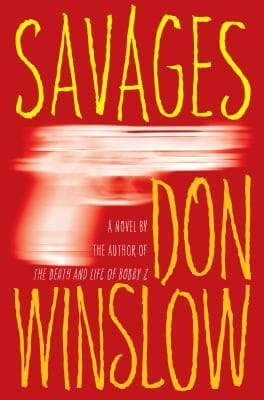
Don Winslow (2010)
Genre
Thriller / Mystery
Reading Time
300 min
Key Themes
See below
Sign in to track this book
When a laid-back Laguna Beach marijuana operation refuses to sell out to the Baja Cartel, their shared girlfriend is kidnapped, starting a brutal war where loyalty, love, and lives are on the line.
Ben and Chon run a successful marijuana business in Laguna Beach, California. Ben, a Berkeley-educated botanist and philanthropist, grows the best weed, while Chon, a former Navy SEAL and mercenary, handles security. Their operation is profitable, supplying a specific clientele. Central to their lives is Ophelia (O), a free-spirited young woman involved with both men in a polyamorous relationship. They share a luxurious house, surfing, enjoying the beach, and indulging in their unique dynamic, believing their world is safe. Their biggest problem seems to be managing their intertwined affections for O.
The peace of Ben and Chon's lives ends with the arrival of messengers from the Baja Cartel, led by Elena Sánchez. The cartel, expanding into California, demands a partnership: Ben and Chon are to become their exclusive distributors, handing over their entire operation. The cartel's proposal is an offer, but the underlying threat is clear. Ben and Chon value their independence and the purity of their product, so they refuse. Chon, especially, is protective of their autonomy and lifestyle, believing they can withstand any external pressure, as they have with local rivals.
After Ben and Chon's refusal, the Baja Cartel escalates its tactics. While Ben and Chon are out, cartel enforcers, led by Lado, break into their home. They assault and abduct Ophelia, leaving a chilling video message of O in captivity. This act is a clear, undeniable message to Ben and Chon: comply or O will suffer and die. The kidnapping shatters their sense of security and forces them to confront the true power of the cartel, shifting their focus from business to a desperate rescue mission.
Devastated and enraged, Ben and Chon immediately begin planning to rescue O. They know involving the police is not an option, as it would expose their illicit business and likely put O in greater danger. Chon's military background kicks in, focusing on strategy, while Ben's intelligence is applied to gathering information and resources. Their immediate goal is to locate O and find a way to outsmart the cartel, even if it means going against a powerful, violent organization. They start by using their network of contacts.
Ben and Chon realize they need inside information to track O and the cartel. They reluctantly turn to Dennis Cain, a corrupt DEA agent who has been on their payroll for years, providing protection and intelligence. Cain, motivated by money, agrees to help, though cautiously, as he is wary of the cartel's reach. They also seek out Alex, a former high-ranking accountant for the Baja Cartel who previously tried to expose their operations and is now in hiding. Alex's knowledge of the cartel's finances, structure, and safe houses becomes crucial to their plan, providing vital leads.
Through their contacts, Ben and Chon make an offer to the Baja Cartel: they will surrender their entire marijuana business, including their cultivation methods, client list, and distribution network, in exchange for O's safe return. This is a strategic move, designed to look like capitulation while buying them time and creating an opportunity. Elena Sánchez, interested in acquiring their high-quality operation without more bloodshed, agrees to consider the terms, setting the stage for negotiations. However, Ben and Chon do not intend to truly give up their business or O.
Ben and Chon begin to execute an elaborate plan. They arrange for a massive amount of cash, the cartel's payment for their 'cooperation,' to be transported, all while secretly planning to reclaim it. They also set up a parallel scheme involving a large shipment of their premium marijuana, intended to be intercepted and used as leverage. Their strategy involves creating multiple layers of deception, using Dennis Cain to feed misinformation and orchestrate diversions, and using Alex's knowledge to anticipate the cartel's movements. The goal is to create chaos and confusion, allowing them to pinpoint O's location and stage a rescue.
During her captivity, Ophelia endures brutal treatment and psychological torture by Lado, the cartel's chief enforcer, who enjoys cruelty. She endures physical abuse and constant threats, but her spirit remains unbroken. Surprisingly, one of the cartel's low-level enforcers, a young man named Savages, develops a reluctant sympathy for O, subtly providing small comforts and information when he can. This unexpected connection, born out of shared humanity amid barbarity, offers O a glimmer of hope and provides crucial insights into her captors' movements and intentions, which she tries to subtly convey when able.
With O's location confirmed, Ben and Chon spring their trap. They orchestrate a series of planned ambushes and diversions. Chon, using his combat skills, leads a direct assault on the cartel safe house where O is being held, engaging in intense firefights. Ben, using his intellect and network, manipulates the flow of money and drugs, creating financial chaos for the cartel and drawing their attention away from the primary rescue operation. The plan is dangerous and violent, pushing both men to their limits as they confront the full force of the Baja Cartel's enforcers.
After a brutal confrontation, Chon successfully infiltrates the safe house and rescues Ophelia. She is battered but alive. Meanwhile, Ben's financial maneuvers severely disrupt the cartel's operations, leading to significant losses and internal strife. The rescue has its costs, but Ben, Chon, and O manage to escape the immediate danger. They inflict a devastating blow to the Baja Cartel, not just by retrieving O, but by stealing their money and disrupting their expansion plans, leaving Elena Sánchez furious and seeking revenge.
With O safe, the trio retreats to a remote, undisclosed location to recover and assess their next steps. They are bruised, physically and emotionally, but their bond is stronger than ever. They know that the Baja Cartel, particularly Elena Sánchez and Lado, will not forgive or forget. Their previous life in Laguna Beach is gone. They begin to plan for a future that involves constant vigilance and the potential for continued conflict, understanding that they have made powerful enemies. Their immediate focus is on O's recovery and securing their continued freedom, knowing the fight isn't truly over.
The Protagonist
Ben transforms from an idealistic, if illegal, businessman into a cunning and ruthless strategist, willing to engage in extreme measures to protect those he loves. He learns that even good intentions can be corrupted by the demands of survival.
The Protagonist
Chon's character remains largely consistent in his capacity for violence and loyalty, but the abduction of O pushes him to new extremes, forcing him to confront the limits of his own ferocity and the consequences of his actions.
The Protagonist/Catalyst
O transforms from a seemingly carefree and somewhat naive individual into a resilient survivor, demonstrating immense courage and mental fortitude in the face of extreme adversity. Her ordeal hardens her but also solidifies her bond with Ben and Chon.
The Antagonist
Elena's arc demonstrates the unyielding nature of cartel power, as her initial attempts at calculated expansion are met with unexpected resistance, leading her to escalate her tactics and suffer significant losses, fueling her desire for ultimate revenge.
The Antagonist
Lado's character remains consistently brutal, serving as the primary physical threat and symbol of cartel cruelty. His actions ultimately lead to a violent confrontation that tests the limits of Chon's combat skills.
The Supporting
Cain's arc highlights the moral ambiguity of law enforcement in the drug trade, showing how corruption can be both a hindrance and a necessary evil in extraordinary circumstances. He faces increasing pressure as he gets caught between the cartel and Ben/Chon.
The Supporting
Alex's arc is one of reluctant involvement and redemption, as he uses his past knowledge to aid in dismantling the cartel, finding a measure of purpose and safety in helping Ben and Chon.
The Mentioned
Savages' brief arc demonstrates that even within the darkest organizations, sparks of humanity can exist, offering a momentary reprieve for O.
The novel explores the high cost of maintaining personal freedom and independence, especially when operating outside societal norms. Ben and Chon value their autonomous, illicit lifestyle, but this freedom is directly challenged by the Baja Cartel's demands for control. Their refusal to yield leads to O's abduction, forcing them to pay a price in violence, loss, and the destruction of their former lives. The story suggests that true independence often requires sacrifice and a willingness to fight against overwhelming forces, as seen when they risk everything rather than submit to the cartel's will.
““There’s no such thing as ‘free’ when you’re dealing with them. Someone always pays.””
At its core, 'Savages' is a story about the fierce, unconventional love and loyalty between Ben, Chon, and Ophelia. Their polyamorous relationship forms a unique family unit, and O's abduction moves Ben and Chon to action, showing that their bond goes beyond their illicit business. Their loyalty to each other is absolute, driving them to extreme violence and cunning to protect their 'family.' The theme highlights how love, even in its most unconventional forms, can be the most powerful motivator, pushing individuals to extraordinary lengths to defend those they care about, as evidenced by their willingness to take on an entire cartel for O.
““We are not a business. We are family. And you don’t mess with family.””
The book contrasts the 'civilized' world of Laguna Beach with the brutality of the drug cartel. Ben, a philanthropist and environmentalist, represents a veneer of civility, even within his illegal enterprise. Chon, a former mercenary, embodies controlled violence. The cartel, particularly Lado, represents unbridled, nihilistic brutality. The story questions where the line between 'savage' and 'civilized' truly lies, as Ben and Chon are forced to descend into extreme violence and cunning to combat the cartel's barbarism. It suggests that even 'good' people can become savage when pushed to protect what they love, blurring the moral lines.
““They called us savages. But what did they call themselves, the ones who came for us?””
The novel is full of moral ambiguity, where characters operate in shades of gray. Ben and Chon are drug dealers but also philanthropists; Dennis Cain is a DEA agent who is corrupt. The lines between right and wrong are constantly blurred, forcing the reader to question traditional notions of heroism and villainy. The story suggests that in the world of drug trafficking, corruption is widespread, affecting law enforcement, criminals, and even those who try to maintain a moral stance. Survival often requires compromise and engaging in morally questionable acts, making 'good' and 'evil' relative terms.
““There are no good guys and bad guys. Just guys who win and guys who lose.””
The story is primarily narrated by Ophelia, often retrospectively and with a distinct, biased voice.
Ophelia (O) serves as the primary narrator, offering a highly subjective and emotionally charged perspective on events. Her voice is distinctive, often sarcastic, philosophical, and deeply personal. This device allows the reader to experience the story through her unique lens, emphasizing her bond with Ben and Chon and her psychological state during captivity. However, her narration also means the reader's understanding is filtered through her experiences and interpretations, potentially obscuring certain details or presenting a biased view of other characters' motivations, particularly Ben and Chon's more violent actions, which she often justifies through love.
The narrative frequently jumps in time, revealing past events or hinting at future outcomes.
Winslow employs frequent use of non-linear storytelling, incorporating short, sharp flashbacks to illustrate the characters' backstories (e.g., Chon's military past, Ben's environmentalism, O's upbringing) or the origins of their relationship. He also uses brief flashforwards, often as O's commentary, to hint at the consequences of actions or to build suspense about whether certain characters survive. This fragmented structure keeps the reader engaged, provides context without derailing the main plot, and mirrors the chaotic, high-stakes nature of the characters' lives, while also allowing O to reflect on the events with a degree of hindsight.
O's kidnapping serves as the central object or goal that drives the plot.
While O is a central character, her abduction functions as a classic MacGuffin, a plot device that sets the entire story in motion and provides the primary motivation for the protagonists. Her capture is the catalyst that forces Ben and Chon to abandon their comfortable lives and confront the Baja Cartel directly. Without her being taken, the core conflict would not exist. The focus shifts from merely 'rescuing O' to the elaborate, violent, and strategic process of achieving that goal, revealing the characters' true natures and the brutal world they inhabit.
Ben and Chon are morally ambiguous figures who operate outside the law.
Ben and Chon are clearly the protagonists, but they are not traditional heroes. They are drug dealers, albeit 'ethical' ones, who engage in violence, corruption, and illegal activities. This device challenges conventional morality, forcing the audience to empathize with characters who are, by societal standards, criminals. Their anti-hero status allows the narrative to explore complex themes of justice, loyalty, and survival in a morally gray world, where the 'bad guys' (the cartel) are even worse, making Ben and Chon's actions, however violent, seem justified in the context of protecting their unique family and way of life.
“There are no good guys, no bad guys. Just guys. Doing stuff.”
— Ben reflecting on the nature of the drug world.
“The thing about paradise is that it's easy to take for granted. Until it's gone.”
— Before the cartel's arrival shatters their peaceful existence.
“You can't negotiate with a shark. You just get eaten.”
— Chon's cynical view on dealing with the Baja Cartel.
“Love is the ultimate weapon. And the ultimate weakness.”
— Reflecting on the motivations behind their actions to save O.
“Some people are just born to be broken. Others are born to break them.”
— Lado's dark philosophy on human nature.
“The best revenge is living well. The second best is a bullet to the head.”
— Chon's brutal sense of justice.
“Fear is a good motivator. But rage is better.”
— Ben and Chon preparing for their confrontation with the cartel.
“When you're a savage, you have to be smarter than the civilized people. Because they don't expect it.”
— Ben's realization about underestimation.
“Money talks. But silence screams.”
— Discussing the power dynamics and secrets in the drug world.
“You think you know who you are. Until someone takes away everything you love.”
— O's internal struggle after her kidnapping.
“There's a fine line between crazy and brilliant. And we dance on it.”
— Ben and Chon acknowledging their unconventional methods.
“The only way out is through. And sometimes, through means getting your hands dirty.”
— Their determination to rescue O, no matter the cost.
“Everyone has a price. The trick is finding out what it is.”
— Lado's perspective on human corruptibility.
“You don't get to choose your family. But you do get to choose who you fight for.”
— The bond between Ben, Chon, and O, despite their unconventional lives.
Ready to see how well you understood this book? Take our interactive quiz with 10 questions.
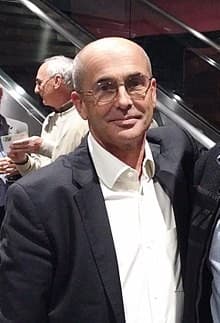
Don Winslow is a critically acclaimed author known for his gritty, fast-paced crime thrillers. His notable works include "The Power of the Dog," "The Cartel," and "Savages," which explore the brutal realities of the Mexican drug war and other dark corners of society. Winslow's writing is characterized by meticulous research, complex characters, and a relentless narrative drive.







