“I wish I were a girl again, with a mother to tell me what to do.”
— Sati reflects on her past and the loss of her mother, expressing a desire for simpler times.


Christopher Pike (1990)
Genre
Thriller / Fantasy / Spirituality / Science Fiction / Young Adult
Reading Time
276 min
Key Themes
See below
Sign in to track this book
A cynical writer's life changes when he gives a ride to a mysterious hitchhiker in the Arizona desert who claims to be God, making everyone she meets question reality, spirituality, and existence.
Michael, a successful but disillusioned writer in the Arizona desert, offers a ride to a young woman hitchhiking. She introduces herself as Sati and calmly states she is God. Michael, an atheist, finds her claim amusing and intriguing, assuming she is either delusional or joking. He brings her back to his isolated house, offering her a place to sleep. Their first conversations are filled with Sati's statements and Michael's skeptical questions, setting up their unusual relationship.
The morning after Sati arrives, Michael notices changes around him. His computer, usually problematic, now works perfectly. Later, his car, which had been sputtering, runs smoothly. Sati attributes these small, convenient events to her presence, fueling Michael's conflict between skepticism and growing wonder. He tries to explain them logically, but the coincidences are too frequent and specific to ignore, slowly eroding his rigid worldview. He watches her closely, looking for signs of deception or mental illness.
Michael's ex-girlfriend, Maya, a spiritual woman who remains important to him, senses an unusual energy from Michael's home. Intrigued, she visits and is immediately captivated by Sati. Unlike Michael, Maya does not question Sati's claims; she feels a deep connection and peace in her presence. Maya believes almost instantly, embracing Sati's teachings with childlike joy. Her unwavering faith contrasts sharply with Michael's skepticism, creating a new dynamic among the three and showing how different people react to the inexplicable.
Still unconvinced, Michael challenges Sati to perform a verifiable 'miracle' — something undeniable that defies all rational explanation. Sati, with her usual calm, says she does not perform tricks or intervene directly in human affairs to force belief. She explains her purpose is to help people see the divine within themselves and the world, not to prove herself. This frustrates Michael, who seeks tangible proof, but it also makes him confront his expectations and the limits of his scientific mindset. He struggles with the idea that true belief might not need obvious displays of power.
Maya's father is terminally ill, and his condition worsens. Distraught, Maya brings Sati to his bedside. Sati simply sits with him, radiating calm energy. Within hours, the father's health improves, and he begins a rapid recovery, baffling his doctors. This event is a turning point for Michael, who witnesses the change. While he still struggles with the implications, the healing is too clear to dismiss. For Maya, it strengthens her faith and deepens her devotion to Sati, reinforcing her belief in Sati's divine nature.
News of Sati's presence and the healing of Maya's father spreads through the small community and beyond. Soon, various individuals, drawn by curiosity, hope, and spiritual longing, gather at Michael's house. They come from different backgrounds — some want healing, others seek enlightenment, and some are just curious. Michael, initially annoyed, becomes a reluctant host and an observer of the growing phenomenon. The group's interactions with Sati and each other show humanity's search for meaning and divinity.
Among the new followers is a charismatic but manipulative man who sees Sati's influence as a chance for personal gain. He tries to convince Sati to use her powers for his agenda, suggesting she start a formal religion or a global movement under his guidance. Sati, however, remains unmoved, refusing to be used for worldly power or to create a structured belief system. Her refusal highlights her core message: divinity is not about external power or hierarchy, but internal awakening. Michael watches this attempted manipulation with concern and admiration for Sati's integrity.
Through his time with Sati and his interactions with the other seekers, Michael experiences a spiritual awakening. He begins to shed his cynicism and intellectual barriers, opening himself to concepts beyond his rational understanding. Sati does not preach or convert him; instead, she guides him to discover answers within himself. He starts to see the world with new eyes, appreciating the interconnectedness of all things and finding beauty in the ordinary. This change is not sudden but a gradual, personal shift in his perception of reality and his place in it.
Just as her influence seems strongest and her followers become dependent on her, Sati calmly announces her time with them is ending. She explains her purpose was not to stay but to ignite a spark within each person, empowering them to find their own path. Her departure is met with sadness, confusion, and a renewed sense of purpose by her followers. She gives a final message emphasizing self-reliance, love, and the inherent divinity within everyone, urging them to continue their spiritual journeys independently.
One morning, Sati is simply gone, vanishing as mysteriously as she arrived. There is no trace, no explanation. Her departure forces Michael, Maya, and the other followers to internalize her teachings and apply them to their daily lives. Michael, now changed, continues his writing with new depth and spiritual perspective. Maya dedicates herself to helping others, showing the compassion Sati inspired. The book ends with the question of Sati's true nature, but more importantly, it stresses the lasting impact she had on the lives she touched, showing that true divinity might appear not in grand spectacles, but in the transformation of individual consciousness.
The Protagonist/Mystic Figure
Sati's arc is less about personal development and more about her impact on others, serving as a catalyst for their growth before subtly departing.
The Protagonist/Narrator
Michael transforms from a hardened atheist and cynic into a spiritually awakened individual who embraces a broader understanding of reality and human connection.
The Supporting Character
Maya's faith is solidified and deepened by Sati, transforming her into an even more compassionate and spiritually empowered individual.
The Supporting/Mentioned
His arc is primarily physical, experiencing a miraculous healing that underscores Sati's power.
The Antagonist (Minor)
His attempts to manipulate Sati are thwarted, reinforcing the integrity of Sati's message.
The Supporting/Collective
The collective undergoes a process of awakening and self-discovery, learning to internalize Sati's teachings rather than relying solely on her presence.
The novel explores divinity not as an external, human-like god, but as a quality within all beings and the universe. Sati consistently refuses worship or grand miracles, instead guiding individuals to recognize their inner power and connection to the divine. This is clear in her interactions with Michael, where she subtly shifts his perception rather than forcing belief, or when she heals Maya's father, showing a deep energetic influence rather than a 'magic trick.' The book suggests that true divinity is found in compassion, love, and self-awareness.
““I am not here to give you God, Michael. I am here to remind you that you already are God.””
This theme is central, mainly driven by Michael's journey. He begins as an atheist and rationalist, demanding proof for Sati's claims. His intellectual resistance clashes with Sati's calm acceptance and Maya's immediate faith. The story carefully breaks down Michael's skepticism, not through forceful conversion, but through subtle, undeniable events and Sati's wisdom. The healing of Maya's father is a key moment that challenges Michael's rational view, making him reconsider the limits of scientific explanation and the validity of experiences beyond his current understanding.
““You want proof, Michael? Look around you. It's everywhere. But you have to choose to see it.””
The core of the story is the personal transformation of those who meet Sati, especially Michael. Her presence acts as a catalyst for individuals to shed illusions, confront their inner selves, and embrace a more enlightened view. Michael's journey from a cynical, isolated writer to a spiritually awakened person is the most prominent example. The various seekers who gather at his house also change, finding healing, peace, or new purpose. Sati's role is not to 'fix' people, but to empower them to fix themselves and realize their potential for growth and understanding.
““The greatest miracle is not changing the world, but changing how you see it.””
The novel subtly critiques the human desire for control and the limits of the ego. Michael's initial skepticism comes from his need to control and categorize reality. The manipulative follower shows the ego's desire to control spiritual power for personal gain. Sati consistently rejects these attempts, emphasizing surrender, acceptance, and letting go of ego attachments. Her departure at the end reinforces this, as she leaves her followers not with a leader, but with the responsibility to cultivate their own inner wisdom, showing that true spiritual power lies beyond external authority.
““Your desire to control is the very thing that keeps you from experiencing true freedom.””
An enigmatic figure whose arrival disrupts the protagonist's life and initiates profound change.
Sati embodies the archetype of the mysterious stranger. She appears suddenly and without a clear origin, possessing extraordinary knowledge and abilities that defy conventional understanding. Her presence acts as a catalyst, forcing Michael to confront his worldview and setting in motion a series of events that transform not only his life but the lives of those around him. Her enigmatic nature keeps the reader, and Michael, constantly questioning her true identity and the source of her power, driving the narrative's central mystery.
An event or character that initiates a significant transformation in the protagonist.
Sati herself serves as the primary catalyst. Her arrival in Michael's life immediately introduces an element of the inexplicable that challenges his rational framework. Every interaction with her, every subtle 'miracle,' and every profound statement she makes pushes Michael further out of his comfort zone and forces him to re-evaluate his beliefs. Without Sati, Michael would remain stuck in his cynical isolation; she is the essential spark that ignites his spiritual awakening and sets him on a path of self-discovery.
The arid, isolated landscape reflects themes of emptiness, testing, and spiritual revelation.
The Arizona desert setting is not merely a backdrop but a symbolic element. Its vast, stark, and often unforgiving nature mirrors Michael's initial emotional and spiritual barrenness. Deserts in literature often represent places of purification, testing, and revelation, where distractions are stripped away, forcing introspection. Sati's appearance in this desolate landscape further emphasizes her otherworldly quality and the idea that profound spiritual truths can be found in unexpected, austere places, away from the noise of civilization, facilitating deep personal reflection and transformation.
The story is told from a first-person perspective, colored by the narrator's evolving beliefs.
While Michael is not intentionally deceptive, his initial narration is heavily influenced by his ingrained skepticism and atheism. As the story progresses and Sati's influence takes hold, his perspective shifts, making him a subtly unreliable narrator in the sense that his understanding and interpretation of events are constantly evolving. This device allows the reader to experience Michael's journey of questioning and transformation alongside him, making the eventual acceptance of the inexplicable more impactful as we witness his internal struggle and the gradual dismantling of his rational defenses.
“I wish I were a girl again, with a mother to tell me what to do.”
— Sati reflects on her past and the loss of her mother, expressing a desire for simpler times.
“The greatest prison people live in is the fear of what other people think.”
— Sati offers a profound observation about human nature and societal pressures.
“Love isn't something you find. Love is something that finds you.”
— Sati shares her perspective on the nature of love, suggesting it's an unbidden force.
“Sometimes you have to let go of the picture of what you thought life would be like and learn to find joy in the story you are actually living.”
— Sati provides advice on accepting reality and finding happiness amidst unfulfilled expectations.
“There are no mistakes, only lessons.”
— Sati offers a philosophical viewpoint on setbacks and personal growth.
“The mind is everything. What you think you become.”
— A classic spiritual concept emphasized by Sati, highlighting the power of thought.
“Even in the darkest of times, there is always hope.”
— Sati offers a message of resilience and optimism during challenging circumstances.
“You can't save anyone if they don't want to be saved.”
— Sati reflects on the limits of intervention and the importance of individual will.
“The past is where you learned the lesson. The future is where you apply the lesson. Don't give up in the middle.”
— Sati encourages perseverance and forward-thinking, linking past experiences to future actions.
“We are all connected, like threads in a vast tapestry.”
— Sati speaks about the interconnectedness of all beings, a common theme in spiritual thought.
“Sometimes the greatest strength is in admitting you're not strong enough.”
— Sati highlights the power of vulnerability and self-awareness.
“The truth will set you free, but first it will make you miserable.”
— Sati acknowledges the difficult process of confronting truth before finding liberation.
“Don't be afraid to be yourself. Everyone else is already taken.”
— Sati encourages authenticity and individuality.
Ready to see how well you understood this book? Take our interactive quiz with 10 questions.
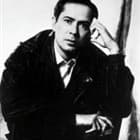
Christopher Pike is a prolific author known for his young adult horror and thriller novels. His works, including "Remember Me," "Chain Letter," and "Falling," often feature suspenseful plots, supernatural elements, and teenage protagonists. Pike's distinctive writing style has made him a popular figure in the genre, captivating readers with his ability to blend mystery and fright.







