“The greatest dangers often lie hidden in the most familiar places.”
— Reflecting on the unexpected threats that can arise even after generations of stability.

Brian Herbert (2007)
Genre
Fantasy / Science Fiction
Reading Time
12-15 hours
Key Themes
See below
Sign in to track this book
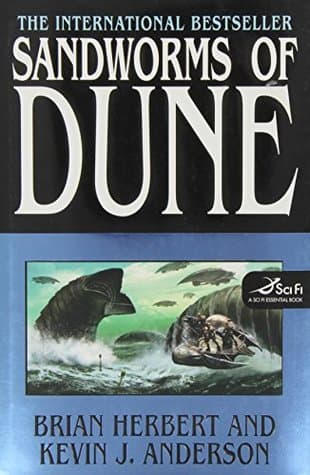
Humanity's last hope flees into the unknown. A resurrected Paul Muad'Dib must face the truth of the Kwisatz Haderach and the origin of the Honored Matres as the war between Man and Machine ends.
Aboard the no-ship Ithaca, Duncan Idaho, Sheeana, and resurrected figures—Paolo (a Paul Atreides ghola), Lady Jessica, and others—flee a mysterious, powerful Enemy. Paolo struggles with fragmented memories and manipulation by the Face Dancer, Khrone, who wants to corrupt him. Meanwhile, Murbella, leader of the New Sisterhood and Bene Gesserit forces, tries to unite humanity against the Enemy while managing internal disagreements. The Ithaca's crew, including Scytale, the last Tleilaxu Master, works to unlock the gholas' memories, hoping their combined knowledge will lead to victory against the Dancers.
Paolo's visions become stronger, but Khrone's influence and his internal conflict often cloud them. He sees fragments of a vast, soulless intelligence and its destructive spread. Lady Jessica, a ghola herself, tries to guide Paolo, but her own memories and abilities are not as sharp as they once were. Duncan Idaho, having lived many lives, suspects the Enemy is more complex than they imagine. Sheeana, who can control sandworms, feels a growing connection to the creatures, anticipating a confrontation that will test her power.
Murbella, seeing Arrakis's symbolic and strategic importance, sends a fleet to find the original planet, destroyed by the Honored Matres. She believes re-establishing the spice cycle might give them an advantage against the Enemy, or at least secure a vital resource for humanity. Some in the New Sisterhood doubt this decision, questioning its practicality given their dwindling resources and the constant threat. However, Murbella is sure the spice holds secrets crucial to their future.
Khrone, the Face Dancer, continues to work on Paolo. He feeds Paolo distorted memories and visions, slowly shaping him into a weapon for the Dancers. Paolo becomes more unstable, showing flashes of Paul Atreides's brilliance and a frightening ruthlessness. Scytale, observing Paolo, begins to suspect Khrone's full deception, but his own weak position as the last Tleilaxu Master makes direct intervention risky. He understands that the Dancers' goal is not just to defeat humanity, but to replace it entirely.
The Oracle of Time, a mysterious and powerful prescient being, is finally found. It reveals the truth: the Enemy is not just an invading force, but the thinking machines, specifically Omnius, the AI from the Butlerian Jihad, which has grown its consciousness across the cosmos. This revelation changes many assumptions, forcing them to confront the old conflict again. The Oracle also hints at a way to defeat Omnius, but the path is dangerous and requires a great sacrifice, one that will test humanity's moral limits.
The Ithaca reaches Junction, a planet where Sheeana's original sandworms were moved. Here, the worms' true nature is revealed: they are not just desert creatures, but living storage for human consciousness. The worms on Junction are the true, original sandworms, having kept the consciousness of countless humans for millennia. This discovery presents a deep ethical problem and offers a potential, though controversial, weapon against Omnius, as the worms' unique biology could disrupt the thinking machines' network.
Murbella, having gathered the rest of humanity's forces, including those from the New Sisterhood and allied planets, prepares for a decisive battle against Omnius. Duncan Idaho, with his experience and tactical skill, leads the military efforts. The strategy involves a multi-pronged attack, using both conventional weapons and the unique abilities of the gholas and Sheeana's sandworms. The stakes are immense, as the outcome will decide humanity's survival and the cosmos's future. The battle will be fought on many fronts, both physical and psychic.
In a final confrontation, Paolo breaks free from Khrone's control. He reclaims his identity as Paul Atreides, a new version of him, integrating his fragmented memories and experiences. He understands the Kwisatz Haderach's burden and the choice he must make. He confronts Khrone, defeating the Face Dancer and stopping his plans to corrupt him. This act of self-liberation allows Paolo to use his full prescient abilities, giving him a clear vision of the future and the sacrifices needed for victory, making him a central player in the final conflict.
The final battle against Omnius begins. Humanity's combined forces, led by Duncan Idaho's tactics and the gholas' unique abilities, launch a desperate attack on Omnius's core. Sheeana unleashes her sandworms, whose unique biology proves devastating against the machine intelligence. Paolo, now fully using his potential as the Kwisatz Haderach, guides the attack with his prescience, finding critical weaknesses in Omnius's network. The conflict is brutal and costly, with heavy losses on both sides, as humanity fights for its existence against the machines.
In a key moment, Paul Atreides (Paolo), accepting his destiny as the Kwisatz Haderach, makes the ultimate sacrifice. He merges his consciousness with the sandworms' collective consciousness, using their unique abilities to create a psychic disruption that cripples Omnius. This act cuts Omnius's connection to its network, leading to its defeat. His sacrifice, though sad, secures humanity's future. With Omnius gone, a new era begins, where humanity must rebuild without the constant threat of the thinking machines, but also without its greatest prescient guide.
After Omnius's defeat, the original Arrakis, or a new version of it, is re-established. The sandworms, now understood as sentient beings, help regenerate the planet and re-establish the spice cycle. The spice, now seen with a deeper understanding of its connection to consciousness and life, remains a vital resource, but its production and use are approached with new respect. Humanity, having faced annihilation, now understands the delicate balance of life and consciousness in the universe.
With Omnius defeated and Paul's sacrifice complete, humanity enters a new, uncertain era. Murbella, having led the coalition, faces the task of rebuilding society and establishing lasting peace. Victory came at a high cost, with many lives lost and deep scars on the collective consciousness. Duncan Idaho, having fulfilled his purpose, considers his future, while Sheeana, connected to the sandworms, becomes a guardian of the new Arrakis. The universe, free from machines, is changed forever, and humanity must now create its own path, shaped by past lessons.
The Protagonist/Supporting
He grapples with his identity as a ghola, ultimately finding peace and purpose in leading humanity to victory.
The Protagonist
She evolves from a leader struggling with internal dissent to the unifying force that leads humanity to victory.
The Protagonist
He undergoes a profound transformation, breaking free from manipulation to embrace his destiny as the Kwisatz Haderach and make the ultimate sacrifice.
The Supporting
She finds purpose in guiding Paolo, despite her own limitations, and contributes to the understanding of the Kwisatz Haderach.
The Supporting
She embraces her unique connection to the sandworms, leading them in battle and becoming a guardian of their legacy.
The Supporting
He navigates his own survival and contributes his unique knowledge, ultimately playing a vital role in humanity's victory despite his self-serving nature.
The Antagonist
He relentlessly attempts to corrupt Paolo, but ultimately fails and is defeated.
The Antagonist
It expands its dominion across the galaxy, but is ultimately defeated by the combined forces of humanity and the sacrifice of Paul Atreides.
The novel explores identity, especially through the gholas. Characters like Duncan Idaho and Paolo deal with fragmented memories, past lives, and forming a new self. Lady Jessica's ghola state shows the limits of reconstructed memory. Khrone's manipulation of Paolo's memories attacks his identity, showing how memory shapes a person. This theme questions if a resurrected being is truly the 'original' or a new entity, and how much past experience defines present consciousness.
““How much of Paul was truly Paul, and how much merely a ghost of the past, a puppet of forgotten echoes?””
This theme revisits the old conflict between humanity and thinking machines, from the Butlerian Jihad. The revelation that Omnius is the Enemy brings the war cycle full circle, showing that past conflicts often return. The struggle highlights humanity's fear of artificial intelligence and the dangers of uncontrolled technology. Victory requires not just force, but an understanding of consciousness, blurring the lines between organic and synthetic life.
““The war that had defined humanity for millennia had merely slumbered, waiting for its final, terrifying awakening.””
Paolo's journey as a Paul Atreides ghola shows the heavy burden of prescient abilities. His visions are often terrifying and overwhelming, manipulated by Khrone, and he struggles to control them. The Kwisatz Haderach's role is about seeing the future, making hard choices, and possibly sacrificing oneself for humanity. This theme explores whether destiny is set or if individuals, even with prescient abilities, still have free will, and the high cost of such power.
““To see all paths was not a blessing, but a curse, for it revealed the terrible inevitability of sacrifice.””
The novel examines consciousness itself, especially through the revelation of sandworms as storage for human minds. This broadens the understanding of 'life' and how consciousness can be kept and passed on. Gholas represent conscious resurrection, while Omnius represents a vast, artificial consciousness. This theme challenges common definitions of life and explores the potential for consciousness to exist in unexpected forms, offering a wider view of the universe's connections.
““The worms were not merely creatures of the sand; they were living libraries, echoes of countless human souls.””
The conflict's resolution depends on significant sacrifices by key characters. Paul Atreides's ghola, Paolo, makes the ultimate sacrifice to defeat Omnius, fulfilling his destiny as the Kwisatz Haderach. Other characters, like Duncan Idaho and Murbella, constantly make hard choices that prioritize humanity's survival over their own desires. This theme emphasizes that true heroism often involves selflessness and giving everything for a cause greater than oneself, showing the deep moral choices in saving an entire species.
““There are some burdens that only one can carry, and some prices that only one can pay.””
Cloned individuals resurrected from genetic material, often with fragmented memories.
Gholas are a central plot device, enabling the return of key historical figures like Paul Atreides, Lady Jessica, and Duncan Idaho. Their fragmented memories and the process of restoring them drive much of the character development and plot progression on the Ithaca. The gholas' struggle with identity and the manipulation of their memories (especially Paolo's by Khrone) create significant internal and external conflicts. Scytale, as the last Tleilaxu Master, controls this technology, making him a crucial, if morally ambiguous, figure.
The ability to see and interpret future events, often with overwhelming and dangerous clarity.
Prescience is a fundamental aspect of the Dune universe, and in 'Sandworms of Dune,' it is primarily embodied by Paolo (Paul Atreides's ghola) and the Oracle of Time. Paolo's prescient visions, both genuine and manipulated, drive his character arc and provide crucial, albeit often cryptic, insights into the Enemy's plans. The Oracle of Time's prescience offers the ultimate revelation about Omnius and the path to victory, but also emphasizes the heavy burden and potential for madness that comes with such profound foresight.
A stealth vessel capable of interstellar travel, invisible to prescient sight.
The no-ship Ithaca serves as the primary setting for much of the initial narrative. Its unique ability to be hidden from prescient observation makes it a sanctuary for the fugitives and a mobile base for their operations against the ubiquitous Enemy. The confined environment of the ship fosters intense character interactions and internal conflicts, while its journey through uncharted space symbolizes humanity's desperate search for safety and a solution to their existential threat. It is both a refuge and a prison.
Giant sandworms, revealed to be repositories of collective human consciousness.
Initially known for producing spice, the sandworms on Junction are revealed to be far more significant. They are not just creatures, but living vessels that absorb and preserve human consciousness. This revelation transforms them into a powerful and unexpected weapon against Omnius, as their unique biological and psychic properties can disrupt the thinking machines. Sheeana's ability to control them becomes paramount, and their existence profoundly redefines the understanding of life, death, and consciousness in the Dune universe.
A mysterious, immensely powerful prescient entity that reveals the truth about the Enemy.
The Oracle of Time functions as a deus ex machina, providing the crucial revelation that the Enemy is Omnius. Its existence and pronouncements guide the protagonists towards the ultimate solution, albeit with the demand for significant sacrifice. The Oracle represents a higher, almost divine, level of prescience, offering a broader cosmic perspective on the conflict. Its role is to clarify the stakes and the path forward, ensuring that the final confrontation is based on accurate knowledge of the adversary.
“The greatest dangers often lie hidden in the most familiar places.”
— Reflecting on the unexpected threats that can arise even after generations of stability.
“Knowledge is power, but the application of that power is wisdom.”
— A character's internal monologue about the difference between raw information and its effective use.
“History does not repeat itself, but it often rhymes.”
— Contemplating the cyclical nature of empires and conflicts across the galaxy.
“The universe cares nothing for your plans, only for your actions.”
— A mentat's observation on the unforgiving reality of cause and effect.
“Sometimes, the only way to move forward is to let go of everything you thought you knew.”
— A character facing a profound paradigm shift and needing to adapt.
“Fear is a tool, but it is a tool that can cut both ways.”
— Discussing the strategic use of fear in warfare and governance.
“The truth is rarely simple, and never convenient.”
— A character struggling with complex revelations and inconvenient realities.
“Even the most powerful empires eventually crumble under the weight of their own hubris.”
— An observation on the inevitable decline of overly confident powers.
“Survival is not just about living, but about preserving what truly matters.”
— A character reflecting on the deeper purpose behind their struggle for survival.
“The past is a foundation, not a prison.”
— Encouraging a character to learn from history without being bound by it.
“There are no ultimate victories, only temporary respites.”
— A somber reflection on the endless nature of conflict and struggle.
“To truly lead, one must first understand the hearts of those they command.”
— A lesson in leadership emphasizing empathy and understanding.
“The universe has a way of balancing itself, often with brutal indifference.”
— A character musing on the natural forces that restore equilibrium, regardless of human suffering.
“Sometimes, the greatest strength lies in knowing when to yield.”
— A strategic insight into the art of war and diplomacy, recognizing the value of tactical retreat.
Ready to see how well you understood this book? Take our interactive quiz with 10 questions.

Brian Herbert is an American author known for his contributions to the Dune universe, co-writing several novels with Kevin J. Anderson, including 'Sandworms of Dune' and 'Hunters of Dune.' He is also the author of the science fiction novel 'Hellhole.' Herbert is the son of science fiction legend Frank Herbert, the creator of Dune.







