“The thing about secrets is, they have a way of coming out. Like a stubborn stain on your favorite shirt, you can try to hide it, but eventually, someone's going to notice.”
— Sammy's internal thoughts on the nature of secrets she's uncovering.

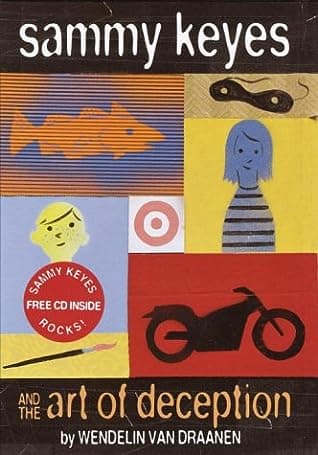
Wendelin Van Draanen (2003)
Genre
Children's / Mystery / Young Adult
Reading Time
240 min
Key Themes
See below
Sign in to track this book
High-tops and a sharp wit lead Sammy Keyes into a high-stakes art gallery heist, where the real masterpiece is a subtle, dangerous deception far beyond a simple stickup.
Sammy Keyes, with her best friend Marissa, is reluctantly taken to an art gallery reception by her grandmother, Gma Sylvia. Gma Sylvia, a cleaning lady, attends as a guest of her client, Mrs. Gray. Sammy, uncomfortable in her high-tops and disliking the snobby atmosphere, questions the value of a simple orange splot painting priced at $10,000. Her comments draw disapproval from the sophisticated guests, especially the gallery owner, Mr. Belton, and the artist, Antoine Dubois. Despite the awkward start, Sammy notices the social dynamics and the superficiality of the art world.
During the reception, a masked robber bursts in, holding a gun and demanding the 'Orange Splot' painting. Panic spreads among the guests. Sammy, acting on instinct and her usual disregard for danger, tackles the thief, who drops the painting and flees. Her quick actions prevent the theft and earn her applause from the previously critical art patrons. However, Sammy feels uneasy, noticing the robber seemed more clumsy than threatening, and the incident felt somewhat staged, which sparks her detective instincts.
After the foiled robbery, Officer Borsch and the police arrive to take statements. Everyone praises Sammy's bravery, but she still feels something is wrong. She observes Mr. Belton, the gallery owner, and Antoine Dubois, the artist, acting suspiciously calm and almost relieved. Sammy notices a faint, familiar scent on the robber's discarded ski mask—a scent she links to her rival, Heather Acosta. This detail, combined with her feeling that the robbery was a setup, leads Sammy to start her own investigation, much to Officer Borsch's annoyance, as he dismisses her ideas.
Sammy first suspects Heather Acosta, because of the scent on the mask and Heather's past troubles. She follows Heather, trying to connect her to the robbery. At the same time, Sammy becomes fixated on the 'Orange Splot' painting, convinced there is more to it. She researches modern art and Antoine Dubois's techniques, trying to understand why a simple splot could be so valuable and why it was targeted. Her investigation begins to show inconsistencies in the artist's background and the gallery's operations, making her question the art world's honesty.
Determined to find the truth, Sammy, with Marissa's hesitant help, sneaks back into the art gallery after hours. They examine the 'Orange Splot' painting, and Sammy, remembering a detail about Dubois's technique, finds a hidden message or symbol within the paint layers. This discovery confirms her suspicion that the painting is not just abstract art but holds a secret. The message, though unclear, points to a larger scheme involving the art and possibly other pieces in the gallery, deepening the mystery and raising the stakes for Sammy.
Through her investigation, which includes questioning local art enthusiasts and observing Mr. Belton and Antoine Dubois, Sammy understands the true nature of the crime. She discovers that the 'Orange Splot' and possibly other paintings in the gallery are not genuine artworks but skilled forgeries. The fake robbery was set up to draw attention to the 'Orange Splot,' increasing its perceived value and making it easier to sell to unsuspecting wealthy buyers as part of a money laundering and art fraud scheme. Mr. Belton and Antoine Dubois are the ones behind this deception.
With her understanding of the art fraud, Sammy decides to confront Mr. Belton and Antoine Dubois. She uses her observations and knowledge to challenge their stories and expose inconsistencies. She manages to record incriminating conversations or find evidence, like documents or materials related to the forgeries, which clearly link them to the scheme. This confrontation is dangerous, as Belton and Dubois realize Sammy is close to exposing them, but Sammy's quick thinking keeps her one step ahead, even as they try to scare her.
As Sammy gets closer, Mr. Belton and Antoine Dubois become desperate. They try to stage another 'robbery' or 'accident' to destroy the forged paintings and any remaining evidence. However, Sammy anticipates their move. She alerts Officer Borsch, giving him enough evidence to take her seriously. The police arrive just as Belton and Dubois try to get rid of the forgeries, catching them in the act. The 'Orange Splot' and other fake paintings are recovered, and the extent of their art fraud and money laundering operation is made public.
Mr. Belton and Antoine Dubois are arrested, and the art world faces a scandal. Sammy's observations and detective work are finally acknowledged, even by Officer Borsch, who admits her theories were correct. The genuine artist whose work was forged is identified, and steps are taken to recover or compensate for the fraudulent sales. Sammy, though she first disliked art, gains a new, somewhat cynical, appreciation for its complexities and how it can be manipulated. She returns to her normal life, having again shown her talent for solving mysteries, much to Gma Sylvia's pride and Marissa's relief.
Afterward, Sammy thinks about the experience. She realizes that art, like many things, can be a setting for both beauty and deception. The 'Orange Splot,' once a symbol of pretentious fraud, now represents the hidden meanings and manipulation she uncovered. She learns that value is not always inherent but often created, sometimes dishonestly. This case expands her understanding of human nature, showing her how greed can corrupt even the most refined environments. Sammy, always practical, may not suddenly become an art enthusiast, but she gains a deeper, more critical view of the world, recognizing that deception can take many artful forms.
The Protagonist
Sammy starts by dismissing art as pretentious but ends with a deeper understanding of its complexities and how it can be used for deception.
The Supporting
Gma Sylvia remains a steadfast and loving figure, consistently supporting Sammy despite her worries.
The Supporting
Marissa consistently supports Sammy, growing slightly bolder through their shared experiences.
The Supporting
Officer Borsch moves from dismissing Sammy to grudgingly respecting her detective abilities.
The Antagonist
Belton maintains his facade of respectability until Sammy exposes his criminal enterprise, leading to his downfall.
The Antagonist
Dubois maintains his artistic facade until Sammy's investigation reveals his true role as a forger, leading to his arrest.
The Mentioned
Heather's role is primarily to be a misdirection, reinforcing her established rivalry with Sammy without significant development.
The Supporting
Mrs. Gray remains largely unaware of the deception until the end, representing the innocent victims of the fraud.
This theme is key to the mystery, appearing in the deceptive nature of the art world. The 'Orange Splot' painting, first dismissed by Sammy as worthless, is a forgery used in a money laundering scheme. The seemingly reputable gallery owner, Mr. Belton, and the celebrated artist, Antoine Dubois, are criminals. The art reception is a front, designed to give credibility to a fraudulent business. Sammy's journey involves uncovering these layers of pretense to expose the truth beneath the beautiful, curated surfaces, questioning if what is presented as valuable or true actually is.
“Just because something's expensive, doesn't mean it's good.”
The novel explores how value is given and seen, especially in art and finance. Sammy first questions the high price of the 'Orange Splot,' showing how subjective artistic valuation often is. The plot then reveals that the painting's perceived value is artificially inflated through fraud, demonstrating how greed can corrupt the idea of worth. The true value, in the end, is not in the painting itself, but in the truth Sammy uncovers and the justice she seeks. The book suggests that real value is often overlooked for superficial or manufactured worth.
“How can a bunch of orange paint be worth ten thousand dollars?”
Deception drives the plot, from the staged robbery to the art forgery scheme. Mr. Belton and Antoine Dubois are manipulators, using their positions and artistic skills to mislead wealthy patrons and the public. Sammy herself uses deception, sneaking into the gallery and pretending ignorance to get information. The theme examines how people, especially those in power, can use art, status, and perceived authority to manipulate others for personal gain. It highlights the importance of critical thinking and looking past surface impressions to uncover hidden motives.
“Art could be so dangerous.”
Sammy's commitment to justice is a core theme. Despite being dismissed by Officer Borsch and facing intimidation from the criminals, she continues her investigation because she believes in finding the truth and holding wrongdoers accountable. Her integrity contrasts with the dishonesty of the art fraudsters. The theme shows that even a young girl, driven by a strong moral compass, can expose significant corruption and bring about justice, regardless of the perpetrators' social standing. It reinforces the importance of speaking up against injustice.
“I knew it. I just knew something wasn't right.”
A misleading clue or character that distracts the protagonist from the real culprit.
The initial suspicion falling on Heather Acosta due to the scent on the ski mask serves as a red herring. Sammy's long-standing rivalry with Heather and her past troubles make her an obvious, but ultimately incorrect, suspect. This device effectively misdirects both Sammy and the reader, building suspense and allowing the true criminals, Mr. Belton and Antoine Dubois, to operate under less scrutiny for a period. It emphasizes Sammy's need to look beyond her immediate assumptions and dig deeper into the evidence.
A subtle detail or message embedded within a seemingly ordinary object.
The hidden message or symbol embedded within the 'Orange Splot' painting itself is a crucial plot device. This detail, which Sammy discovers through careful observation and research into Antoine Dubois's style, transforms the painting from a simple abstract piece into a key piece of evidence. It confirms Sammy's suspicions that the art is not what it seems and provides a tangible link to the larger forgery scheme, allowing her to unravel the complex deception and understand the criminals' methods.
An event deliberately orchestrated to deceive or manipulate.
The initial 'robbery' at the art gallery reception is a prime example of a staged event. It is designed by Mr. Belton and Antoine Dubois not to actually steal the painting, but to draw attention to it, increase its perceived value, and create a narrative that aids their money laundering and forgery scheme. Sammy's intuition that the robbery felt 'fake' is key to her unraveling the larger deception. This device highlights the sophisticated and theatrical nature of the criminals' plot, making the art of deception literal.
The protagonist's keen attention to detail drives the plot and solves the mystery.
Sammy Keyes's defining trait is her exceptional observational skill, which acts as a primary plot device. Her initial questioning of the 'Orange Splot,' her noticing the specific scent on the ski mask, her ability to pick up on the subtle inconsistencies in Belton and Dubois's behavior, and her eventual discovery of the hidden message in the painting are all direct results of her keen eye. Without Sammy's unique ability to notice and connect seemingly minor details, the complex art fraud would have gone undetected, making her observation central to the mystery's resolution.
“The thing about secrets is, they have a way of coming out. Like a stubborn stain on your favorite shirt, you can try to hide it, but eventually, someone's going to notice.”
— Sammy's internal thoughts on the nature of secrets she's uncovering.
“Being a detective isn't just about finding clues. It's about seeing what other people miss. It's about putting the pieces together even when they don't seem to fit.”
— Sammy reflecting on the process of investigation.
“Sometimes the biggest lies are hidden in plain sight, disguised as the truth.”
— Sammy realizing she's been misled by something seemingly obvious.
“It's hard to be invisible when you're always asking questions. And even harder when you're wearing bright red sneakers.”
— Sammy's internal monologue about her own inquisitive nature and distinctive style.
“Adults are weird. They say one thing, mean another, and then get mad when you try to figure out what they really meant.”
— Sammy's typical exasperation with the adults around her.
“The truth is like a puzzle. Sometimes you have to turn the pieces over a hundred times before you see how they connect.”
— Sammy's persistent efforts to unravel a complex mystery.
“You can't always trust what you see. Especially when someone's trying really hard to make you see something specific.”
— Sammy's growing awareness of manipulation in the case.
“My grandma always says, 'If you're going to stick your nose into other people's business, make sure you've got a good reason.' My reason? Someone's trying to pull a fast one.”
— Sammy justifying her involvement in the mystery to herself.
“A good disguise isn't about changing who you are, it's about making people see what they expect to see.”
— Sammy observing how people are fooled by simple tricks.
“It's not enough to just know something. You have to prove it. And proving it, that's the hard part.”
— Sammy struggling to gather concrete evidence for her suspicions.
“Sometimes the most ordinary things can hide the most extraordinary secrets.”
— Sammy realizing that a seemingly mundane object is key to the mystery.
“Fear can make people do strange things. And sometimes, it makes them say nothing at all.”
— Sammy considering the motivations behind someone's silence.
“The world isn't always fair. But that doesn't mean you shouldn't try to make it a little bit fairer.”
— Sammy's underlying sense of justice driving her actions.
“Just because something is complicated doesn't mean it's impossible to figure out. It just means you have to dig deeper.”
— Sammy's determination when faced with a complex situation.
Ready to see how well you understood this book? Take our interactive quiz with 10 questions.

Biography coming soon.

Dan Gemeinhart
4.5

Kate O'Hearn
4.4

Jeanne Birdsall
4.4

Jen Wang
4.4
Wendelin Van Draanen
4.3

John Marsden
4.3

Chris Van Allsburg
4.3
Jennifer A. Nielsen
4.2