“If a sick person folds one thousand paper cranes, the gods will grant her wish and make her healthy again.”
— Sadako hears this legend from her friend Chizuko, giving her hope to recover from leukemia.

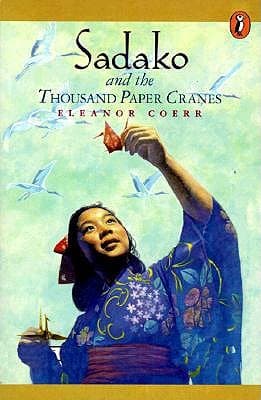
Eleanor Coerr (1977)
Genre
Children's / Historical Fiction / Young Adult
Reading Time
60 min
Key Themes
See below
Sign in to track this book
Struck down by the 'atom bomb disease,' a spirited Hiroshima girl races against time, folding a thousand paper cranes in a poignant quest for health and peace.
Sadako Sasaki is a strong, fast runner in Hiroshima, ten years after the atomic bomb was dropped. She is excited about the Peace Day festival, where she will represent her class in a race. Sadako is a typical, energetic sixth-grader, living with her family near the Ota River. Her older brother, Masahiro, often teases her, but they are close. The memory of the atomic bomb, called the 'thunderbolt,' is a part of the city's history, but for Sadako, it's a distant event; she was only two years old when it happened. Her life is filled with school, friends, and the joy of running.
During an important relay race at school, Sadako feels dizzy and weak, but she pushes through, determined not to let her team down. She manages to pass the stick to her teammate, but the dizziness is a new and unsettling sensation. She tries to dismiss it as a momentary weakness, possibly due to excitement or the heat. However, the dizzy spells continue, becoming more frequent. Her family notices her fatigue and paleness, though Sadako tries to hide her symptoms, fearing she might be held back from running.
The dizzy spells worsen, and Sadako collapses during a school assembly. Her parents take her to the Red Cross Hospital, where she undergoes tests. The doctors give the news: Sadako has leukemia, which many in Hiroshima call the 'atom bomb disease.' This diagnosis shatters her family's world and forces Sadako to confront the grim reality of her illness. She is admitted to the hospital, where she faces a future of treatments and uncertainty, far from her friends and the running track.
While Sadako is in the hospital, feeling weak and discouraged, her friend, Chizuko, visits her. Chizuko brings a golden paper crane, which she has folded, and tells Sadako about an old Japanese legend: if a sick person folds one thousand paper cranes, the gods will grant her wish and make her healthy again. This legend sparks hope in Sadako. She decides to take on the challenge, believing that folding the cranes might be her path to recovery and a return to her normal, active life.
Inspired by Chizuko and the legend, Sadako begins folding paper cranes with determination. She uses whatever paper she can find — medicine wrappers, gift paper, and paper scraps given by nurses and visitors. Her brother, Masahiro, helps by hanging the finished cranes from the ceiling of her hospital room, creating a colorful canopy. Despite her increasing weakness and the pain of her treatments, Sadako finds solace and purpose in the rhythmic folding, working towards her goal of one thousand cranes. Each crane is a small victory and a renewed hope for life.
In the hospital, Sadako meets Kenji, a nine-year-old boy who also has leukemia from the atomic bomb. Kenji is quiet and thoughtful, having been in the hospital for a long time. He shares his pessimistic view of their chances of recovery, which initially disheartens Sadako. However, their shared experience of illness and their quiet conversations create a bond. Kenji's eventual death affects Sadako deeply, reminding her of her own condition and strengthening her resolve to fold more cranes.
As summer progresses, Sadako's condition worsens. She experiences more pain, her appetite wanes, and her body grows weaker. Despite the physical toll, her spirit remains strong. Her family visits frequently, bringing her favorite foods and encouraging her in her crane-folding project. They bring her more paper, and her mother reassures her, telling her that the gods will surely grant her wish. Sadako's hope, though sometimes wavering, is continually rekindled by the love and support of her family and the growing number of cranes in her room.
In October, Sadako's health takes a final, drastic turn. Her family is constantly by her bedside. She becomes very weak, barely able to speak or move. Despite her failing strength, she continues to try and fold cranes, her fingers fumbling with the paper. She manages to fold a few more, reaching a total of 644 cranes. She looks at the colorful strings of cranes hanging above her, a symbol of her fight and hope. However, her body finally gives out, and she is unable to fold the remaining cranes to reach her goal of one thousand.
On October 25, 1955, Sadako Sasaki passes away peacefully, surrounded by her family. Her parents and brother, Masahiro, are there as she takes her last breath. She is holding a half-finished paper crane in her hands. Though she did not reach her goal of one thousand cranes, her spirit and determination left a mark on her family and friends. Her unfinished journey becomes a symbol of the innocence lost and the enduring hope for peace in the shadow of war.
After Sadako's death, her classmates and friends are moved by her story. They decide to complete her goal, folding the remaining 356 cranes so that one thousand paper cranes are offered in her memory. They also begin raising money to build a monument for Sadako and all the child victims of the atomic bomb. Years later, a statue of Sadako holding a golden crane is erected in Hiroshima Peace Park. Every year, children from all over the world send paper cranes to the monument, carrying messages of peace and hope, ensuring Sadako's legacy lives on.
The Protagonist
From a carefree, athletic child, Sadako transforms into a symbol of hope and peace through her brave struggle with illness and her dedication to folding paper cranes.
The Supporting
Masahiro matures from a typical older brother to a deeply supportive and loving sibling, witnessing and aiding Sadako's courageous fight.
The Supporting
Chizuko remains a steadfast and supportive friend, playing a pivotal role in inspiring Sadako's crane-folding journey.
The Supporting
He endures the pain of his daughter's illness with strength and unwavering parental love.
The Supporting
She demonstrates immense maternal strength and love while caring for her terminally ill daughter.
The Supporting
His brief appearance provides a poignant, sobering perspective on the shared fate of atomic bomb victims.
The Supporting
She consistently provides professional and compassionate care to Sadako.
Hope and resilience are central to Sadako's story. Despite a devastating diagnosis and the physical toll of her illness, Sadako clings to the hope that folding a thousand paper cranes will grant her a wish for health. Her determination to complete the cranes, even as her strength wanes, shows resilience. This hope extends beyond her personal wish, becoming a symbol of human spirit in the face of suffering from war. Her classmates continue this hope by finishing her cranes and advocating for peace.
“She would get well. She had to! She had the cranes to fold.”
The book illustrates the long-term consequences of the atomic bombing of Hiroshima, even a decade later. Sadako's leukemia, called the 'atom bomb disease,' is a direct result of the radiation exposure. This shows how war's effects linger and claim innocent lives years after the conflict ends. The suffering of Sadako and other children like Kenji is a reminder of the cruelty of nuclear weapons and the human cost of war. It emphasizes the importance of peace.
“It was the atom bomb disease. Many people in Hiroshima were getting it now.”
Sadako's journey is supported by the love of her family and the friendship of Chizuko. Chizuko's introduction of the paper crane legend gives Sadako hope and purpose. Her brother, Masahiro, and her parents visit, provide comfort, and assist her in her crane-folding efforts. This network of love and support shows the importance of human connection in overcoming adversity and facing challenging times, offering solace even when a cure is impossible.
“Chizuko was her best friend. Sadako knew Chizuko would think of something to make her happy.”
Sadako's story goes beyond her individual struggle, becoming a legacy of peace and remembrance. Although she doesn't complete her thousand cranes, her classmates finish the task, and her story inspires the creation of a children's peace monument in Hiroshima. This theme shows how individual acts of courage and suffering can become catalysts for collective remembrance and a global call for peace. It ensures that victims of war are not forgotten and that their stories continue to teach future generations.
“On the base of the statue is carved: 'This is our cry, this is our prayer; peace in the world.'”
A central symbol of hope, healing, and peace.
The paper cranes are the most prominent plot device, serving as a powerful symbol throughout the narrative. Initially, they represent Sadako's personal hope for recovery and her wish to live. As her illness progresses, they transform into a symbol of resilience and determination. After her death, the cranes become a universal emblem for peace, a memorial to all child victims of war, and a tangible way for people worldwide to express their desire for a peaceful future. The act of folding them provides structure and motivation to Sadako's final days.
A euphemism that highlights the insidious and delayed effects of nuclear warfare.
The term 'atom bomb disease' (leukemia) functions as a plot device to directly link Sadako's illness to the atomic bombing of Hiroshima. It serves as a constant reminder of the war's lasting and devastating impact, even years after the event. This specific diagnosis personalizes the abstract horror of nuclear weapons, showing how radiation poisoning can slowly and cruelly claim innocent lives, emphasizing the long-term human cost of such destruction rather than just the immediate devastation.
A recurring event that contrasts Sadako's initial health with her later illness, and symbolizes hope for the future.
The Peace Day Festival serves as a significant backdrop and recurring motif. It is introduced early in the book when Sadako is healthy and excited to participate, symbolizing a return to normalcy and a collective aspiration for a peaceful future in Hiroshima. Later, as Sadako battles her illness, the festival's symbolism becomes more poignant, representing the peace she yearns for but might not achieve. The festival ultimately reinforces the story's overarching message about the importance of peace and remembrance.
Brief mentions of the atomic bombing to establish the story's historical foundation.
While not a full flashback, the book frequently uses brief mentions and references to the 'thunderbolt' or the atomic bombing that occurred ten years prior to the story's main events. This device establishes the crucial historical context for Sadako's illness and the setting of Hiroshima. It subtly but effectively reminds the reader of the catastrophic event that underpins the entire narrative, explaining why Sadako and other children are suffering from leukemia, thus grounding the personal story within a larger historical tragedy.
“If a sick person folds one thousand paper cranes, the gods will grant her wish and make her healthy again.”
— Sadako hears this legend from her friend Chizuko, giving her hope to recover from leukemia.
“I will write peace on your wings and you will fly all over the world.”
— Sadako's thought while folding cranes, reflecting her desire for peace.
“She was determined to fold one thousand cranes.”
— Narration describing Sadako's resolve after learning the legend.
“The golden crane was the most beautiful of all.”
— Sadako's family gives her a special crane, symbolizing love and support.
“Life is like a paper crane—fragile but full of hope.”
— Reflective passage on the book's central metaphor.
“Sadako's spirit lives on in every paper crane.”
— Closing message about her enduring legacy.
“She folded cranes even when her fingers grew tired.”
— Description of Sadako's perseverance despite her weakening condition.
“The atomic bomb changed everything.”
— Narration explaining the historical backdrop of Sadako's illness.
“Peace starts with one small act.”
— Theme emphasized through Sadako's story.
“Her cranes became a symbol for all children of peace.”
— Explanation of how Sadako's story inspired global movements.
“Even in the hospital, she found joy in small things.”
— Description of Sadako's ability to maintain positivity.
“We must remember so it never happens again.”
— Implied message about learning from the atomic bomb's aftermath.
“Each crane carried a piece of her wish.”
— Poetic description of Sadako's folding process.
Ready to see how well you understood this book? Take our interactive quiz with 10 questions.

Biography coming soon.

Dan Gemeinhart
4.5
Kate O'Hearn
4.4

Jeanne Birdsall
4.4

Jen Wang
4.4
Wendelin Van Draanen
4.3

John Marsden
4.3

Chris Van Allsburg
4.3
Jennifer A. Nielsen
4.2