“The past is like a foreign country; they do things differently there.”
— A general reflection on the nature of memory and change.

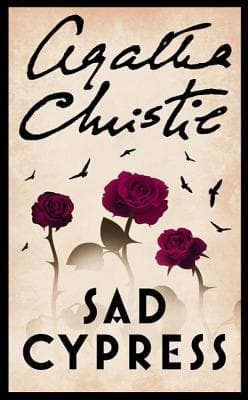
Agatha Christie (1939)
Genre
Thriller / Mystery
Reading Time
336 min
Key Themes
See below
Sign in to track this book
In a courtroom filled with suspicion, Elinor Carlisle faces execution for a poisoning she might not have committed. Hercule Poirot must untangle the deadly threads of love and jealousy before it is too late.
The story begins with Elinor Carlisle in court, accused of Mary Gerrard's murder. Her lawyer, Peter Lord, believes she is innocent, but the evidence is strong. Elinor, accepting her situation, writes to Hercule Poirot. She asks him to investigate, not necessarily to save her, but to find the truth about Mary's death. She tells of the events leading to the tragedy, starting with her wealthy aunt, Laura Welman, getting sick. Then Mary Gerrard, a young woman who was a family ward years ago, reappears. Elinor's fiancé, Roddy Winter, becomes attracted to Mary, adding to Elinor's personal pain.
Elinor Carlisle and her fiancé, Roddy Winter, visit Elinor's wealthy Aunt Laura Welman at Hunterbury. Aunt Laura is sick and cared for by Nurse Hopkins and Nurse O'Brien. During their visit, Mary Gerrard, a beautiful local girl who was once Aunt Laura's ward, comes back to Hunterbury. Aunt Laura shows strong affection for Mary, which immediately causes tension. Roddy Winter is clearly captivated by Mary's charm and beauty. Elinor tries to be polite but feels growing unease and jealousy about Mary's presence and Roddy's admiration.
Aunt Laura Welman's health gets worse quickly, and she dies. After her death, her lawyer, Mr. Seddon, reads her will. To everyone's surprise, Aunt Laura changed her will just before she died. She left a large part of her estate, including Hunterbury, to Mary Gerrard, with Elinor getting a smaller amount. This news upsets Elinor, who always expected to inherit most of her aunt's money. It also strengthens Roddy's feelings for Mary, as she is now wealthy, making the relationships even more difficult.
Soon after Aunt Laura's funeral and the will reading, Mary Gerrard, Nurse Hopkins, and Elinor Carlisle have lunch. During the meal, Mary says she feels unwell and quickly dies from a sudden, violent illness. The local doctor determines she was poisoned. Suspicion immediately falls on Elinor Carlisle. She had a clear reason (the inheritance) and the chance to give poison, having prepared the sandwiches and tea. The community, and later the police, see Elinor as the main suspect, leading to her arrest and trial.
Elinor Carlisle's trial for Mary Gerrard's murder begins. The prosecution presents a strong case based on motive, opportunity, and a vial of morphine found with Elinor. Despite the strong evidence, Elinor says she is innocent. Hercule Poirot, after getting Elinor's letter, starts his investigation. He interviews the main people from Hunterbury, including Nurse Hopkins, Nurse O'Brien, Dr. Lord, and Roddy Winter. Poirot carefully checks the timeline, the house's layout, and the people involved, looking for inconsistencies or overlooked details that might explain Mary's death.
As Poirot investigates, he finds an important piece of information about Mary Gerrard's past. He learns that Mary was not just Aunt Laura's ward, but her illegitimate daughter, conceived with a local farmer, Frederick Gerrard. This changes the inheritance situation greatly. Under British law at the time, an illegitimate child could not inherit from biological parents if they died without a will, or if the will did not clearly state the relationship. This discovery suggests that Mary's inheritance from Aunt Laura's will was possibly invalid. This gives a new reason for someone to want Mary dead before the will could be challenged or the truth revealed.
During his investigation, Poirot focuses on the vial of morphine found with Elinor, presented as the murder weapon. He realizes that while morphine is a strong poison, Mary's symptoms before death (quick onset, convulsions, and specific facial contortions) are not fully consistent with morphine poisoning. This difference makes him suspect the morphine was a distraction, planted to blame Elinor. He thinks another, faster-acting poison was used. He starts looking for other substances in the house, especially medical ones, that could have caused Mary's quick death.
Poirot eventually reveals Nurse Hopkins as the killer. He explains that 'Nurse Hopkins' is Elinor's Aunt Mary Riley, Laura Welman's sister, who was thought to be dead for many years. Mary Riley faked her death and returned with a false identity. She was driven by strong hatred for her sister, Laura, whom she blamed for a past injustice regarding a man they both loved. Her reason for killing Mary Gerrard was to stop her from inheriting the Welman estate, which Mary Riley believed belonged to Elinor, and eventually to herself through Elinor. This was her way of getting revenge on Laura, even after Laura's death.
Poirot explains that Nurse Hopkins (Aunt Mary Riley) poisoned Mary Gerrard with eserine. This is an alkaloid from the Calabar bean, which she had access to as a nurse. It caused symptoms consistent with Mary's quick death. She gave the poison to Mary through a small piece of toast that only Mary ate during lunch. She knew Elinor would be blamed since Elinor prepared the other food. Also, Nurse Hopkins planted the morphine vial in Elinor's room to strengthen the case against her. She had also subtly influenced Aunt Laura's will to include Mary Gerrard, knowing Mary's illegitimate status would complicate the inheritance and further incriminate Elinor.
With Poirot's careful investigation and strong evidence, Elinor Carlisle is found not guilty of Mary Gerrard's murder. Nurse Hopkins (Aunt Mary Riley) is arrested and faces justice for her crimes. The truth about Mary Gerrard's parents and Nurse Hopkins's plan brings a complex end to the tragedy. Roddy Winter, who was attracted to Mary, has to deal with the truth and his feelings. Elinor, though cleared, is changed by the experience. She finds a quiet resolution with Peter Lord, her lawyer, who believed she was innocent from the start, suggesting a possible future together. Roddy leaves her life.
The Protagonist
From a seemingly cold and accused murderer, Elinor is revealed as a woman of integrity and quiet strength, finding solace and a new path after her ordeal.
The Detective
Poirot arrives to solve a seemingly open-and-shut case, systematically dismantling the prosecution's argument and exposing a deep-seated family secret.
The Victim
Mary is introduced as a charming, seemingly innocent figure who becomes a catalyst for jealousy and ultimately, a victim whose true parentage is a key plot point.
The Supporting
Roddy's initial loyalty to Elinor is broken by his infatuation with Mary, leaving him somewhat adrift and regretful after the truth is revealed.
The Antagonist
From a seemingly minor character, Nurse Hopkins is revealed as the calculating and vengeful mastermind behind the murders and framing.
The Supporting/Victim (indirect)
Aunt Laura's life and death reveal a hidden past that ultimately leads to tragic consequences for others.
The Supporting
From a professional advocate, Peter Lord becomes a steadfast supporter and potential partner for Elinor.
The Supporting
Nurse O'Brien remains a consistent, observant character, providing a reliable perspective on the events at Hunterbury.
The Supporting
Dr. Lord's medical expertise helps establish the initial facts of the case, which Poirot later reinterprets.
Jealousy is a main force in 'Sad Cypress,' mostly seen in Elinor Carlisle's feelings toward Mary Gerrard. Roddy Winter's clear attraction to Mary, plus Mary's sudden inheritance, creates strong jealousy in Elinor. The prosecution uses this as her main reason for murder. However, the true depth of jealousy is shown in Nurse Hopkins's long-held anger and desire for revenge against her sister, Laura Welman. This ultimately leads her to murder and frame an innocent person. This theme shows how uncontrolled emotions can cause destructive acts.
“''It was her face,' he said. 'Her face and her youth. They seemed to belong to each other. And Elinor – Elinor's beautiful, but she's not young, not like Mary was.'”
The book has many hidden identities and old secrets that slowly come out. The most important reveal is Mary Gerrard's true parentage as Aunt Laura's illegitimate daughter, a fact kept secret for decades. This secret changes the inheritance situation and adds another layer of motive. Also, Nurse Hopkins's true identity as Mary Riley, Aunt Laura's supposedly dead sister, is the final reveal. Poirot uncovers these hidden lives and past events in detail, showing how secrets can grow and lead to tragic results, shaping lives and deaths from afar.
“''You see, Hastings, the past is never dead. It is not even past. It lies in wait, sometimes for years, sometimes for generations, to spring out and claim its due.'”
A main theme is finding true justice, which often differs from what seems true and from circumstantial evidence. Elinor Carlisle seems guilty under the law, with motive, opportunity, and means appearing to be against her. However, Poirot's investigation looks beyond these surface facts, seeking the deeper truth. The story shows how legal systems can fail when they rely only on evidence. It shows the importance of understanding human psychology and hidden motives to get real justice, instead of just convicting the most obvious suspect.
“''It is not enough that a woman should be beautiful, or that she should be loved. It is not enough that she should be innocent. She must be proved innocent.'”
The idea of inheritance drives much of the early plot and character actions. Elinor expects to inherit Aunt Laura's money, and the change in the will, favoring Mary Gerrard, gives the prosecution a strong reason for murder. However, the true extent of greed is shown through Nurse Hopkins (Mary Riley), whose long-standing anger over past inheritance disputes and a wish for the Welman estate fueled her plan to kill Mary Gerrard and frame Elinor. The book explores how the desire for wealth can corrupt and motivate extreme actions.
“''It is always the money, Mademoiselle. The money, and the power that the money brings.'”
Elinor's perspective frames the initial understanding of events.
The novel ingeniously opens with Elinor Carlisle's internal monologue and her letter to Poirot, recounting the events leading up to Mary Gerrard's death from her perspective as the accused. This device immediately establishes Elinor's character, her emotional state, and the seemingly damning evidence against her. It creates a sense of intimacy and empathy for Elinor, while also subtly planting biases and incomplete information that Poirot will later challenge. By presenting her version of events first, Christie masterfully manipulates the reader's perception, making the eventual truth more shocking.
Poirot's objective investigation contrasts with Elinor's subjective account.
After Elinor's initial first-person account, the narrative shifts to a more traditional third-person perspective following Hercule Poirot's investigation. This shift allows for an objective, detached exploration of the facts, contrasting sharply with Elinor's emotionally charged recollection. Poirot's methodical questioning, his focus on psychological details, and his re-examination of established 'facts' systematically dismantle the assumptions built by Elinor's narrative, leading the reader towards the unexpected truth. This dual narrative structure effectively builds suspense and misdirection.
A planted poison to mislead investigators and frame the innocent.
The vial of morphine found in Elinor's possession serves as a classic red herring. While morphine is a potent poison and its discovery strongly implicates Elinor, Poirot's keen observation of Mary Gerrard's specific symptoms leads him to deduce that it was not the actual murder weapon. This device effectively misdirects both the police and the reader, making Elinor's guilt seem undeniable, only for Poirot to reveal that a different, faster-acting poison (eserine) was used, skillfully administered by the true killer, Nurse Hopkins, who deliberately planted the morphine to strengthen the frame-up.
Characters' perceptions and memories are influenced by their biases and hidden roles.
While Elinor's initial account is largely truthful from her perspective, the novel subtly employs unreliable narration through the various characters' interpretations of events. Roddy's perception of Mary, Nurse Hopkins's seemingly professional demeanor, and even Aunt Laura's seemingly innocent will are all revealed to be colored by underlying motives, hidden identities, or incomplete information. Poirot's role is to sift through these subjective accounts and piece together the objective truth, demonstrating how personal biases and concealed agendas can distort reality and mislead investigators.
“The past is like a foreign country; they do things differently there.”
— A general reflection on the nature of memory and change.
“It is not the crime that matters, it is the motive.”
— Hercule Poirot discussing the importance of understanding the 'why' behind a murder.
“Human beings are very adaptable. They can get used to almost anything.”
— Reflecting on the human capacity to adjust to difficult circumstances.
“There are some things that even death cannot destroy.”
— A poignant thought about enduring love or memory after loss.
“One cannot judge a book by its cover, nor a person by their outward appearance.”
— A reminder not to make hasty judgments based on superficial observations.
“The truth, however bitter, is always preferable to a comforting lie.”
— Poirot's unwavering commitment to uncovering the truth.
“It is often the little things, the seemingly insignificant details, that hold the key.”
— Poirot's method of focusing on minor details to solve a case.
“Suspicion is a poison that can corrupt the purest heart.”
— Describing the damaging effects of doubt and mistrust.
“People are so quick to jump to conclusions, especially when they want to believe something.”
— Critiquing the tendency for people to embrace convenient narratives.
“Love is a dangerous thing, Mademoiselle. It can drive people to madness, or to murder.”
— Poirot observing the powerful and sometimes destructive nature of love.
“Everyone has secrets. Some are small, some are grave.”
— A general observation about the hidden aspects of human lives.
“Grief, like love, can be a terribly selfish emotion.”
— Reflecting on how personal sorrow can sometimes overshadow others' feelings.
“The human heart is a dark and complex place.”
— A profound statement about the intricacies of human emotions and motives.
“Sometimes the most obvious explanation is the correct one, and sometimes it is a carefully constructed lie.”
— Poirot's nuanced approach to evaluating evidence and narratives.
Ready to see how well you understood this book? Take our interactive quiz with 10 questions.
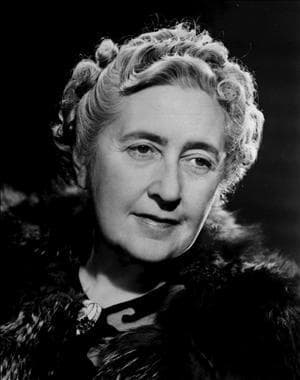
Dame Agatha Mary Clarissa Christie, Lady Mallowan, was an English writer known for her 66 detective novels and 14 short story collections, particularly those revolving around fictional detectives Hercule Poirot and Miss Marple. She also wrote the world's longest-running play, the murder mystery The Mousetrap, which has been performed in the West End since 1952. A writer during the "Golden Age of Detective Fiction", Christie has been called the "Queen of Crime". She also wrote six novels under the pseudonym Mary Westmacott. In 1971, she was made a Dame (DBE) by Queen Elizabeth II for her contributions to literature. Guinness World Records lists Christie as the best-selling fiction writer of all time, her novels having sold more than two billion copies.







