“Everything changed the day he achieved the insight that the purpose of life is not to be happy but to be useful.”
— Mickey Sabbath's early realization about the meaning of existence, contrasting with conventional desires.


Philip Roth (2010)
Genre
Literary Fiction
Reading Time
9-10 hours
Key Themes
See below
Sign in to track this book
Mickey Sabbath, a sixty-four-year-old puppeteer, embarks on a lecherous and grief-stricken odyssey through his past after the death of his mistress, leaving a trail of farcical disasters and confronting the ghosts of his scandalous life.
The novel opens with Mickey Sabbath, a disgraced, aging puppeteer, reeling from the recent death of his beloved mistress, Drenka Balich. Drenka, a Croatian immigrant and former butcher, was Sabbath's primary sexual and emotional outlet for over two decades, a relationship carried on behind the back of his wife, Rose. Her death from ovarian cancer leaves Sabbath grief-stricken, consumed by sorrow and a deep sense of loss. He reflects on their wild, uninhibited sexual escapades and the unique understanding they shared, which went beyond the conventional boundaries of his marriage. Drenka's absence creates a void in Sabbath's life, driving him towards erratic and self-destructive behavior, as he struggles to reconcile his past with a future without her presence.
Rose Sabbath, Mickey's long-suffering wife, discovers the extent of his affair with Drenka Balich through Drenka's daughter, who sends her a box of Mickey's belongings found after Drenka's death. This revelation shatters Rose's already fragile world, confirming her deepest suspicions and humiliations. Despite her pain, Rose attends Drenka's funeral, where Mickey, in a fit of grief and defiance, makes a public spectacle of himself. He tries to steal a memento from Drenka's coffin and later accosts her grieving daughter, demanding to know if Drenka spoke of him in her final moments. His outrageous behavior further alienates him from his wife and solidifies his reputation as a depraved outcast in their small, respectable community.
Consumed by his grief and an obsessive need to maintain a physical connection with Drenka, Mickey Sabbath drives to the cemetery where she is buried. He fantasizes about exhuming her body, a macabre yet deeply emotional impulse to retrieve something tangible of her. This morbid fantasy is intertwined with his memories of their intense sexual relationship and Drenka's uninhibited nature. He brings a shovel and even begins to dig, only to be interrupted by a groundskeeper. This thwarted act shows Sabbath's deep psychological distress and his inability to process loss in a conventional manner, highlighting his rejection of societal norms even in death.
Following Drenka's death, Mickey Sabbath begins a campaign of provocative phone calls to various women from his past, including former students and lovers. He makes obscene suggestions, recounts explicit memories, and generally behaves in a manner designed to shock and disturb. These calls are partly an expression of his unbridled libido, partly a desperate attempt to feel alive, and partly an act of self-sabotage. His actions threaten to expose his scandalous history to a wider audience, particularly among the faculty of the small liberal arts college where he once taught. His behavior seems to be a deliberate effort to burn bridges and ensure his complete ostracization.
After enduring Mickey's increasingly erratic and humiliating behavior, coupled with the public scandal surrounding Drenka's affair, Rose Sabbath delivers an ultimatum: he must leave their home. She can no longer tolerate his destructive presence and the constant emotional torment he inflicts. Though devastated by Rose's decision, Mickey, in his characteristic defiance, sees it as a form of liberation. He packs a bag and leaves their New England home, embarking on an aimless journey that he hopes will provide some form of escape or resolution. This departure is a key moment, pushing Sabbath further into his solitary and self-destructive spiral.
Mickey Sabbath drives to his childhood neighborhood in New Jersey, a place filled with memories of his youth and the origins of his rebellious nature. He encounters Bobby, a man he knew from his past, who is now a successful, respectable member of the community. This meeting is a stark contrast to Sabbath's own life, highlighting the different paths they took. Sabbath, ever the provocateur, tries to shock Bobby with his lewd stories and cynical worldview, but Bobby remains largely unfazed. This encounter forces Sabbath to confront the ghosts of his past and the choices that shaped him, particularly his early experiences with sexuality and his rejection of conventional morality.
During his journey, Mickey Sabbath becomes fixated on finding the prosthetic hand of his cousin, Fishman, a World War II veteran who lost his arm and later committed suicide. This quest is deeply symbolic, representing Sabbath's grappling with guilt, memory, and the physical manifestations of loss. Fishman's story, particularly his tragic death and the lingering question of his lost prosthetic, becomes intertwined with Sabbath's own feelings of mutilation and incompleteness after Drenka's death. The search for the hand is a desperate attempt to connect with a lost past and perhaps to atone for unspoken transgressions, further illustrating Sabbath's unconventional coping mechanisms.
Mickey continues his journey, making a point to visit and call several women with whom he had affairs in the past. These encounters are often awkward, uncomfortable, and charged with unresolved tension. He tries to re-ignite old passions, or at least to get a reaction, a confirmation of his enduring power or depravity. Each interaction is a mirror, reflecting different facets of his past self and the impact he had on these women's lives. These visits are not about genuine connection but about Sabbath's desperate need to affirm his identity, even if it means dredging up painful memories or inflicting further emotional damage.
Alone in a cheap motel room, Mickey Sabbath descends into a night of deep psychological torment. He experiences vivid hallucinations, fragmented memories, and feverish dreams, blurring the lines between reality and his inner turmoil. He is haunted by the ghosts of his past: Drenka, his mother, his cousin Fishman, and various women he has wronged. This delirious state is a culmination of his grief, guilt, and the sheer exhaustion of his self-destructive journey. The motel room becomes a crucible for his psychological breakdown, where he confronts the consequences of his life choices and the unbearable weight of his losses.
After his period of wandering, Mickey Sabbath returns to his home, hoping for reconciliation with Rose. However, Rose, having reached her breaking point, firmly rejects him, refusing to take him back. Her refusal shatters any remaining hope Sabbath harbored for a conventional future. Desperate and utterly alone, Mickey attempts suicide by carbon monoxide poisoning in his garage. This act is not simply a desire for death but a final, dramatic gesture of defiance and despair, a culmination of his lifelong rebellion against expectation and his inability to find peace within himself or with others.
Miraculously, Rose Sabbath discovers Mickey's suicide attempt in time and saves his life. Her intervention, though born of a complex mix of anger, duty, and perhaps lingering affection, prevents his death. Mickey is hospitalized, where he slowly recovers physically. During his hospital stay, he continues to grapple with his internal demons, his memories, and the implications of his failed suicide. This period of forced introspection, though painful, offers a brief respite from his chaotic existence, allowing him to reflect on his life from a more detached perspective, even if he remains fundamentally unchanged.
The novel concludes with Mickey Sabbath continuing his defiant and unrepentant existence. Though physically weakened by his suicide attempt, his spirit remains unbroken in its commitment to misrule and provocation. He rejects any notion of redemption or conventional peace, choosing instead to embrace his identity as an outsider and a sexual anarchist. The ending is ambiguous, offering no easy resolution to his torment or his relationships. Sabbath remains a figure of constant rebellion, a man who, even at the precipice of old age and death, refuses to submit to the demands of society or the quietude of a conventional life, leaving his fate uncertain but his character unyielding.
The Protagonist
Sabbath's arc is less about transformation and more about an intensified confrontation with his lifelong identity. He grapples with mortality and loss, but ultimately reaffirms his defiant, unrepentant nature.
The Supporting
Drenka's arc is seen entirely through Mickey's memories and grief, representing the embodiment of uninhibited passion and a lost world for him.
The Supporting
Rose's arc sees her reaching a breaking point, finally asserting her boundaries against Mickey's destructive behavior, though still bound by a complex, unresolved connection.
The Mentioned
Fishman's 'arc' is entirely retrospective, serving as a symbolic touchstone for Mickey's exploration of guilt, loss, and the nature of masculinity.
The Supporting
Bobby's character is static, serving as a foil to Mickey and a symbol of conventional life.
The Supporting
Michal's arc is limited to her reaction to her mother's death and her role in exposing the affair, serving as a catalyst for Rose's actions.
The novel is deeply shaped by Mickey Sabbath's raw and unconventional grief over the death of his mistress, Drenka Balich. His mourning shows not in quiet sorrow, but in outrageous, self-destructive acts — trying to steal from her coffin, fantasizing about exhumation, and harassing women from his past. This theme explores how individuals cope with deep loss when conventional outlets are unavailable or rejected, highlighting the intense psychological turmoil that can come with the death of a significant, though illicit, love. His grief for Drenka is intertwined with a broader sense of loss for his youth, his potency, and a world he feels is slipping away.
“He understood what it was to be consumed. He was consumed. He was consumed by Drenka. He was consumed by Drenka's death.”
Sexuality is a central and pervasive theme, portrayed as both a driving force and a principle for Mickey Sabbath. For him, sex is not just pleasure but an instrument of rebellion, a way to assert his identity and defy societal norms. His affairs, particularly with Drenka, are acts of radical freedom and a rejection of bourgeois morality. The novel explores the uninhibited, often transgressive nature of desire in old age, challenging conventional notions of aging and libido. Sabbath's relentless pursuit of sexual connection, even in grief, shows its fundamental importance to his being, despite the chaos and destruction it often brings.
“For Sabbath, sex was an obsession and a principle, an instrument of perpetual misrule in his daily existence.”
Mickey Sabbath embodies a lifelong spirit of rebellion and transgression against all forms of authority and convention. From his early days as a puppeteer using his art to provoke, to his numerous extramarital affairs, and his outrageous behavior after Drenka's death, Sabbath consistently chooses to flout expectations. This theme explores the nature of a life lived outside societal boundaries, questioning the costs and freedoms associated with such a path. His actions, often shocking and offensive, are a deliberate challenge to respectability, morality, and the quietude of old age, making him an anti-hero who refuses to be tamed.
“He was a man who had chosen to be outside. He was outside, and he liked it there.”
The novel is deeply immersed in Mickey Sabbath's memories, constantly shifting between his present grief and vivid recollections of his past. His journey is largely an exploration of his personal history, revisiting old haunts, former lovers, and the formative experiences that shaped his identity. The past is not a static entity but a living force that continually influences his present actions and psychological state. His obsession with Drenka and his cousin Fishman demonstrates how memory, both cherished and painful, can haunt and define an individual, blurring the lines between what was and what is, and making true escape impossible.
“The past was not a country he had left, but a country he inhabited still, every day.”
Throughout the narrative, there is an underlying current of the absurd, particularly in Sabbath's actions and the situations he finds himself in. His attempts to steal from a coffin, his obscene phone calls, and his general disregard for decorum often verge on the farcical, highlighting the inherent meaninglessness he perceives in a structured, conventional life. This theme explores how humor and the grotesque can be used to confront the bleakness of mortality and the futility of human striving. Sabbath's outrageous behavior is his way of injecting meaning and defiance into an existence he views as inherently arbitrary.
“The world was a joke, and he was the punchline, and the setup, and the audience, all at once.”
The story frequently jumps between present events and Mickey's memories of the past.
The narrative structure is highly non-linear, with frequent flashbacks and digressions into Mickey Sabbath's past. These shifts are often triggered by a current event or a memory, allowing the reader to understand the complex history behind Sabbath's present actions and psychological state. This device reflects the fragmented nature of memory and grief, showing how the past constantly intrudes upon and informs the present. It also allows for a deeper exploration of Sabbath's character development and the origins of his rebellious nature, making his motivations more nuanced than a purely chronological account would allow.
Extensive use of Mickey Sabbath's thoughts, reflections, and stream-of-consciousness.
A significant portion of the novel is conveyed through Mickey Sabbath's internal monologue, providing direct access to his raw, unfiltered thoughts, obsessions, and philosophical musings. This device immerses the reader deeply into Sabbath's mind, revealing his complex inner world, his rationalizations for his behavior, his profound grief, and his relentless defiance. It allows for detailed explorations of his memories, his sexual fantasies, and his cynical worldview, making him a vivid and often uncomfortable presence. The internal monologue is crucial for understanding the depths of his character and the extent of his psychological turmoil.
The prosthetic hand of Mickey's deceased cousin, Fishman, represents loss and guilt.
The prosthetic hand of Mickey's deceased cousin, Fishman, serves as a powerful recurring symbol. Fishman lost his arm in World War II and later committed suicide, and Mickey becomes obsessed with finding the missing prosthetic. The hand symbolizes physical and emotional mutilation, the lingering effects of war and trauma, and the impossibility of fully recovering what is lost. For Mickey, the search for the hand is intertwined with his own feelings of incompleteness after Drenka's death and his unresolved guilt regarding his past, representing a tangible link to a damaged history he cannot escape.
Mickey's perspective is often biased, self-serving, and prone to exaggeration.
While the novel is primarily told from Mickey Sabbath's perspective, he functions as an unreliable narrator. His accounts of events, his relationships, and his own motivations are often colored by his desires, his self-delusions, and his need to justify his transgressive behavior. He exaggerates, distorts, and selectively remembers, particularly concerning his sexual exploits and his perceived victimhood. This unreliability forces the reader to critically evaluate his narrative, recognizing the gap between his self-perception and how others might view him, adding layers of complexity to his character and the events of the story.
“Everything changed the day he achieved the insight that the purpose of life is not to be happy but to be useful.”
— Mickey Sabbath's early realization about the meaning of existence, contrasting with conventional desires.
“The price of being a pariah, of course, is that you are hated. The price of being a genius is that you are envied. The price of being a free spirit is that you are misunderstood. The price of being a monster is that you are feared.”
— Sabbath reflecting on the consequences of different societal roles and his own perceived identity.
“He was an artist. He was a puppeteer. He manipulated, he deceived, he charmed, he repelled. He was a liar, a trickster, a seducer.”
— Description of Mickey Sabbath's nature and his profession as a puppeteer, highlighting his manipulative tendencies.
“The only thing that mattered was the present moment, and the present moment was always terrible.”
— Sabbath's cynical view of time and his perpetual dissatisfaction with his immediate circumstances.
“To be without shame, to be without a sense of guilt, to be without a sense of responsibility — this was the only true freedom.”
— Sabbath's radical philosophy on freedom, rejecting societal norms of morality and accountability.
“He lived in the present tense, a present tense that was always dissolving, always evaporating, always being replaced by another, equally fleeting present tense.”
— Further elaboration on Sabbath's experience of time, emphasizing its ephemeral and unstable nature.
“Old age is not for sissies. It's for the strong, for the resilient, for the survivors.”
— Sabbath's grim but defiant perspective on the challenges and endurance required in old age.
“He had a gift for making himself hated, a genius for alienating everyone who came into contact with him.”
— Observation about Sabbath's destructive social tendencies and his ability to repel others.
“The dead were everywhere. They were in his head, in his dreams, in his memories. They never left him alone.”
— Sabbath's haunted internal world, constantly besieged by the presence of the deceased, particularly his past lovers.
“He was a man who had chosen to live outside the law, outside the conventions of decent society, and he was paying the price.”
— A summary of Sabbath's rebellious life choices and the inevitable repercussions he faces.
“The world was a stage, and he was a player, a performer, a jester, a fool.”
— Sabbath's theatrical self-perception, viewing his life as a performance.
“He was a man who had lost everything, but he had never lost his desire to shock, to offend, to provoke.”
— Despite his losses, Sabbath retains his fundamental provocative nature.
“There was no redemption. There was only the endless, grinding repetition of the same old mistakes.”
— Sabbath's bleak outlook on life, rejecting the possibility of redemption and seeing only a cycle of error.
“He had always been drawn to the grotesque, to the forbidden, to the taboo.”
— Description of Sabbath's lifelong attraction to the transgressive and the unconventional.
Ready to see how well you understood this book? Take our interactive quiz with 10 questions.
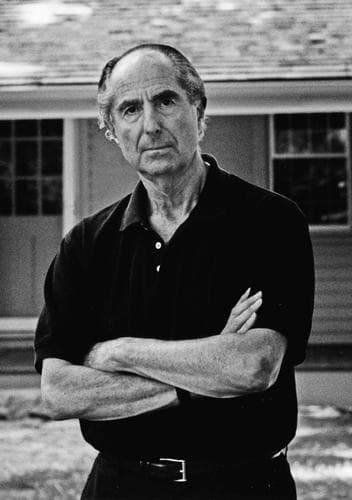
Philip Milton Roth was an American novelist and short story writer. Roth's fiction—often set in his birthplace of Newark, New Jersey—is known for its intensely autobiographical character, for philosophically and formally blurring the distinction between reality and fiction, for its "sensual, ingenious style" and for its provocative explorations of American identity. He first gained attention with the 1959 short story collection Goodbye, Columbus, which won the U.S. National Book Award for Fiction. Ten years later, he published the bestseller Portnoy's Complaint. Nathan Zuckerman, Roth's literary alter ego, narrates several of his books. A fictionalized Philip Roth narrates some of his others, such as the alternate history The Plot Against America.







