“Memory is a complicated thing, a net that catches what it will.”
— Addy reflecting on the nature of memory and how it shapes her life story.

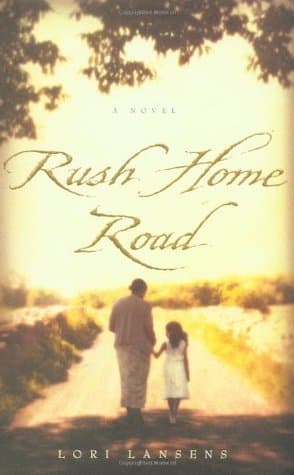
Lori Lansens (2002)
Genre
Historical Fiction
Reading Time
387 min
Key Themes
See below
Sign in to track this book
A five-year-old girl, abandoned by her mother, helps an elderly Black woman unlock memories of fugitive slaves, forbidden love, and family strength in the hidden town of Rusholme.
The story begins with five-year-old Sharla Cody being dropped off at the home of eighty-two-year-old Addy Shadd by her mother, Maybelline, who says she's leaving for the summer. Sharla is a difficult child, prone to outbursts and always scowling. This is a stark contrast to the quiet life Addy has lived for decades in her small, neat home. Addy, a Black woman in a mostly white community, at first resists taking Sharla, a white child. But Maybelline's desperate plea and the child's clear vulnerability persuade her. This unexpected arrival disrupts Addy's solitary routine and brings a charged energy into her quiet life, forcing her to confront the past she has long tried to bury.
Sharla proves to be a challenging child. She is defiant, rarely speaks, and often retreats into herself, making Addy's attempts at nurturing difficult. Sharla's messy appearance and disruptive behavior are a constant source of friction, and Addy's patience is tested. Sharla's only possession is a tattered doll, which she clutches tightly. Addy slowly begins to understand that Sharla's behavior comes from deeper trauma and abandonment, seeing echoes of her own past in the child's guardedness. The first days are marked by a clash of wills, with Addy trying to impose order and Sharla stubbornly resisting any control or affection.
As Addy cares for Sharla, the child's presence begins to unlock long-dormant memories of Addy's own childhood in Rusholme, a community in rural Ontario founded by Black settlers, many of whom were fugitive slaves. These memories surface in vivid, often painful, fragments, taking Addy back to the mid-20th century. She recalls the life of the settlement, the strength of her family, and the traditions of her people. The contrast between Sharla's chaotic upbringing and Addy's rooted past becomes a central theme, as Addy grapples with these resurfacing experiences and their emotional toll.
Addy remembers growing up in Rusholme with her parents, Sarah and Thomas Shadd, and her siblings, especially her brother, David. She describes the close-knit community, the importance of storytelling, and the challenges faced by Black families in a prejudiced society. Rusholme was a haven, a place of safety and tradition, where the descendants of slaves built lives based on hard work, faith, and mutual support. Addy's recollections detail the daily rhythms of life, the shared meals, the church gatherings, and the sense of belonging that defined her early years, painting a rich picture of a forgotten history.
Addy recounts her forbidden love affair with Bo, a white boy from a nearby town. Their secret meetings and growing affection went against the strict racial boundaries of the time. This relationship, at first a source of joy and excitement for young Addy, ultimately leads to betrayal and trauma. Bo's family, especially his mother, disapproves of their relationship, and the social pressures of their communities are strong. This period marks a turning point in Addy's life, shaping her understanding of love, trust, and the harsh realities of racial prejudice.
The climax of Addy's Rusholme memories is a brutal incident that leaves her physically and emotionally scarred. Bo betrays her, leading to a violent attack by his family and their friends. This traumatic event, rooted in racial hatred and the violation of her innocence, destroys Addy's spirit and her connection to Rusholme. Unable to cope with the pain and shame, Addy makes the difficult decision to leave her family and the only home she has ever known, seeking anonymity and escape from the devastating memories. This departure marks the end of her youth and the beginning of her solitary adult life.
After leaving Rusholme, Addy builds a life of quiet solitude. She moves to a new town, finds work, and avoids forming deep connections, effectively protecting herself from emotional vulnerability. Her home becomes a sanctuary of order and routine, a stark contrast to the chaos of her past. She suppresses the painful memories of Rusholme and the trauma she endured, believing that forgetting is the only way to survive. This period of her life is marked by a deliberate erasure of her identity and a refusal to acknowledge her roots, until Sharla's arrival forces her to confront what she's hidden.
As Addy shares her stories, Sharla subtly changes. The child, at first withdrawn and hostile, gradually begins to respond to Addy's steady presence. Small gestures of trust emerge, like Sharla allowing Addy to brush her hair or sharing a rare, hesitant smile. Addy's patience and the unconditional love she offers, even in the face of Sharla's challenging behavior, slowly chip away at the child's defenses. Through these interactions, Sharla begins to reveal glimpses of her own pain and abandonment, mirroring Addy's past trauma and creating an unspoken bond between them.
Addy discovers that sharing her memories of Rusholme is not just a way to pass the time with Sharla, but an act of healing for herself. As she recounts the history of her community, the love of her family, and even the pain of her past, she reclaims her identity. Sharla, in turn, is captivated by these stories, finding a sense of belonging and narrative stability that has been absent from her own life. Storytelling bridges the generational and racial divide between them, creating a shared history and a deep, empathetic connection that transforms their relationship.
Maybelline eventually returns, as abruptly as she left, expecting to reclaim Sharla. However, the dynamic between Sharla and Addy has changed. Sharla, once desperate for her mother's attention, now has a secure attachment with Addy. The reunion is tense, as Maybelline struggles to understand the bond that has formed. Addy, now stronger and more at peace with her past, confronts Maybelline, not with anger, but with a quiet determination to ensure Sharla's well-being. This confrontation forces Maybelline to acknowledge her shortcomings and the depth of Addy's love for Sharla.
Ultimately, Maybelline decides to allow Sharla to stay with Addy, recognizing that Addy provides the stability and love Sharla needs. This resolution signifies the formation of an unconventional, yet loving, family unit. Addy, once a solitary figure, finds renewed purpose and connection through Sharla. Sharla, in turn, finds a safe haven and a grandmother figure who sees and loves her unconditionally. Their shared journey through memory and healing ends with a powerful affirmation of love's ability to transcend biological ties and past wounds.
The Protagonist
Addy begins as a woman isolated by past trauma but through caring for Sharla, she reclaims her identity, heals old wounds, and finds renewed purpose and love.
The Protagonist
Sharla transforms from a neglected, withdrawn child into a secure, loved, and expressive girl through Addy's unconditional affection and the stories she hears.
The Supporting
Maybelline begins as an irresponsible mother but eventually makes a selfless decision for Sharla's well-being, acknowledging her own limitations.
The Supporting
Bo's character does not have a significant arc; he serves as a catalyst for Addy's trauma and subsequent journey.
The Supporting
Sarah's character is primarily seen through Addy's memories, representing a steadfast maternal figure.
The Supporting
Thomas's character is primarily seen through Addy's memories, representing a strong paternal figure.
The Supporting
David's character is primarily seen through Addy's memories, representing a loving sibling.
The novel shows how memory, both individual and collective, shapes identity and helps healing. Addy's journey is driven by her long-suppressed past in Rusholme. By sharing these stories with Sharla, Addy reclaims her heritage and processes her trauma, and also provides Sharla with a sense of history and belonging she lacks. Recounting the life of Rusholme, its struggles and triumphs, transforms painful individual memories into a shared narrative of resilience and connection, showing that stories are vital for understanding who we are and where we come from. This is clear in how Addy's detailed recollections of her family and community bring Rusholme to life for the reader and for Sharla.
“"The past ain't never really gone, child. It's just waitin' for you to remember it right."”
Love, especially the bond between Addy and Sharla, is a transformative and redemptive force. Addy, hardened by a lifetime of solitude and trauma, finds renewed purpose and emotional connection through her reluctant care for Sharla. Similarly, Sharla, a child of neglect, grows under Addy's unconditional affection and stable presence. Their relationship shows how love can bridge generational, racial, and experiential divides, healing old wounds and creating new forms of family. This is clear when Maybelline recognizes that Addy's love for Sharla is stronger and more consistent than her own, leading to Sharla staying with Addy.
“"Some folks, they got a family by blood, and some folks, they got a family by heart. And sometimes, the heart family is the one that saves you."”
The novel explores the impact of racial prejudice in mid-20th century Canada, particularly through Addy's experiences in Rusholme. The community itself was founded by fugitive slaves, showing the need for self-determination in the face of oppression. Addy's traumatic encounter with Bo and his racist family highlights the realities faced by Black individuals. However, the theme also emphasizes the resilience of the Black community in Rusholme, their ability to build a culture, maintain dignity, and form strong communal bonds despite systemic racism. The stories Addy shares celebrate this perseverance, ensuring that the struggles and triumphs of her people are not forgotten.
“"Rusholme, it weren't just a place. It was a promise. A promise we made to ourselves, that we'd be free, no matter what they tried to do to us."”
The concept of family is explored in its various forms, contrasting biological ties with chosen bonds. Sharla's biological family is dysfunctional and neglectful, leading to her abandonment. In contrast, the family Addy and Sharla create is one of deep love, mutual respect, and support. The novel suggests that while biological connections are important, the quality of love, care, and commitment truly defines a family. Addy's memories of her strong, loving biological family in Rusholme provide a blueprint for the family she ultimately builds with Sharla, emphasizing the enduring power of familial love, regardless of its origin. The decision for Sharla to stay with Addy, with Maybelline's consent, solidifies this theme.
“"Blood don't make you family, child. Love does. And the remembering."”
The present-day interaction between Addy and Sharla frames Addy's past narratives.
The novel uses a framing device where the present-day interactions between Addy Shadd and Sharla Cody serve as the outer narrative, while Addy's extensive recollections of her childhood in Rusholme form the embedded, central story. This structure allows the reader to experience Addy's memories as they are triggered and processed by her, making the past feel immediate and relevant to the present. The framing device highlights how the past continuously informs and shapes the present, and how the act of sharing these memories is integral to the healing and bonding of the two protagonists.
Addy's memories are presented as vivid, often non-linear recollections.
Addy's memories of Rusholme are not presented in a strictly chronological order but rather as a stream of consciousness, often triggered by Sharla's actions, a specific smell, or a passing thought. This device immerses the reader directly into Addy's subjective experience, reflecting the way memory often works in real life – fragmented, emotionally charged, and associative. It allows the author to reveal information about Addy's past gradually, building suspense and deepening the reader's understanding of her character and the historical context of Rusholme, as the pieces of her story slowly come together.
The concept of 'home' represents safety, identity, and belonging.
The concept of 'home' is a powerful symbol in the novel, representing safety, identity, and belonging. Rusholme symbolizes a lost home, a haven from racial prejudice, and the roots of Addy's identity. Her current meticulously kept house represents a self-imposed, solitary sanctuary. Sharla, initially homeless in a literal and emotional sense, finds her first true home with Addy. The journey of the characters is largely about finding or reclaiming a sense of home, whether it's a physical place or an emotional state of belonging. The 'Rush Home Road' itself symbolizes the journey back to one's origins and true self.
The conversations and shared experiences between Addy and Sharla bridge different generations.
The dialogue and shared experiences between Addy, an octogenarian, and Sharla, a five-year-old, serve as a critical plot device. This intergenerational exchange allows for the transmission of history, wisdom, and emotional healing. Addy's stories educate Sharla about her own heritage and the resilience of her ancestors, while Sharla's youthful vulnerability and need for love prompt Addy to confront and process her long-buried trauma. The contrast in their ages and backgrounds highlights the universal human needs for connection and belonging, demonstrating how different generations can profoundly impact and enrich each other's lives through empathy and shared narrative.
“Memory is a complicated thing, a net that catches what it will.”
— Addy reflecting on the nature of memory and how it shapes her life story.
“You can't outrun your past, Addy. It follows you like a shadow.”
— A character warning Addy about the inescapable nature of her history and secrets.
“Love ain't always pretty. Sometimes it's a fight, sometimes it's a whisper, but it's always there.”
— Addy's understanding of the complexities and enduring nature of love.
“A good story ain't about what happened, it's about how you tell it.”
— Emphasizing the importance of narrative and perspective in recounting life events.
“Home ain't just a place, child. It's the people who love you.”
— A poignant definition of home, highlighting emotional connection over physical location.
“Every life leaves a trace, a ripple in the water, long after the stone is gone.”
— Reflecting on the lasting impact and legacy of individual lives.
“Sometimes the things you run from are the very things that make you who you are.”
— Exploring the idea that difficult experiences and past trauma contribute to identity.
“The truth has a way of finding its own path, no matter how deep you bury it.”
— Discussing the inevitability of truth being revealed, despite efforts to conceal it.
“Grief is a heavy cloak, but sometimes it's the only thing that keeps you warm.”
— A metaphor for the complex and sometimes comforting nature of grief.
“We carry our ancestors in our bones, their stories whispered in our blood.”
— Addy's connection to her heritage and the influence of past generations.
“Hope is a stubborn thing, even when you think all is lost.”
— Highlighting the resilience of hope in the face of adversity.
“There's a difference between living and just existing.”
— A character reflecting on the quality of life and making the most of one's time.
“The world ain't always fair, but you gotta find your own kind of justice.”
— Addy's pragmatic view on injustice and the need for personal agency.
“Stories are like threads, weaving together the fabric of who we are.”
— Emphasizing the role of stories in constructing personal and collective identity.
Ready to see how well you understood this book? Take our interactive quiz with 10 questions.







