“The only thing that can be said to be truly beautiful is that which is on the verge of destruction.”
— Isao's contemplation on beauty and death.

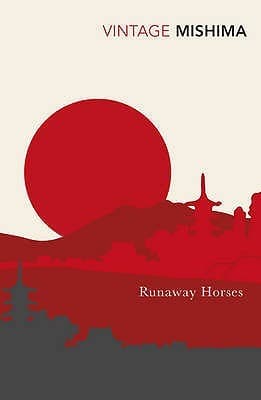
Yukio Mishima (1975)
Genre
Literary Fiction / Historical Fiction
Reading Time
9-10 hours
Key Themes
See below
Sign in to track this book
In a Japan grappling with modernity, a charismatic young patriot, steeped in the samurai code, ignites a desperate terrorist plot to restore the Emperor's power and dismantle the industrialists he believes are corrupting the nation's soul.
The novel opens introducing Isao Iinuma, a brilliant and nationalistic young man in 1930s Japan. He is the son of Shigekuni Iinuma, a former leader of a right-wing society. Isao deeply respects ancient samurai ideals of purity, loyalty, and self-sacrifice, particularly as shown by the historical League of Divine Wind. Disgusted by the corruption and Westernization of modern Japan, which he sees in materialistic industrialists and politicians, Isao begins to organize a secret society of like-minded young men, mostly cadets and students. They train in kendo and discuss their desire to restore Japan to its traditional glory and the Emperor to absolute power, believing a violent uprising is necessary to cleanse the nation.
Isao and his group, which grows to include several young officers, finalize their plan for a 'Showa Restoration.' Their target is a list of prominent zaibatsu leaders and corrupt politicians, whom they see as undermining the Emperor and the true spirit of Japan. The plan involves simultaneous assassinations on a specific date, aiming to shock the nation and trigger a wider nationalist awakening. Isao carefully plans the logistics, assigns roles, and ensures his followers are committed to self-sacrifice. He views their actions not as mere murder, but as a sacred act of purification and loyalty to the Emperor and the nation.
As the date of the planned assassinations nears, a betrayal happens. One of the younger members, frightened by the mission or swayed by external pressures, reveals the plot to the authorities. The police quickly move in, arresting Isao and all his co-conspirators before they can act. The arrests shock their small, dedicated group and wider nationalist circles. Isao, though captured, remains determined, seeing his failure not as a defeat of his ideals, but a temporary setback in the larger struggle for Japan's soul.
Isao and his fellow conspirators are put on trial, a public event that draws national attention. During the proceedings, Isao refuses to express remorse or seek leniency. Instead, he uses the courtroom to passionately state his radical nationalist ideology, denouncing Western materialism, government weakness, and the perceived insult to the Emperor. His articulate and fervent speeches resonate with some of the public, particularly young people, and challenge the authorities, who struggle to frame him solely as a common criminal given his perceived pure motives.
Shigekuni Iinuma, Isao's father, a former right-wing leader now living a more subdued life, is affected by his son's actions. He visits Isao in prison, trying to understand his son's motivations and reconcile them with his own past nationalist activities. While he disapproves of the violent methods, he recognizes the purity of Isao's patriotic fervor, a fervor he once shared. Shigekuni is torn between his paternal love and his own ideological history, leading to internal conflict as he witnesses his son's unwavering commitment to ideals that were once his own, now taken to an extreme.
The trial concludes with the conspirators receiving varying sentences, with Isao receiving a significant prison term. Despite the harsh judgment, Isao remains firm, seeing his imprisonment as another form of sacrifice for his beliefs. An appeal process begins, driven by public sympathy and the efforts of some sympathetic lawyers and former military figures. This period prolongs the legal battle and keeps Isao's ideology in the public eye, further solidifying his image as a nationalist martyr to his supporters.
Surprisingly, Isao and his co-conspirators are released from prison after their appeal, likely due to political maneuvering and a desire to quell public unrest rather than true exoneration. Upon his release, Isao finds himself in a changed world, yet his core beliefs remain. He withdraws to his family home, reflecting deeply on his past actions, the failure of the initial plot, and the continued decline of Japan as he sees it. He feels a sense of incompleteness and a renewed conviction that his mission is not yet over, despite the setback.
Isao experiences a powerful internal struggle upon his release. He feels a deep, spiritual, compulsion to complete the 'purification' of Japan. He believes that the previous plot failed because it was too grand and involved too many people, leading to its exposure. He begins to consider a singular, ultimate act of self-sacrifice, believing that a personal, pure act of atonement and protest would have a greater impact. He seeks a path that aligns with his idealized vision of the samurai spirit—one that is direct, unadulterated, and ultimately fatal.
Isao narrows his focus, choosing a prominent zaibatsu leader, a symbol of the corruption and materialism he despises, as his next target. He plans this act in secrecy, determined to avoid the mistakes of his previous conspiracy. He carefully prepares, honing his skills and steeling his resolve. This time, his goal is not just to eliminate an individual, but to make a symbolic statement through his own death, which he views as an essential part of the act. He believes this ultimate sacrifice will awaken the Japanese spirit.
On the chosen day, Isao successfully infiltrates the home of the zaibatsu leader and assassinates him. Immediately after, in a secluded spot, Isao performs seppuku (ritual suicide) with serene determination. This act is the culmination of his life's philosophy—a final, pure expression of loyalty to the Emperor and Japan, a protest against the modern world, and an embrace of the ancient samurai code. He dies believing his sacrifice will inspire a true spiritual restoration, fulfilling his destiny as a 'runaway horse' driven by an unstoppable, pure ideal.
The Protagonist
Isao begins as a leader of a group conspiracy, experiences failure and imprisonment, and ultimately evolves to a solitary, self-sacrificial act, embodying his extreme nationalist ideals.
The Supporting
Shigekuni moves from a detached observer to a deeply conflicted father, forced to confront his own past and the implications of his son's actions.
The Supporting
Kiyohide remains loyal to Isao's cause throughout, but his individual development is secondary to his function as a dedicated follower.
The Antagonist/Mentioned
Serves as the catalyst for Isao's final act, embodying the 'evil' that must be purged.
The Supporting
Their role is static, representing the societal forces against which Isao rebels.
Isao's philosophy centers on purity in action and intention. He believes true purity comes through absolute dedication and, ultimately, self-sacrifice for a higher ideal. His initial plot, and especially his final act of seppuku, are acts of purification for himself and for Japan. He rejects compromise, believing that only a complete, unblemished offering of one's life brings true meaning. This theme is clear in his ascetic lifestyle and his unwavering commitment to the samurai code, ending in his ritual suicide.
““For Isao, the most beautiful thing was a clear, pure action, untainted by compromise or calculation, even if it led to death.””
Extreme nationalism drives Isao's actions. He believes in a mystical, spiritual connection between the Japanese people, the land, and the Emperor. He sees the Emperor not just as a political leader but as a divine embodiment of Japan's essence. The perceived weakening of the Emperor's power and the infiltration of Western materialism are grave insults to this sacred national identity. Isao's plots aim to restore the Emperor to his absolute position and purify Japan of foreign influences, reflecting a fervent and dangerous strain of pre-war Japanese ultranationalism.
““The Emperor was not merely a symbol; he was the very heart of Japan, and to allow him to be diminished was to allow Japan itself to wither.””
The novel shows the clash between ancient Japanese traditions, especially the samurai code, and Western modernity. Isao represents the traditionalist extreme, rejecting industrialization, democracy, and materialism as corrupting influences. He yearns for a return to an idealized past of spiritual purity and martial valor. The 'zaibatsu' leaders and politicians represent the modern, Westernized elements Isao wants to destroy. This conflict is external and internal, as characters like Shigekuni Iinuma grapple with their own past and Japan's changing face.
““He saw the true spirit of Japan being suffocated by money, by machines, by the vulgarity of the West.””
Mishima, through Isao, explores the Japanese cultural tendency to find beauty and spiritual fulfillment in death, especially when it is a conscious, chosen act of sacrifice. Isao views his impending death, particularly his seppuku, not as a tragic end but as the ultimate, most beautiful expression of his life's purpose and loyalty. The ritualistic nature of seppuku, with its emphasis on purity, discipline, and honor, is presented as an art form. This theme highlights an aspect of the samurai ethic, where a 'beautiful death' is preferable to a compromised life, and is linked to the idea of purity of action.
““Death, if chosen and performed with pure intent, could be the most beautiful of all human acts.””
The novel explores the tension between achieving political and spiritual goals through collective conspiracy versus individual action. Isao initially believes in the power of a group uprising, planning a grand assassination plot with his followers. However, the plot's failure due to betrayal leads him to reconsider. He concludes that true purity and impact come only through a solitary act of self-sacrifice, unburdened by the weaknesses and complexities of collective human endeavor. His final act of assassination and seppuku shows this shift, emphasizing the power of an individual's unyielding will.
““A single, pure act, untainted by the weaknesses of others, held more power than any grand conspiracy.””
Early articulation of Isao's extreme beliefs and admiration for seppuku hints at his ultimate fate.
From the very beginning, Isao's unwavering devotion to the samurai code, his fascination with the League of Divine Wind's history of ritual suicide, and his constant discussion of purity and self-sacrifice strongly foreshadow his eventual act of seppuku. Mishima meticulously lays out Isao's philosophical framework, making his final, violent act feel like an inevitable consequence of his deeply held beliefs rather than a sudden, unpredictable event. This device builds a sense of tragic destiny for the protagonist.
The political and social turmoil of pre-war Japan serves as a backdrop and catalyst for the plot.
The specific historical period of the 1930s in Japan – a time of rising nationalism, economic disparity, political instability, and military expansionism – is not merely a setting but a crucial plot device. It provides the fertile ground for Isao's radical ideology to take root and resonate. The perceived corruption of politicians and industrialists, the weakening of the Emperor's authority, and the growing influence of the West were all real anxieties of the time, lending authenticity and urgency to Isao's motivations and making his actions understandable within that specific historical framework.
The title metaphor encapsulates Isao's unstoppable, pure, yet ultimately destructive drive.
The title 'Runaway Horses' serves as a central metaphor for Isao himself. A runaway horse is powerful, pure in its instinct, and unstoppable once set on its course, but also uncontrolled and destined for a potentially destructive end. This symbolizes Isao's fervent, unbridled patriotism and his single-minded dedication to his ideals, which, while pure in intention, lead him down a path of violence and self-destruction. The metaphor emphasizes his inability to be swayed or stopped, portraying him as a force of nature driven by an absolute internal conviction.
Isao's public trial transforms a legal proceeding into a stage for ideological debate.
The trial of Isao and his co-conspirators is not just a legal process to determine guilt or innocence; it functions as a critical plot device. It provides Isao with a public platform to articulate his radical nationalist ideology, transforming him from a mere criminal into a spokesman for a segment of society. His eloquent speeches during the trial force the authorities and the public to confront the underlying ideological issues, making the trial a crucial moment for the dissemination of his ideas and the solidification of his image as a martyr, rather than just a failed conspirator.
“The only thing that can be said to be truly beautiful is that which is on the verge of destruction.”
— Isao's contemplation on beauty and death.
“Purity, even if it is a delusion, is a admirable thing.”
— Isao's internal thoughts on the purity of his ideals.
“True beauty could be born only from an accumulated fury that would not tolerate the world as it was.”
— Isao's belief about the origins of true beauty and his revolutionary spirit.
“A man's death is a matter for his own soul.”
— Isao's reflections on the personal nature of death and his impending sacrifice.
“Only in death does man attain his full stature.”
— Isao's philosophy regarding the ultimate meaning of life found in death.
“There is no freedom for a man who is not master of himself.”
— A general philosophical statement reflecting the disciplined nature of the characters.
“The world is full of beauty, and the world is full of death. And they are the same.”
— Isao's recurring theme connecting beauty with the inevitability of death.
“For Isao, the most beautiful thing in the world was the purity of intent.”
— Narration describing Isao's core values and motivations.
“The feeling that one has been chosen for a special destiny is a powerful intoxicant.”
— A reflection on Isao's sense of mission and destiny.
“Youth is a dream, a form of chemical madness.”
— A broader observation on the nature of youth and its fervent passions.
“To die for the Emperor was the highest honor, the ultimate beauty.”
— Isao's indoctrinated belief about patriotic sacrifice.
“The world was a stage for the display of his own purity, and for the demonstration of his resolve.”
— Isao's perception of his role in the world and his commitment to his cause.
“The cherry blossoms, falling, seemed to whisper of the brevity of life, and the beauty of its passing.”
— A poetic observation, often associated with Japanese aesthetics and the theme of transience.
“He knew that his death would not change the world, but it would change him, and that was enough.”
— Isao's final internal justification for his actions.
Ready to see how well you understood this book? Take our interactive quiz with 10 questions.
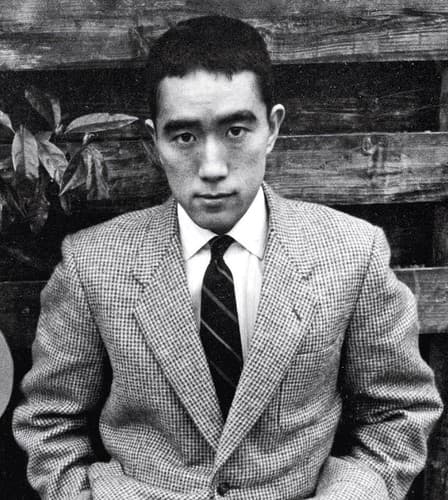
Kimitake Hiraoka , also known as Yukio Mishima , was a Japanese author, poet, playwright, actor, model, Shintoist, nationalist, and founder of the Tatenokai , an unarmed civilian militia. Mishima is considered one of the most important writers of the 20th century. He was considered for the Nobel Prize in Literature in 1968, but the award went to his countryman and benefactor Yasunari Kawabata. His works include the novels Confessions of a Mask and The Temple of the Golden Pavilion , and the autobiographical essay Sun and Steel . Mishima's work is characterized by "its luxurious vocabulary and decadent metaphors, its fusion of traditional Japanese and modern Western literary styles, and its obsessive assertions of the unity of beauty, eroticism and death", according to author Andrew Rankin.







