“There are two kinds of people, boys. Them that's for you and them that ain't. And when you find out which is which, you treat 'em accordingly.”
— P.K.'s father gives him advice about navigating the world.

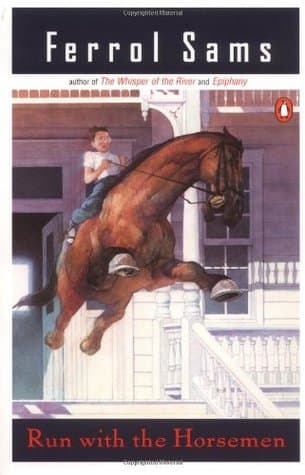
Ferrol Sams (1982)
Genre
Literary Fiction / Historical Fiction / Young Adult
Reading Time
14 hr 24 min
Key Themes
See below
Sign in to track this book
In Depression-era Georgia, a sensitive boy named Porter navigates adolescence, from farm life to school antics, while his eccentric family shapes him into a man strong enough to 'run with the horsemen' amidst life's painful truths.
The story begins with Porter Osborne Jr.'s earliest memories on the family farm in rural Georgia during the Depression. He is a curious and energetic child, watching and taking part in daily farm routines. He learns about cotton chopping, hog killing, and testing a watermelon's ripeness. His beloved father, Porter Sr., a complex man, introduces him to mules and farming, giving him a sense of responsibility to the land. His mother, a calmer presence, balances his father's rougher side. His snuff-dipping grandmother and many cousins create a lively family environment that shapes his early understanding of community.
As Porter grows, school introduces him to a new social world beyond the farm. He quickly learns to play practical jokes, a common activity among his friends, which often gets him into minor trouble but also strengthens his friendships. His school years include adolescent crushes, the thrill of athletic success, especially in football, and a growing awareness of secret sexual encounters among his friends. These experiences, though sometimes awkward, are important for his development, as he learns about social groups, reputation, and peer relationships in a small Southern town.
A main part of Porter's youth is his relationship with his father, Porter Sr. Though deeply loved, Porter Sr. has flaws that Porter Jr. slowly starts to see. His father's pride, business struggles, and occasional temper become clearer to the maturing boy. These moments, though sometimes painful, are important in Porter's journey from idealizing his father to a more realistic appreciation of him as a person. His mother often helps, her gentle strength a constant presence that helps Porter process these difficult observations and keep the family stable.
Porter's adolescence includes his first serious romantic relationship, a deeply moving experience that shapes his understanding of intimacy. He falls in love with a girl, feeling the intense emotions, highs, and lows of young love. This relationship, beautiful at first, eventually ends, leaving Porter with his first true heartbreak. This period is a significant step, forcing him to face feelings of loss, rejection, and the temporary nature of some connections. It helps him mature emotionally, teaching him resilience and the complex feelings in human relationships beyond family.
Throughout his early years, Porter is surrounded by the rich but often strict traditions of the American South. He learns the importance of manners, respect for elders, and the unwritten social rules of his community. The story shows how these traditions, while giving a sense of identity, also create expectations and limits. Porter observes the subtle differences in class, race, and gender roles in his society. These observations, though not always questioned by him as a boy, prepare him for his later understanding of the complexities and sometimes hypocrisies in the Southern way of life, influencing his developing moral sense.
As Porter grows, he faces the reality of death, both in his immediate family and the wider community. These experiences, whether the loss of a pet, a distant relative, or a close family member, force him to deal with life's fragility and absence. He watches how his family members cope with grief, seeing both their strength and vulnerability. These encounters with death are important in shaping his understanding of the human condition, making him more empathetic and thoughtful, and deepening his appreciation for life and his bonds with others.
Raised in a religious Southern community, Porter is exposed to strong religious teachings. However, as he matures, he starts to have his own spiritual questions and doubts. He struggles with faith, the idea of a good God amid suffering, and the sometimes strict interpretations of scripture by local preachers. These inner struggles are a significant part of his intellectual and emotional development, as he tries to match his personal experiences with what he is taught. This search for understanding helps his independent thinking and nuanced view of belief.
Toward the end of his adolescence, Porter begins to look beyond his family farm and small town. College approaches, representing both an exciting chance for learning and a sad departure from his youth. He prepares for this change, reflecting on lessons learned, friendships made, and experiences that shaped him. This period is a mix of anticipation and nostalgia, as he stands at the edge of adulthood, ready for new challenges while carrying the lasting impact of his upbringing in rural Georgia.
The metaphor of 'running with the horsemen' gradually becomes clear to Porter. At first an abstract idea, it comes to mean the challenges, responsibilities, and sometimes harsh realities of adulthood. It signifies the strength, resilience, and wisdom needed to handle life's difficulties without being overwhelmed. By the end of his adolescent journey, Porter understands that 'running with the horsemen' means facing life directly, accepting its complexities, and finding the inner strength to endure and succeed. This realization is the result of all his experiences, from simple farm lessons to family struggles and personal heartbreaks.
The book ends with Porter Osborne Jr. at the start of young adulthood, having absorbed his childhood and adolescence. He has the practical skills from the farm, social lessons from school, and, most importantly, the emotional and moral education from his complex family, especially his flawed but beloved father. He has learned to appreciate the beauty and hardship of his Southern heritage, to handle personal loss, and to question the world. Porter is now ready to 'run with the horsemen' into life's broader challenges beyond the familiar fields of Georgia.
The Protagonist
Porter transforms from an innocent, curious boy into a thoughtful, resilient young man who understands the nuances of life and human nature.
The Supporting
While his character doesn't undergo a dramatic arc, Porter Sr.'s portrayal evolves from an idealized figure in his son's eyes to a more realistic, flawed, yet still deeply loved man.
The Supporting
She remains a consistent moral and emotional anchor for Porter, her strength revealed through her unwavering support and grace.
The Supporting
Her character remains largely consistent, serving as a vibrant, traditional figure who influences Porter through her personality and wisdom.
The Supporting
As a collective, the cousins represent the evolving social landscape of Porter's youth, from childhood playmates to adolescent peers.
The Supporting
These characters provide a backdrop for Porter's social growth, reflecting typical adolescent experiences without individual arcs.
The novel details the often uncomfortable process of moving from childhood innocence to adult understanding. Porter learns that his father is flawed, that love can bring heartbreak, and that life holds loss and difficult choices. These 'painful truths' are shown as essential parts of resilience and wisdom. For example, Porter sees his father's business struggles and temper, which breaks a childlike ideal but leads to a deeper, more realistic love. The end of his first serious relationship also teaches him emotional endurance.
““...to learn the painful truths about growing up strong enough to run with the horsemen.””
Despite its complexities, the Osborne family is a foundational force in Porter's life. His mother's gentle guidance, his father's love and lessons, his grandmother's wisdom, and his cousins' support all help him grow. The family unit provides identity, belonging, and emotional support, even when its members cause him pain. Shared experiences of farm life, economic hardship, and personal successes bind them, showing that family, in its imperfect form, is the main place for character development.
““Family was the rock, the foundation, the place you always came back to, no matter how far you wandered.””
The novel is deeply set in rural Georgia during the Depression. It describes the seasonal cycles of farming—cotton chopping, hog killing, watermelon thumping—which form the background for Porter's growth. These activities are not just tasks but rites of passage, connecting him to the land and a way of life that requires hard work, resilience, and a deep understanding of nature. The descriptions create a strong sense of place, showing how the environment shapes character and how traditional values pass through generations in this setting.
““The smell of freshly turned earth, the sound of crickets at dusk, the taste of a ripe muscadine – these were the sacraments of his childhood.””
Porter's journey is one from childhood innocence to the more experienced, sometimes disillusioning, perspective of adolescence and young adulthood. This theme appears through his discovery of his father's imperfections, his first heartbreak, and his encounters with death. Each experience removes a layer of innocence, replacing it with a more nuanced understanding of the world's complexities and human flaws. This is not a tragic loss, but a necessary process that gives him the emotional depth and resilience needed to face life's challenges.
““The world, he was learning, was not a simple place where good always triumphed, but a tangled web of intentions, some noble, some base.””
A story tracking the psychological and moral growth of the protagonist from youth to adulthood.
The entire novel functions as a classic Bildungsroman, focusing on Porter Osborne Jr.'s development from a young boy to a young man. The narrative meticulously chronicles his experiences, both mundane and profound, as they shape his character, worldview, and understanding of himself and the world around him. Each chapter or significant event contributes to his emotional, intellectual, and moral education, culminating in his readiness to face adulthood. This structure allows for a deep exploration of formative experiences and their lasting impact.
Incorporation of eccentric characters, a strong sense of place, and underlying societal tensions.
While not a full-blown Southern Gothic, the novel subtly employs elements of the genre. This includes the strong, almost oppressive sense of place in rural Georgia, the portrayal of eccentric characters like the snuff-dipping grandmother, and an underlying awareness of the South's complex history and social structures, particularly regarding race and class, though often from a child's limited perspective. These elements contribute to the rich, distinctive atmosphere and the unique cultural context of Porter's upbringing, adding depth and a touch of the peculiar to the narrative.
A central guiding metaphor representing the challenges and resilience required for adulthood.
The phrase 'running with the horsemen' serves as the overarching metaphor for the trials and tribulations of growing up and facing the harsh realities of life. It is introduced early and recontextualized throughout the narrative, signifying the strength, courage, and wisdom needed to navigate life's inevitable difficulties. This metaphor provides a thematic anchor, encapsulating the book's central message about resilience and the arduous but ultimately rewarding journey into adulthood, giving the title itself a profound symbolic weight.
The story is told by an older Porter reflecting on his youth.
The novel is narrated in the first person by an older, wiser Porter Osborne Jr., looking back on his childhood and adolescence. This retrospective viewpoint allows for a layer of mature reflection and insight to be woven into the recounting of youthful experiences. The narrator can comment on the significance of events, understand the motivations of characters in hindsight, and provide a broader philosophical context to his formative years, enriching the reader's understanding of his development.
“There are two kinds of people, boys. Them that's for you and them that ain't. And when you find out which is which, you treat 'em accordingly.”
— P.K.'s father gives him advice about navigating the world.
“The past is never dead. It's not even past.”
— A reflection on the enduring influence of history and personal experience, echoing Faulkner.
“You can't escape what you are, no matter where you go or what you do.”
— P.K. grapples with his identity and heritage.
“A man's got to stand for something, or he'll fall for anything.”
— A recurring theme about integrity and conviction.
“Life ain't about waiting for the storm to pass. It's about learning to dance in the rain.”
— A resilient outlook on overcoming adversity.
“The only thing worse than being talked about is not being talked about.”
— P.K. observes the social dynamics and small-town gossip.
“Every man has his own private hell, and his own private heaven.”
— A contemplation on personal experience and internal worlds.
“Sometimes the biggest battles are fought within yourself.”
— P.K.'s internal struggles and moral dilemmas.
“Ignorance is not bliss; it is simply ignorance.”
— A statement about the value of knowledge and understanding.
“The truth will set you free, but first it will make you miserable.”
— P.K. learns hard lessons about reality.
“There's a fine line between courage and foolishness, and sometimes it's hard to tell the difference.”
— P.K. reflects on his actions and those of others.
“You can't change the past, but you can learn from it.”
— A pragmatic view on history and personal growth.
“The older I get, the more I realize that the only thing that truly matters is love.”
— A mature reflection on life's ultimate values.
“Childhood is a short season, and it passes quickly.”
— P.K. looks back on his youth with a sense of nostalgia.
Ready to see how well you understood this book? Take our interactive quiz with 10 questions.







