“He knew it wasn't a fair fight, but then, life rarely was.”
— Describing the protagonist's mindset facing a formidable challenge.

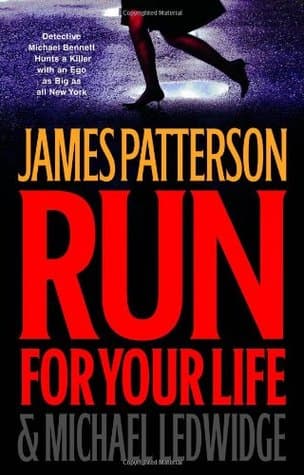
James Patterson (2009)
Genre
Thriller / Mystery
Reading Time
373 min
Key Themes
See below
Sign in to track this book
A killer called 'The Teacher' targets New York's rich with lessons in etiquette. Detective Mike Bennett must find him while managing his ten flu-stricken children.
The book starts with the discovery of Robert Maxwell, a powerful Wall Street executive, found dead in his apartment. His tongue is cut out, and a note says, 'Remember your manners.' Detective Michael Bennett takes the case. He already juggles his ten adopted children. The crime's dramatic nature and the killer's goal of punishing the 'undeserving rich' immediately strike him. The media quickly covers the story, making the murder and the strange message a sensation, causing fear among New York's wealthy.
Soon after Maxwell's death, another New Yorker, a rude celebrity chef, is found murdered in a similar way, his hands cut off. This time, the killer leaves a longer note, signing as 'The Teacher' and stating his goal to 'teach' the city's arrogant a lesson in humility. Detective Bennett and his team, including Detective Santiago, begin to link the victims by their public image of entitlement. The city is afraid, and the police are under pressure to find The Teacher before another attack.
During the growing murder investigation, Detective Bennett faces a personal problem. All ten of his adopted children get a severe flu at the same time. This makes Bennett split his time between the demanding case and his large family's needs. His wife, Mary Catherine, a doctor, works hard to care for them, but Bennett feels the stress of balancing his job to protect the city with his role as a father. The constant interruptions and worry for his children add stress to an already difficult situation.
As The Teacher continues his attacks, targeting people who show different kinds of arrogance—a corrupt politician, an unethical lawyer—Detective Bennett and his team start to see a pattern beyond just 'bad manners.' They realize that each victim, while publicly unpleasant, also holds a specific place in New York's power structure. Bennett thinks The Teacher is not just randomly targeting rude people, but is systematically breaking down a hidden network or sending a message to a specific group. This idea changes the investigation's focus from individual flaws to a possible larger conspiracy.
The Teacher's boldness grows when he sends a chilling message directly to the Mayor of New York City, warning that the 'lessons' will continue until the city learns its manners, implying that even those in power are not safe. This public challenge increases the panic among the wealthy and puts pressure on Mayor Bloomberg and the NYPD. Bennett realizes that The Teacher's actions are not just about revenge but are a planned public challenge and a direct attack on what he sees as the moral decay of the city's upper class, making the case even more politically charged.
Despite the chaos at home and the pressure, Detective Bennett has a breakthrough. He figures out that the victims, besides their public arrogance, are all connected to a specific, high-stakes real estate project. This link suggests that The Teacher's motive is not just moral but has a more direct, possibly financial or revenge-driven, reason. Bennett believes The Teacher is systematically removing obstacles or punishing those responsible for a past wrong related to this project. This discovery narrows the suspects and gives the investigation a clearer direction.
As Bennett looks deeper into the real estate project, he finds clues suggesting that The Teacher's ultimate goal is not just to kill people but to cause a major event that will affect a much larger part of New York City. He realizes that the earlier murders were just steps toward a bigger, more destructive 'lesson.' The exact plan is still unclear, but Bennett understands he has only hours to figure out The Teacher's final target and stop a huge disaster, putting the whole city at risk. Time is running out.
Through careful investigation and connecting the real estate project's details, Bennett unmasks The Teacher as Arthur Penhaligon, a brilliant but vengeful architect. Penhaligon's family was ruined and his life destroyed by the unethical actions of the very people he has been targeting, all linked to the dishonest acquisition of his family's land for the development. His 'lessons' are not just about manners but about a deep desire for justice and revenge for the wrongs done to him and his family, ending in a plan to expose their corruption in a dramatic, destructive way.
Bennett figures out that The Teacher's final, most devastating 'lesson' involves a plot to cause a major incident at Grand Central Terminal, meant to expose the corruption in a spectacular way. With little time left, Bennett, even with his children still very sick, races to the terminal. He confronts Arthur Penhaligon among the crowds. A tense standoff happens, with Penhaligon explaining his motives and his elaborate plan, which involves a timed device to create chaos and reveal hidden truths about the city's powerful elite. Bennett tries to talk him down, desperate to stop many deaths.
In a dramatic showdown, Detective Bennett disarms The Teacher's device and arrests Arthur Penhaligon, stopping a disaster at Grand Central Terminal. The city is relieved, and Bennett is called a hero. Tired but relieved, he goes home to find his ten children slowly getting better from the flu, their health improving thanks to Mary Catherine's care. The book ends with Bennett thinking about how fragile life is, how complex justice is, and the strength of his family, showing the balance he tries to keep between his demanding job and being a father.
The Protagonist
Bennett grapples with the intense pressure of a city-wide crisis and a family health crisis, ultimately proving his dedication to both his job and his children.
The Supporting
Mary Catherine demonstrates incredible resilience and dedication in caring for her sick children, highlighting her strength as a mother and partner.
The Antagonist
Penhaligon moves from calculated revenge to a grand, destructive plan, ultimately being stopped before achieving his final goal.
The Supporting
Santiago consistently supports Bennett, proving his reliability and competence as a partner.
The Mentioned
His death serves as the inciting incident for the entire narrative.
The Supporting
The Mayor faces a crisis of leadership, pushing the police department for a resolution.
This theme is key to the novel, shown through Arthur Penhaligon's actions as 'The Teacher.' While Penhaligon believes he is bringing justice for past wrongs done to his family by the city's wealthy, his methods are vengeful and illegal. Detective Bennett, in contrast, seeks lawful justice, even as he understands Penhaligon's anger. The story makes the reader think about the moral issues of taking the law into one's own hands, even when the system has failed. This appears in the public's mixed reactions to The Teacher's murders, with some feeling the victims 'deserved' it, highlighting the conflict between revenge and legal process.
“'Remember your manners.'”
Detective Michael Bennett's struggle to balance his demanding job with his large family is a main theme. The novel constantly puts the urgent 'Teacher' investigation next to the personal crisis of all ten of his children getting sick. This theme shows the big sacrifices and dedication needed to succeed in both roles. Bennett's strong commitment to his children, even when the city is in danger, shows the importance of family, while his relentless pursuit of the killer shows his professional honesty. It shows the strength and support within his family, especially Mary Catherine, that he can handle these two pressures.
“'He was a cop, yes, but first and foremost, he was a father.'”
The novel criticizes the corruption and arrogance among New York City's wealthy. The Teacher's victims are not chosen by chance; they represent different parts of societal decay: greed, political wrongdoing, and public entitlement. Through Penhaligon's past, the story shows how powerful people can exploit and ruin the lives of ordinary citizens without consequence. This theme connects with public frustration towards systems that seem unfair, making The Teacher, for some, a rebel figure. It highlights that unchecked power and wealth can lead to a disregard for basic human decency and justice.
“'The city's rich had forgotten their place, forgotten their humanity.'”
This theme looks at the difference between how people, especially public figures, are seen and who they really are. The Teacher targets people based on their public image of arrogance and rudeness, but Bennett's investigation often reveals deeper, more harmful acts of corruption underneath. Similarly, The Teacher himself is at first seen by some as a vigilante, a hero punishing the 'undeserving,' but his actions are those of a dangerous killer. The media plays a big part in shaping these views, making the crimes sensational and influencing public opinion, showing how easily stories can be twisted and how complex human motives are.
“'The headlines painted a monster, but the whispers spoke of a hero.'”
Misleading clues about The Teacher's primary motive.
Initially, The Teacher's motives appear to be purely moralistic, punishing individuals for 'bad manners' and arrogance. This serves as a significant red herring, diverting the police and the reader from the deeper, more personal, and revenge-driven motive connected to a specific real estate project. This misdirection makes the investigation more challenging for Detective Bennett and builds suspense as he must look beyond the obvious to uncover the killer's true agenda, revealing that the 'manners' are merely a superficial pretext for a profound injustice.
A sense of urgency created by The Teacher's escalating plan.
The ticking clock is a crucial device. First, it's the race to catch The Teacher before he kills again. Second, and more critically, it's the realization that The Teacher's final 'lesson' is a large-scale event with a rapidly approaching deadline. This device is intensified by Bennett's personal crisis, as his children's severe illness further limits his time and focus. The urgency builds to a climax at Grand Central Terminal, where Bennett has mere hours, then minutes, to prevent a catastrophe, injecting high tension and stakes into the narrative.
Two major crises unfolding simultaneously for the protagonist.
The novel masterfully employs parallel plotlines: the high-stakes investigation into 'The Teacher' and Detective Bennett's personal crisis of all ten of his children falling severely ill. These two narratives run concurrently, each demanding Bennett's full attention and creating immense internal and external conflict. The constant shifting between crime scenes and sickbeds amplifies the pressure on Bennett, highlighting his character's resilience and the difficulty of balancing his professional duty with his profound paternal responsibilities, making the overall story more complex and emotionally resonant.
Objects and actions representing deeper meanings.
Symbolism is used subtly throughout. The victims' severed tongues and hands symbolize their 'lack of manners' or their inability to speak truth and act justly, respectively. The name 'The Teacher' itself symbolizes Arthur Penhaligon's self-appointed role as a moral arbiter. Grand Central Terminal, as the site of the planned final attack, symbolizes the heart of New York City, a place of convergence and public life, making its disruption a symbolic attack on the city's very fabric and its sense of security and order. These symbols deepen the thematic resonance of the narrative.
“He knew it wasn't a fair fight, but then, life rarely was.”
— Describing the protagonist's mindset facing a formidable challenge.
“The city was a labyrinth of shadows and secrets, and he was just another ghost in its machine.”
— Reflecting on the protagonist's feeling of insignificance within the vastness of New York City.
“Every step he took was a gamble, every decision a potential landmine.”
— Highlighting the constant danger and high stakes the protagonist faces.
“Justice wasn't about right or wrong; it was about who told the better story.”
— A cynical observation about the nature of the legal system.
“Fear was a constant companion, but he refused to let it lead the way.”
— Illustrating the protagonist's resilience despite pervasive fear.
“Some wounds never healed, they just scarred over, reminders of battles fought and lost.”
— A poignant reflection on past traumas and their lasting impact.
“The truth was a weapon, and he intended to wield it.”
— The protagonist's determination to uncover and use the truth against his adversaries.
“In this game, there were no rules, only consequences.”
— Emphasizing the lawless and brutal nature of the criminal underworld.
“He chased ghosts, and sometimes, the ghosts chased back.”
— Describing the dangerous pursuit of elusive criminals and the risks involved.
“The past was a relentless tide, always threatening to pull him under.”
— The protagonist's struggle with his past and its continued influence.
“Every minute counted. Every second was a breath held.”
— Conveying the intense urgency of a critical moment in the plot.
“Trust was a luxury he couldn't afford, not anymore.”
— Reflecting the protagonist's isolation and inability to trust others after betrayals.
“The silence was louder than any scream, filled with unspoken threats.”
— Describing a tense, quiet moment laden with underlying danger.
“He was a man running on fumes, but the engine of his will refused to die.”
— Highlighting the protagonist's sheer determination and endurance despite exhaustion.
Ready to see how well you understood this book? Take our interactive quiz with 10 questions.

Biography coming soon.







