“It was the sort of day that comes in like a lamb and goes out like a lion, only in reverse.”
— Describing a cold, snowy day in Boston.

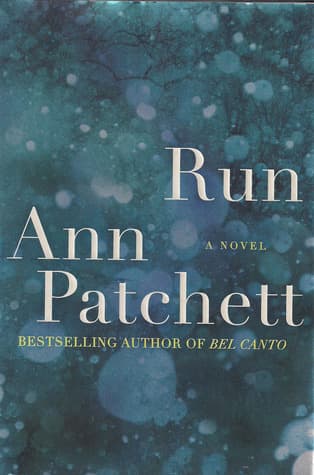
Sign in to track this book
After a Boston snowstorm and a sudden accident, a former mayor faces the complex reality of his unconventional family when his biological and adopted sons' lives intersect with a stranger, making him rethink what it means to protect those he loves.
The novel opens on a snowy Christmas Eve in Boston. Bernard Doyle, a former mayor, prepares for the day, focused on his three sons: Tip and Teddy, his biological children, and the recently arrived Kenya, a young Black woman he has taken in. Tip, the elder biological son, is introverted and artistic; Teddy is more outgoing and Bernard's preferred political heir. The boys are to buy a Christmas tree. While walking, an argument between Tip and Teddy escalates, leading to Tip pushing Teddy into a speeding bus's path. A stranger, later identified as Eunice Park, shoves Teddy out of the way, but her own daughter, Rwanda, is struck and critically injured. The boys are shaken, and the immediate aftermath begins a series of events.
Bernard Doyle arrives at the hospital, where Rwanda is in critical condition. He meets Eunice Park, a young Black woman, who is distraught over her daughter's injuries. As Bernard offers support and takes responsibility, a revelation unfolds: Bernard recognizes Eunice as the biological mother of Kenya, the young woman he recently welcomed into his home. Furthermore, he learns that Rwanda is also Kenya's biological sister, making her his adoptive granddaughter. This discovery complicates Bernard's understanding of his family and the accident, blurring lines between stranger and kin.
Through flashbacks, the story details Bernard Doyle's history and his reasons for bringing Kenya into his family. After his wife's death, Bernard, a devout Catholic and former politician, feels a deep emptiness. He had always wanted a daughter. He learns of Kenya through a social worker, finding she is a young Black woman with a difficult past, living in a group home. Bernard, driven by compassion, a desire to expand his family, and perhaps some public image awareness, decides to adopt Kenya, believing he can offer her a better life and fulfill his own longing for a daughter. Her arrival has already begun to change the dynamics in the Doyle household.
The story explores Eunice Park's past, showing her struggles with poverty, single motherhood, and addiction. She gave up Kenya for adoption years ago, a decision she regretted but felt was necessary for Kenya's well-being. Eunice has been rebuilding her life and now raises Rwanda, who is also Kenya's sister. Her appearance at the accident scene is not entirely coincidental; she has been following Kenya, trying to reconnect with her lost daughter. Her desperation and love for her children drive her actions, contrasting with Bernard's privileged life.
Tip and Teddy, the biological Doyle brothers, feel guilt over their part in Rwanda's accident. The incident forces them to confront their strained relationship and individual struggles. Tip, the more sensitive and artistic brother, feels the weight of his actions deeply and is drawn to Rwanda's situation. Teddy, while initially more defensive, also deals with the consequences and the unexpected connection to Eunice and her daughters. The shared trauma begins to break down some barriers between them, making them rely on each other and question their father's expectations.
As the situation's seriousness sets in, Bernard Doyle's political instincts activate. He tries to manage the crisis, for Rwanda's sake and to protect his family's reputation. He offers financial support to Eunice, tries to control information, and subtly influences those around him to ensure the best outcome for his family, as he defines it. His actions, while seemingly kind, are also rooted in his desire to maintain control and project an image of a benevolent patriarch, even as his complex extended family unravels.
Kenya, having just begun to settle into the Doyle household, suddenly faces the reality of meeting her biological mother, Eunice, and learning she has a younger sister, Rwanda, who is now critically injured. This abrupt encounter creates an identity crisis, as she tries to reconcile her past with her present and future. She feels torn between the comfort and privilege of the Doyle family and the raw, undeniable connection to her biological kin, making her confront what 'family' means to her and where she belongs.
As the day progresses, the characters begin to navigate their new intertwined reality. Bernard, despite his initial attempts at control, starts to genuinely connect with Eunice and acknowledge her as part of his extended family. Tip and Teddy reach out to Eunice, expressing remorse and offering support. Kenya, after initial shock, tentatively connects with Eunice and Rwanda. The hospital setting becomes a place for these relationships, forcing an emotional reckoning with past choices, present circumstances, and the possibility of forgiveness and acceptance across different backgrounds.
Despite the ongoing crisis with Rwanda, getting a Christmas tree, initially given to Tip and Teddy, becomes a symbolic act. Bernard, Eunice, Kenya, Tip, and Teddy find themselves collectively involved in this simple, domestic ritual. This shared activity, amidst chaos and emotional turmoil, represents a fragile but significant step toward integrating their disparate lives. It shows the potential for new traditions and a redefined sense of family, where love and responsibility extend beyond conventional boundaries, even as Rwanda's outcome remains uncertain.
The novel ends without a definitive resolution for Rwanda's condition, but with a significant shift in the characters' relationships. Bernard Doyle has opened his home and heart to Eunice and, by extension, Rwanda. Kenya begins to form a connection with her biological mother and sister while keeping her place within the Doyle family. Tip and Teddy have matured through the ordeal, finding a deeper bond with each other and a new understanding of their father. The story ends with the sense that a new, unconventional family has formed, bound by shared trauma, unexpected connections, and the evolving definition of love and belonging.
The Protagonist/Patriarch
Bernard's journey sees him grapple with his need for control, ultimately learning to expand his definition of family and love beyond his preconceived notions.
The Supporting/Protagonist
Tip grows from a resentful son into a more empathetic and responsible individual, accepting his role in the accident and forging new connections.
The Supporting/Protagonist
Teddy matures from a somewhat self-centered young man into one who understands accountability and the complexities of family.
The Supporting/Protagonist
Kenya navigates the complexities of her dual identity, learning to reconcile her past with her present and forge connections with both families.
The Supporting/Protagonist
Eunice moves from a place of desperation and hidden longing to an unexpected integration into a new, extended family, finding support and a measure of peace.
The Supporting/Mentioned
Rwanda's arc is primarily external, as her injury drives much of the plot and the character development of others, embodying innocence and the stakes of the story.
The novel explores how family goes beyond traditional biological or legal definitions. Bernard Doyle's adoption of Kenya and the revelation of Eunice and Rwanda as Kenya's biological family make all characters redefine what family means. The shared trauma of the bus stop accident, where Eunice saves Teddy but her own daughter Rwanda is injured, connects these different individuals. Bernard, initially focused on his biological sons and his 'chosen' daughter, must accept Eunice and Rwanda as part of his extended family, showing that love, responsibility, and belonging can come from unexpected places and across class and racial differences.
““Family is not a matter of blood. It’s a matter of heart.””
Ann Patchett contrasts the wealthy Doyle family's world with Eunice Park and her daughters' impoverished life. The Doyles' comfortable home, political connections, and easy access to medical and legal help stand out against Eunice's struggles with homelessness, addiction, and lack of resources. The accident is where these two worlds meet, revealing inequalities but also shared humanity. Bernard's initial attempts to 'fix' the situation with money highlight power dynamics, but the story ultimately pushes for genuine integration and understanding, acknowledging systemic disparities while building personal connections.
““He had always believed that money could solve problems, and it usually could.””
Guilt drives several characters, especially Tip and Teddy, who are responsible for the argument that leads to Rwanda's accident. Tip, in particular, struggles deeply with his role, feeling immense remorse. Bernard also carries a subtle guilt over his past actions and choices, including Kenya's adoption. The novel explores confronting this guilt, both individually and together, and the difficult path to forgiveness. Eunice, despite her anger, eventually accepts the Doyles' offers of help, suggesting forgiveness and a move beyond blame toward a shared future.
““The weight of what he had done settled on him, heavy and cold.””
Bernard Doyle places high expectations on his biological sons, especially Teddy, whom he sees entering politics. This pressure creates tension between the brothers and within them. Tip struggles with his artistic interests versus his father's more practical ambitions, while Teddy tries to live up to Bernard's image for him. Kenya also faces the expectation of fitting into the Doyle family's affluent world. The accident shatters these predefined paths, forcing characters to re-evaluate their desires and identities outside of these burdens, leading to more authentic connections and choices.
““His father had always had a plan for him, a trajectory laid out like a carefully drawn map.””
The central catalyst that brings the two families together.
The bus accident is the pivotal plot device that sets the entire narrative in motion. It serves as the physical collision point between the privileged Doyle family and the struggling Eunice Park and her daughters. Without this event, the worlds of Bernard, Tip, Teddy, Kenya, Eunice, and Rwanda would likely never have intersected. The accident creates immediate stakes (Rwanda's life), reveals hidden connections (Kenya's biological mother), and forces all characters to confront their responsibilities, prejudices, and definitions of family. It acts as a dramatic fulcrum around which all subsequent character development and thematic exploration revolve.
A traditional time of family and miracles, used ironically and redemptively.
Setting the novel on Christmas Eve is a significant plot device. Traditionally a time for family, peace, and miracles, the holiday initially highlights the Doyles' seemingly perfect, if somewhat strained, family unit. However, the tragic accident on this day subverts the traditional festive atmosphere, introducing chaos and pain. Paradoxically, the Christmas setting also lends itself to themes of hope, charity, and the unexpected coming together of disparate individuals to form a new kind of family, mirroring the spirit of goodwill, albeit through a crucible of suffering and revelation.
A pre-existing condition that creates a hidden link between the families.
Kenya's adoption by Bernard Doyle, prior to the main events of the novel, is a crucial plot device. It provides the hidden, pre-existing link between the Doyle family and Eunice Park. Without Bernard's decision to adopt Kenya, Eunice would have remained a stranger, and the profound revelations about her being Kenya's biological mother and Rwanda's sister would not have occurred. The adoption serves as the narrative's 'fuse,' waiting for the spark of the accident to ignite the complex and intertwined familial connections that drive the story.
Initially, a collective 'we' perspective of the Doyle family.
While not strictly a device throughout, the novel opens with a subtle use of a collective 'we' from the perspective of the Doyle brothers (Tip and Teddy), creating an immediate sense of their shared experience and bond, even amidst their squabbles. This narrative choice establishes their intertwined lives and their collective guilt regarding the accident. As the story progresses and the focus broadens to include Eunice and Kenya's perspectives, the narration becomes more omniscient, but the initial 'we' effectively grounds the reader in the immediate, internal world of the Doyle brothers and their shared culpability, emphasizing their unity despite individual differences.
“It was the sort of day that comes in like a lamb and goes out like a lion, only in reverse.”
— Describing a cold, snowy day in Boston.
“That's what children were, after all: a gift from God. But a gift could be returned.”
— Bernadette thinks about her adopted sons and their origins.
“Every family has a secret, and this one was no different.”
— The narrator introduces the underlying mystery of the family.
“She had always believed that the most important thing a person could do was to be kind, and that everything else, all the other virtues, flowed from that.”
— Bernadette's core philosophy on life.
“The past was not a country; it was a ghost, a presence that could not be seen but was always felt.”
— Reflecting on the lingering influence of past events.
“Love was not a thing that could be earned or bargained for. It was a gift, freely given, or not at all.”
— Thinking about the nature of love within the family.
“He understood then that sometimes the greatest act of love was to let go.”
— Teddy's realization about his feelings for Kenya.
“It wasn't that she didn't love them; it was that she loved them too much, and it made her afraid.”
— Bernadette's anxieties about her children's safety.
“There was a fine line between wanting to protect someone and wanting to control them.”
— Reflecting on parental instincts and boundaries.
“Life, she thought, was a series of small, ordinary miracles, if you only knew where to look.”
— Bernadette finds beauty and meaning in everyday life.
“Grief was a house with many rooms, and some of them were always dark.”
— Reflecting on the enduring nature of loss.
“Family was a story, and like all good stories, it had a beginning, a middle, and often, a surprising end.”
— The overarching theme of the novel as a family saga.
“The things we don't say are often the loudest.”
— Reflecting on unspoken truths and their impact.
“Sometimes, the only way to find out who you are is to run.”
— The novel's title reflected in a character's journey of self-discovery.
Ready to see how well you understood this book? Take our interactive quiz with 10 questions.

Ann Patchett is an American author. She received the 2002 PEN/Faulkner Award and the Orange Prize for Fiction in the same year, for her novel Bel Canto. Patchett's other novels include The Patron Saint of Liars (1992), Taft (1994), The Magician's Assistant (1997), Run (2007), State of Wonder (2011), Commonwealth (2016), and The Dutch House (2019). The Dutch House was a finalist for the 2020 Pulitzer Prize for Fiction.







