“The problem with wanting is that it makes us weak.”
— Alina reflects on her desires and the perceived weakness they bring.

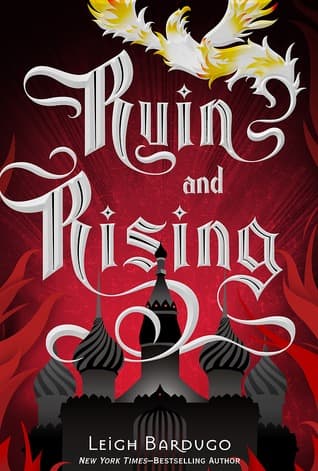
Leigh Bardugo (2014)
Genre
Fantasy / Young Adult / Romance
Reading Time
280 min
Key Themes
See below
Sign in to track this book
As Ravka falls to the Darkling, Alina, a weakened Sun Summoner, must find the mythical firebird and face the truth of her bond with her enemy to save her world, even if it means sacrificing her future.
After the capital, Os Alta, falls, Alina, Mal, and the remaining Grisha and soldiers hide in the White Cathedral, an old underground network under the Apparat's command. The Apparat, a religious leader, uses Alina's status as a 'Saint' to control the people and his followers. Alina feels trapped by his manipulation and forced devotion, wanting freedom and a way to face the Darkling. She is weakened by past battles and the Apparat's strict rules, her powers lessened, making her feel more vulnerable. Despite the danger, Alina secretly plans their escape and to continue their search for Morozova's last amplifier.
Alina, with Mal's help and her loyal Grisha, escapes the White Cathedral. They emerge into a war-torn Ravka, a land ruined by the Darkling's Shadow Army and the growing Fold. Their immediate goal is to find the firebird, the third and last of Morozova's mythical amplifiers, believed to be the key to defeating the Darkling and destroying the Fold. They face many challenges, including scarce resources, the constant threat of the Darkling's forces, and the moral dilemmas of a desperate war. The journey tests their resolve and makes them face the true cost of their mission.
During their difficult journey, Alina and her group meet Nikolai Lantsov, who has been working as the privateer Sturmhond, along with the surviving members of the Second Army and his supporters. Nikolai, now a hunted man and a symbol of resistance, agrees to join Alina, seeing the shared threat of the Darkling. This alliance brings needed strategic planning and resources but also creates new tensions, especially regarding Nikolai's political goals and Alina's growing bond with Mal. Together, they plan how to find the firebird and prepare for the inevitable fight with the Darkling.
As Alina and her allies continue, news of the Darkling's growing power reaches them. He has fully embraced his role as a tyrant, using his amplified abilities to control and scare. The Fold, now larger and more threatening, continues to spread, consuming towns and villages and plunging Ravka into deeper despair. The Darkling's forces, strengthened by new horrors he has unleashed, relentlessly pursue Alina. This growing threat highlights the urgency of their mission and the severe consequences of failure, pushing Alina to her limits as she deals with the great responsibility she carries.
Through old texts and clues, Alina begins to uncover the true history and plans behind Ilya Morozova, the legendary Grisha who created the amplifiers. She learns that Morozova's power was not just about enhancing Grisha abilities, but about manipulating life and death, blurring the lines between creation and destruction. This reveal complicates her understanding of her own power and the amplifiers she has worn, suggesting a deeper, more dangerous connection than she first thought. The knowledge makes her question the very foundation of Grisha magic and her place within it.
In a heartbreaking twist, Alina discovers that the firebird is not an animal, but Mal himself, a direct descendant of Morozova and the living form of the final amplifier. This revelation shatters Alina, as activating the amplifier requires Mal's death. Mal, understanding the seriousness of the situation and the necessity of his sacrifice for Ravka's survival, bravely accepts his fate. This moment tests their love and commitment, forcing Alina to face the ultimate price of power and the devastating choices needed to save her world.
The final fight happens deep within the dangerous expanse of the Fold. Alina, now using the full power of Morozova's amplifiers, including Mal's sacrifice, faces the Darkling in a massive battle. Her allies, including Nikolai and the remaining Grisha and soldiers, fight fiercely against the Darkling's terrifying creatures and his Shadow Army. Ravka's fate hangs in the balance as light fights shadow, and Alina must use all of her amplified power to defeat her enemy and destroy the Fold for good. The battle is brutal and costly, with many losses on both sides.
Alina defeats the Darkling, destroying the Fold and freeing Ravka from its shadow. However, her victory comes at a great personal cost. By using the amplifiers, especially Mal's, her Grisha power is not only amplified but also spread among the ordinary people present in the Fold, effectively making her a normal human again. The Darkling is killed, ending his rule of terror. Mal, resurrected by Alina's power, also loses his tracking abilities, becoming an ordinary man. This outcome leaves Alina dealing with her new identity and the loss of her unique abilities.
With the Fold destroyed and the Darkling defeated, Ravka begins the slow and difficult process of rebuilding. Nikolai Lantsov, now King, takes on the huge task of restoring the nation. Alina and Mal, having sacrificed their extraordinary abilities and wanting a life away from public attention, choose to disappear. They decide to run the Keramzin orphanage, returning to the place of their childhood, seeking a quiet life and a chance to heal from their traumatic experiences. They embrace a future together, free from the burdens of power and prophecy, finding comfort in their shared history and love.
Alina Starkov, once the legendary Sun Summoner, fully accepts her new life as an ordinary human. She finds peace and purpose in caring for the children at the orphanage, using her experiences to guide and protect them. While the memory of her Grisha powers and the battles she fought remains, she no longer longs for them. Her journey taught her that true strength comes not from special abilities, but from love, sacrifice, and the courage to choose a different path. She and Mal find happiness in their shared, quiet life, looking forward to a future built on their own terms.
The Protagonist
Alina transforms from a reluctant, powerful Grisha into a selfless leader who ultimately chooses a quiet, ordinary life, sacrificing her powers for the greater good and finding peace in anonymity.
The Supporting
Mal evolves from a supportive tracker to a selfless hero, accepting his destiny as Morozova's amplifier and making the ultimate sacrifice for Alina, only to be resurrected and choose a normal life with her.
The Antagonist
The Darkling's arc culminates in his ultimate defeat and death, ending his centuries-long quest for dominance and control over Ravka.
The Supporting
Nikolai transforms from a clever privateer into the King of Ravka, taking on the immense responsibility of rebuilding his nation after the war.
The Supporting
Zoya's arc sees her move from a self-serving rival to a fiercely loyal and respected general in Alina's cause, finding her true purpose in protecting Ravka.
The Supporting
Genya recovers from past trauma and manipulation to become an indispensable and loyal member of Alina's inner circle, using her skills for good.
The Supporting
David remains a quiet but essential inventor, whose contributions are vital to the war effort and whose relationship with Genya deepens.
The Antagonist
The Apparat's influence wanes as Alina escapes his control, and his power is ultimately diminished with the defeat of the Darkling and the shift in Ravkan society.
The Supporting
Baghra fully commits to helping Alina defeat her son, even at great personal cost, providing vital knowledge and support.
The novel explores how power corrupts, seen in the Darkling's constant pursuit of control, and the sacrifices needed to use it for good. Alina struggles with her immense power, fearing it might turn her into another Darkling. Her choice to sacrifice her Grisha abilities to save Ravka and resurrect Mal shows that true power is not about control, but about selfless giving. Mal's willingness to be the final amplifier also highlights the theme of personal sacrifice for the greater good.
““The problem with wanting,” he whispered, his voice raw, “is that it makes us weak.””
Alina's journey is a constant struggle between her destined role as the Sun Summoner and her deep love for Mal. The prophecy and Ravka's fate often pull her from a normal life with Mal, forcing her to make impossible choices. The revelation that Mal is the firebird amplifier directly pits her love against her destiny, demanding a devastating sacrifice. Ultimately, Alina chooses a life of love and anonymity with Mal, showing that personal connection and happiness can be more fulfilling than grand destinies.
““I've been many things, Alina, but I've never been a coward. I'll make this choice. I'll be your amplifier.””
Alina's struggle with her identity is central to the story. She grapples with being called a saint, fearing her power, and finally accepting herself as an ordinary human. Her journey is about finding who she is beyond her Grisha abilities or her role in a prophecy. Losing her power forces her to redefine herself, leading to a more grounded and authentic identity. Similarly, Mal accepts his unique lineage and his role as an amplifier, then adapts to life as an ordinary man.
““I was a Grisha, a Saint, a Sun Summoner. I was a child. I was a girl. I was a weapon. I was a ghost. I was a monster. I was a hero. I was nothing. I was everything.””
Many characters deal with past mistakes and seek redemption. Zoya, who first served the Darkling, finds redemption by fighting fiercely for Alina and Ravka. Genya, forced to betray Alina, earns forgiveness through her strong loyalty and sacrifice. Even the Darkling, in his final moments, seeks some peace, though his actions are unforgivable. This theme shows that change is possible and that choosing a better path is important, even after big mistakes.
““I've done terrible things. I've been a fool. But I'm not a monster.””
The book blurs the lines between good and evil, showing that even characters with good intentions can do terrible things, and antagonists can have understandable reasons. The Darkling believes he is saving Grisha, while the Apparat uses religion for control. Alina herself fears becoming a tyrant with her amplified power. This theme challenges simple moral judgments, suggesting that choices and actions define good and evil more than inherent nature or perceived destiny, and that even the 'good' side must make morally grey decisions.
““The world is not a battlefield. It is a garden. And we are the gardeners. We must cultivate it, protect it, make it grow.””
Mythical objects that enhance Grisha power, with a hidden, devastating secret.
Morozova's amplifiers are central to the plot, serving as both the goal of Alina's quest and the source of her ultimate power and sacrifice. The revelation that the final amplifier is not an object but a living being (Mal) is a major twist, redefining the entire concept of amplification. These devices drive the narrative, dictating Alina's journey and forcing her to confront the true cost of power and the ancient magic that binds her to the Darkling. They are a classic MacGuffin that evolves into a crucial plot point.
A vast expanse of impenetrable darkness filled with monstrous creatures, created by the Darkling.
The Fold is the primary antagonist's creation and a constant looming threat throughout the series. In 'Ruin and Rising,' its expansion symbolizes the Darkling's growing power and the encroaching despair over Ravka. It serves as the ultimate battleground and the physical manifestation of the darkness Alina must defeat. Its destruction signifies the end of the Darkling's reign and the beginning of Ravka's healing, providing a tangible goal for the protagonists and a powerful symbol of their struggle.
An ancient prediction foretelling a Grisha who can destroy the Fold.
The prophecy sets Alina's entire journey in motion, establishing her as the chosen one to defeat the Darkling. It provides both hope and immense pressure, shaping how others perceive her and how she perceives herself. While it guides her path, the novel ultimately subverts the idea of a simple, predetermined destiny by showing that Alina's choices, sacrifices, and love are what truly determine the outcome, rather than just fulfilling a prophecy. It initially empowers her but later becomes a burden.
A unique, powerful bond between Alina and the Darkling, stemming from shared power.
The psychic and magical connection between Alina and the Darkling is a constant source of tension and a key plot driver. It allows them to sense each other, communicate, and even influence one another, creating a complex dynamic that blurs the lines between hero and villain. This connection hints at their shared lineage and power, making their final confrontation deeply personal and emotionally charged. It highlights the idea that power can create bonds that are difficult to break, even between enemies.
“The problem with wanting is that it makes us weak.”
— Alina reflects on her desires and the perceived weakness they bring.
“I am the Sun Summoner. I am the one who can destroy you.”
— Alina confronts the Darkling, asserting her power and identity.
“When you have nothing left to lose, you have everything to gain.”
— A philosophical thought on desperation and opportunity.
“The greatest power is often not in what you wield, but in what you are willing to sacrifice.”
— Alina grapples with the cost of her power and the choices she must make.
“A good idea is a good idea no matter where it comes from.”
— Mal shows his pragmatism and open-mindedness.
“The world is not changed by people who are afraid to get their hands dirty.”
— Characters discuss the necessity of difficult actions for change.
“Love is not a choice. It is a destiny.”
— A reflection on the nature of love and fate.
“Sometimes the only way to save someone is to let them go.”
— A difficult lesson learned about letting go for the greater good.
“He was a wound, and I was the salt.”
— Alina's internal struggle and connection to the Darkling.
“There are no heroes, only survivors.”
— A cynical perspective on the nature of heroism in wartime.
“The heart is an arrow. It demands a target.”
— A poetic description of longing and purpose.
“I was a map and you were the destination.”
— Mal expresses his deep connection and devotion to Alina.
“True strength isn't about how much you can lift, but how much you can bear.”
— Alina realizes the true nature of her strength amidst suffering.
“Sometimes, the only way to win is to walk away.”
— A character considers the wisdom of strategic retreat or surrender.
Ready to see how well you understood this book? Take our interactive quiz with 10 questions.

Biography coming soon.







