“It is not for me to determine what is the quality of an action, but what is the consequence.”
— Roxana often justifies her actions by their outcomes rather than their inherent morality.

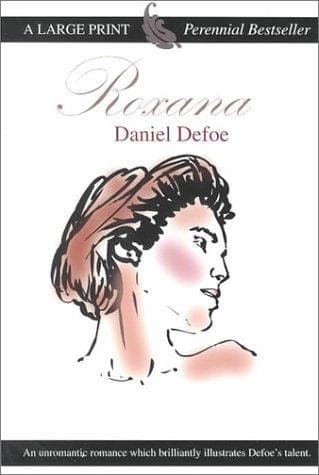
Daniel Defoe (1724)
Genre
Historical Fiction
Reading Time
9-10 hours
Key Themes
See below
Sign in to track this book
Roxana, a woman in 18th-century Europe, uses her body for power and prestige, exposing the constraints of patriarchy and rejecting marriage as a loss of self.
Roxana, a beautiful French Protestant refugee in London, tells about her early life, which included a comfortable upbringing and a marriage to a handsome but foolish brewer. She has five children quickly. Her husband, driven by ambition and poor business skills, wastes his inheritance and Roxana's dowry. He declares bankruptcy and, ashamed and in debt, leaves England, abandoning Roxana and their children. This sudden poverty leaves Roxana and her children helpless, a sharp contrast to her earlier easy life.
Desperate and starving, Roxana is approached by her landlord, a kind Dutch merchant and jeweler, who offers her and her children a place to stay and support. He secretly takes them to a country house, providing for them. During this time, Roxana and the jeweler begin a passionate affair. Sadly, her five children, neglected by the nurse Roxana hired to hide them, all get sick and die quickly. This loss, though painful, also removes the main barrier to Roxana's freedom and her relationship with the jeweler, strengthening their bond and secret arrangement.
Fearing discovery and social ruin from their secret relationship, Roxana and the jeweler decide to leave England. They travel to Holland, where the jeweler has family and business ties, then move to France. In Paris, Roxana, now pretending to be a rich widow, establishes herself in society. The jeweler, still married in England, provides her with money and advice. Roxana, using her beauty and intelligence, starts to gain a reputation, enjoying a life of luxury and freedom. This period shows her becoming a woman of means, no longer a victim but someone actively shaping her future through her choices.
In Paris, Roxana's beauty and charm attract a powerful French Prince, who makes her his mistress. This relationship makes Roxana very rich. The Prince gives her gifts, money, and valuable jewels, greatly increasing her wealth. Beyond the money, Roxana, guided by the jeweler, learns about managing money, investments, and keeping her independence. She carefully handles her assets, securing her future. Her time with the Prince makes her a woman of great fortune and social standing, allowing her to live a life of luxury while also building significant personal wealth.
After the Prince's interest fades, Roxana decides to return to England with her maid, Amy. She arrives in London with great wealth and settles in a grand house in Pall Mall, keeping her past a secret. To entertain guests, Roxana, known for her beauty and bold spirit, performs a dance in an exotic Turkish dress, which becomes a key part of her public image. This performance, while exciting, also shows her control over her image and her willingness to challenge typical female behavior. She uses her wealth and charm to navigate London society, attracting new admirers.
Upon returning to London, Roxana becomes good friends with a Quaker woman, who becomes her trusted helper and business partner. The Quaker, a smart and practical woman, helps Roxana manage her large fortune, investing in various businesses and ensuring her financial security. Through this connection, Roxana learns more about business, further strengthening her independent wealth. The Quaker also offers moral advice, often suggesting Roxana consider a more respectable life. This relationship shows Roxana's continued search for independence, not just through romantic relationships, but also through smart money management.
The Dutch jeweler, Roxana's first protector and lover, returns to England and, now a widower, asks her to marry him. Despite their long history and his real affection, Roxana first refuses. She argues strongly against marriage, seeing it as giving up her freedom, property, and power to a man. She fears losing her hard-won independence and control over her life and money. This refusal highlights Roxana's early feminist views and her strong desire for self-reliance, preferring her current freedom to the perceived limits of marriage.
Despite her initial refusal, Roxana eventually agrees to the jeweler's persistence and her own desire for a respected place in society, marrying him. They live a comfortable and seemingly respectable life. However, Roxana's past continues to bother her. She constantly fears that her former life, especially her children from her first marriage, will be revealed and ruin her new respectability. This anxiety is a repeated theme, showing how fragile her created identity is and the moral compromises she has made. Her marriage, while offering security, cannot fully remove the shadow of her past.
Roxana's oldest daughter, Susan, who had been sent to work as a child, reappears and, through chance, starts to suspect Roxana is her mother. Susan, wanting to know her parents and perhaps improve her own situation, keeps trying to find out Roxana's true identity. Roxana, terrified of being exposed and ruining her carefully built reputation, strongly denies being Susan's mother. Her maid, Amy, fiercely loyal but becoming unstable, grows desperate to silence Susan, seeing her as a major threat to Roxana's future and their shared secret.
Desperate to protect Roxana's secret, Amy takes extreme action and murders Susan. The exact details of the murder are unclear, but Amy clearly kills Susan to stop her from revealing Roxana's past. This act plunges Roxana into deep guilt and fear. She is horrified by Amy's crime and fears punishment for her own part, even if indirect. The murder permanently stains Roxana's life, leaving her with a heavy conscience and constant fear of being discovered and punished, destroying any hope of lasting peace or happiness.
After Susan's murder and the increasing fear of exposure, Roxana and her husband decide to leave England and move to Holland. They try to start a new life, hoping to escape their past. However, Roxana's guilt over Susan's death and her own past wrongdoings continue to trouble her. Despite her husband's love and their comfortable new home, she finds no real peace. The story ends with Roxana's ongoing struggle with her conscience, her fear of divine judgment, and the constant threat of her past catching up with her, leaving her in a state of continuous anxiety and regret.
The Protagonist
From a naive, abandoned wife, Roxana transforms into a self-made, wealthy courtesan and businesswoman who values independence, ultimately grappling with the moral cost of her choices.
The Supporting
Amy's loyalty to Roxana intensifies, culminating in a desperate act of murder to protect her mistress's secret, revealing her own moral descent.
The Supporting
From a compassionate protector and lover, he becomes Roxana's persistent suitor and eventual husband, offering a chance at a respectable life.
The Mentioned
His arc is one of decline, from a prosperous brewer to a bankrupt fugitive, disappearing from the narrative early on.
The Supporting
His role is to elevate Roxana's financial status, serving as a temporary benefactor before she moves on.
The Supporting
She serves as a moral compass and practical guide for Roxana, offering a path towards legitimacy.
The Antagonist
Her arc is one of discovery, leading to her tragic demise as she seeks to uncover her true parentage.
The novel shows Roxana's constant search for personal and financial independence. After being abandoned, she promises herself never again to depend on a man, viewing marriage as giving up 'Liberty, Estate, Authority.' Her wealth, her strategic relationships, and her choice to remain unmarried for much of her life all show this theme. She actively rejects social rules that limit women's freedom, always trying to control her own future and money, as seen in her careful financial management after her affair with the Prince, and her strong initial rejection of the Dutch Jeweler's marriage proposal.
“the Marriage Contract is [...] nothing but giving up Liberty, Estate, Authority, and every-thing, to the Man”
Roxana's story explores social movement in 18th-century England and France. Starting in poverty, she cleverly reinvents herself many times, taking on new identities (rich widow, courtesan, respectable lady) to move up in society. Her 'Turkish dress' and the exotic image she creates are physical signs of her made-up identity, letting her move easily between different social groups. However, this upward movement is always risky, built on secrets and lies, leading to constant worry and fear of her true origins being found out, as shown by her daughter Susan's return.
“I was now become a great Lady, and was courted by all the World; but I was still the same Roxana, only a little more exalted.”
Roxana's story has unclear morals. While she seeks independence, her methods often include prostitution, lying, and abandoning her children. The novel does not directly condemn her but shows her reasons and the psychological cost of her choices. Her initial lack of regret for her early actions slowly turns into deep guilt and fear of divine punishment, especially after Amy murders Susan. This growing feeling of an 'inner hell' highlights the conflict between her worldly success and her spiritual unease, showing that even great wealth cannot buy peace of mind or erase past wrongs.
“Thus I, that was the most prosperous Woman alive, was at the same time the most miserable; for I had a Hell within me.”
Defoe subtly criticizes the patriarchal and class-focused society of the 18th century through Roxana's experiences. Society accepts Roxana when she is rich and acts like a respectable lady, regardless of how she got her money. In contrast, her initial abandonment by her husband leaves her completely poor and vulnerable, with no social support. The novel reveals the double standards for men and women, especially regarding sex and financial independence. Roxana's ability to succeed by using these social hypocrisies shows how widespread they are.
“The World is all a Cheat, and they that will not cheat with it, are cheated by it.”
Roxana's direct, retrospective account of her life's events and internal struggles.
The entire novel is narrated by Roxana herself, looking back on her life from a later, more remorseful perspective. This allows for intimate access to her thoughts, justifications, and evolving moral conscience. The first-person perspective makes her a complex and often unreliable narrator, as she frequently rationalizes her actions and struggles with guilt. It also creates a sense of immediacy and personal confession, drawing the reader into her world and forcing them to confront the moral dilemmas alongside her. This device is crucial for exploring her psychological depth and the nuanced motivations behind her choices.
Clothing, particularly the 'Turkish dress,' representing Roxana's identity, freedom, and exotic allure.
Throughout the novel, Roxana's clothing serves as a powerful symbol of her changing identity, social status, and self-presentation. The most prominent example is the 'Turkish dress' she wears for her famous dance. This exotic attire represents her allure, her defiance of conventional English modesty, and her ability to captivate and manipulate. It signifies her chosen persona as a woman of mystery and independence, distinct from the domestic sphere. Her careful selection of attire for different occasions underscores her conscious construction of identity and her use of appearance as a tool for social navigation and power.
Roxana's subjective and self-serving recounting of events, often justifying her actions.
Roxana's narration is often unreliable, as she frequently attempts to justify her morally questionable actions, downplay her culpability, and present herself in a more favorable light. While she confesses her sins, her retrospective account is colored by her desire for absolution and her internal struggles. Her rationalizations for abandoning her children or rejecting marriage, for instance, reveal her self-interest and a degree of moral blindness. This unreliability forces the reader to critically assess her narrative, question her motivations, and interpret the events through their own moral lens, adding layers of complexity to her character and the story's themes.
Subtle hints and Roxana's growing anxieties about the consequences of her actions.
Defoe employs foreshadowing through Roxana's recurring anxieties and premonitions of divine judgment. Even during her most prosperous periods, Roxana often expresses fears that her past will catch up to her, or that she will face spiritual retribution for her sins. This is particularly evident in her fears about her children's reappearance and her increasing remorse after the murder of Susan. These subtle hints build a sense of impending doom and underscore the idea that illicit gains cannot lead to lasting peace, preparing the reader for Roxana's ultimate psychological torment and lack of a happy ending.
“It is not for me to determine what is the quality of an action, but what is the consequence.”
— Roxana often justifies her actions by their outcomes rather than their inherent morality.
“Money is the general issue of the world, and there is no dealing without it.”
— A recurring theme highlighting the paramount importance of wealth in Roxana's society and life.
“I was now a single woman again, and I was resolved to be so for good and all.”
— After her husband's death, Roxana embraces her independence and vows against remarriage.
“All the happiness of this life consists in the not being out of the reach of money.”
— Roxana's perspective on happiness being directly tied to financial security.
“The greatest joy of my life was that I was mistress of myself, and of my own fortune.”
— Expressing the deep satisfaction Roxana finds in her autonomy and financial control.
“What a world is this, and how does Providence order the affairs of mankind!”
— Roxana often muses on fate and the unpredictable turns of life.
“Necessity is the mother of invention, and I found it so now, in a particular manner.”
— Roxana's resourcefulness in dire situations, particularly early in her struggles.
“I had been a whore, and I had been a lady, and I had been a rich woman, and I had been a poor woman.”
— A reflection on the diverse and often contradictory roles Roxana has played throughout her life.
“I was not a woman to be kept; I was a woman to be married.”
— Despite her illicit relationships, Roxana often desires the legitimacy and security of marriage.
“Conscience, that faithful monitor, began now to tell me I had done wrong.”
— Roxana's conscience occasionally pricks her, especially as she reflects on her past actions.
“I saw myself in a condition of life which I had always abhorred.”
— Early in her struggles, Roxana finds herself in circumstances she had always feared.
“The devil, they say, is in the cards; but I think the devil is in the women.”
— A cynical observation from one of the characters, reflecting societal views on female agency and temptation.
“It is a sad thing to be a woman, and not to be able to live without a man.”
— Roxana's early experience highlights the economic vulnerability of women in her era.
“I began to have a perfect knowledge of the world, and to know that money was the best friend in it.”
— Roxana's hardened realization about the true nature of relationships and the power of money.
Ready to see how well you understood this book? Take our interactive quiz with 10 questions.
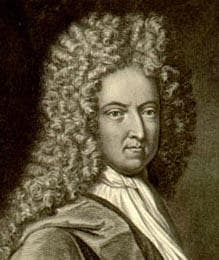
Daniel Defoe was an English writer, trader, journalist, pamphleteer and spy. He is most famous for his novel Robinson Crusoe, published in 1719, which is claimed to be second only to the Bible in its number of translations. He has been seen as one of the earliest proponents of the English novel, and helped to popularise the form in Britain with others such as Aphra Behn and Samuel Richardson. Defoe wrote many political tracts, was often in trouble with the authorities, and spent a period in prison. Intellectuals and political leaders paid attention to his fresh ideas and sometimes consulted him.







