“The mountain is a living thing. It has a heart, and a will, and a memory.”
— Allun explains the nature of the mountain to the villagers before their journey.

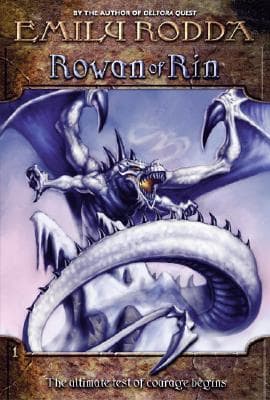
Emily Rodda (1993)
Genre
Fantasy / Children's / Young Adult
Reading Time
180 min
Key Themes
See below
Sign in to track this book
A timid boy, convinced he lacks courage, journeys into a dangerous, dragon-haunted mountain to find the source of his village's dying river, discovering that bravery is acting despite fear.
The peaceful village of Rin, located by a river, wakes to a terrible discovery: the river has stopped flowing. The stream, which provides water for their crops, livestock, and mill, is now a dry, stony bed. Panic spreads among the villagers, as their survival depends on the river. The wise old witch, Sheba, is consulted. Through her cryptic statements and riddles, she says the river's source, the forbidden Mountain, holds the answer. She warns of great danger, saying only the 'bravest heart' can succeed.
Led by the strong Jiller, a small group of Rin's most capable adults forms to journey to the Mountain. This group includes Bronden, Val, Lann, Ellis, and Allun. To everyone's surprise, and his own dismay, the timid and physically weak Rowan is chosen by Sheba to go with them, despite his protests. He must carry a map only he can read, a series of riddles and drawings from Sheba, which are important for finding their way through the Mountain's dangers. Reluctantly, Rowan joins the trip.
As the group goes up the Mountain, they face their first obstacle: a large, sticky spiderweb blocking a narrow pass. The web is made of a strange, shimmering material, and they realize it is a trap. Bronden, impatient, tries to cut through it and gets stuck. Rowan, remembering Sheba's first riddle about 'the thing that hides but cannot run,' realizes the web is a warning. He figures out that the solution is to find the 'eye' of the web – a small, almost invisible hole – and slip through it. With his guidance, the group carefully passes, leaving Bronden freed.
Further up the Mountain, the path leads them to a blocked way: a lake of bubbling, molten rock. The heat is strong, and the air shimmers. The group feels hopeless, believing their journey is over. Rowan, however, remembers Sheba's second riddle: 'what burns and bites but has no teeth.' He realizes that the fiery look is an illusion, a trick of the Mountain. He concludes that what they see is not real fire but an optical illusion created by intense heat and certain minerals. With a burst of courage, Rowan steps forward and, to everyone's surprise, walks into the 'fire,' showing it to be only hot ground, not molten rock. The others follow, shaken but safe.
The next challenge is a deep, dark chasm that seems to go endlessly into the earth, blocking their path. The air is cold and still, and a terrifying silence comes from its depths. Sheba's third riddle comes to Rowan's mind: 'what is always coming, but never arrives.' He understands that the pit is not truly bottomless but an illusion of infinite depth, meant to cause fear and make them give up. He realizes they must overcome their fear and take a leap of faith. Val, usually brave, is frozen by terror. Rowan, despite his own fear, finds a hidden ledge, showing that the pit is not as vast as it appears, allowing them to cross.
Beyond the pit, they enter a dense, old forest where the trees seem to whisper and groan. As they go deeper, the group members begin to feel an invisible force pulling at them, holding them in place. One by one, they get stuck, unable to move, as if rooted to the spot. Sheba's fourth riddle, 'what is always broken by a word,' comes to Rowan's mind. He realizes that the forest is a place of silence and despair, and the only way to break the spell is to speak. He tells his trapped companions to shout, to make noise. They hesitate at first but eventually do, and the invisible bonds break, freeing them from the forest's hold.
Finally, Rowan, now alone after his companions have given in to various illusions and fears, reaches the summit. There, he sees a terrifying sight: a massive, old dragon, its scales like obsidian, lying curled around the river's source, which is dry. The dragon is not breathing fire but looks weak and sick. Sheba's final riddle, 'what has an eye but cannot see,' guides Rowan. He realizes the dragon is blind and has a thorn in its eye, which is causing its pain and, because of that, the river's dryness. The dragon, in its pain, is accidentally blocking the water flow.
Despite his fear of the huge beast, Rowan understands he must help the dragon. He carefully approaches the suffering creature, noticing the large thorn in its eye. Gathering all his courage, he reaches out and, with a quick, firm movement, pulls the thorn from the dragon's eye. The dragon roars in pain, then relief, and turns its head, showing its now clear eye. Immediately, the spring at the mountain's peak gushes water, flowing down the mountain and restoring the river. The dragon, no longer in pain, gently nudges Rowan, a sign of thanks.
As the river begins to flow, Rowan goes down the Mountain. Along the way, he finds his companions, who are now free from the Mountain's illusions and have recovered their senses. They are amazed to see the river flowing and to learn that Rowan, the timid boy, was the one who solved the riddles and saved them all. They realize that their own strengths were not enough against the Mountain's tricks, and that Rowan's intelligence and quiet courage were the true 'bravest heart.' They return to Rin as heroes, with Rowan now recognized for his bravery, and the village saved from disaster.
The villagers of Rin celebrate as the river returns to its full flow, bringing life back to their dry land. Rowan, once overlooked, is hailed as the hero. Sheba acknowledges his bravery, confirming he had the 'bravest heart' all along. His bravery was not in physical strength or daring, but in his willingness to face his fears, think critically, and show compassion. Rowan, though still quiet, has grown in confidence and self-belief, changed by his journey to the Mountain. Rin thrives again, its future secured by the boy who did not believe he was brave.
The Protagonist
Rowan transforms from a self-doubting, timid boy into a courageous and confident hero, recognized for his unique strengths.
The Supporting
Sheba remains a mysterious, guiding force, her wisdom proven correct by the journey's outcome.
The Supporting
Jiller learns to value intellectual and emotional courage over purely physical strength, broadening her understanding of leadership.
The Supporting
Bronden's pride is tempered by humility as she learns the limitations of physical strength and recognizes different forms of courage.
The Supporting
Val's journey reveals that physical attributes alone are insufficient against the Mountain's challenges, leading to a new appreciation for mental fortitude.
The Supporting
Lann's experiences on the Mountain challenge his reliance on conventional skills, leading him to acknowledge the necessity of different forms of wisdom.
The Supporting
Ellis, through his quiet observation, comes to understand the value of Rowan's unique intellect and courage.
The Supporting
Allun's journey reinforces the idea that true leadership and bravery can emerge from unexpected sources.
The Antagonist/Supporting
The Dragon transforms from a misunderstood antagonist into a symbol of the Mountain's life force, healed by an act of empathy.
The main theme is about courage and Rowan learning he has it. At first, courage means physical strength and daring, like Bronden and Jiller. But the Mountain's challenges show that true bravery is facing fears, using intellect, and showing compassion. Rowan, who thinks he is a coward, repeatedly shows a different, deep kind of courage by solving riddles, stepping into illusions, and helping the dragon. His journey teaches him that bravery is not being fearless, but acting even when afraid.
“'Bravest heart will carry on when sleep is death, and hope is gone.'”
The book looks at different kinds of strength. The villagers of Rin first value physical strength, skill, and leadership, shown by the expedition members. However, these traditional strengths do not work against the Mountain's magical illusions and psychological traps. Rowan's intellectual strength, his ability to decipher riddles, notice details, and think critically, saves the day. The story shows that true strength is many-sided, including intelligence, empathy, and mental toughness, which can be more powerful than brute force.
“'You have the map, Rowan. You must read it.'”
The Mountain uses illusion, always tricking the expedition with false appearances. The spiderweb, the lake of fire, the bottomless pit, and the silent forest are all designed to trick the senses and cause fear or despair. Rowan's ability to see through these illusions, guided by Sheba's riddles, is key to their progress. This theme shows that things are not always as they seem, and that critical thinking and questioning what you see are important for life's challenges. It also suggests that fear itself can be an illusion, often stronger than the actual danger.
“'What burns and bites but has no teeth?'”
The drying river crisis forces the community of Rin to work together for survival, showing they depend on each other. While the expedition has individuals, their success depends on each member, especially Rowan. The story shows how different skills and personalities, when combined, can overcome problems. Even though Rowan ends up alone at the peak, his journey is helped by the group's initial support, and his success benefits everyone. The book shows that a community succeeds when it recognizes and values the unique contributions of all its members, even those who seem least capable.
“'We must go, or Rin will die.'”
A series of cryptic clues that guide Rowan through the Mountain's perils.
Sheba's riddles are the primary plot device driving Rowan's journey. Each riddle corresponds to a specific obstacle on the Mountain (the spiderweb, the lake of fire, the bottomless pit, the silent forest, and the dragon). They function not just as navigational aids but also as tests of Rowan's intelligence, observation skills, and courage. By deciphering them, Rowan not only solves the immediate problem but also gains deeper insight into the nature of the Mountain's illusions and his own capabilities, ultimately proving his 'bravest heart'.
A living, sentient antagonist that tests the characters' physical and mental limits.
The Mountain itself acts as a powerful, almost sentient antagonist. It is not just a geographical location but a magical entity that actively creates illusions and psychological traps to deter intruders. It challenges the characters' perceptions, preys on their fears, and exposes their weaknesses. The Mountain forces the expedition to confront not only external dangers but also their internal struggles, making it a symbolic representation of life's daunting challenges and the journey of self-discovery.
The inciting incident and symbol of the village's life force.
The drying river serves as the inciting incident that propels the plot forward, creating an urgent crisis for the village of Rin. It is more than just a water source; it symbolizes the very life and survival of the community. Its cessation represents a threat to their entire way of life, emphasizing the high stakes of the expedition. The river's eventual restoration signifies the triumph of courage and intelligence, and the renewal of hope and prosperity for Rin.
A physical object holding the key to the Mountain's secrets.
Rowan's map, given to him by Sheba, is not a conventional map with geographical features. Instead, it contains Sheba's cryptic riddles and strange drawings. It is a symbolic representation of Rowan's unique ability to interpret and understand things beyond the obvious. The fact that only Rowan can 'read' it underscores his special role and his intellectual gifts, highlighting that the solution to their problems lies not in brute force but in wisdom and insight.
“The mountain is a living thing. It has a heart, and a will, and a memory.”
— Allun explains the nature of the mountain to the villagers before their journey.
“Fear is a poison. It can kill you as surely as any venom.”
— Rowan reflects on the dangers of fear during the perilous climb.
“Strength is not always in the arm that wields the sword.”
— Rowan realizes his own value despite not being physically strong like the others.
“The stream is the lifeblood of Rin. Without it, we are nothing.”
— The villagers discuss the crisis of their water source drying up.
“Sometimes the smallest can see what the largest cannot.”
— Rowan's keen observation skills help solve a puzzle on the mountain.
“We go because we must. There is no other choice for Rin.”
— The leader, Strong Jonn, rallies the group to undertake the dangerous quest.
“The bukshah are gentle, but they remember. They remember everything.”
— Rowan learns about the mystical bukshah creatures that guard the mountain.
“In the heart of the mountain, truth waits.”
— A cryptic clue from the wise woman, Sheba, about their journey's goal.
“Courage is not the absence of fear, but the will to go on in spite of it.”
— Rowan encourages himself when facing terrifying challenges.
“The map is not the land. It is only a guide.”
— The group learns to interpret the magical map that changes with their progress.
“Every step upward is a step away from what we know.”
— Reflecting on the increasing danger and isolation as they climb higher.
“Trust the bukshah. They know the way when we do not.”
— Rowan advises the group to rely on the bukshah's instincts.
“The silence of the mountain is louder than any storm.”
— Describing the eerie, oppressive atmosphere as they near the summit.
“We are all afraid. But together, we are less afraid.”
— Rowan comforts another villager during a moment of shared fear.
Ready to see how well you understood this book? Take our interactive quiz with 10 questions.

Biography coming soon.







