“For dogs, you know, have a very great respect for the moon, and particularly for the Man in the Moon. They know him better than we do, and they often talk to him.”
— Introducing the special relationship dogs have with the moon.

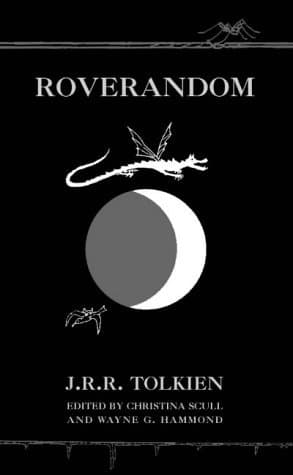
J.R.R. Tolkien (1998)
Genre
Fantasy / Children's / Young Adult
Reading Time
90-120 min
Key Themes
See below
Sign in to track this book
Transformed into a toy dog for biting a wizard, Roverandom embarks on a whimsical, perilous journey to the moon and under the sea to find the magic that will make him real again.
Rover, a lively young dog, is walking on the beach with his owner, a little boy named Two. Rover's playful nature takes over when he meets an old man with a long beard. Mistaking the man's flowing trousers for a toy, Rover playfully nips at them. Unknown to Rover, the man is Artaxerxes, a wizard who is not pleased by the puppy's actions. Angrily, Artaxerxes turns Rover into a small, white toy dog with jointed legs and a painted smile. Two is sad about losing his real dog and seeing this toy, which he immediately recognizes as his beloved Rover.
After his transformation, the toy Roverandom is accidentally left in a garden by Two's nursemaid. He lies forgotten and lonely until a young boy named Sam, visiting his grandmother, finds him. Sam, happy with the new toy, takes Roverandom home. Roverandom, though a toy, remembers being a real dog. He wants to return to his original form and reunite with Two. Sam's family, unaware of Roverandom's true nature, treats him as a cherished toy, often placing him on the mantelpiece or taking him on outings.
One night, Roverandom is on Sam's window ledge. As the moon rises, he feels a strange sensation and can move and speak. He meets the Sand-man, a kind magical being who travels on a moonbeam, bringing dreams to children. Roverandom tells the Sand-man about his problem, explaining how a wizard turned him into a toy. The Sand-man recognizes Artaxerxes and says the wizard lives on the moon. He offers to take Roverandom to the moon to confront Artaxerxes and find a cure.
The Sand-man carries Roverandom on a moonbeam, and they journey to the moon. The moon is a magical, otherworldly place with its own inhabitants. Upon arrival, Roverandom meets the Moon-dog, a large, friendly dog who guards the moon and guides its light. The Moon-dog sympathizes with Roverandom and offers help. He explains that Artaxerxes is a grumpy wizard but might be convinced to reverse the spell, especially if Roverandom can apologize or offer something in return.
With the Moon-dog's help, Roverandom finds Artaxerxes's home on the moon. However, Artaxerxes is not in a good mood. He is busy with a magical argument with another wizard, Psamathos. Artaxerxes is too occupied and irritable to listen to Roverandom's pleas. He dismisses Roverandom, telling him he has more urgent magical matters. Roverandom is discouraged but not defeated, realizing he needs to get the wizard's full attention.
While on the moon, the Moon-dog becomes ill. His light begins to fade, threatening to darken the world below. Roverandom, grateful for the Moon-dog's kindness, decides he must help. He learns that the Moon-dog's illness is from a forgotten magical item. Roverandom, with his small size and quick thinking, searches for the missing item, navigating the moon's strange landscapes. His efforts succeed, and the Moon-dog is healthy again, shining brightly.
Impressed by Roverandom's resourcefulness in helping the Moon-dog, Artaxerxes finally pays him some attention. However, he is still too busy with his magical quarrel with Psamathos to reverse the spell. Artaxerxes decides that the best way to resolve the situation is for Roverandom to go to the sea and find Psamathos, hoping Psamathos might be more willing to help a lost toy. Artaxerxes sends Roverandom on a magical journey from the moon down to the sea, a vastly different and equally wondrous environment.
Roverandom's journey under the sea is full of new wonders and dangers. He meets various sea creatures, including friendly mermaids and mischievous sea-serpents. He learns that Psamathos is the Sea-Sorcerer and lives in a magnificent underwater palace. The sea-dwellers are wary of Psamathos, describing him as powerful but also prone to temper. Roverandom must navigate this new world, learning its customs and avoiding its dangers, all while trying to reach the great Sea-Sorcerer.
After some dangerous adventures and with the help of friendly sea creatures, Roverandom finally reaches Psamathos's underwater palace. Psamathos, a grand and somewhat dramatic wizard, is initially amused by a toy dog speaking to him. Roverandom bravely explains his situation, recounting how Artaxerxes transformed him and how he wants to be a real dog again. Psamathos listens carefully, interested by the story and the connection to his rival, Artaxerxes. He sees an opportunity to help Roverandom and perhaps subtly outdo Artaxerxes.
Psamathos, after thought and some magical display, agrees to reverse the spell. He performs a powerful counter-spell, and Roverandom feels a tingling sensation as his toy form begins to disappear. Slowly, he turns back into a real, live puppy. Overjoyed, Roverandom thanks Psamathos. Psamathos then arranges for Roverandom to be magically transported back to the home of his original owner, Two. Roverandom wakes up, a real dog once more, finding himself back in Two's garden, ready for a happy reunion.
Two, who had been sad about Rover's disappearance, is thrilled to find his dog suddenly returned, as if by magic. Rover, now a real dog again, is just as happy to be reunited with his beloved owner. Meanwhile, the toy Roverandom stays with Sam, who continues to cherish him. The story ends with both boys happy, unaware of the incredible adventures the toy dog had experienced. Rover, a little wiser from his magical journey, continues his life as a real dog, remembering his time as Roverandom and the kindness of the Sand-man, the Moon-dog, and Psamathos.
The Protagonist
Transforms from a thoughtless puppy to a brave and resourceful toy, ultimately earning his return to his original form and gaining wisdom.
The Antagonist (initially) / Supporting
Remains largely static, but his indirect actions facilitate Roverandom's journey and eventual cure.
The Supporting / Catalyst
Introduced as a rival, but becomes the benevolent force that resolves Roverandom's predicament.
The Supporting
Serves as an initial guide and source of comfort for Roverandom, setting him on his path.
The Supporting
Becomes ill and is restored by Roverandom, solidifying their friendship.
The Supporting
Starts heartbroken by loss, ends joyful with reunion, remaining largely unaware of the magical journey.
The Supporting
Remains a loving owner to the toy Roverandom, happy in his ignorance of the magic.
The main theme is Rover's physical transformation into a toy and his journey to become a dog again. Despite his changed form, Roverandom keeps his memories, thoughts, and personality, showing that true identity is more than outward appearance. His adventures force him to adapt and act as a toy while still trying to return to his original self, as seen when he bravely confronts wizards despite his small size. This theme explores the idea that inner spirit and self-awareness are more important than physical form.
“He was a small white toy dog, with jointed legs and a painted smile, but inside he was still Rover, and he still wanted to be a real dog.”
Rover's initial problem results directly from his playful but ill-mannered decision to bite Artaxerxes's trousers. This shows that even small actions can have big, unexpected consequences. His long journey to reverse the spell teaches responsibility and the need to consider the impact of one's behavior. The story suggests that apologies and making amends are important steps in correcting mistakes, even if the process is complicated.
“He had bitten the wizard's trousers, and this was the result.”
Throughout his adventures, Roverandom gets help from magical beings like the Sand-man and the Moon-dog. In turn, Roverandom shows his own kindness and helpfulness, especially when he aids the sick Moon-dog. This exchange of goodwill helps his quest, as his good deeds eventually impress Artaxerxes and lead him closer to Psamathos. The theme suggests that helping others, even when one needs help oneself, can lead to unexpected rewards and progress.
“And the Moon-dog was very grateful, and promised to help Roverandom in any way he could.”
The story takes Roverandom on journeys to the moon and under the sea, revealing imaginative landscapes and creatures. These settings are described with rich detail, showing the wonder and magic in the unknown. From moonbeams and talking dogs on the moon to mermaids and sea-serpents in the ocean depths, the story emphasizes the boundless possibilities and hidden marvels of the world beyond everyday experience. This theme encourages a sense of awe and curiosity about the magical and unseen aspects of existence.
“The moon was a strange and beautiful place, full of wonders that Roverandom had never imagined.”
The central magical event that drives the entire plot.
The transformation of Rover into Roverandom by Artaxerxes's spell is the inciting incident of the story. This device immediately establishes the fantastical nature of the world and creates the central conflict: Roverandom's desire to reverse the enchantment. It allows for the exploration of themes like identity and perspective, as Rover must navigate the world from the limited viewpoint of a toy while retaining his inner consciousness. The magic is portrayed as powerful and sometimes whimsical, setting the tone for his subsequent adventures.
Roverandom's journey to find a cure for his transformation.
The entire story is structured as a quest, with Roverandom undertaking a perilous journey to achieve a specific goal: to be turned back into a real dog. This involves traveling to distant, magical lands (the moon, under the sea), encountering various helpers and obstacles, and ultimately confronting the source of his problem (or its solution). The quest framework provides a clear progression for the plot, allowing for a series of episodic adventures that build towards the resolution.
Giving human characteristics to animals and toys.
Rover, even as a toy, retains his thoughts, feelings, and ability to communicate, allowing him to interact with magical beings and articulate his desires. The Moon-dog also speaks and exhibits human-like emotions. This device is crucial for a children's fantasy story, making the animal characters relatable and enabling their active participation in the plot. It allows for a deeper exploration of themes like identity and empathy from a non-human perspective, while also adding to the whimsical charm of the narrative.
Characters who guide and assist the protagonist.
Throughout his journey, Roverandom encounters several benevolent magical figures who provide crucial assistance and guidance. The Sand-man initiates his journey to the moon and offers wise counsel. The Moon-dog provides companionship and advice on the moon. These characters serve to advance the plot by offering necessary information, transportation, or direct aid. They represent the forces of good in the magical world, demonstrating that help can be found in unexpected places when one is on a worthy quest.
“For dogs, you know, have a very great respect for the moon, and particularly for the Man in the Moon. They know him better than we do, and they often talk to him.”
— Introducing the special relationship dogs have with the moon.
“He was just a little white dog, with black ears, and a funny tail that curled over his back, and he was very proud of his tail.”
— Describing Roverandom's initial appearance and a small detail of his personality.
“And the little boy was very, very unhappy, because he loved his toy dog more than anything else in the world.”
— Recounting the boy's distress after losing Rover.
“The Man in the Moon never laughed at anyone who was unhappy, and he understood all about lost toys.”
— Illustrating the compassionate nature of the Man in the Moon.
“For the Man in the Moon is really a magician, and a very good one too.”
— Revealing the magical abilities of the Man in the Moon.
“He had a very bad temper, and he hated being disturbed, especially when he was trying to think of new spells.”
— Describing the irritable personality of the wizard Artaxerxes.
“It is much harder to be a toy dog than a real one, because toy dogs have to be very patient.”
— Reflecting on the challenges of being a toy, from Roverandom's perspective.
“The Moon dogs are very busy dogs, and they have a great deal of work to do, looking after the moonbeams.”
— Explaining the duties of the dogs who live on the Moon.
“For the sea, you know, has a great many secrets, and it doesn't tell them to everyone.”
— Introducing the mysterious nature of the sea.
“He was very brave, though he was only a little dog, and he wasn't afraid of the dark.”
— Highlighting Roverandom's courage during his adventures.
“And the Mer-king was very wise, for he knew that sometimes even a little dog can be very important.”
— The Mer-king's recognition of Roverandom's significance despite his small size.
“It's a very uncomfortable thing to be a toy, especially when you want to be a real dog.”
— Roverandom's longing to return to his original form.
“For the Moon is a very good place for finding lost things, if you know how to look.”
— Emphasizing the Moon's role as a repository for lost items.
“And so, after many adventures, Roverandom became a real dog again, and a very happy one.”
— Concluding Roverandom's journey and his return to his true self.
Ready to see how well you understood this book? Take our interactive quiz with 10 questions.
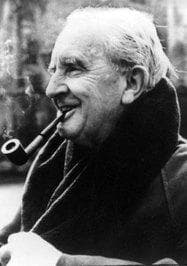
Biography coming soon.







