BookBrief
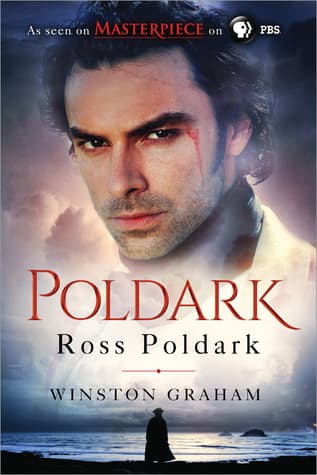
Ross Poldark cover
Archivist's Choice

Ross Poldark

Winston Graham (1968)

Genre

Historical Fiction / Romance

Reading Time

750 min

Key Themes

See below

Track Your Reading

Sign in to track this book

Returning scarred from war, Ross Poldark finds his inheritance in ruins and his beloved engaged, forcing him to rebuild his life and mine amidst the rugged Cornish landscape and the unexpected affections of a spirited scullery maid.

Synopsis

Ross Poldark returns to Cornwall in 1783 after fighting in the American Revolution. He finds his estate, Nampara, in ruins and his beloved Elizabeth engaged to his cousin, Francis. Heartbroken, Ross works to rebuild his land and reopen his father's struggling tin mine. He takes in a scullery maid, Demelza Carne, a rough but spirited girl from a mining family. As Ross deals with the harsh social conditions of Cornwall, battling poverty, class divides, and the actions of rival families like the Warleggans, Demelza changes into a beautiful, refined woman. Despite their different backgrounds, they develop a deep affection, leading to their unexpected marriage, which shocks polite society. Their life together has both good times and bad. Ross works to make his mine, Wheal Leisure, profitable, facing financial ruin and legal troubles. He supports the rights of the poor and working class, which often puts him against the gentry. Meanwhile, Francis Poldark's money problems grow due to gambling and bad decisions, making Elizabeth unhappy. Demelza gives birth to their daughter, Julia, bringing them happiness, but tragedy happens when a bad illness sweeps through the community, taking Julia's life. Ross and Demelza must deal with their grief and the constant challenges of their lives, their bond tested but made stronger by their shared experiences.
Reading time
750 min
Difficulty
Medium
Pacing
Moderate
Mood
Atmospheric, Resilient, Romantic, Melancholy
✓ Read this if...
You enjoy sweeping historical sagas with strong character development, intricate family dynamics, and a focus on social class and economic struggles in a vivid setting.
✗ Skip this if...
You prefer fast-paced thrillers or stories without significant periods of hardship and emotional intensity.

Plot Summary

Ross's Return and Shattered Hopes

Ross Poldark returns to Cornwall in 1783 after three years fighting in the American Revolutionary War. Many people thought he had died. He finds his family home, Nampara, in bad shape, managed by his two lazy and often drunken servants, Jud and Prudie Paynter. The copper mine on his land, Wheal Leisure, is flooded and not working. Worse, his childhood sweetheart, Elizabeth Chynoweth, is engaged to his cousin, Francis Poldark, because everyone believed Ross had died. Ross goes to the engagement ball, a painful event where he sees Elizabeth's new life and feels his family's pity and his own loss. This makes him determined to rebuild his life on his own.

Rebuilding Nampara and a Chance Encounter

Sad but determined, Ross begins the hard work of fixing Nampara. He works with his tenants, clearing land, repairing buildings, and trying to revive the neglected farm. During a trip to Redruth market, he steps into a brutal dogfight and saves a young, hungry girl named Demelza Carne from her abusive father and a violent crowd. On impulse, he offers her a job as a scullery maid at Nampara. Despite her rough background and messy appearance, Ross sees a spark of spirit in her. He brings her back to his damaged estate, surprising and upsetting his servants and the local gentry.

Demelza's Transformation and Growing Affection

Under Ross's care, Demelza slowly changes. He teaches her to read and write, and she learns how Nampara works, becoming an important part of his home. Her initial shyness turns into a lively personality, and her appearance gets much better, showing a striking beauty. Demelza becomes very loyal and develops a deep, unspoken love for Ross. Meanwhile, Ross, though still hurt by Elizabeth's marriage to Francis, starts to value Demelza's company and lively spirit, finding comfort and real affection in her presence, even as he struggles with the class differences and social rules that separate them.

The Wheal Leisure Venture and Social Strife

Wanting to provide for his tenants and challenge the established gentry, Ross decides to reopen his old mine, Wheal Leisure. He forms a company, offering shares to local people and even some of his tenants. This is a radical move that earns him both respect and suspicion. The venture involves financial risk, needing significant investment and hard work. Ross dedicates himself to the mine, actively working in its operations and showing real concern for his miners' well-being. This decision makes him a leader for the working class, setting him apart from his more traditional Poldark relatives and the powerful Warleggan family.

Francis's Downfall and Elizabeth's Unhappiness

Francis Poldark, Ross's cousin and Elizabeth's husband, is a weak man who is easily influenced. He gambles, drinks too much, and falls for the manipulative friendship of George Warleggan, which leads to big financial losses. His poor management of his own mine, Grambler, and his increasing debts strain his marriage to Elizabeth. Elizabeth, though happy at first, finds herself more and more alone and unhappy with Francis's behavior and their declining money. Ross watches their struggles, his pity for Elizabeth often clashing with his resentment towards Francis.

A Developing Relationship and Social Outrage

As Christmas gets closer, the unspoken affection between Ross and Demelza reaches a turning point. After a particularly difficult day, made worse by Ross's sadness over Elizabeth, Demelza tries to comfort him. Their shared vulnerability and deep emotional connection lead to a night of intimacy. Recognizing his responsibility and his real feelings for her, Ross makes the unusual decision to marry Demelza, despite her low social standing and the scandal it will cause. The news shocks Cornish society, especially the Poldark family and the gentry, who see it as a bad match.

Demelza's Introduction to Society

Demelza's move into the role of Mrs. Ross Poldark is hard. She faces immediate snobbery and disrespect from the local gentry, including Ross's aunt, Agatha, and even some of his well-meaning friends like Verity Poldark. Despite her natural grace and intelligence, Demelza knows she lacks formal education and refined manners. Ross, very protective, helps her navigate these social situations. With time, and especially after a good appearance at a local assembly where she charms many with her singing, Demelza starts to find her place, showing her strong character and winning over some of her critics.

The Birth of Julia and Growing Happiness

Despite the initial social disapproval, Ross and Demelza's marriage is strong and loving. Demelza becomes pregnant, and their happiness grows with the thought of their child. The birth of their daughter, Julia, brings great joy to Nampara and strengthens their bond. Ross, who once thought happiness was lost to him, finds deep contentment and love in his life with Demelza and their child. Their happy home life contrasts with the growing unhappiness and financial problems of Francis and Elizabeth at Trenwith, showing the success of Ross's choice.

Verity's Romance and Family Conflict

Ross supports his cousin Verity Poldark's long-delayed romance with Captain Andrew Blamey, a man her family deems unsuitable because of a past scandal. Despite the Poldark family's strong objections, especially from Francis and Charles, Ross helps them reunite and encourages Verity to follow her heart. This leads to Verity's elopement with Captain Blamey, a decision that further separates Ross from the Trenwith Poldarks, particularly Francis, who feels betrayed and shamed by Ross's involvement. The event shows Ross's independent spirit and his willingness to go against social rules for true affection.

The Illness and a Tragic Loss

A severe epidemic of putrid throat (diphtheria) spreads through Cornwall, devastating many families. Ross, with his usual compassion, visits his sick tenants and neighbors, offering help. Tragically, the illness reaches Nampara, striking down first Demelza, who gets it while nursing a sick child, and then their infant daughter, Julia. Despite Ross's desperate efforts and the doctor's best attempts, Julia dies from the illness. This devastating loss puts Ross and Demelza into deep grief, testing their bond and leaving a deep scar on their lives. The novel ends on a somber, but strong, note.

Principal Figures

Ross Poldark

The Protagonist

Ross transforms from a disillusioned, heartbroken man into a responsible landowner and loving husband and father, finding unexpected happiness and purpose in his life with Demelza.

Demelza Carne Poldark

The Protagonist/Love Interest

Demelza grows from an abused, uneducated girl into a confident, loving wife and mother, finding her voice and place in the world through her marriage to Ross.

Elizabeth Chynoweth Poldark

The Supporting

Elizabeth's initial happiness as a Poldark wife slowly erodes due to her husband's failings, leading to a life of quiet disappointment.

Francis Poldark

The Supporting

Francis's character declines steadily throughout the novel, marked by increasing financial difficulties, jealousy, and a deteriorating marriage.

Verity Poldark

The Supporting

Verity transforms from a resigned spinster into a happily married woman, finally finding love and independence with Ross's help.

George Warleggan

The Antagonist

George steadily gains power and influence, becoming a formidable antagonist to Ross Poldark through his business acumen and manipulative tactics.

Jud Paynter

The Supporting

Jud remains largely static, a figure of constant, if sometimes unreliable, loyalty and comic relief at Nampara.

Prudie Paynter

The Supporting

Prudie evolves from a slovenly housekeeper to a more dedicated one under Demelza's influence, remaining a steadfast, if gossipy, presence at Nampara.

Aunt Agatha Poldark

The Supporting

Aunt Agatha remains a static but insightful character, observing the changing Poldark fortunes with a sharp tongue and a clear memory.

Captain Andrew Blamey

The Supporting

Captain Blamey's arc is one of perseverance and vindication, as he finally marries the woman he loves after years of waiting.

Themes & Insights

Social Class and Injustice

The novel clearly shows the strict class structure of 18th-century Cornwall and the unfairness faced by the working class. Ross Poldark often challenges these norms, especially by marrying Demelza and working to provide fair wages and shares for his miners. The clear difference between the poor miners and the wealthy gentry (like the Warleggans) is a central part, showing issues of exploitation, poverty, and the fight for respect. Ross's actions and compassion often put him against the established order, making him a supporter of the less fortunate.

''He had learned that to be poor was to be without a voice, without a choice, and without hope.'

Narrator (referring to Ross's observations)

Love, Loyalty, and Redemption

Love appears in various forms in the novel, from Ross's first idealized love for Elizabeth to the deep, unusual, and ultimately more satisfying love he finds with Demelza. Loyalty is a strong element, shown in Demelza's steady devotion to Ross, Verity's faithfulness for Captain Blamey, and even Jud and Prudie's gruff loyalty to Ross. Ross himself seeks a form of healing after his war experiences and the loss of Elizabeth, finding it in rebuilding his life, his estate, and ultimately in his marriage and family. The novel explores how love can go against social expectations and bring deep change and healing.

''He had come home to a ghost, and found a living woman.'

Narrator (reflecting on Ross's feelings for Demelza)

Change vs. Tradition

The story is set against a changing society in Cornwall, with new industrial wealth (represented by the Warleggans) challenging the old landed gentry (the Poldarks). Ross himself combines tradition (his attachment to Nampara and his family name) and a forward-thinking spirit (his mining ventures, his marriage, his treatment of his tenants). He is willing to innovate and defy old conventions, while others, like Francis, hold onto tradition to their harm. This tension between keeping the past and embracing the future drives much of the conflict and character development.

''There was a new order coming, and the old ways were dying, whether men willed it or no.'

Narrator

Resilience and Perseverance

Ross Poldark's journey shows resilience. He returns from war scarred and finds his life in ruins, yet he continues to rebuild Nampara, reopen his mine, and create a new path. Demelza's own story shows incredible resilience, overcoming abuse and poverty to succeed. Even when facing great personal tragedy, such as the loss of Julia, the characters show an ability to endure and find strength. This theme highlights the lasting human spirit when facing hardship, both personal and societal, showing the harsh realities of life in 18th-century Cornwall.

''Life was a battle, and one must fight, even if the odds were stacked against you.'

Narrator (reflecting on Ross's philosophy)

Plot Devices & Literary Techniques

The Ruined Estate (Nampara)

Symbolizes Ross's initial broken state and his journey of rebuilding.

Nampara, Ross's ancestral home, is in a state of disrepair upon his return. This ruined estate serves as a powerful symbol for Ross's own internal state—broken, neglected, and needing to be rebuilt. His physical labor and dedication to restoring Nampara mirror his psychological and emotional journey of healing and finding purpose after the war and the loss of Elizabeth. As Nampara is brought back to life, so too is Ross's spirit, culminating in the creation of a loving home with Demelza and Julia. It acts as a tangible representation of his progress and his rootedness in Cornwall.

The Mines (Wheal Leisure, Grambler)

Represent economic struggle, social class, and the Poldarks' differing approaches to progress.

The copper mines are central to the economic and social fabric of Cornwall and the narrative. Wheal Leisure, Ross's mine, represents his progressive spirit and his commitment to his community, as he invests in it and provides employment, often defying conventional business practices. In contrast, Grambler, Francis's mine, symbolizes his poor judgment and the decline of the traditional gentry, as it fails due to his mismanagement. The mines highlight the dangerous and arduous lives of the working class and serve as a battleground for the economic and social rivalries between the Poldarks and the Warleggans.

The Social Snobbery/Gentry Balls

Highlights class divisions and Demelza's struggle for acceptance.

The social gatherings, balls, and assemblies of the Cornish gentry serve as a recurring plot device to emphasize the rigid class structure and the challenges Demelza faces after marrying Ross. These events are initially daunting for Demelza, exposing her to the condescension and judgment of society. They highlight Ross's defiance of convention and Demelza's journey of self-discovery and growing confidence. Her eventual triumph in these settings, particularly through her singing, symbolizes her acceptance into a world that initially rejected her, albeit on her own terms.

The American Revolutionary War

Catalyst for Ross's transformation and the initial state of the plot.

The American Revolutionary War, though largely in the past as the novel begins, serves as the critical inciting incident. Ross's participation in the war and his presumed death during it are the reasons for his absence, the neglect of Nampara, and Elizabeth's marriage to Francis. The war has hardened Ross, making him more cynical yet also more resolute and independent. It is the catalyst that sets the entire plot in motion, shaping Ross's character and the circumstances he returns to, forcing him to rebuild his life from scratch.

Critical analysis

Notable Quotes

There's a time for everything, Ross, and a season for every activity under the heavens. A time to be born and a time to die, a time to plant and a time to uproot, a time to kill and a time to heal, a time to tear down and a time to build, a time to weep and a time to laugh, a time to mourn and a time to dance...

Ross reflecting on the cyclical nature of life and change, often in the face of adversity.

It was one thing to be generous, another to be foolish.

Ross often grapples with his impulsive generosity and the practical consequences.

You can't live your life by other people's rules.

A recurring theme as Ross constantly challenges societal norms and expectations.

There is nothing so constant as change.

Ross often observes the shifting fortunes and landscapes around him.

For good or ill, we're tied together, you and I.

Reflecting on the complex and intertwined relationship between Ross and Demelza.

Sometimes you have to break the law to do what's right.

Ross's moral compass often leads him to defy authority and conventional legality.

The sea never gives up its dead willingly.

A common sentiment in Cornwall, reflecting the dangers and power of the sea.

It isn't what you have, it's what you are.

Ross's belief in intrinsic worth over material wealth or social standing.

Hope is a good breakfast but a bad supper.

A pragmatic view on the limitations of hope without action or realism.

He knew that one cannot change the world, but one can make a small difference in one's own corner of it.

Ross's motivation to improve the lives of those around him, despite larger societal issues.

There was a wildness in her, a spirit that refused to be tamed, and it was this that had first drawn him.

Ross's initial attraction to Demelza's untamed nature and independence.

The past is a foreign country; they do things differently there.

While not a direct quote, the sentiment is strongly present in Ross's return to a changed Cornwall.

One day you will understand that to be happy is not to have a life without problems, but to have the strength to overcome them.

Ross's philosophy on resilience and finding contentment amidst hardship.

Better to be hated for what you are than loved for what you are not.

Ross's commitment to authenticity, even if it leads to unpopularity.

Quiz

Test Your Knowledge

Ready to see how well you understood this book? Take our interactive quiz with 10 questions.

10
Questions
~5
Minutes
?
Best Score

Key Questions (FAQ)

"Ross Poldark" is about a young Cornish gentleman, Ross Poldark, who returns home in 1783 after fighting in the American Revolution to find his estate, Nampara, in ruins and his beloved fiancée, Elizabeth, engaged to his cousin, Francis Poldark. Devastated, Ross endeavors to rebuild his life, restore his family's fortunes through mining and farming, and navigate the complex social landscape of 18th-century Cornwall, all while an unexpected relationship with his scullery maid, Demelza, begins to blossom.

About the author