“Rosemary, I made you a nice chocolate mousse.”
— Roman offering Rosemary dessert after she finds out about the coven.

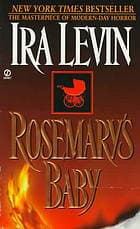
Ira Levin (2013)
Genre
Thriller / Fantasy / Mystery
Reading Time
300 min
Key Themes
See below
Sign in to track this book
A young wife's dream of starting a family curdles into a waking nightmare as she realizes her new neighbors, and perhaps even her own husband, have insidious plans for her unborn child.
Rosemary and Guy Woodhouse, a young, ambitious couple, move into a spacious apartment in the Bramford, a historic New York City building known for its gothic architecture and a past filled with strange deaths and rumored witchcraft. Despite the building's unsettling reputation, they are drawn to its charm and the prospect of a good deal. Soon after settling in, they meet their elderly neighbors, Minnie and Roman Castevet, who live directly across the hall. Minnie is pushy and overbearing, while Roman is more cultured and seemingly benevolent. The Castevets quickly insert themselves into the Woodhouses' lives, initially through small acts of neighborly hospitality that soon become a persistent, almost intrusive, presence.
Not long after the Woodhouses move in, a young woman named Terry Gionoffrio, whom the Castevets had taken in, commits suicide by jumping from their apartment window. Rosemary had briefly met Terry, who seemed withdrawn and fearful, wearing a distinctive locket. The Castevets quickly downplay the incident, explaining Terry was a drug addict, but Rosemary feels an unsettling premonition. Later, Rosemary finds Terry's locket in the laundry room, and Minnie insists she keep it, claiming it's a good luck charm. This event is the first significant crack in the veneer of normalcy surrounding the Castevets and the Bramford, planting a seed of unease in Rosemary's mind.
Guy Woodhouse, an aspiring but struggling actor, begins to spend more time with the Castevets. Roman Castevet, a seemingly well-connected figure, takes a particular interest in Guy's career. Shortly after Guy starts socializing with them, a rival actor, Donald Baumgart, mysteriously goes blind, opening up a significant role that Guy then secures. This sudden stroke of luck catapults Guy's career forward, but Rosemary observes a subtle shift in his personality. He becomes more secretive, less affectionate, and increasingly dismissive of her concerns, often defending the Castevets and their eccentricities, even when they make Rosemary uncomfortable.
One evening, after dinner with the Castevets, Rosemary feels inexplicably dizzy and falls asleep. She wakes up briefly to a nightmarish vision: she is surrounded by the Castevets and their peculiar friends, all naked, witnessing a ritualistic scene. She believes she is being sexually assaulted by a non-human entity with yellow eyes, while Guy, also naked, seems to be participating, encouraging her to 'be fruitful.' The next morning, Guy dismisses it as a drug-induced nightmare, admitting he gave her a chocolate mousse from Minnie containing a sedative. He then reveals they had intercourse while she was still groggy, implying he took advantage of her semiconscious state to conceive a child on the 'right' night. Rosemary feels violated but tries to rationalize it.
Rosemary discovers she is pregnant. Her pregnancy is far from normal. She experiences intense, constant pain in her abdomen, particularly when the baby moves, and develops bizarre cravings for raw liver and undercooked meat. Minnie Castevet insists that Rosemary abandon her own doctor, Dr. Hill, in favor of their friend, Dr. Abraham Sapirstein, a renowned obstetrician. Under Sapirstein's care, Rosemary is given strange herbal concoctions (which Minnie prepares) and is discouraged from taking any standard prenatal vitamins. The Castevets and their circle become more involved in her daily life, dictating her diet and activities, isolating her from her old friends.
As her pregnancy progresses, Rosemary finds herself more isolated. Her close friend, Hutch, attempts to warn her about the Castevets but falls into a coma and later dies under mysterious circumstances. Before his death, he leaves Rosemary a cryptic book on witchcraft, 'All of Them Witches,' and a note urging her to research Roman Castevet. Other friends find her difficult to reach or are subtly discouraged by Guy from visiting. With Guy increasingly aloof and absorbed in his career, and the Castevets' constant presence, Rosemary's paranoia escalates. She begins to suspect that the Castevets and their friends are part of a sinister conspiracy targeting her and her unborn child.
After Hutch's death, Rosemary finally reads the book 'All of Them Witches' and deciphers his coded message. The book details the history of witchcraft and Satanism, and Rosemary discovers that Roman Castevet is actually Steven Marcato, a notorious Satanist and cult leader who disappeared years ago. She realizes the locket Terry Gionoffrio wore contained tannenroot, an herb used in witchcraft, which she had been unknowingly ingesting in her herbal drinks. The truth dawns on her: the Castevets and their group are a coven of witches, and Guy is complicit in their plan. They intend to use her baby for their dark rituals, having orchestrated her impregnation by Satan himself.
Terrified by her discoveries, Rosemary attempts to escape the Bramford and seek help from Dr. Hill, her original obstetrician. She manages to reach his office and frantically explains her ordeal, detailing the coven, the tannenroot, and her belief that her baby is Satan's. Dr. Hill, however, is skeptical. After a phone call from Guy and Dr. Sapirstein, he dismisses her claims as a symptom of prenatal psychosis. Guy and Dr. Sapirstein arrive and forcibly take Rosemary back to the Bramford, where she is heavily sedated and confined to her apartment. They convince her that she is mentally unstable and that her fears are delusions, further isolating her.
Rosemary endures a painful labor, heavily sedated and surrounded by the coven, who chant and perform rituals. After the birth, she is told the baby was stillborn and that she must not see it, claiming it has severe deformities. Devastated and drugged, Rosemary is made to believe her child is dead. However, she hears a baby crying from the Castevets' apartment next door. Her maternal instincts override the sedatives, and she realizes they have lied to her. The crying confirms her worst fears: her baby is alive, but it is not with her.
Driven by the baby's cries, Rosemary breaks free from her apartment and, armed with a kitchen knife, confronts the coven in the Castevets' apartment. There, she finds the entire coven gathered around a black bassinet. Inside, she sees her baby, not deformed as she was told, but with yellow, slitted eyes – the eyes of Satan. The coven hails the baby as the Antichrist, the son of Satan. Guy is present, celebrating. Despite the horror, a primal maternal instinct takes over. When the baby starts crying again, Rosemary, against all reason, approaches the bassinet, moves a cross away, and begins to gently rock her son, accepting her terrifying destiny as the mother of the devil's child.
The Protagonist
Rosemary transforms from a trusting, conventional housewife into a terrified, then resigned, mother who accepts her monstrous child.
The Antagonist
Guy descends from a loving, if somewhat self-absorbed, husband into a cold, calculating betrayer for personal gain.
The Antagonist
Her true sinister nature is gradually revealed, transitioning from a quirky neighbor to a terrifying conspirator.
The Antagonist
His identity as Steven Marcato is revealed, solidifying his role as the primary antagonist and leader of the coven.
The Supporting
Hutch's character arc is cut short by his mysterious death, but his actions posthumously empower Rosemary to uncover the truth.
The Supporting
He appears as a professional doctor but is revealed to be a complicit member of the Satanic coven.
The Mentioned
Her brief appearance and death serve as an early, unsettling warning sign for Rosemary.
The Mentioned
His sudden affliction directly facilitates Guy's career advancement, highlighting the coven's influence.
A central theme is Rosemary's gradual, then complete, loss of control over her body, mind, and life. From the moment she moves into the Bramford, the Castevets and eventually Guy begin to dictate her choices, from her doctor to her diet, and even the circumstances of her pregnancy. This culminates in the horrifying realization that her body was used without her consent for a demonic purpose, and her baby is not truly hers. The story explores the terror of having one's most intimate decisions and personal space violated by external, malevolent forces, culminating in her inability to protect her child.
“"This is no dream! This is really happening!"”
The novel explores the theme of betrayal, particularly the ultimate betrayal by a spouse. Guy Woodhouse's ambition leads him to betray Rosemary in the most profound way imaginable, sacrificing her physical and psychological well-being, and their child, for his career. This betrayal extends to the medical professionals and neighbors who feign care while actively participating in the conspiracy. Rosemary's trust in those closest to her is systematically shattered, leaving her isolated and vulnerable. The story highlights how easily trust can be exploited and turned into a weapon.
“"He sold me to them. He made a bargain."”
Ira Levin presents evil not as a grand, theatrical spectacle, but as something insidious and ordinary, woven into everyday life. The Satanic coven members are not cloaked figures in dark rituals, but Rosemary's seemingly charming, elderly neighbors and respected professionals. Their actions are couched in neighborly kindness and medical advice, making their true intentions difficult to discern until it's too late. This theme shows that the most terrifying evil can hide in plain sight, making it all the more chilling and harder to combat.
“"They're not monsters, Rosemary. They're just people. Nice people."”
Despite the horrific nature of her child's conception and parentage, Rosemary's maternal instinct ultimately triumphs over her terror. Even after discovering her baby has the eyes of Satan, she cannot abandon him. This theme explores the powerful, primal bond between a mother and her child, suggesting it can transcend even the most monstrous circumstances. Her final act of rocking the bassinet, despite the inherent horror, is a testament to the enduring, unconditional nature of maternal love, presenting a complex and unsettling resolution to her ordeal.
“"It's all right, baby. Mama's here."”
Rosemary's experiences are systematically dismissed and invalidated by those around her, particularly Guy and Dr. Sapirstein. Her valid concerns about her health and the Castevets' influence are labeled as 'nerves' or 'prenatal psychosis.' This constant gaslighting leads her to question her own sanity, making it difficult for her to trust her instincts and seek help. The novel portrays the psychological toll of being told your reality is false, amplifying Rosemary's isolation and making her more susceptible to the coven's manipulation.
“"You're overwrought, Rosemary. It's the pregnancy."”
A gothic, historic building with a sinister reputation, serving as the primary setting.
The Bramford is more than just a setting; it's a character in itself. Its dark history of suicides, murders, and rumored witchcraft creates an immediate atmosphere of unease and foreshadows the horrors to come. The building's labyrinthine corridors and shared spaces (laundry room, main hall) facilitate the Castevets' constant proximity and surveillance of Rosemary. The apartment itself becomes a cage for Rosemary, trapping her within the coven's reach and intensifying her sense of claustrophobia and isolation, making escape feel impossible.
A seemingly innocent locket and herbal concoctions used to poison and control Rosemary.
The tannenroot locket, initially found by Rosemary and given to her by Minnie, symbolizes the insidious nature of the coven's influence. It contains the herb tannenroot, which Rosemary later realizes she has been ingesting through Minnie's herbal 'vitamin' drinks. This device highlights the theme of hidden danger in plain sight and the manipulation of trust. The tannenroot's effects (pain, cravings, disorientation) serve to control Rosemary's physical and mental state, making her more compliant and less able to resist the coven's agenda, while also masking the true nature of her pregnancy.
A book on witchcraft left by Hutch, serving as the key to uncovering the coven's identity.
This book is a crucial plot device that acts as a delayed exposition. Hutch, knowing he's in danger, leaves it for Rosemary with a coded message. When Rosemary finally reads it, the book provides her with the historical context and specific information (like Steven Marcato's true identity as Roman Castevet) needed to understand the true nature of the conspiracy. It shifts Rosemary's understanding from vague paranoia to concrete, terrifying knowledge, empowering her to piece together the truth and take action, even if ultimately futile.
A vivid, drug-induced 'dream' of demonic rape that is, in fact, the actual conception.
The dream sequence is a masterful use of unreliable narration and psychological horror. Rosemary experiences what she believes to be a nightmare after being drugged by Guy and Minnie. This 'dream,' however, is the actual event of her demonic impregnation. By presenting it as a blurred, surreal experience, the novel initially allows Rosemary (and the reader) to dismiss it as a hallucination, only for its horrifying reality to be confirmed later. This device blurs the line between the subjective and objective, enhancing the sense of dread and questioning Rosemary's sanity.
“Rosemary, I made you a nice chocolate mousse.”
— Roman offering Rosemary dessert after she finds out about the coven.
“He has his father's eyes. He has his father's eyes.”
— Rosemary's horrifying realization upon seeing her baby's eyes.
“What have you done to his eyes, you maniacs!”
— Rosemary's desperate cry after seeing her baby's eyes.
“It's a gift from my old family, from my mother.”
— Minnie explaining the origin of the tanis root necklace.
“Every tenant, every year, has a beautiful baby.”
— Minnie T. explaining the building's unusual fertility rate.
“It's not a dream. It's real.”
— Rosemary's internal struggle with the reality of her situation.
“You'll be a wonderful mother, Rosemary.”
— Minnie's seemingly kind but sinister encouragement.
“The year is One, for the first year of our Lord.”
— Roman announcing the birth of the Antichrist.
“I'm going to have a baby!”
— Rosemary's initial joyful announcement of her pregnancy.
“It's a mistake to go against nature.”
— Dr. Saperstein's advice to Rosemary about her diet and cravings.
“Don't worry, Rosemary. We're all here to help you.”
— The Coven's seemingly reassuring words to Rosemary.
“He chose you, Rosemary. Out of all the women in the world.”
— Roman explaining why Rosemary was chosen to bear the Antichrist.
“The baby's healthy, Rosemary. A little devil, but healthy.”
— Dr. Saperstein's chilling assessment of the newborn.
“This is not a game, Rosemary. This is a very serious matter.”
— Guy warning Rosemary not to interfere with the coven's plans.
Ready to see how well you understood this book? Take our interactive quiz with 10 questions.

Biography coming soon.







