“He was a Kinte. And to the Kintes, a child was not a child until he was named.”
— Describing the importance of Kunta Kinte's naming ceremony in Juffure.

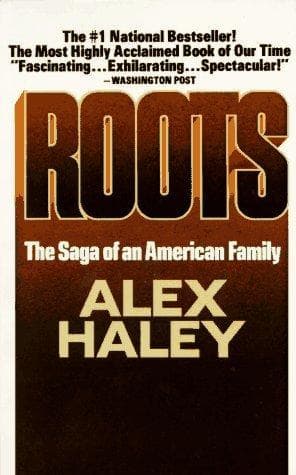
Alex Haley (1976)
Genre
Historical Fiction
Reading Time
1200 min
Key Themes
See below
Sign in to track this book
Following Kunta Kinte and his descendants, 'Roots' shows slavery's brutality and an American family's lasting resilience.
The story begins in 1750 in Juffure, Gambia. Kunta Kinte is born to Omoro and Binta Kinte, a respected Mandinka family. From a young age, Kunta learns his people's rich culture and traditions. He learns about his ancestors, honor, and survival skills like farming, hunting, and the Mandinka language. His grandfather, Kairaba, teaches him about his family line and spiritual connection to his heritage. Kunta completes the Fula initiation rites, becoming a man. He dreams of becoming a warrior and marrying a woman from his village, continuing his family's legacy.
In 1767, at sixteen, Kunta Kinte goes into the forest near Juffure to find wood for a drum. Four white slave catchers ambush him. They overpower and chain him, dragging him away. He is forced onto the Lord Ligonier, a slave ship, enduring the brutal Middle Passage. Packed in the hold with hundreds of other Africans, Kunta suffers from disease, starvation, and constant violence. He sees terrible cruelty and death. His identity is systematically stripped away, yet he holds onto his Mandinka heritage and his will to live.
Kunta Kinte and other captured Africans arrive in Annapolis, Maryland. They face a humiliating inspection and auction. John Waller, a rich planter from Spotsylvania County, Virginia, buys him. Kunta resists his new name, 'Toby,' given by the overseer, Ames. He tries to escape many times, driven by a strong desire for freedom and to return to Juffure. Each escape attempt brings harsh punishment, including brutal whippings. But Kunta's spirit does not break. He continues to speak his native Mandinka language whenever he can.
Kunta Kinte is assigned to work in the Waller plantation fields. He struggles with the unfamiliar tasks and slavery's harsh realities. His repeated escape attempts lead to his Achilles tendon being cut. This cruel act aims to stop him from running and break his spirit. This injury forces him to become a buggy driver for John Waller. Eventually, he bonds with Belle, the plantation cook. She offers him comfort and understanding. They marry, and Belle helps him navigate slave life, providing family and stability amid the oppression.
Kunta and Belle have a daughter, Kizzy. Kunta, despite the dangers, secretly teaches Kizzy about her African heritage. He tells her stories of Juffure and the Kinte clan. Kizzy grows into a strong, intelligent young woman. But her life takes a tragic turn. As a teenager, she helps a young slave boy write a pass to escape. Her act is discovered. John Waller, fearing rebellion, sells Kizzy away from her parents. This breaks their family bond and devastates Kunta and Belle.
Kizzy is sold to Tom Lea, a struggling, often cruel, white planter in North Carolina. Lea rapes Kizzy, and she gives birth to a son, George. George, known as 'Chicken George' for his skill in training fighting cocks, becomes valuable to Tom Lea. He helps Lea win large bets. Despite his relative privileges as a slave and his complicated relationship with Lea, George wants freedom for himself and his family. He marries Matilda, a religious slave, and they have several children, including Tom, continuing the Kinte line.
Chicken George wins a major cockfight for Tom Lea, which should secure his freedom. However, Lea had bet George himself and lost a lot of money. Lea is forced to send George to England to work for seven years to pay off the debt. This is a devastating betrayal. George is separated from Matilda and their children, who remain enslaved. Despite the heartbreak, George works hard in England. He saves money and gains a wider view of life and freedom. He is determined to return and buy his family's liberty.
When he returns from England, Chicken George finds the Civil War has ended. His family, along with millions of other enslaved people, is now free. He reunites with Matilda and their children, including Tom, who has become a skilled blacksmith. The family faces the huge challenges of Reconstruction. These include poverty, racial prejudice, and the struggle to get their own land and livelihoods. They move to Henning, Tennessee, where they work hard to build a new life. They establish themselves as farmers and craftsmen, holding onto their family bonds and the stories passed down through generations.
Tom Kinte, Chicken George's son, becomes a respected blacksmith in Henning, Tennessee. He and his wife, Irene, have a daughter named Cynthia. Cynthia carries on the family's resilience and pride. She hears the stories of Kunta Kinte from her elders, though details become more legendary over time. Cynthia marries Will Palmer, a successful lumber mill worker. Their marriage brings economic stability and community for the Kinte family in the post-slavery era. They work to build a future for their children.
Cynthia's daughter, Bertha George Palmer, grows up in Henning, Tennessee. She marries Simon Alexander Haley, a college-educated professor. Their marriage marks a major step forward for the Kinte descendants. They move beyond manual labor into intellectual and professional careers. Bertha, like her ancestors, keeps family stories. She passes them to her children, including her son, Alex Haley. She tells tales of 'the African' and his journey, starting Alex's lifelong quest to trace his family's origins. This sets the stage for the book itself.
Inspired by his grandmother Bertha's stories of 'the African' who called the river 'Kamby Bolongo' and was captured while chopping wood, Alex Haley begins a long journey. Now a successful writer, he spends a decade tracing his family's roots. He travels widely, researching historical documents, slave ship manifests, and oral traditions. His search leads him to the National Archives, libraries, and eventually, to Gambia, West Africa. There, he connects with griots, traditional oral historians. They confirm the story of Kunta Kinte of Juffure, captured in 1767.
Alex Haley's tireless research leads to the amazing discovery of Juffure, Kunta Kinte's ancestral village in Gambia. He meets the Kinte clan's griot, who recites the family's oral history. It details Kunta Kinte's birth, abduction, and ancestors' names. This perfectly matches the stories passed down through generations in America. This deep moment of connection brings Haley face-to-face with his heritage. It confirms his grandmother's tales and gives him a strong sense of closure and identity, linking two continents and two centuries of family history.
The Protagonist
From a free Mandinka warrior-in-training, Kunta is forced into slavery, endures immense suffering, but ultimately finds a way to preserve his identity and pass on his legacy through his daughter.
The Supporting
Belle provides stability and love to Kunta, helping him find a measure of peace and a way to continue his line, demonstrating quiet resilience in the face of immense hardship.
The Protagonist
From a cherished child learning her roots, Kizzy is brutally separated from her family and forced into a new life, yet she bravely continues the legacy of resilience and storytelling, ensuring her son knows his heritage.
The Protagonist
Chicken George uses his unique skills to gain a measure of autonomy, endures betrayal, but ultimately reunites with his family and guides them through the challenges of post-slavery America.
The Supporting
Matilda represents the spiritual strength and unwavering devotion within the enslaved community, ensuring the family's moral foundation and continuity.
The Supporting
Tom transitions from a skilled slave to a respected freedman, using his craft to build a new life for his family and secure their place in post-slavery America.
The Supporting
Cynthia solidifies the family's presence in Henning and ensures the continuation of the lineage, passing down the oral history to her children.
The Supporting
Bertha serves as the pivotal bridge between the generations, ensuring that the ancient stories of Kunta Kinte are accurately passed down to Alex, inspiring his monumental research.
The Protagonist/Narrator
From a writer intrigued by family lore, Alex becomes a tireless genealogist, ultimately unearthing and documenting his family's epic journey, thereby giving voice to millions.
This theme is key to 'Roots,' showing a strong will to survive and keep dignity despite immense suffering. Kunta Kinte shows this by refusing the name 'Toby' and trying to escape many times, even after his Achilles tendon is cut. His spirit stays strong, and he finds ways to pass on his heritage. Later generations, like Kizzy enduring rape and separation, and Chicken George navigating betrayal, all show incredible resilience. Their ability to find love, build families, and work for a better future, despite oppression, highlights the lasting strength of the human spirit.
“For the first time, he was seeing not just a black man, but a Kinte. He was seeing the spirit of his ancestors, the fire that had burned in Kunta, in Kizzy, in George, in Tom. It was in him too.”
The fight to keep and regain identity is a core theme. Kunta Kinte's refusal to give up his Mandinka name and language, even under torture, is a strong act of resistance. He secretly teaches Kizzy about Juffure, making sure the stories and names are passed down. This oral tradition, from Kunta to Kizzy, to Chicken George, to Tom, to Cynthia, and finally to Bertha, forms the family's identity. Alex Haley's quest is the best example of this theme. He rebuilds a lost heritage, showing how connecting to one's roots brings strength, pride, and belonging.
“He knew that one day, he would go home. And if not him, then his children. And if not his children, then his children's children. But a Kinte would return to Juffure.”
'Roots' clearly shows slavery's brutal and dehumanizing nature. The Middle Passage, with its terrible cruelty and loss of life, sets the tone. On plantations, characters like Kunta Kinte lose their names, language, and freedom. They are treated as property, facing physical violence, sexual assault (as with Kizzy), and constant threats of family separation. The story shows how slavery tried to erase its victims' humanity, turning people into goods and destroying cultural ties. Yet, it also shows the ongoing fight against this dehumanization.
“The white man had taken his name, his home, his freedom. But he would never take his spirit.”
Family is the basis of survival and resistance throughout the book. The Kinte family's ability to endure and eventually succeed comes directly from their commitment to each other and keeping their shared history. Kunta's stories of Juffure become a sacred trust passed down through generations. The oral tradition, seen in griots in Africa and grandmothers like Bertha in America, is a vital link. It connects the present to the past and gives a sense of identity and purpose that slavery tried to destroy. This theme ends with Alex Haley's successful family search, which proves the power of these family stories.
“Every griot in Gambia, like every family elder in America, was a living, walking library. They were the human record of who you were, and where you came from.”
From Kunta Kinte's first escape attempts to Chicken George and Tom Harvey's post-Civil War struggles, the desire for freedom and self-determination drives the story. For Kunta, it is about physical escape and keeping inner liberty. For Kizzy, it is about protecting her child and passing on heritage. For Chicken George, it is about earning freedom for his family. After emancipation, this journey changes to achieving economic independence, owning land, and building a community, as seen with Tom and Cynthia in Henning. The story shows that freedom is not just the absence of chains, but the ability to define one's own life and future.
“A man's freedom, he learned, was not a gift from God. It was a fight to be won, every single day.”
The passing down of history and culture through spoken word.
Oral tradition is the foundational plot device, serving as the primary vehicle for the Kinte family's history. In Africa, the griot system meticulously preserves lineage and events. In America, this transforms into the family stories passed from Kunta to Kizzy, and down through generations, culminating in Bertha's tales to Alex Haley. These stories, containing specific details like 'Kamby Bolongo' and 'the African' chopping wood, act as crucial clues that enable Alex Haley to connect his American family history to its African origins, effectively bridging two continents and centuries of time.
A physical act of violence that symbolically breaks Kunta's ability to run but not his spirit.
The severing of Kunta Kinte's Achilles tendon by the slave overseer, Ames, is a pivotal and brutal plot device. Physically, it cripples Kunta, preventing further escape attempts and forcing him into a less physically demanding role as a buggy driver. Symbolically, however, it fails to break his spirit. Instead, it redirects his resistance from physical flight to cultural preservation, compelling him to pass on his African heritage to his daughter, Kizzy. This act highlights the cruelty of slavery while simultaneously underscoring Kunta's enduring internal strength and his shift in focus to ensuring his legacy lives on.
A name that represents identity, heritage, and continuity through generations.
The name 'Kinte' is a powerful symbol of identity and heritage throughout the narrative. Kunta's desperate attempts to hold onto his name, even after being renamed 'Toby,' underscore its importance. Though the name itself is largely lost in the American generations, the *memory* of 'the African' and his family, passed down through the generations, serves the same purpose. Alex Haley's ultimate discovery of the name 'Kunta Kinte' and the 'Kinte' clan in Juffure provides a profound sense of closure and validation, reconnecting a lost lineage and demonstrating the enduring power of a name to embody an entire history and culture.
The slave ship that transports Kunta Kinte and symbolizes the Middle Passage.
The Lord Ligonier is not just a vessel but a powerful symbol of the Middle Passage and the forced migration of Africans to America. Its description vividly portrays the inhumane conditions, suffering, and dehumanization endured by Kunta Kinte and countless others. The ship represents the violent rupture from home, culture, and freedom. It is the crucible where Kunta's physical journey into slavery begins, and its historical reality grounds the personal narrative in the broader, tragic history of the transatlantic slave trade, making the journey tangible and horrific.
“He was a Kinte. And to the Kintes, a child was not a child until he was named.”
— Describing the importance of Kunta Kinte's naming ceremony in Juffure.
“Every time I hear the wind blow, I hear the names of my people.”
— Kunta Kinte reflecting on his lost family and heritage in Africa.
“Dat's de onliest way you kin keep yo' head up, Toby. You gotta know who you is.”
— Fiddler advising Kunta Kinte (Toby) on maintaining his identity and dignity.
“A sound as old as time, a sound as new as the first breath of a child, a sound that would echo down through generations...”
— Describing the first cry of a newborn, symbolizing continuity and hope.
“It was not enough to survive. One had to live.”
— Kizzy's determination to find meaning and purpose despite her enslaved condition.
“Every generation must find its own way to fight the good fight.”
— Chicken George contemplating the ongoing struggle for freedom and equality.
“Dat's de way it always is, ain't it? De white folks always got de power.”
— Tom Lea expressing the stark reality of racial power dynamics.
“The past, he knew, was not just something that happened; it was something that lived.”
— Alex Haley's reflection on the living legacy of his ancestors.
“He had heard it said that a man could not be truly free until he had fought for his freedom.”
— Kunta Kinte's internal struggle and repeated escape attempts.
“Roots, he thought. That was it. Roots. The deepest part of you.”
— Alex Haley's realization about the profound importance of ancestral origins.
“And the drumming, the constant drumming, was the heartbeat of Africa.”
— Describing the pervasive cultural presence of drumming in Kunta Kinte's homeland.
“He knew that one day he would return to his homeland, no matter how long it took.”
— Kunta Kinte's enduring hope and determination to go back to Africa.
“Every scar on his body was a story, a testament to what he had endured.”
— Kunta Kinte's physical scars as symbols of his suffering and survival.
“He felt in his heart that he was a free man, even if his body was in chains.”
— Kunta Kinte's mental and spiritual resistance against the dehumanization of slavery.
Ready to see how well you understood this book? Take our interactive quiz with 10 questions.
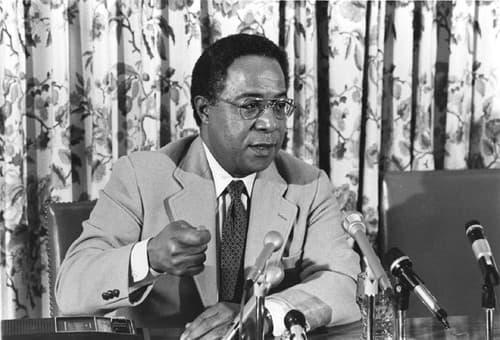
Alex Haley was an American writer and author, best known for his 1976 novel "Roots: The Saga of an American Family." This epic work traced his family history from Africa to slavery and freedom in the United States, becoming a cultural phenomenon and inspiring a television miniseries. He also co-authored "The Autobiography of Malcolm X" and wrote the novel "Queen." Haley received a special Pulitzer Prize citation for "Roots."







