“You are the most adorable, most infuriating, most frustrating, most wonderful woman I have ever known, and I am going to marry you.”
— Colin's proposal to Penelope, full of his characteristic exasperation and affection.

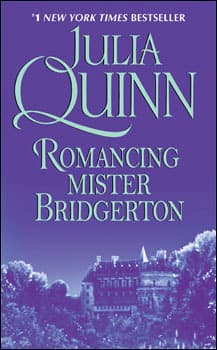
Julia Quinn (2015)
Genre
Historical Fiction / Romance
Reading Time
360 min
Key Themes
See below
Sign in to track this book
Penelope Featherington, a lifelong secret admirer, finds her quiet devotion to Colin Bridgerton changed when she uncovers his hidden depths, forcing them both to confront long-held assumptions and the true identity of London's most scandalous gossip.
Penelope Featherington, twenty-eight and resigned to spinsterhood, has secretly loved Colin Bridgerton for over a decade. She is often overlooked and still lives with her overbearing mother. As the season begins, Colin Bridgerton returns from a long trip abroad, looking more handsome and charming. His family and society greet him warmly, including Penelope, who is still a close friend of his sister, Eloise. Colin, however, is restless and feels he lacks purpose, tired of being seen only as a charming rake. He confides in Penelope, often discussing his travels and his wish to do something more meaningful with his life. He does not know the depth of her feelings for him. Penelope finds comfort in their conversations, cherishing every moment they spend together.
Colin Bridgerton often says he is frustrated with his aimless life. He has traveled the world but feels unfulfilled, always compared to his successful older brothers, Anthony and Benedict. He secretly keeps a travel journal, filled with witty observations and philosophical thoughts, but he thinks it is unimportant. Meanwhile, Penelope Featherington continues to be the anonymous author of Lady Whistledown's Society Papers. Her columns, which have chronicled London society for years, give her a secret outlet for her intelligence and wit. This gives her a sense of purpose and power that her public life lacks. She carefully guards her identity, knowing the scandal and ostracization it would bring if discovered, especially by Colin, who often complains about Whistledown's mentions of him.
At a ball, Colin, in a rare moment of connection, asks Penelope to dance. This unexpected gesture makes Penelope's heart soar, rekindling her long-held hopes. They share a comfortable conversation, and Penelope feels a closeness she rarely experiences. However, the moment is brief. Colin's easy charm and friendly demeanor leave Penelope wondering if he sees her as anything more than a dear friend of his sister. She tries to lower her expectations, reminding herself of her wallflower status and his reputation as a sought-after bachelor, but the dance leaves a strong impression on her, fueling her quiet longing for something more.
A significant event changes Penelope's world when her best friend, Eloise Bridgerton, elopes with Sir Phillip Crane. Penelope is happy for Eloise but feels acutely lonely and abandoned. Eloise's departure highlights Penelope's own stagnant life, her lack of prospects, and her continued role as a spinster living under her mother's roof. This isolation further emphasizes her secret life as Lady Whistledown, which remains her only true independent endeavor and source of personal fulfillment. Eloise's absence also means fewer chances for Penelope to naturally interact with Colin, deepening her sadness and reinforcing her belief that she is destined for a quiet, unremarkable life.
Colin, curious about Penelope and her frequent, unexplained absences, decides to follow her one evening. He sees her entering a hackney coach and then a printer's shop. His suspicions are raised, and he waits outside. To his astonishment, he watches Penelope emerge from the shop, carrying what appears to be a freshly printed copy of Lady Whistledown's Society Papers. The realization hits him hard: Penelope Featherington, the quiet wallflower, his sister's friend, is the notorious gossip columnist who has captivated and sometimes irritated London society for years, and who has written about him countless times. He is stunned by this revelation, his perception of her completely changed.
Colin confronts Penelope in anger, feeling betrayed and deceived. He demands to know why she kept such a secret from him, accusing her of manipulating society and him. Penelope, initially defensive, eventually breaks down, explaining the loneliness and lack of agency that led her to create Lady Whistledown. She says it was her only way to feel seen and heard. The argument is intense, filled with accusations and raw emotions. In a sudden, overwhelming moment, the anger turns to passion, and Colin unexpectedly kisses Penelope. The kiss is deep and intense, revealing a powerful, undeniable attraction that has been simmering beneath their friendship, leaving both of them reeling.
The morning after the kiss, Colin, still grappling with the revelation of Penelope's secret and the intensity of their shared moment, feels a sense of responsibility and a confusing, growing attraction. He knows he cannot simply walk away after such an intimate encounter, especially considering her vulnerable position. Driven by duty, honor, and a growing understanding of his feelings for her, Colin arrives at the Featherington household and proposes marriage to Penelope. Penelope is shocked but overwhelmed with joy and trepidation. She knows his proposal might be more out of obligation than genuine love, yet she accepts, her lifelong dream seemingly coming true.
News of Colin Bridgerton's engagement to Penelope Featherington shocks London society. Society, accustomed to Colin's charm and Penelope's wallflower status, is astonished. Whispers spread, with many speculating on the reasons for such an unexpected match. Lady Danbury, always observant, expresses surprise but also a hint of approval. Penelope's mother, Portia Featherington, is ecstatic at the prospect of her daughter marrying a Bridgerton, finally securing Penelope's future. Amidst the public reaction, Colin and Penelope navigate their engagement. Colin still processes the implications of her secret, and Penelope tries to believe in the sincerity of his affections, despite her lingering doubts.
As their wedding day approaches, Penelope grows anxious about her identity as Lady Whistledown being exposed. She fears the scandal would ruin not only her but also Colin and the entire Bridgerton family. Colin, despite his initial anger, has grown to admire Penelope's intelligence and courage. He reassures her, vowing to protect her and to keep her secret safe. He understands the impact her writing had on her life and begins to see the strength and wit hidden beneath her quiet exterior. This shared secret strengthens their bond, creating a new level of intimacy and trust between them.
At a grand ball hosted by Lady Danbury, Penelope bravely decides to reveal her identity as Lady Whistledown to all of London society. With Colin's support by her side, she stands before the astonished crowd and announces she has been the author of the scandalous papers for over a decade. The revelation sends gasps and murmurs through the ballroom. Some are outraged, others are impressed, and many are simply stunned. Lady Danbury, who had previously offered a reward for Whistledown's identity, applauds Penelope's bravery and wit. Colin, beaming with pride, publicly declares his love and admiration for his soon-to-be wife, solidifying their united front against any societal backlash.
Despite the initial shock caused by Penelope's revelation, the Bridgerton family supports her. Society, while still gossiping, begins to adjust to the new reality. Colin and Penelope proceed with their wedding, a beautiful ceremony attended by their families and friends. Their vows are heartfelt, reflecting their long history and their newfound understanding and deep affection for each other. After the wedding, they go on their honeymoon, where they discuss their future, including Colin's plans to publish his travel journals and Penelope's decision to perhaps continue writing under her own name. They look forward to a life together, filled with love, intellectual partnership, and mutual respect, having finally found their true match in each other.
The Protagonist
Penelope transforms from a timid, secretly powerful wallflower to a confident woman who publicly embraces her true identity and finds love.
The Protagonist
Colin evolves from an aimless charmer to a man who finds purpose, love, and a partner who challenges and inspires him.
The Plot Device/Secret Identity
Lady Whistledown's reign as an anonymous force ends with her public revelation, transforming her from a secret identity to a recognized talent.
The Supporting
Eloise's arc in this book primarily involves her elopement, setting up her own story and leaving Penelope to navigate her life without her closest confidante.
The Supporting
Portia remains largely static, driven by social ambition, but ultimately benefits from Penelope's choices.
The Supporting
Lady Danbury's role is consistent; she acts as a discerning societal observer and eventual champion for Penelope.
The Supporting
Anthony's arc is largely completed in previous books; here, he provides a steady presence and familial support.
The Supporting
Violet's arc is consistent in her role as a loving and supportive mother to her children.
This theme explores how characters deal with their true selves versus how society sees them. Penelope, as the overlooked wallflower, secretly thrives as the powerful and witty Lady Whistledown, finding an outlet for her intelligence and a sense of purpose. Colin, despite his charm, feels aimless and struggles with being seen as merely a 'charming rake,' longing for something more meaningful. Their journeys involve shedding these societal expectations and embracing their authentic identities, both individually and in their relationship, as seen when Penelope publicly claims her authorship and Colin finds fulfillment in writing.
“Perhaps I am not the man I thought I was. Perhaps I am something more. Perhaps I am something less.”
The novel explores the pain and perseverance of unrequited love, mainly through Penelope's decade-long adoration of Colin. She loves him from afar, cherishing every small kindness and conversation, believing he will never see her as anything more than a friend. This theme highlights the quiet suffering and hope that can come with such feelings. It also explores how Colin's affection for Penelope slowly grows from friendship to love, initially hidden even from himself, only truly surfacing after the shock of discovering her secret and the passion of their first kiss. Their eventual union is the culmination of these long-held, often unspoken, emotions.
“She had loved him for so long. She had loved him for so long, she could not remember a time when she had not.”
Words have great power in this novel, most explicitly through Lady Whistledown's Society Papers. Penelope's anonymous columns can make or break reputations, influence social events, and entertain society. This shows how written words can shape an entire society. The theme also explores the burden and liberation of secrets. Penelope's secret identity gives her power and a sense of self, but also isolates her and creates fear of exposure. Colin's secret journal reveals his hidden thoughts. The eventual revelation of Penelope's secret, and the subsequent public acceptance, shows that truth, even scandalous truth, can ultimately lead to freedom and deeper connection.
“One could not control what one wrote, but one could certainly control what one did not write.”
This theme examines the rigid expectations placed upon individuals, particularly women, in Regency society. It looks at the struggle to find personal happiness and fulfillment within or outside those bounds. Penelope is expected to be a quiet, marriageable young lady, but finds true fulfillment and agency in her secret writing. Colin is expected to be a charming gentleman with no real ambitions, but yearns for a deeper purpose. The novel critiques these societal boxes, showing how both characters ultimately defy them to create a life that is authentic and meaningful to them, culminating in their unconventional marriage and shared intellectual pursuits.
“It was not enough to be a Bridgerton. One had to be a person, too.”
The anonymous gossip column that drives much of the social narrative and character interactions.
Lady Whistledown's Society Papers serves as a pervasive narrative device, opening each chapter with excerpts that set the social scene, introduce characters, or comment on recent events. It functions as an omniscient narrator within the story, shaping public opinion and creating suspense around its author's identity. More critically, it is the central secret of the novel, revealing Penelope's hidden intelligence and providing the catalyst for much of the plot's conflict and resolution, particularly Colin's discovery and subsequent feelings for Penelope.
A hidden literary pursuit revealing Colin's deeper, restless nature.
Colin's travel journals are a symbolic plot device that mirrors Penelope's secret writing. While he dismisses them as unimportant, they reveal his intelligence, wit, and yearning for purpose beyond superficial charm. They serve to highlight his hidden depths and his shared intellectual inclination with Penelope, ultimately providing a common ground and a future career path for him. The existence of his journals subtly foreshadows his eventual understanding and acceptance of Penelope's own secret literary life.
Penelope's character archetype, used to subvert expectations.
The 'wallflower' trope is a classic romance device, where an overlooked female character blossoms and finds love. In 'Romancing Mister Bridgerton,' Penelope embodies this trope, but it is subverted by her secret identity as Lady Whistledown. She is not merely a shy girl waiting to be noticed; she actively observes and influences society from the shadows. This device highlights societal prejudices and ultimately empowers Penelope when she sheds the wallflower image to embrace her true, powerful self, proving that quietness does not equate to weakness or lack of depth.
The narrative structure where two friends develop romantic feelings.
This classic romance plot device is central to Colin and Penelope's story. Their long-standing friendship provides a foundation of familiarity, trust, and shared history, making their eventual transition to lovers deeply satisfying. The challenge lies in moving beyond the friend zone, particularly for Penelope who has harbored secret feelings, and for Colin who initially sees her only as a friend. The arc allows for a slow burn of emotional development, with their existing intimacy deepening into romantic love once secrets are revealed and true feelings acknowledged, rather than love-at-first-sight.
“You are the most adorable, most infuriating, most frustrating, most wonderful woman I have ever known, and I am going to marry you.”
— Colin's proposal to Penelope, full of his characteristic exasperation and affection.
“Because, Penelope, I’ve been half in love with you for as long as I can remember.”
— Colin finally admitting his long-held feelings for Penelope.
“I refuse to be a wallflower any longer.”
— Penelope's internal resolve to change her life and pursue her desires.
“A gentleman never truly knows himself until he’s been thoroughly bested by a lady.”
— A humorous observation about the dynamic between men and women in society.
“One day, I will write books. One day, I will see the world.”
— Penelope's private dreams and aspirations before they become public.
“Sometimes, the most important journeys are the ones we take to find ourselves.”
— A reflection on personal growth and self-discovery.
“He just… saw her. Not as a friend, not as a sister’s companion, but as a woman.”
— Penelope's realization that Colin's perception of her has changed.
“It was not a kiss of passion, but a kiss of promise, of comfort, of everything that was good and right in the world.”
— A description of an early, tender kiss between Colin and Penelope.
“She was Penelope Featherington, and she had a secret that could bring down the ton.”
— Penelope's internal thought about her identity as Lady Whistledown.
“Love, after all, was not always a grand passion, but sometimes a quiet understanding.”
— A reflection on the nature of love, particularly between two long-time friends.
“He needed her, not just as a friend, but as the woman who made his world make sense.”
— Colin's internal realization of his deep emotional need for Penelope.
“Perhaps a wallflower was not meant to bloom in the garden, but to cultivate her own.”
— Penelope's evolving perspective on her place in society and her own worth.
“There was a fine line between being a gentleman and being a fool. Colin had crossed it, then recrossed it, several times.”
— A humorous observation about Colin's often impulsive behavior.
“Sometimes, the person you are meant to be with has been right in front of you all along.”
— A overarching theme of the story, as Colin and Penelope realize their love.
Ready to see how well you understood this book? Take our interactive quiz with 10 questions.

Biography coming soon.







