“I saw the world from a different perspective, and it was a world of my own making.”
— Reflecting on his solitude and self-sufficiency on the island.

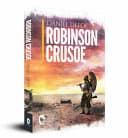
Daniel Defoe (2017)
Genre
Historical Fiction
Reading Time
150 min
Key Themes
See below
Sign in to track this book
Shipwrecked on an island, Robinson Crusoe, the only survivor, builds a new life through his strength and cleverness, turning a terrible situation into a display of human endurance.
Robinson Crusoe, born in York, England, to a well-off middle-class family, ignores his father's advice for a stable life. Instead, he wants adventure at sea. At 19, in 1651, he takes his first voyage from Hull to London with a friend. A bad storm almost kills him. This close call, which he sees as a warning from God, makes him briefly think about going home. But, swayed by friends and his own desire to travel, he continues his life at sea. His second voyage makes him money but ends badly when Turkish pirates capture his ship near Africa. Crusoe is enslaved by a Moorish captain in Salé for two years.
While enslaved in Salé, Crusoe escapes with Xury, a young Moorish boy, by tricking his master into letting them fish. They sail south along the African coast and eventually meet a Portuguese ship. The captain, a kind and honest man, rescues them. Crusoe sells Xury to the captain, with the agreement that Xury will be freed in ten years if he becomes a Christian. The captain takes Crusoe to Brazil, where Crusoe uses money from selling his few things to buy land and start a sugar plantation. He works hard for several years, becoming quite successful, but his wish for quick money and his natural desire to travel lead him to seek more slaves from Africa.
Crusoe needs more workers for his growing plantation and is drawn by the promise of easy money. He agrees to a secret slave-trading trip to the coast of Africa. He leaves his Brazilian plantation with a friend and sails on September 1, 1659. The trip is hit by storms, and after twelve days of constant battering, the ship is caught in a hurricane near the mouth of the Orinoco River. The crew tries to leave the ship, but their lifeboat overturns in the rough waves. Crusoe is the only survivor, washed ashore on an unknown, empty island. He is very sad about losing his friends and being alone, but also very glad to be alive.
When he realizes he is the only survivor, Crusoe immediately focuses on how to live. He builds a temporary shelter in a tree to be safe from wild animals. The next day, he finds the wrecked ship has moved closer to shore. Over several days, he makes many trips to the wreck, carefully taking tools, weapons, food, sails, ropes, and wood. He builds a strong home in a cave, surrounded by a strong fence, near a freshwater spring, and moves all his saved goods there. He also saves a dog and two cats from the ship; they become his only companions. Crusoe starts a journal to write down his daily activities and thoughts.
Crusoe systematically creates a way to live on the island. He finds a small field of barley and rice, which he carefully grows, learning how to plant and harvest through trial and error. He tames wild goats, building pens and eventually having a small herd for milk and meat. He learns to bake bread from his grain. He explores the island, finding different parts, including a fertile valley where he builds a second home. He makes tools, furniture, and clothes from saved materials and natural resources. He makes a calendar by carving notches on a post to keep track of days, weeks, and months, marking his shipwreck date as September 30, 1659.
After several years on the island, Crusoe gets very sick with a fever. During his illness, he has vivid dreams and deep religious thoughts. He starts to read the Bible he saved from the ship, which leads to a strong religious change. He thinks about his past life of rebellion and sin, seeing his shipwreck as punishment from God and his survival as God's mercy. This religious awakening brings him peace and purpose, changing his view from despair to thanks. He prays regularly and sees God's hand in his daily food and survival, finding comfort in his faith.
After twenty-three years alone, Crusoe makes a shocking find: a single footprint in the sand. This fills him with fear and confusion, as he thought he was completely alone. He carefully searches for more signs and eventually finds human bones, remains of fires, and other proof that cannibals visit the island regularly for ritual feasts. This discovery breaks his sense of safety and fills him with dread. He builds up his home more and lives in constant watchfulness. He struggles with whether to interfere with their practices but decides to defend himself if directly threatened.
Years after finding out about the cannibals, Crusoe sees a group of them landing on the island with captives. He plans an attack but hesitates. However, when one captive escapes and is chased by two cannibals, Crusoe steps in, shooting one and hitting the other with his musket, saving the man's life. He names his new friend Friday, after the day he was rescued. Friday promises loyalty to Crusoe, who starts to teach him English, Christianity, and European ways. Friday proves to be a loyal, smart, and kind companion, ending Crusoe's deep loneliness and becoming his devoted friend.
Friday tells Crusoe that his people bring captives to the island sometimes and that there are other Europeans stuck on a nearby island. Eventually, another group of cannibals arrives, bringing three captives. Crusoe and Friday bravely rescue two of the captives: an old man who is Friday's father, and a Spaniard. They kill many of the cannibals, solidifying their alliance. Crusoe learns from the Spaniard about other Europeans who survived a shipwreck and live on a nearby island. He starts to plan to build a boat big enough to sail to the mainland or find a way home.
One day, an English ship appears offshore, but Crusoe soon realizes mutineers control it. They have left their captain and two loyal crewmen on the island. Crusoe and Friday, along with the Spaniard and Friday's father, secretly contact the captain. Crusoe, pretending to be the island's governor, helps the captain and his men take back their ship using a clever plan, overpowering the mutineers. In return for his help, the thankful captain promises Crusoe passage back to England. On December 19, 1686, after twenty-eight years, two months, and nineteen days, Robinson Crusoe finally leaves the island, leaving behind the remaining mutineers and the Spaniard and Friday's father to start a small settlement.
Crusoe arrives back in England on June 11, 1687, a stranger in his own country. He finds that his Brazilian plantation, which he had left in trust, has made him very rich. He provides for the widow of his deceased friend who managed the plantation and makes sure Friday is well-cared for. He finds it hard to adjust to civilized life after so many years alone and relying on himself. He marries, has children, but his adventurous spirit remains. He makes a final trip to his island, finding the settlement doing well, and writes about his experiences in his famous memoirs, changed forever by his ordeal and his deep religious transformation.
The Protagonist
Crusoe transforms from a reckless, materialistic adventurer into a self-sufficient, spiritually enlightened individual who finds peace and purpose through hardship.
The Supporting
Friday transforms from a 'savage' captive into a loyal, Christianized companion, embodying the potential for acculturation and forming a deep bond with Crusoe.
The Supporting
Remains a static character, serving as a moral and cautionary voice in Crusoe's memory.
The Supporting
A consistently benevolent and reliable figure, instrumental in Crusoe's early successes and eventual financial security.
The Supporting
Experiences a brief period of freedom with Crusoe before entering into a new form of servitude with the promise of future emancipation.
The Supporting
A static character who provides the means for Crusoe's long-awaited return to civilization.
The Supporting
Rescued from certain death, he finds family and a new community on the island.
The Supporting
Rescued from captivity, he becomes a founding member of the island's new European-influenced settlement.
The idea of God's plan is important in the book. Crusoe often sees events, both good and bad, as direct actions from God. His shipwreck is seen as punishment for his rebellious nature, while his survival, getting goods from the wreck, his illness leading to religious change, and the arrival of Friday and the English ship are all credited to God's plan. This idea shows Crusoe's strong religious conversion and his belief that God guides his life, leading him through suffering towards understanding. It gives a moral structure to his experiences and thoughts.
“''Thus, fear of danger is ten thousand times more terrifying than danger itself when apparent to the eyes; and we find the burden of anxiety greater, by much, than the evil which we are anxious about.''”
Robinson Crusoe shows early colonial ideas. Crusoe 'colonizes' the island, taking control of nature and, later, of Friday. He brings European farming, tools, and religion, turning the island into a small English estate. His relationship with Friday, whom he names and converts, shows the master-servant dynamic common in colonial meetings, where the 'savage' is 'civilized' by European influence. The book explores the idea of putting European order and culture on foreign lands and people, showing it as a natural and even good process.
“''I was lord of the whole manor; or, if I pleased, I might call myself king, or emperor over the whole country which I had possession of.''”
Crusoe's amazing ability to rely on himself is a main idea. Without any help from society, he must depend only on his intelligence, work, and cleverness to live. He builds his shelter, grows crops, tames animals, makes tools, and clothes himself through pure effort and resourcefulness. This idea celebrates the power of one person to overcome huge problems with practical skills, persistence, and logical thinking. Being alone forces him to face what he can and cannot do, making him a stronger, more independent person.
“''All the remedy that I found for this was, that I did as I have described, namely, to make my habitation strong and defensible, and to be always upon my guard.''”
The book explores the tension between civilization and nature. Crusoe's efforts to recreate European society on the island—building a fortified home, farming, taming animals, and keeping a calendar—show his desire to bring order and control to the wild. He brings the 'civilizing' influence of European religion and language to Friday. The island represents a wild state, a test of humanity's ability to create order from chaos. Crusoe's success in making a working, self-sufficient 'colony' shows the triumph of human cleverness and European 'civilization' over raw nature.
“''I had now been here so long, that I hardly remembered what we called 'money' in England; it was but a sound in my ears...''”
Crusoe's journey is closely tied to ideas of guilt and seeking forgiveness. He feels bad about ignoring his father's advice and seeking adventure, which he often sees as sin. His shipwreck and long suffering are first seen as punishment from God. However, his religious awakening during his illness is a turning point, leading him to admit his sins, embrace faith, and find a way to forgiveness through prayer and thanks. His eventual rescue and return to society complete this arc, suggesting that even through deep suffering, one can find spiritual renewal and forgiveness.
“''Now I began to construe the words we call 'misery' and 'happiness' differently from what I had done before.''”
Provides an intimate, subjective account of Crusoe's experiences and thoughts.
The entire novel is told from Robinson Crusoe's perspective, primarily through his journal entries and later as a retrospective memoir. This device allows readers direct access to Crusoe's psychological state, his fears, hopes, practical considerations, and evolving spiritual reflections. It creates a sense of immediacy and authenticity, making his struggle for survival deeply personal. The first-person account also serves to emphasize his isolation, as the reader experiences the world solely through his eyes and thoughts, reinforcing the theme of individualism.
A tangible record of Crusoe's daily life, growth, and changing perspectives.
Crusoe begins keeping a journal shortly after his shipwreck, meticulously documenting his daily activities, salvage efforts, discoveries, and emotional state. This diary serves multiple functions: it provides a structured timeline of his long years on the island, highlights his methodical approach to survival, and allows him to track his progress and maintain his sanity. When his ink runs out, the journal transitions into a mental record, but the habit of daily reflection continues, underscoring his intellectual and spiritual development during his isolation.
Represents a controlled environment for testing human nature and societal constructs.
The deserted island functions as a microcosm, a miniature world where Crusoe can recreate and test the principles of civilization. It becomes his personal kingdom, a laboratory for self-governance, agriculture, and industry. Stripped of established society, Crusoe builds his own 'empire,' establishing laws, currency (or lack thereof), and a social hierarchy when Friday arrives. The island allows Defoe to explore themes of colonialism, self-reliance, and the essential elements of human society in a simplified, controlled environment.
Symbolizes the 'noble savage' and the dynamics of colonial encounters.
Friday, Crusoe's native companion, becomes an archetypal figure representing the 'noble savage' – a person from an uncivilized culture who is naturally good and uncorrupted, and receptive to European 'civilization.' His loyalty, innocence, and quick learning under Crusoe's tutelage highlight the perceived benefits of European influence and religious conversion. This device allows Defoe to explore the moral and practical dimensions of master-servant relationships, cultural assimilation, and the spread of Christianity, reflecting the colonial attitudes of the era.
A rational method for coping with despair and finding gratitude.
Early in his isolation, Crusoe creates a literal 'pros and cons' list, dividing a sheet of paper into 'Evil' and 'Good' columns to compare his misfortunes with his blessings. For example, 'Evil: I am cast upon a horrible, desolate island, void of all hope of recovery. Good: But I am alive; and not drowned, as all my ship's company were.' This device illustrates Crusoe's rational approach to problem-solving and his gradual shift from despair to gratitude. It's a tangible representation of his psychological resilience and his nascent spiritual development, helping him to maintain perspective and avoid complete despondency.
“I saw the world from a different perspective, and it was a world of my own making.”
— Reflecting on his solitude and self-sufficiency on the island.
“All our discontents about what we want, would soon vanish, if we would seriously consider what we have.”
— A philosophical reflection on gratitude and contentment amidst his hardships.
“Thus, in a moment, a man may be cast down from the highest pinnacle of prosperity to the lowest abyss of adversity.”
— Musing on the suddenness of misfortune and the unpredictable nature of life.
“It was now that I began to exercise myself in contemplating the works of Providence in the world.”
— Beginning to find spiritual meaning and divine intervention in his circumstances.
“I learned to look upon the bright side of my condition, and to sweeten it with the thought of what I had not, and what I might have had.”
— Developing a positive outlook and finding solace in his situation.
“My mind was now entirely taken up in considering how I should secure myself from these savages.”
— After discovering the footprint and becoming aware of cannibals on the island.
“I had been here above fifteen years, and was now, as I thought, perfectly settled.”
— After years of isolation, feeling a sense of permanence and establishment on the island.
“I was lord of the whole manor; or, if I pleased, I might call myself king or emperor over the whole country which I possessed.”
— Reflecting on his absolute dominion over the island and its resources.
“I found myself in a most melancholy condition, as well as my fortune was, and my life was at stake.”
— Early in his shipwreck, facing the harsh reality of his predicament.
“By degrees, I grew more and more familiar with the place, and found that I could live in it.”
— Gradually adapting to his new environment and finding ways to sustain himself.
“I had been in the remotest part of the world, and was now coming home to a place where I was known and loved.”
— Upon his eventual return to England, reflecting on his journey and anticipated homecoming.
“It is impossible to express the consternation of my mind, at this sight.”
— Upon discovering the single footprint in the sand, a moment of profound shock and fear.
“I was a prisoner, as much as if I had been in the dungeon of the Bastille.”
— Describing his feeling of entrapment and lack of freedom on the island.
“My island was now peopled, and all my new subjects seemed to be at my absolute command.”
— After rescuing Friday and other captives, establishing his role as a leader.
Ready to see how well you understood this book? Take our interactive quiz with 10 questions.
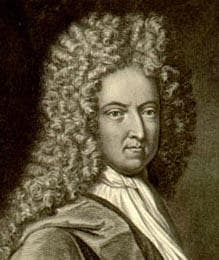
Daniel Defoe was an English writer, trader, journalist, pamphleteer and spy. He is most famous for his novel Robinson Crusoe, published in 1719, which is claimed to be second only to the Bible in its number of translations. He has been seen as one of the earliest proponents of the English novel, and helped to popularise the form in Britain with others such as Aphra Behn and Samuel Richardson. Defoe wrote many political tracts, was often in trouble with the authorities, and spent a period in prison. Intellectuals and political leaders paid attention to his fresh ideas and sometimes consulted him.







