BookBrief
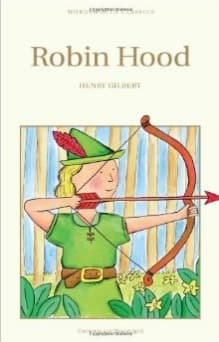
Robin Hood cover
Archivist's Choice

Robin Hood

Henry Gilbert (1912)

Genre

Fantasy / Children's / Historical Fiction / Young Adult

Reading Time

240 min

Key Themes

See below

Track Your Reading

Sign in to track this book

Join Robin Hood and his Merry Men as they outwit the Sheriff of Nottingham and Guy of Gisborne, fighting for justice and King Richard's return in Sherwood Forest.

Synopsis

Robin Hood, a skilled archer and nobleman unfairly declared an outlaw, finds refuge in Sherwood Forest. He gathers a loyal group of Merry Men, including Little John, Friar Tuck, and Will Scarlet. Together, they work to correct wrongs done by the corrupt Sheriff of Nottingham and other oppressive figures, famously taking from the rich to give to the poor. Their adventures involve daring escapes, clever disguises, and archery contests, often at the Sheriff's expense, as he tries to capture Robin. Robin's love for Maid Marian grows amidst their dangerous life, and they even help the minstrel Alan-a-Dale marry his true love. The story builds to King Richard the Lionheart's return from the Crusades. The King, not knowing Robin's true identity or the injustices he fights, initially hunts the outlaws. However, through a series of events and a direct meeting, Robin reveals the widespread corruption and the suffering of the common people. King Richard sees Robin's inherent goodness and sense of justice, pardoning him and his men, and restoring their lands and titles. Their time as outlaws ends, but the legend of Robin Hood continues, as he spends his final days in peace, remembered as the hero of Sherwood.
Reading time
240 min
Difficulty
Easy
Pacing
Moderate
Mood
Adventurous, Heroic, Whimsical, Moral
✓ Read this if...
You enjoy classic tales of heroism, adventure, and justice, with a focus on historical settings and moral themes.
✗ Skip this if...
You prefer gritty realism or complex, morally ambiguous characters over traditional heroic narratives.

Plot Summary

The Outlaw of Sherwood Forest

The story begins with Robin Hood, a skilled archer and noble yeoman, unfairly declared an outlaw by the corrupt Sheriff of Nottingham after a dispute over a deer in the King's forest. Forced to leave his home and lands, Robin goes into Sherwood Forest. There, he quickly becomes a leader, attracting other men who have suffered under Prince John and his greedy Sheriff. Among his first companions are Much, the Miller's son, and Will Scarlet, a skilled swordsman. Together, they promise to live by their own code: to take from the rich and give to the poor, and to resist the Normans, all while staying loyal to the true King, Richard the Lionheart, who is away on crusade.

Robin Hood and Little John

One day, while exploring the forest, Robin Hood finds a sturdy bridge over a brook. On the other side stands a very large man, Little John (though his real name is John Little, Robin reverses it as a joke). Neither will give way. A playful but intense duel follows, with Robin using his bow and Little John using a quarterstaff. After Little John knocks him into the stream, Robin laughs and admires the giant's strength and good humor. Seeing a similar spirit, Robin invites Little John to join his band of Merry Men. Little John quickly accepts, becoming Robin's most loyal and trusted helper, known for his strength and steady loyalty.

The Friar of Fountains Abbey

Robin Hood, hearing stories of a large and cheerful friar who cares more for eating and fighting than prayer, seeks out Friar Tuck near Fountains Abbey. Robin, in disguise, challenges the friar to carry him across a river. Tuck agrees, but halfway across, Robin reveals his identity and demands to be carried back. Tuck, angry but impressed by Robin's boldness, then throws Robin into the water. A battle of wits and strength follows, with both men proving their skill. Eventually, Robin, charmed by Tuck's lively spirit and his quarterstaff skills, convinces the friar to leave his abbey and join the Merry Men in Sherwood, where Tuck becomes their spiritual guide, cook, and a strong fighter.

The Sheriff's Traps and Robin's Escapes

The Sheriff of Nottingham, angry about Robin Hood's continued defiance and constant embarrassment, plans many ways to capture the outlaw. He often sets traps, such as organizing archery contests with attractive prizes, knowing Robin's pride in his skill will draw him out. At one such event, Robin, disguised as a common yeoman, wins the golden arrow but is recognized and must make a daring escape with his Merry Men. Another time, the Sheriff tries to ambush Robin after inviting him to a feast. However, Robin's network of spies and his own cleverness ensure he is always one step ahead, turning the Sheriff's traps against him and often leaving the Sheriff himself without his fine clothes and possessions.

Maid Marian and Alan-a-Dale

Maid Marian, a noblewoman and Robin Hood's beloved, is a spirited and brave woman who often risks her safety to help Robin and his cause. Their love is deep and real, providing a romantic center to Robin's outlaw life. Later, the Merry Men meet Alan-a-Dale, a minstrel whose beloved, Ellen, is being forced to marry an old, rich knight by her family. Robin Hood, always a champion of true love and justice, steps in. With help from Friar Tuck, who performs the marriage, and the Merry Men, who stop the forced wedding, Alan-a-Dale and Ellen are united, further solidifying Robin's reputation as a protector of the innocent and an enemy of injustice.

Guy of Gisborne's Pursuit

The Sheriff of Nottingham, desperate to get rid of Robin Hood, hires Guy of Gisborne, a well-known mercenary and skilled swordsman known for his cruelty and tracking ability. Guy of Gisborne becomes Robin's most personal and dangerous opponent, a dark reflection of Robin's own skill. Gisborne tracks Robin relentlessly through Sherwood Forest, leading to several tense encounters. In one memorable fight, Robin, disguised in Gisborne's distinctive horsehide cloak, manages to outwit and defeat Gisborne in a fierce duel, effectively removing one of his most persistent threats and using Gisborne's identity to further his own deceptions against the Sheriff.

King Richard's Return

After years away, King Richard the Lionheart finally returns to England from the Crusades, only to find his kingdom poorly managed and oppressed by his brother, Prince John, and his corrupt officials. Richard, often in disguise, travels his lands, seeing his people's suffering and hearing stories of the legendary outlaw, Robin Hood. Eventually, Richard, disguised as a humble monk, goes to Sherwood Forest, intending to test Robin Hood's loyalty and observe his group firsthand. Robin, always respectful of the true King, entertains the 'monk' and shares his ideas of justice, unaware of his guest's true identity.

The King's Revelation and Pardon

During his stay in Sherwood, King Richard sees the Merry Men's archery skills, their generosity to the poor, and their steady loyalty to the absent King. Impressed by Robin's noble spirit and his dedication to justice, Richard finally reveals his true identity to Robin Hood and his entire group. Robin, filled with joy and relief, kneels before his King. King Richard, recognizing Robin's inherent goodness and the need for his actions during his absence, grants a full pardon to Robin Hood and all his Merry Men. He restores Robin to his lands and titles, inviting him to serve in his royal court.

Life After Sherwood

After King Richard's pardon, Robin Hood, Maid Marian, Little John, Friar Tuck, and the rest of the Merry Men leave Sherwood Forest. Robin returns to his family lands, planning to live a peaceful life and serve the King in a more traditional role. However, the change from the freedom of the forest to the rules of court life and settled society proves hard for many. The Merry Men, used to their wild ways and the friendship of outlaw life, struggle to adjust. The peace and order, while welcome in some ways, lack the excitement and purpose they found in their fight against tyranny. Some find it hard to stop their outlaw habits.

Robin Hood's Final Days

Despite his pardon and restored status, Robin Hood finds the limits of settled life unbearable. He longs for the greenwood and the simple justice of his outlaw days. Eventually, he feels he must return to Sherwood Forest, drawn by an irresistible pull. As he ages, he falls ill. Seeking a cure, he goes to Kirklees Priory, where his aunt, the Prioress, is supposed to bleed him. However, driven by malice or fear of his past, she intentionally bleeds him to death. Before he dies, Robin, with his last strength, shoots an arrow from his window, asking to be buried where it falls. Little John carries out his final wish, marking the end of the legendary outlaw.

Principal Figures

Robin Hood

The Protagonist

From an unjustly outlawed yeoman, Robin transforms into a legendary figure, a symbol of hope and resistance, before ultimately finding a tragic end that solidifies his legend.

Little John

The Supporting

Introduced as a formidable opponent, Little John quickly becomes Robin's loyal companion, his character remaining steadfast in strength and loyalty throughout the narrative.

Friar Tuck

The Supporting

From a solitary, gluttonous friar, Tuck finds purpose and camaraderie with the Merry Men, becoming their spiritual and culinary anchor.

Maid Marian

The Supporting

Marian remains a steadfast and loving figure, a constant source of support and motivation for Robin, her character providing a stable emotional core.

Sheriff of Nottingham

The Antagonist

The Sheriff remains a static antagonist, consistently driven by greed and a desire to capture Robin, never learning from his repeated failures.

King Richard the Lionheart

The Supporting

Richard returns from his absence, reclaims his kingdom, and restores justice, validating Robin Hood's actions.

Guy of Gisborne

The Antagonist

Introduced as a dangerous hunter, Gisborne's arc culminates in a direct confrontation and defeat by Robin Hood, solidifying Robin's martial prowess.

Will Scarlet

The Supporting

Will Scarlet remains a steadfast and brave companion to Robin, his character consistently embodying loyalty and martial skill.

Alan-a-Dale

The Supporting

Alan-a-Dale's arc is brief but significant, serving to demonstrate Robin Hood's commitment to helping the oppressed and uniting true lovers.

Themes & Insights

Justice vs. Law

This theme looks at the conflict between the written law, enforced by corrupt officials like the Sheriff of Nottingham and Prince John, and a higher moral code of justice. Robin Hood, though an outlaw, acts with a strong sense of fairness, taking from the rich to give to the poor, and defending the innocent. His actions show that legal authority does not always mean moral rightness. For example, when he helps Alan-a-Dale marry Ellen, he breaks the law to ensure a fair outcome, going against the forced marriage arranged by a powerful lord.

For while the King is away, his laws are twisted by evil men. But there is a higher law, the law of kindness and right, which we shall uphold in this greenwood.

Robin Hood

Loyalty and Brotherhood

The bond among the Merry Men is a main theme, highlighting steady loyalty and friendship. Despite their different backgrounds, they are united by their dedication to Robin Hood and their shared cause. This loyalty extends to their absent King, Richard, whom they serve even when he is gone. Scenes like Little John refusing to leave Robin during an ambush, or the Merry Men always helping Robin when he is in danger (like at the archery contest), show this deep brotherhood. This theme contrasts sharply with the betrayal and self-interest shown by the Sheriff and Prince John.

We are brothers in arms, and no man shall stand alone while he has a Merry Man by his side.

Little John

Corruption of Power

The story clearly shows how power can corrupt, focusing on Prince John and the Sheriff of Nottingham. Their rule is marked by greed, oppression, and injustice, as they exploit common people through high taxes and unfair punishments. The Sheriff's constant attempts to capture Robin Hood are driven by a desire to keep his tyrannical power and get rich. This corruption is the very reason Robin Hood and his men are forced to become outlaws, creating a sharp contrast between the self-serving rulers and the selfless outlaws.

And so, the rich grew richer, and the poor grew poorer, all beneath the shadow of Prince John's greedy hand and his Sheriff's cruel whip.

Narrator

Freedom vs. Constraint

Sherwood Forest itself represents freedom, offering a safe place from the harsh laws and social rules of feudal England. The Merry Men choose a life of liberty in the greenwood over submitting to unfair authority. This theme is clear when Robin Hood and his men struggle to adjust to court life after King Richard's pardon; the structured, conventional world feels too restrictive compared to the wild freedom of the forest. Robin's eventual return to the forest, even in his final days, shows his longing for this complete freedom.

Better to live free beneath the green canopy of Sherwood than to be a slave in gilded chains.

Robin Hood

The Noble Outlaw

Robin Hood is the classic noble outlaw, a figure who, though outside the law, follows a higher moral code. He does not steal for personal gain but to redistribute wealth and correct injustices. His courtesy, honor, and loyalty to the true king set him apart from common criminals. This theme questions usual ideas of good and evil, suggesting that true nobility comes from one's actions and character, not their legal status. His actions, like ensuring Alan-a-Dale's marriage, show his commitment to fixing wrongs beyond just financial redistribution.

I am an outlaw, yes, but no thief. I take only from those who have too much, to give to those who have too little, and always in the name of King Richard.

Robin Hood

Plot Devices & Literary Techniques

Disguise

Characters frequently use disguises to achieve their goals or avoid capture.

Disguise is a frequently used plot device, primarily by Robin Hood and King Richard. Robin uses disguises (such as a butcher, a monk, or a simple yeoman) to infiltrate enemy territory, gather information, win contests, or escape capture. This device highlights his cunning and resourcefulness. King Richard also employs disguise upon his return to England to observe his kingdom firsthand and test Robin Hood's loyalty without revealing his royal identity. The use of disguise adds layers of intrigue and often leads to humorous or tense encounters.

The Archery Contest

A recurring event used by the Sheriff to trap Robin Hood.

The archery contest is a classic plot device in Robin Hood tales. The Sheriff of Nottingham, knowing Robin's unparalleled skill with the bow and his pride, frequently organizes these contests with tempting prizes (often a golden arrow) as a trap. Robin, unable to resist the challenge, inevitably attends in disguise. This device serves multiple purposes: it showcases Robin's extraordinary skill, provides opportunities for dramatic tension and daring escapes, and further highlights the Sheriff's persistent but ultimately futile attempts to capture the outlaw.

Forest as Sanctuary/Symbol

Sherwood Forest acts as both a physical refuge and a symbolic haven for freedom.

Sherwood Forest is more than just a setting; it is a crucial plot device that functions as a sanctuary, a hiding place, and a symbol of freedom and resistance. For Robin Hood and his Merry Men, it provides natural defenses against the Sheriff's forces, allowing them to operate outside the reach of corrupt law. Symbolically, it represents a world apart, where justice prevails according to Robin's code, in stark contrast to the oppressive 'civilized' world outside its borders. The forest enables their outlaw lifestyle and is integral to their identity.

The King's Absence

King Richard's long absence creates the conditions for Robin Hood's outlawry.

King Richard's prolonged absence on the Crusades is a foundational plot device. It directly creates the power vacuum and unchecked corruption that forces Robin Hood into outlawry. Without Richard's return, Prince John and the Sheriff would continue their tyranny, and Robin's actions would remain outside the law indefinitely. The anticipation of the King's return drives much of the narrative, providing a definitive endpoint for Robin's outlaw life and a clear resolution to the kingdom's troubles.

Critical analysis

Notable Quotes

For the Sheriff of Nottingham, albeit a great man and a powerful, was a cruel and grasping tyrant, who wrung the last penny from the poor folk of the countryside, and cared not how much misery he caused so long as his own coffers were full.

Describing the Sheriff's character and why Robin Hood opposes him.

It is not for us to question the ways of God, but to do our part with a good will, and leave the rest to Him.

Spoken by Friar Tuck, offering a perspective on faith and action.

And so Robin Hood, with his merry men, lived in the greenwood, taking from the rich and giving to the poor, and ever ready to right a wrong.

A classic summary of Robin Hood's mission and lifestyle.

A good bowman is worth a dozen men with swords, if he knows how to use his weapon and his wits.

Robin Hood discussing the value of archery and skill.

For what is a king without his people? A shepherd without his flock, and a poor one at that.

Little John reflecting on the true source of a ruler's power.

The forest is our friend, and will hide us from our foes, if we but know its secrets.

Robin Hood emphasizing the importance of knowing and utilizing their environment.

There are times when a man must choose between his own safety and the safety of others, and a true man will not hesitate.

A moral dilemma faced by one of the characters, highlighting heroism.

It is better to live free in the greenwood, even with danger, than to be a slave to injustice in the town.

Robin Hood expressing his preference for freedom over oppression.

He who makes a promise should keep it, though it cost him dear.

A principle of honor upheld by the characters.

Many a good deed is done in secret, and its reward is in the doing.

Friar Tuck on the nature of true generosity and virtue.

Let us not fight with anger, but with skill and a clear head, for anger blinds a man.

Robin Hood advising his men on how to approach conflict.

For a man may be rich in gold, yet poor in spirit, and a man may be poor in goods, yet rich in heart.

A reflection on the true meaning of wealth and poverty.

The common folk may have little power, but their hearts are true, and in their numbers lies a strength that even kings must heed.

Little John acknowledging the collective power of the common people.

Every man has his own path to follow, and some are straight and some are winding, but all lead to the same end.

A philosophical musing on destiny and individual journeys.

Quiz

Test Your Knowledge

Ready to see how well you understood this book? Take our interactive quiz with 10 questions.

10
Questions
~5
Minutes
?
Best Score

Key Questions (FAQ)

Henry Gilbert's 'Robin Hood' recounts the adventures of Robin Hood and his Merry Men, who live as outlaws in Sherwood Forest, stealing from the rich and giving to the poor. Their primary goal is to resist the tyrannical rule of the Sheriff of Nottingham and Guy of Gisborne while supporting the rightful King Richard during his absence.

About the author






