“The wind was a whetting stone on the ridge, sharpening the sound of the wind.”
— Early description of the harsh mountain environment.

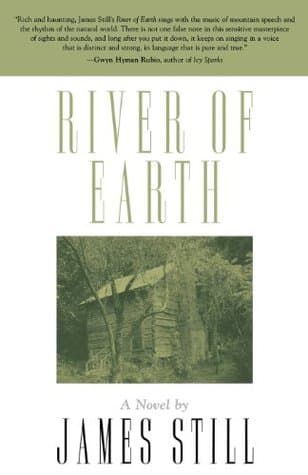
James Still (1940)
Genre
Literary Fiction / Historical Fiction
Reading Time
340 min
Key Themes
See below
Sign in to track this book
In 1920s Kentucky coal country, a young boy watches his family struggle between the harsh demands of the mines and the quiet strength of their mountain farm, enduring a world both difficult and unexpectedly beautiful.
The story begins with young Brice, the narrator, as his family gets ready to leave their small, unproductive mountain farm in Kentucky. His father, Brack, a man torn between the land and the promise of steady wages, decides to move them to a coal mining camp. His mother, Alpha, strongly resists, regretting the loss of their independence and the dangers of the mines. Brice, along with his younger sister Euly and baby brother Caudill, experiences the change as they pack their few belongings onto a wagon. They travel through the rough landscape, eventually reaching the crowded mining community, a sharp contrast to their farm's quiet. The family settles into a small, company-owned house, and Brack starts working in the dangerous coal seams, hoping for a better life for his children.
Life in the coal camp quickly becomes difficult. Brack works long, dangerous hours underground, often coming home tired and covered in coal dust. Alpha struggles to keep their home and feed her children with the small and unreliable income. Brice sees the close-knit but often tense community, marked by poverty, sickness, and the constant threat of mining accidents. He observes how temporary the camp is, with families always moving in and out, driven by changing coal demand and hard working conditions. Despite the difficulties, there are moments of simple joy and human connection, as neighbors share what little they have and children find ways to play in the bleak surroundings.
A major miners' strike stops work in the coal camp, pushing families into extreme poverty. Brack, like the other miners, stands firm, but the lack of wages means severe hunger for Alpha, Brice, Euly, and Caudill. Food becomes scarce, and Alpha must ration their dwindling supplies. Brice keenly feels the hunger and sees his parents' desperation. Strike leaders try to keep unity, but the company's actions, including bringing in strikebreakers, create tension and division. The family endures days of uncertainty and hardship, showing their vulnerability to economic forces beyond their control.
Unable to bear the hunger and uncertainty of the strike, Alpha convinces Brack to take the family back to her father's small, isolated farm. They make the hard journey, finding a temporary break from the coal camp's struggles. Life on the farm, though still difficult, offers a sense of stability and connection to the land that Alpha wants. Brice experiences farm life, helping with chores and enjoying nature's simple gifts. His grandfather, a quiet and independent mountain man, represents the values Alpha holds dear. This time allows the family to regain some strength, but Brack remains restless, often thinking about the mines and the promise of wages.
Despite the relative peace and food on the farm, Brack's desire for the financial stability of the mines is too strong. He grows restless, feeling the pull of wages that could provide more for his family than the farm ever could. Alpha, though sad to leave the land again, understands his drive. The family once again packs their few belongings, leaving the farm and Alpha's father behind. Brice sees his mother's quiet acceptance and his father's determined, though conflicted, resolve as they return to the coal camp, restarting the cycle of labor and uncertainty.
The family moves to a new coal camp, hoping for better chances, but conditions are much the same. Brice observes the familiar patterns of hard work, poverty, and constant danger. Brack continues his exhausting labor in the mines, while Alpha struggles to make ends meet and care for their children. The land is scarred by mining, and the air is often thick with coal dust. Brice witnesses the mountain people's strength, their ability to endure great hardship with quiet dignity, but also the toll this life takes on their bodies and spirits. The cycle of hope and disappointment continues in this new, yet familiar, place.
Tragedy strikes when Brice's younger brother, Caudill, gets sick. The rough living conditions, poor food, and lack of proper medical care in the mining camp lead to his worsening health. Alpha, despite her tireless efforts and deep love, cannot save him. Caudill's death is a devastating blow to the family, especially Alpha, who is overcome with grief. Brice, too young to fully understand, experiences the deep sadness and the somber rituals of death in their community. This loss highlights how fragile life is and the harsh realities families faced in the coal camps, where illness often had fatal results.
Caudill's death leaves Alpha deeply hurt and increasingly resentful of the mining life she believes caused his death. Her grief is clear, casting a shadow over the family. She becomes more withdrawn, her spirit dulled by sorrow, and her longing for the land grows stronger. Brack, also grieving, continues his work, feeling the need to provide for his remaining family. The unspoken tension between them grows, as Alpha's quiet despair contrasts with Brack's grim determination. Brice observes his mother's suffering, sensing her growing distance from the life Brack has chosen, and the family struggles to find a way forward amidst their deep loss.
As Alpha's grief for Caudill continues, her desire for a life rooted in the land becomes almost an obsession. She begins to talk more often about buying their own small farm, a place where her children could be safe and healthy, away from the dangers and poverty of the mines. This dream, though seemingly out of reach, gives her new purpose. Brice sees his mother's determination, watching how this vision of a farm brings her spirit back, even as Brack stays focused on the immediate need for wages. The dream of land represents not just independence, but also a chance for healing and a better future for their family.
The story ends with the family still caught in the cycle of moving between mining camps and wanting a stable life on the land. They are once again packing their belongings, looking for another chance, another place where Brack can find work and Alpha can pursue her dream of a farm. Brice, though still a child, has grown through watching his parents' struggles, their love, and their lasting strength. The ending offers no final answer, but instead a touching reflection on the ongoing fight of mountain families during the Depression era, always caught between the hard realities of industrial labor and the deep desire for independence and a connection to the earth.
The Protagonist
Brice matures from an innocent child to a more understanding observer, internalizing the complex struggles of his parents and community.
The Supporting
Alpha's initial resistance to the mines hardens into profound grief and a renewed, unwavering determination to secure a farm for her family.
The Supporting
Brack remains largely consistent in his drive to provide, though he shoulders the burden of his family's sacrifices and the consequences of his choices.
The Supporting
Euly's arc is less defined, serving primarily as a representation of childhood resilience amidst adversity.
The Supporting
Caudill's arc is tragically cut short, his death serving as a pivotal moment for the family, particularly Alpha.
The Supporting
The Grandfather remains a steadfast symbol of the mountain past, unchanging in his values.
This theme is central, showing the constant pull between the traditional, self-sufficient life on a farm and the wage-dependent, dangerous existence in the coal mines. Alpha wants the land, seeing it as a source of independence, health, and dignity. Brack, though connected to the land, needs cash wages to provide for his family, even if it means giving up freedom and safety. The family's repeated moves between farm and mining camp (e.g., leaving their farm, returning to grandfather's farm during the strike, then going back to the mines) show this ongoing, unresolved conflict.
“A body ain't free that ain't on his own land.”
The novel clearly shows the severe poverty mountain families faced during the Depression. Hunger, poor housing, and lack of medical care are constant, especially during the miners' strike when the family faces starvation. Despite these great difficulties, the characters show remarkable strength. Alpha's tireless efforts to feed and care for her children, Brack's strong commitment to working in the dangerous mines, and the community's quiet endurance in the face of tragedy (like Caudill's death) all highlight a determined spirit. They accept their situation with a dignity that goes beyond their material conditions.
“We lived on, day by day, knowing the hunger but not the giving up.”
The family's journey shows a repeated pattern of seeking a better life, only to meet new challenges and disappointments. Each move to a new mining camp or attempt to return to the land holds hope, which is always lessened by the hard realities of economic hardship, strikes, and personal tragedy. Brack's hope for steady wages meets dangerous work and strikes; Alpha's hope for a farm is always put off. This cycle is clear in their repeated moves between the farm and the mines, suggesting a never-ending struggle without a final solution.
“It seemed we were always leaving some place, always going to another.”
Despite the hardship, the novel highlights the dignity found in hard work and the deep love within the family. Brack's labor in the mines, though dangerous, is shown as an honorable effort to provide. Alpha's constant work at home and on the land is portrayed with great respect. The family's love for one another—Alpha's protective instincts, Brack's quiet devotion, Brice's watchful care for his siblings—is the foundation that supports them through great suffering. This love provides moments of warmth and connection amidst the bleakness, proving to be the most lasting force in their lives.
“There was a warmth in my mother's voice that made the cold room seem less cold.”
The story is told through the eyes of young Brice.
The use of Brice as a first-person narrator provides an intimate, immediate, and often innocent perspective on the harsh realities of mountain and mining life. His observations are keen but often without the explicit judgment or political commentary an adult might offer, allowing the reader to draw their own conclusions about the socio-economic conditions. This device creates a sense of authenticity and emotional impact, as the reader experiences the events through a child's vulnerable yet resilient lens, making the privation and beauty equally vivid and poignant.
The stark contrast between the natural world and the industrial world.
The land (the farm, the mountains) symbolizes independence, natural cycles, health, and a spiritual connection to ancestry. The mine, conversely, symbolizes dependence, danger, economic necessity, and the destruction of both the natural world and human spirit. This symbolic dichotomy is central to the novel's thematic core, particularly through Alpha's persistent yearning for the farm and Brack's grudging acceptance of the mine. The family's physical movements between these two settings reinforce their symbolic significance, highlighting the profound conflict within their lives and the broader cultural shift occurring in Appalachia.
The family's repeated pattern of moving between farm and mine.
The novel employs a cyclical structure, with the family repeatedly leaving the land for the mines, experiencing hardship, and then longing or briefly returning to the land, only to be drawn back to the industrial world. This structure underscores the inescapable nature of their economic plight and the enduring conflict between their desires and their necessities. It emphasizes that for these mountain families, there is no easy escape or definitive resolution, but rather a continuous struggle, a cycle of hope and disappointment that defines their existence.
Authentic use of Appalachian language.
Still masterfully employs the vivid and distinctive dialect of Appalachian mountain speech. The characters' dialogue is rich with regionalisms, unique sentence structures, and a poetic cadence that grounds the story firmly in its setting. This device not only adds authenticity and local color but also reveals character, establishes a strong sense of place, and subtly conveys the cultural values and worldview of the mountain people. It allows the reader to hear the voices of the characters directly, enhancing the immersive quality of the narrative and preserving a vital aspect of Appalachian heritage.
“The wind was a whetting stone on the ridge, sharpening the sound of the wind.”
— Early description of the harsh mountain environment.
“Living in the mountains was like living in a deep well. You could look up and see the sky, but you couldn't see the world outside.”
— Reflecting on the isolation of mountain life.
“There was always a hunger in the mountains, a hunger that gnawed at the bone.”
— Describing the pervasive poverty and hardship.
“A man's life was like a river, always flowing, always changing, but always going somewhere.”
— A philosophical reflection on the journey of life.
“The earth was a hard master, and it gave up its bounty grudgingly.”
— Referring to the difficulty of farming and survival.
“Hope was a small bird, easily frightened, but it always came back.”
— A poignant observation on resilience despite adversity.
“The past was like a shadow, always following, always there, even when you tried to outrun it.”
— Reflecting on the inescapable influence of history and memory.
“Silence was a sound in the mountains, a sound that spoke of loneliness and peace.”
— Describing the unique atmosphere of the remote setting.
“Work was a prayer in the mountains, a way of asking for sustenance.”
— Highlighting the spiritual aspect of labor for survival.
“The mountains held their secrets close, like a miser with his gold.”
— Personifying the enigmatic and enduring nature of the mountains.
“Fear was a cold knot in the belly, tightening with every turn of the road.”
— Conveying the constant apprehension faced by the characters.
“There was a rhythm to the mountains, a slow, patient beat that measured out the days.”
— Observing the timeless and cyclical nature of life in the mountains.
“Home was not a place, but a feeling, a warmth that lingered in the heart.”
— A deeper understanding of what 'home' truly means in a transient life.
“The future was a distant ridge, always visible but never quite reached.”
— Expressing the elusive and often unfulfilled hopes for a better future.
Ready to see how well you understood this book? Take our interactive quiz with 10 questions.







