“The city was a beast, and he was just one more morsel in its maw.”
— Describing the protagonist's feeling of insignificance in New York City.

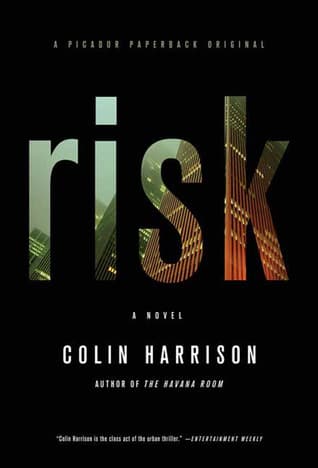
Colin Harrison (2009)
Genre
Thriller / Mystery
Reading Time
150 min
Key Themes
See below
Sign in to track this book
A Manhattan insurance lawyer investigates a socialite's son's violent death, uncovering secrets involving a Czech hand model and Christmas ornaments in a volatile city.
George Young, a meticulous lawyer for the firm Corbett & Young, is called by co-founder Mrs. Corbett. Frail and terminally ill, Mrs. Corbett asks George to find out what really happened to her son, Roger Corbett, who supposedly died by suicide two years earlier. Despite the official ruling, she believes Roger was murdered and wants George to find the truth before she dies, offering a large sum for his help. George, initially hesitant to go beyond his legal role, agrees out of duty and growing curiosity.
George starts by reviewing police reports and Roger's belongings, finding little beyond the official suicide ruling. His first real lead comes from Mrs. Corbett's vague mention of a 'foreign girl.' Using Roger's financial records, George identifies Eliska, a Czech hand model, as Roger's mistress. He finds her in a modest apartment. Their first meeting is tense. Eliska is guarded and avoids questions, giving only small details about her relationship with Roger, portraying him as troubled but generous. George feels she is holding back crucial information, which increases his suspicion.
During a later, more relaxed meeting, Eliska reveals a key detail: Roger had given her a small, carved wooden box filled with unusual Christmas ornaments shortly before he died. He told her to keep it safe and not open it, implying its contents were important. Eliska, despite her initial hesitation, shows George the box. The ornaments seem harmless, but the secrecy around them interests George. He suspects the box, or what it represents, is key to Roger's death, and Eliska's careful handling of it suggests she understands its importance, even if she doesn't fully grasp its dangers.
George looks deeper into Roger's life, talking to former colleagues and associates. He learns that Roger, despite his family's wealth, liked risky ventures and was involved in a shadowy world outside corporate offices. George discovers Roger's connection to a network dealing in stolen art and antiquities, often involving international travel and illegal transactions. This information paints a clearer picture of Roger: not just a troubled heir, but a man deeply involved in dangerous, illegal activities. The Christmas ornaments now seem less like trinkets and more like potential clues or coded messages related to this illicit trade.
As George continues to question Eliska, her tough exterior begins to break. He realizes she knew more about Roger's illegal activities than she first said. She admits Roger often used her to carry small, seemingly innocent packages, and that she knew about his dealings with unsavory people. Her fear is clear, suggesting she understands the real danger linked to the box of ornaments and Roger's past. George sees that Eliska is not just a grieving mistress but a potential target, caught in the dangerous aftermath of Roger's life and death, making him more protective of her as his investigation continues.
George re-examines the box of ornaments closely. He notices a slight flaw in the craftsmanship and, after careful handling, finds a hidden compartment. Inside, he finds not more ornaments, but a microfiche containing encrypted financial ledgers and coded messages. This discovery confirms his suspicions: the box was a dead drop, and the ornaments were a clever disguise. The microfiche details a complex web of money laundering and illegal art transactions, implicating powerful figures in the art world and possibly within Corbett & Young, suggesting Roger's death was not a simple suicide.
George works hard to decipher the microfiche. With Eliska's help in translating some of Roger's cryptic notes, they piece together the full scope of the operation. The ledgers show that Roger was not just a participant but was trying to expose a major art smuggling ring, one that reached into the highest levels of New York society. Shockingly, the evidence points to Henderson, a senior partner at Corbett & Young, as the mastermind, using the firm's legitimate operations as a cover. Roger's 'suicide' was a planned murder to silence him before he could expose Henderson.
With clear evidence, George confronts Henderson. Henderson, at first pretending ignorance, quickly drops his act, showing his ruthless nature. He admits to arranging Roger's murder, fearing exposure. Henderson tries to intimidate George into handing over the microfiche, but George refuses. The confrontation escalates, and Henderson, desperate to protect his empire, tries to kill George. A tense struggle follows, with George barely escaping Henderson's grasp, now a target himself. He realizes the full extent of the danger he and Eliska are in, understanding that Henderson will stop at nothing to get the evidence back.
George and Eliska, now united against a common enemy, go on the run, seeking a safe way to reveal the evidence. Henderson's operatives pursue them through Manhattan's streets. Using George's legal skill and Eliska's street smarts, they manage to evade their pursuers. George contacts a trusted colleague, an old friend from the District Attorney's office, and arranges a secure handover of the microfiche. With the evidence finally in the hands of law enforcement, Henderson is arrested, and the art smuggling ring is broken up. George ensures Eliska's safety and privacy.
Mrs. Corbett, told the truth and about Henderson's arrest, finds peace in her final days, grateful to George for fulfilling her last wish. Roger's name is cleared, and the firm, though shaken, begins to recover. George, no longer just a meticulous insurance lawyer, has changed greatly from the experience. He has faced danger, solved a complex conspiracy, and protected Eliska. He thinks about the fine line between risk and reward, honesty and corruption, and the unexpected depths of human character he met. His view of his career and life has shifted, leaving him with a deeper understanding of justice.
The Protagonist
George transforms from a by-the-book lawyer into an amateur detective, confronting danger and moral ambiguity, ultimately finding a new purpose beyond his initial professional scope.
The Supporting
Eliska evolves from a secretive, fearful witness into a courageous and vital ally for George, actively participating in uncovering the truth and ensuring justice.
The Supporting
Mrs. Corbett's arc is one of seeking and ultimately finding peace and closure regarding her son's death before her own passing.
The Mentioned
Roger's arc is revealed retrospectively, showing his transformation from a participant in illegal activities to someone attempting to expose them, ultimately leading to his murder.
The Antagonist
Henderson's arc involves his exposure and downfall as George uncovers his criminal activities and his role in Roger's murder.
The novel explores various forms of risk: the financial risks of illegal ventures, the personal risks taken to find truth, and the risks in human relationships. Roger Corbett's involvement in art smuggling shows the appeal and danger of high-stakes crime. George Young takes big personal and professional risks by investigating a murder, putting him against powerful figures. Eliska's life as an immigrant and her involvement with Roger also represent constant personal risk. The title itself highlights how risk is always present in each character's life and the choices they make.
““Risk was everywhere, in every decision, every secret, every breath taken in the city.””
Corruption is a main theme, appearing in the illegal art smuggling ring and the moral decay of characters like Henderson, who uses a respected law firm to cover criminal activities. Deception is woven throughout the story, from Roger's double life to Eliska's initial evasiveness and Henderson's elaborate cover-up. George's journey is an unraveling of layers of lies and hidden motives. The novel suggests that corruption can thrive even in seemingly honest institutions, hidden beneath a respectable appearance, challenging the protagonist's initial view of the world.
““The city was a monument to ambition, and where ambition thrived, so did its shadows.””
At its core, the novel is a search for justice and truth, driven by Mrs. Corbett's dying wish. George Young, initially a lawyer focused on facts within a legal framework, must confront a reality where official truths are often false. His pursuit of Roger's killer is a moral duty, going beyond his professional tasks. The discovery of the microfiche and the exposure of Henderson's crimes show truth overcoming deception and the eventual, though hard-won, achievement of justice, bringing closure to Mrs. Corbett and exposing a dangerous criminal.
““Some truths refused to stay buried, no matter how deep the grave.””
Characters in 'Risk' change significantly or deal with multiple identities. Roger Corbett lived a double life, one as a wealthy heir and another as a participant in a criminal underworld. Eliska, first seen as a simple mistress, shows layers of resilience and resourcefulness. Most notably, George Young changes from a meticulous, risk-averse lawyer to an amateur detective capable of courage and decisive action. His journey forces him to redefine himself and his understanding of his own abilities, leaving him fundamentally changed by the dangerous events he experiences.
““He had walked into a world he never knew existed, and in doing so, had become someone he never thought he could be.””
A seemingly innocuous box of Christmas ornaments that conceals vital evidence.
The box of Christmas ornaments acts as a classic MacGuffin, driving much of the plot's early mystery. Initially, its significance is unclear, but its secrecy and Roger's instructions to Eliska immediately establish it as important. As the story progresses, it's revealed to contain a hidden compartment with crucial evidence (the microfiche), transforming it from a mere curiosity into the central piece of the puzzle. It serves as both a literal and symbolic key to unlocking the truth behind Roger's death and the larger criminal conspiracy.
Mrs. Corbett's terminal illness and her last wish to uncover the truth about her son's death.
Mrs. Corbett's imminent death creates a strong sense of urgency and moral imperative for George's investigation. Her request is more than a legal assignment; it's a personal plea that compels George to go beyond his usual professional boundaries. This device not only kickstarts the plot but also adds emotional depth, framing the entire investigation as a race against time and a final act of maternal love and justice. It motivates George and gives his actions a higher purpose than just solving a case.
Roger Corbett's secret involvement in an art smuggling ring, hidden from his family and firm.
Roger Corbett's double life as a privileged heir and a participant in a criminal enterprise is a crucial plot device. It creates layers of deception and mystery, making his death initially appear as a suicide, while the truth is far more complex. This device allows for the slow reveal of his true activities and connections, gradually deepening the conspiracy. It also highlights the theme of corruption lurking beneath a respectable facade and provides a compelling reason for his murder, as his two worlds inevitably collided.
“The city was a beast, and he was just one more morsel in its maw.”
— Describing the protagonist's feeling of insignificance in New York City.
“Every secret had a price, and sometimes the currency was more than just money.”
— Reflecting on the consequences of hidden information.
“He learned that the most dangerous lies were the ones you told yourself.”
— A realization about self-deception and its perils.
“The past wasn't dead; it was just waiting for the right moment to ambush you.”
— Commenting on the lingering impact of past events.
“Fear was a kind of currency, and the powerful knew how to spend it.”
— Observing how fear is manipulated by those in control.
“In a city of eight million stories, some were meant to stay buried.”
— Considering the hidden narratives within a large metropolis.
“The line between ambition and obsession was often invisible until it was too late.”
— Musing on the dangers of unchecked drive.
“He felt like a man walking a tightrope, with the entire world watching and waiting for him to fall.”
— Describing the intense pressure and scrutiny faced by the protagonist.
“Money didn't buy happiness, but it certainly bought options, and options were power.”
— A cynical view on the role of wealth in society.
“The silence in the room was heavier than any spoken word, thick with unspoken accusations and dread.”
— Describing a tense and uncomfortable atmosphere.
“Justice was a luxury, and not everyone could afford it.”
— A bitter observation about the unequal distribution of justice.
“He understood then that sometimes the only way out was further in.”
— A realization about facing challenges head-on.
“The truth was a slippery thing, constantly changing shape depending on who was holding it.”
— Reflecting on the subjective nature of truth.
“Every choice was a gamble, and the stakes kept getting higher.”
— Commenting on the increasing risks faced by the characters.
Ready to see how well you understood this book? Take our interactive quiz with 10 questions.

Colin Harrison is an American author known for his gritty, noir-infused crime fiction. His novel "Risk" was a finalist for the Edgar Award for Best Paperback Original, showcasing his talent for complex plots and morally ambiguous characters. Harrison's writing often explores the dark underbelly of New York City, earning him a reputation as a master of suspense.







