“The past is a foreign country; they do things differently there.”
— A reflection on the historical setting and the differences in societal norms.

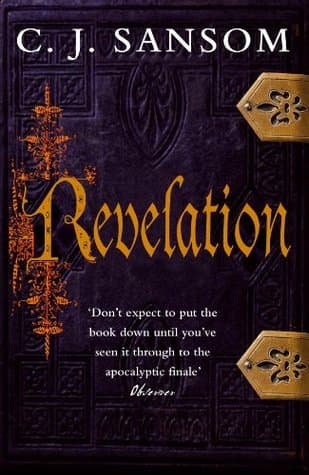
C.J. Sansom (2008)
Genre
Fantasy / Young Adult / Romance
Reading Time
917 min
Key Themes
See below
Sign in to track this book
In 1543, as King Henry VIII pursues Catherine Parr and religious tensions rise, lawyer Matthew Shardlake uncovers a conspiracy of murders, forcing him to confront Tudor superstition and evil.
The story begins in London in spring 1543. Lawyer Matthew Shardlake is still recovering from past events when his former assistant, Jack Barak, now working for Richard Rich, visits him. Barak tells Shardlake that their friend, Roger Elliard, a master glazier and Protestant, was found murdered in his workshop, his throat slit. Authorities, especially the Sheriff of London, quickly call it a robbery. However, Shardlake, knowing Elliard's careful nature and the lack of valuable stolen items, suspects more. He feels he must investigate Elliard's death, given the rising religious tensions under King Henry VIII.
Shardlake and Barak start their unofficial investigation. They learn that Roger Elliard had been visiting Bedlam, the asylum. There, they find Elliard often visited Adam Kite, a disturbed teenager with an obsessive knowledge of the Book of Revelation. Adam, showing signs of religious mania, had been writing cryptic prophecies and drawing unsettling images. Shardlake finds a copy of Revelation in Elliard's workshop, with notes referring to Adam's writings. This link makes Shardlake suspect Elliard's murder is more complex than a robbery, possibly connected to the religious climate.
The investigation turns darker with a second victim: Brother Gabriel, a former monk with conservative Catholic views, found dead in his home. His body has a gruesome mutilation – his tongue cut out. This detail reminds Shardlake and Barak of a plague described in the Book of Revelation. The methodical nature of the killings and the specific mutilations point to a serial killer, possibly driven by religious fanaticism or a twisted interpretation of biblical prophecy. Fear spreads in London, with whispers of witchcraft and demonic possession.
While following leads, Shardlake becomes involved with Lady Catherine Parr, whom King Henry VIII is courting to be his sixth wife. Catherine is known for her reformist beliefs, and her potential marriage to Henry is a major political and religious issue at court. Shardlake discovers that Roger Elliard had done glazing work for Lady Catherine and that she is interested in Protestant ideas. This connection suggests the murders might be tied to the power struggles and religious factions around the King, making Shardlake's dangerous inquiry even more complicated.
The situation worsens when Adam Kite, the young prophet from Bedlam, escapes. Before his escape, Shardlake had questioned him, getting fragmented, disturbing insights into Adam's visions. After Adam's disappearance, a new prophecy, in Adam's handwriting, is found. Shardlake and Barak interpret this prophecy as foretelling the next victim, using imagery directly from Revelation. Adam's escape and his apparent ability to predict or influence the murders make him both a potential suspect and a terrified pawn in a larger, darker game, raising the stakes.
As Adam's prophecy predicted, the killer strikes a third time. The victim is a wealthy merchant, Master Fitzwilliam, found dead with a live serpent inside his body, a gruesome detail from the Book of Revelation. The horror and calculated nature of the murder send fear through London. Authorities are increasingly confused and pressured, while Shardlake and Barak realize they are dealing with an intelligent, meticulous killer using Revelation as a blueprint. Public fear of witchcraft and demonic influence grows, threatening mass hysteria.
Shardlake, with Barak's help, connects the victims, their religious affiliations, and the specific mutilations to the prophecies in the Book of Revelation. He realizes the killer targets individuals who, in their twisted view, represent the 'unworthy' or 'sinful' as described in the apocalyptic text. Through investigation, questioning witnesses, and looking into the victims' pasts, Shardlake starts to form a profile of the killer. He suspects someone with deep religious knowledge, a strong grievance, and access to the victims, someone who sees themselves as a divine instrument of judgment.
The search for Adam Kite intensifies, as he holds important information. Shardlake and Barak eventually find Adam, who is in extreme distress and fear. Adam, though disturbed, seems more like a manipulated victim than a cold-blooded killer. He reveals fragments of information, hinting at a 'Master' who has guided him, using his visions and religious fervor for dark purposes. Adam's testimony, though disjointed, confirms Shardlake's suspicion that the boy is being exploited, and a more cunning person is orchestrating the murders.
As Shardlake investigates, he uncovers a political dimension to the murders. The killer's ultimate goal, or a key outcome of their actions, appears to be discrediting Lady Catherine Parr. By linking the reformist-sympathetic Catherine to religious killings and 'demonic' influence, the conservative court faction hopes to turn King Henry VIII against her, preventing their marriage and stopping Protestant reform. The serial killer, therefore, is not just a lone fanatic but a tool in a larger, dangerous court game, with powerful figures controlling events.
Shardlake, using his deduction and gathered clues, identifies the true mastermind behind the Revelation murders. The killer is not Adam Kite, but a manipulative and fanatical person who has exploited Adam's religious fervor and visions. The climax involves a tense confrontation where Shardlake, often with Barak, faces the killer. The killer's full motives are revealed – a mix of extreme religious zealotry, personal grievance, and a desire to purge England of what they see as heresy, all hidden behind the prophecies of the Book of Revelation. The scene is dangerous, putting Shardlake's life at risk.
After a perilous struggle, the killer is caught. The immediate threat to London ends. However, the resolution is mixed. Political schemes at court remain, and while Lady Catherine Parr's position is somewhat secure, the dangers of religious extremism and the fragility of justice in Tudor England are clear. Shardlake, though solving the case, is deeply affected by the horrors he witnessed and the moral complexities of the investigation. The experience reinforces his cynical view of power and religious fanaticism, leaving him with lasting emotional and psychological scars.
The Protagonist
Shardlake continues to grapple with his past traumas and the moral compromises of his profession, solidifying his resolve to pursue justice even when it puts him in danger.
The Supporting
Barak continues to mature, learning to balance his cynical pragmatism with a growing respect for Shardlake's moral compass.
The Supporting
Adam moves from being a confined, prophetic figure to a manipulated escapee, revealing his vulnerability and innocence.
The Supporting
Catherine Parr's character highlights the precarious position of powerful women in Tudor society and the political stakes of religious reform.
The Mentioned
His death sets the entire plot in motion, revealing the dangers of the era.
The Mentioned
His gruesome death confirms the pattern of the serial killer, escalating the mystery.
The Mentioned
Henry's actions and desires drive the political backdrop against which the murders occur.
The Mentioned
Cranmer represents the ongoing struggle for religious reform, a backdrop to the central mystery.
The Supporting
Rich continues to embody the ruthless ambition and moral decay prevalent in Tudor politics.
The novel explores the destructive power of religious extremism in Tudor England. The killer's actions stem from a fanatical interpretation of the Book of Revelation, leading to horrific violence in the name of divine judgment. This theme appears in Adam Kite's manipulated fervor, the killer's twisted motives, and the broader societal fear of heresy and witchcraft. The tension between Catholic and Protestant factions at court, and the dangers faced by those with 'unorthodox' beliefs, show how faith can be twisted to justify brutality. The murders result from a mind consumed by apocalyptic visions and a desire to 'cleanse' the world.
“For what else would the Tudor mind make of a serial killer...?”
Shardlake's search for justice is often hindered by the arbitrary nature of law and power under Henry VIII. The quick dismissal of Roger Elliard's murder as a simple robbery, the manipulation of evidence, and political interference in investigations all show how fragile true justice is. Shardlake, with his strong moral compass, often fights not just the killer, but also corrupt legal and political systems. Innocent people, like Adam Kite, are easily exploited, while powerful figures can act with little consequence, highlighting the deep injustices of the era.
“Justice, in this kingdom, was a fragile thing, easily bent by the powerful.”
The novel shows how power corrupts, both in court and in smaller areas of influence. King Henry VIII's absolute power shapes the religious and political climate, creating fear and opportunism. Figures like Richard Rich show how people can gain power by betraying others and prioritizing self-interest over morality. The political manipulation behind the Revelation murders, aimed at discrediting Lady Catherine Parr, demonstrates how power struggles can directly lead to violence and the exploitation of vulnerable people. The pursuit of power often justifies terrible acts in the eyes of those who hold it.
“Power, Shardlake knew, was a hungry beast, and it devoured conscience without a trace.”
Adam Kite's character and his connection to the Book of Revelation raise questions about madness, religious fervor, and prophecy. Is Adam truly mad, divinely inspired, or a tool for someone else's evil? The novel explores how the line between spiritual insight and mental illness can blur, especially in a superstitious time. The prophecies, whether real or manipulated, have tangible, terrifying consequences, influencing the killer's actions and public perception. This theme examines how belief systems, particularly apocalyptic ones, can shape reality and drive human behavior.
“The devil, they said, could speak through the mouths of the mad, and make them utter truths they did not understand.”
The biblical text serves as the literal guide for the serial killer's actions.
The Book of Revelation functions as the central plot device, providing the thematic and structural framework for the murders. The killer meticulously recreates the plagues and judgments described in the biblical text, using specific imagery and mutilations for each victim. This device creates a terrifying sense of predictability for Shardlake, as he must interpret the prophecies to anticipate the killer's next move. It also heightens the suspense and horror, as the killer's actions are imbued with a distorted sense of divine purpose, leading to widespread fear of the supernatural and the end of days.
A mentally ill young man whose visions are central to the mystery.
Adam Kite serves as a crucial plot device, acting as a link between the victims and the killer's motives. His prophetic writings and visions, though born of mental illness, provide Shardlake with invaluable, albeit cryptic, clues. He is both a victim and a key to solving the case, a manipulated innocent whose mind has been twisted by the killer. His escape from Bedlam and subsequent warnings drive the narrative forward, forcing Shardlake to race against time to prevent further atrocities and understand the true nature of his disturbed prophecies.
The court's power struggles create the dangerous backdrop for the murders.
The intense political intrigue and religious factionalism at King Henry VIII's court serve as a powerful plot device, adding layers of complexity and danger to the murder investigation. The struggle between Protestant reformers (like Catherine Parr and Cranmer) and conservative Catholics creates a volatile environment where the murders can be exploited for political gain. This device elevates the stakes, showing that the killer is not merely a lone fanatic, but potentially a pawn in a larger game, with powerful figures willing to use any means to achieve their political and religious objectives. It forces Shardlake to navigate a treacherous landscape beyond just solving the crimes.
“The past is a foreign country; they do things differently there.”
— A reflection on the historical setting and the differences in societal norms.
“Fear is a powerful weapon, but it cuts both ways.”
— Discussing the use of fear by those in power and its potential repercussions.
“Even in the darkest times, hope can be found in the most unexpected places.”
— A character finding a glimmer of optimism amidst widespread despair.
“Love is not a choice, but a recognition.”
— A character realizing their deep feelings for another, beyond their initial intentions.
“Truth, like light, will always find a way to break through the darkness.”
— A belief held by a character investigating hidden secrets and conspiracies.
“The greatest battles are often fought within oneself.”
— A character struggling with internal conflict and moral dilemmas.
“Sometimes, the only way to move forward is to let go of the past.”
— A character accepting a loss and deciding to embrace a new future.
“Knowledge is a dangerous thing, especially when wielded by the ignorant.”
— A warning about the misuse of information and its potential for harm.
“Every choice we make ripples through time, shaping our destiny.”
— A character contemplating the consequences of their actions on their future.
“Beauty can hide the most terrible truths.”
— A character discovering that an outwardly beautiful setting or person conceals dark secrets.
“The world is not as it seems; there are wonders and horrors beyond our understanding.”
— A character encountering a supernatural element that challenges their perception of reality.
“Even the smallest act of kindness can ignite a revolution.”
— A minor gesture of compassion leading to significant change or resistance.
“Loyalty is a double-edged sword; it can protect you or betray you.”
— A character dealing with shifting allegiances and the complexities of trust.
“To truly live, one must first confront their own mortality.”
— A character facing a life-threatening situation and finding a new appreciation for existence.
Ready to see how well you understood this book? Take our interactive quiz with 10 questions.

C.J. Sansom is a celebrated author of historical fiction, best known for his Shardlake series. His meticulously researched novels, including "Revelation" and "Lamentation," vividly bring Tudor England to life. Sansom holds a PhD in history, lending an authentic depth to his compelling narratives.







