“It wasn't that he disliked the sea; it was simply that he preferred to deal with the things that stayed put.”
— Spenser reflecting on his preference for land-based problems.

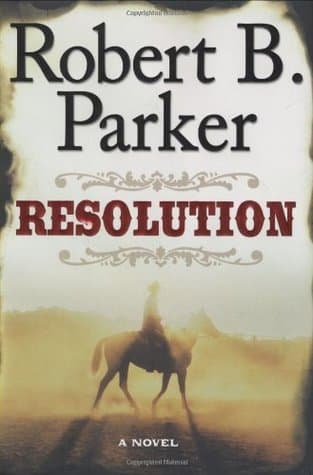
Robert B. Parker (2008)
Genre
Historical Fiction / Mystery
Reading Time
290 min
Key Themes
See below
Sign in to track this book
In the raw town of Resolution, Everett Hitch, an ex-Wells Fargo agent, gets caught in a war between a copper mine owner and ranchers, forcing him and Virgil Cole to create their own justice.
After the violent events in Appaloosa, Everett Hitch rides west, arriving in the dusty town of Resolution. The town has mostly saloons and brothels, with little established business or law. Hitch, practical and observant, quickly assesses the place. He gets a job as a lookout at Amos Wolfson's Blackfoot Saloon, a spot that lets him watch the town's early power struggles. His reputation and quiet authority are known, or quickly established, as he settles into this new, lawless frontier, seeking some peace after past conflicts.
At the Blackfoot Saloon, Everett Hitch's role soon goes beyond just watching for trouble. He quietly becomes a protector for the women working there, especially the young prostitute, Cat. He shows a calm but firm resolve against anyone who would exploit or harm them. Hitch's presence deters trouble, and his measured responses to small problems quickly make him a respected authority in the saloon. He carries his eight-gauge shotgun, a sign of his readiness to enforce his own justice in a town without formal law.
The peace at the Blackfoot Saloon ends with Koy Wickman's arrival. Wickman is a ruthless enforcer for Eamon O'Malley, the powerful owner of the local copper mine. Wickman tries to show O'Malley's power over Resolution, specifically targeting the saloon and its women. Hitch, however, stands firm. In a tense moment, Hitch, with his usual calm and deadly skill, disarms and humiliates Wickman. This removes the immediate threat and sends a clear message that he will not let O'Malley's men dictate terms. This action solidifies Hitch's reputation as a man not to be challenged.
Despite his success with Koy Wickman, Everett Hitch knows the conflict with Eamon O'Malley is not over. Tensions continue, and Hitch is relieved when his long-time friend and partner, Virgil Cole, arrives in Resolution. Cole's presence instantly changes things, giving Hitch a trusted ally who shares his moral code and fighting ability. Their reunion means the forces of order are stronger against O'Malley's growing influence, and their combined presence makes Resolution a tougher challenge for O'Malley's plans.
Eamon O'Malley, the mine owner, increases his efforts to control Resolution. He systematically buys the town's few businesses, often through threats, and pressures local ranchers to sell their land. O'Malley wants complete economic and political control over the region, consolidating his power and removing any opposition to his mining. His actions show a clear disregard for the community and a willingness to use any means to get what he wants, setting him on a direct path against Hitch and Cole.
Facing Eamon O'Malley's aggressive tactics, the independent ranchers around Resolution find common ground in their shared threat. They know O'Malley's expansion will destroy their livelihoods. This loose group begins to organize a resistance. They seek to protect their land and independence from the mine owner. Their growing defiance counters O'Malley's power, setting the stage for a larger conflict that Hitch and Cole become central to.
As the conflict grows, Everett Hitch and Virgil Cole are increasingly drawn into the war between Eamon O'Malley's men and the local ranchers. Guided by their strong sense of justice and their desire to protect the vulnerable, they naturally side with the ranchers. They become leaders and strategists for the resistance, using their experience in maintaining order and fighting to counter O'Malley's larger numbers. Their presence encourages the ranchers and gives strength to the opposition.
The confrontation between O'Malley's forces and the ranchers, supported by Hitch and Cole, intensifies. There are several skirmishes and violent acts, as O'Malley's hired guns try to scare the ranchers and take their property. Hitch and Cole lead the resistance in defending their land. These encounters involve ambushes, shootouts, and sabotage, each raising the tension and bringing the groups closer to full war. Resolution's lawless nature means these conflicts happen quickly and brutally, with no outside authority to intervene.
The conflict ends in a major standoff. Hitch and Cole, with the united ranchers, decide to take the fight directly to Eamon O'Malley's base—the copper mine. This move aims to cripple O'Malley's operations and end his rule. They meticulously prepare for this fight, with Hitch and Cole using their experience to plan their attack, anticipating O'Malley's defenses and his gunmen's tactics. The stage is set for a final, violent showdown that will decide the future of Resolution.
The main battle happens at the copper mine. Hitch and Cole, leading the ranchers, fight a fierce and bloody conflict against O'Malley's many, well-armed men. The fight is chaotic and brutal, with casualties on both sides. Hitch and Cole show their exceptional combat skills, planning, and courage, turning the tide against O'Malley's superior numbers. The conflict tests their resolve, their friendship, and their ability to bring order to a lawless land, leading to the defeat of O'Malley's forces and a fragile peace.
The Protagonist
Hitch attempts to find peace after past violence, but ultimately embraces his role as a bringer of justice, solidifying his bond with Virgil Cole.
The Protagonist
Cole joins Hitch, reinforcing their partnership and proving his unwavering loyalty in the face of escalating conflict.
The Antagonist
O'Malley attempts to dominate Resolution but ultimately faces his downfall at the hands of Hitch and Cole.
The Supporting
Wickman attempts to assert dominance but is swiftly defeated by Hitch, demonstrating the limits of O'Malley's brute force.
The Supporting
Cat finds a measure of safety and respect under Hitch's protection, representing the hope for a more ordered society.
The Supporting
Wolfson transitions from a cautious observer to a quiet supporter of Hitch and Cole's efforts to bring stability.
The Supporting
The ranchers evolve from isolated individuals to a unified, determined force for self-preservation, finding leadership in Hitch and Cole.
The main theme is about creating justice where there is no formal law. Everett Hitch and Virgil Cole follow their own strict moral code, protecting the weak and punishing the wrongdoers when no other authority exists. This is clear in Hitch's immediate protection of the women at the Blackfoot Saloon and his quick, decisive handling of Koy Wickman. It shows that personal honor can replace institutional law in the untamed West. Their actions define justice in Resolution.
“In a place where law and order don’t exist, Hitch and Cole must make their own, guided by their sense of duty, honor, and friendship.”
Eamon O'Malley's strong desire for land and resources drives the central conflict, showing the destructive results of unchecked power. His willingness to use threats, violence, and economic pressure to reach his goals highlights how ambition can corrupt and endanger a whole community. O'Malley's actions, from buying businesses to threatening ranchers, lead directly to the violent confrontation. This proves that power used without ethics brings its own downfall. His desire for control ultimately isolates him and leads to his defeat.
“He could almost smell trouble beginning to cook . . . .”
The lasting friendship and loyalty between Everett Hitch and Virgil Cole are the emotional core of the story. Their partnership is built on mutual respect, shared principles, and a deep understanding of each other's abilities. Cole's timely arrival in Resolution provides not only practical help but also shows that even in dangerous situations, strong bonds give strength and purpose. Their shared history and trust allow them to face overwhelming odds, showing the power of true camaraderie.
“When greedy mine owner Eamon O’Malley threatens the loose coalition of local ranchers and starts buying up Resolution’s few businesses, Hitch and Cole find themselves in the middle of a makeshift war between O’Malley’s men and the ranchers.”
The setting of Resolution itself is a main theme, showing the raw nature of the Old West where society is still forming. The town's lack of established law, its reliance on saloons and brothels for business, and the constant threat of violence highlight the difficulties of building a community from nothing. This environment forces people like Hitch and Cole to become the bringers of order, showing the delicate balance between freedom and chaos in frontier life. The story explores how a new society tries to define itself.
“It’s the kind of town that doesn’t have much in the way of commerce, except for a handful of saloons and some houses of ill repute.”
Everett Hitch's reserved nature belies his immense capability and moral strength.
Everett Hitch embodies the archetype of the quiet protagonist. His sparse dialogue and observant demeanor force the reader to focus on his actions and internal thoughts, which are often conveyed through his keen perception of his surroundings and other characters. This device builds suspense and emphasizes his formidable presence; his words are few, but his actions are decisive and impactful, making his interventions all the more powerful. His quietness contrasts sharply with the boisterous, often violent world he inhabits, highlighting his unique character.
Virgil Cole's arrival and unwavering support for Hitch.
The arrival of Virgil Cole serves as a classic 'steadfast companion' device. His presence immediately doubles the protagonists' strength, both physically and morally. Cole's loyalty and shared principles with Hitch provide a vital emotional anchor and practical reinforcement. This device not only heightens the stakes by making the protagonists a more formidable duo but also allows for dialogue that reveals more about Hitch's character through their interactions, deepening the narrative's emotional core and demonstrating the power of partnership.
Eamon O'Malley as the archetypal greedy industrialist.
Eamon O'Malley functions as the 'corrupt baron,' a classic antagonist in Westerns and historical fiction. He represents the encroaching forces of industrialization and unchecked capitalism that threaten the independent spirit of the frontier. This device provides a clear, powerful external threat against which the protagonists can define their moral code. O'Malley's vast resources and willingness to use violence underscore the challenges faced by those who seek to uphold justice against overwhelming power, making the eventual triumph of Hitch and Cole more significant.
Resolution and its inhabitants as a microcosm of frontier fragility.
The town of Resolution and its various inhabitants—from the prostitutes like Cat to the independent ranchers—serve as the 'vulnerable community' plot device. This collective vulnerability provides the primary motivation for Hitch and Cole's intervention. It illustrates the real-world consequences of a lawless environment and the destructive impact of O'Malley's greed. By focusing on the protection of these ordinary people, the narrative elevates the conflict beyond mere personal vendetta, framing it as a fight for the soul of a nascent society and giving the protagonists' actions greater moral weight.
“It wasn't that he disliked the sea; it was simply that he preferred to deal with the things that stayed put.”
— Spenser reflecting on his preference for land-based problems.
“The past is never dead. It's not even past.”
— A general observation on the lingering impact of history, a common theme in Parker's work.
“He moved through the world like a man who had seen too much and understood even more.”
— Describing a character's weary wisdom, often applicable to Spenser himself.
“There was a difference between knowing a thing and understanding it in your gut.”
— Spenser contemplating the depth of true comprehension.
“Justice was a slippery thing, often more about who held the power than who held the truth.”
— A cynical but realistic view on the nature of justice within the narrative.
“He had a face that looked like it had been used to stop a fight.”
— A vivid and characteristic description of a tough character.
“Sometimes the only way to get through it was to go through it.”
— Spenser's pragmatic approach to difficult situations.
“The silence in the room was not empty, but full of unspoken things.”
— Describing a tense or emotionally charged moment.
“He preferred a good fight to a bad argument.”
— Illustrating a character's preference for direct action over verbal sparring.
“The truth was a weapon, and like all weapons, it could cut both ways.”
— A reflection on the double-edged nature of honesty and revelation.
“There was a certain beauty in the way things fell apart, if you knew where to look.”
— A philosophical observation on chaos and destruction.
“He didn't trust men who smiled too much, especially when there was nothing to smile about.”
— Spenser's wary nature and insight into human behavior.
“Every man has his own demons, and some are bigger than others.”
— A general statement on internal struggles and personal challenges.
“The world had a way of not caring about your intentions, only your results.”
— A stark realization about the unforgiving nature of reality.
Ready to see how well you understood this book? Take our interactive quiz with 10 questions.
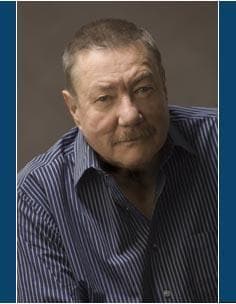
Biography coming soon.







