“Every time I drive past the Spokane reservation, I think about how much I want to be a part of it, and how much I want to escape it.”
— Victor Joseph reflecting on his identity and relationship with the reservation.

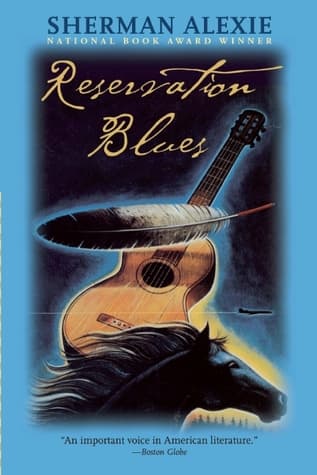
Sherman Alexie (1995)
Genre
Literary Fiction
Reading Time
360 min
Key Themes
See below
Sign in to track this book
When blues legend Robert Johnson gives his enchanted guitar to a Spokane Indian storyteller, a misfit band begins a magical, soul-searching tour from reservation bars to New York City, changing their understanding of music, magic, and their own identities.
On the Spokane Indian Reservation, the storyteller Thomas Builds-the-Fire meets a ghostly figure on the road: Robert Johnson, the legendary blues musician, still carrying his guitar and the weight of his past. Johnson, having made a deal with the devil, has returned to the reservation, drawn by a spiritual pull. He seeks redemption and a way to pass on his musical legacy. Thomas, bewildered, listens to Johnson's story and is given the devil's guitar. This encounter changes Thomas, setting him on a path that will combine music, magic, and his people's struggles.
Inspired by Robert Johnson's gift and the guitar's power, Thomas decides to form a blues band. He recruits his childhood friends, Victor Joseph and Junior Polatkin, both initially skeptical but drawn in by Thomas's enthusiasm and the guitar's strange appeal. Victor, a cynical and often angry young man, and Junior, a more easygoing but equally lost soul, become the rhythm section. They name their band 'Coyote Springs,' a nod to their trickster heritage and the arid landscape of their reservation. Their early practices are clumsy but filled with raw energy, as they begin to channel the blues through their Spokane perspective.
While playing a gig at the local Trading Post, Coyote Springs attracts Chess and Checkers Warm Springs, two African American women from Seattle visiting the reservation. Chess, a talented guitarist, and Checkers, her equally capable bass-playing sister, are intrigued by the band's sound and the mysterious aura around Thomas's guitar. They decide to join Coyote Springs, bringing professional polish and a different cultural perspective to the group. Their arrival adds new energy and ambition, transforming the band into a more serious musical endeavor, much to the initial discomfort of Victor and Junior.
Coyote Springs begins playing gigs around the Spokane Reservation, at places like the Trading Post and community events. Their music, a blend of traditional blues with Spokane storytelling and modern rock, starts to gain a local following, though not without its detractors. The band members deal with their individual struggles: Thomas's storytelling, Victor's anger and self-doubt, Junior's quiet despair, and the sisters' attempts to integrate into a new cultural environment. Tensions arise, particularly between Victor and Chess, as they navigate their differing musical approaches and personal histories. Despite the challenges, the music begins to create a reluctant unity among them.
Driven by Chess and Checkers' ambition and the band's growing confidence, Coyote Springs decides to leave the reservation and head to Seattle, hoping to land a record deal and make it big. They play in various clubs, experiencing the bustling, indifferent urban environment that contrasts with their home. They encounter a music industry that is often exploitative and dismissive of their unique sound and heritage. The band faces financial struggles, homesickness, and the realities of trying to make a living as musicians. Their dreams are tested against a city that offers both opportunity and disillusionment.
While in Seattle, Robert Johnson's ghost appears again to Thomas, intensifying the mystical elements of their journey. Johnson, still bound by his infernal contract, subtly tries to influence the band's decisions, especially regarding the pursuit of fame and fortune. He reminds Thomas of the guitar's power and the potential cost of its use, hinting at the deal he made. This encounter deepens Thomas's understanding of the guitar's true nature and the spiritual burden he carries. It also forces the band to confront the moral implications of their musical aspirations and the path they are choosing.
Against the odds, Coyote Springs secures a record deal and travels to New York City to record their album. The move to the ultimate urban landscape further disorients the band members, especially Victor and Junior, who struggle to adapt to the fast-paced, commercialized world of the music industry. They experience the intoxicating appeal of fame and the pressures of recording, but also the alienation and loss of identity that come with it. The band's music begins to change, influenced by producers and commercial demands, moving away from their original raw, reservation-infused sound. The initial excitement gives way to internal friction and a sense of being adrift.
As Coyote Springs achieves some commercial success, the spiritual weight of Robert Johnson's guitar and the underlying 'deal' becomes more apparent. The band members, particularly Thomas, begin to feel the drain of their success. Victor becomes increasingly withdrawn and angry, Junior sinks deeper into depression, and even Chess and Checkers feel the pressure. The music, once a source of joy and expression, starts to feel like a burden. They realize that the fame they sought comes at a price, and the guitar's power is not purely good. This realization forces them to question their choices and the meaning of their musical journey.
Overwhelmed by the pressures of their success and the spiritual toll, the members of Coyote Springs begin to unravel. Junior, unable to cope, returns to the reservation, seeking solace and a return to his roots. Victor, equally disillusioned, follows suit, though his anger and internal conflicts remain. Chess and Checkers also question their path, realizing that their initial aspirations have been corrupted. The band, once a unit, fragments as the appeal of the big city fades and the yearning for home and identity returns. The reservation, once a place they sought to escape, now represents a potential haven.
Back on the Spokane Reservation, Thomas Builds-the-Fire faces a final confrontation with Robert Johnson's ghost. This encounter is the culmination of the spiritual journey, as Thomas must decide what to do with the devil's guitar and its legacy. He understands the true cost of Johnson's deal and the burden it placed on him. Thomas, now wiser and more grounded in his heritage, makes a choice that reflects his desire for healing and a different kind of power—one rooted in community and storytelling rather than commercial success. He seeks to break the cycle of despair and exploitation, for himself and his people.
After their failed attempt at mainstream success, the remaining members of Coyote Springs, particularly Thomas, Victor, and Junior, begin a process of reconciliation and healing on the reservation. They confront their individual demons and the collective trauma of their past. Junior finds a fragile peace, Victor begins to channel his anger more constructively, and Thomas continues his role as a storyteller, now with a deeper understanding of the world. While the band as a commercial entity may be over, the bonds formed through music and shared experience remain. They find a new sense of purpose and identity, not in fame, but in their connection to their land and their people.
The Protagonist
Thomas evolves from a naive dreamer into a wise custodian of his people's stories, learning the true power and responsibility that comes with his gifts.
The Protagonist
Victor slowly confronts his anger and pain, eventually finding a more grounded sense of self and community, even if his cynicism never fully disappears.
The Supporting
Junior's arc is one of descent into despair and a gradual, fragile return to the reservation, seeking a quieter peace.
The Supporting
Johnson's arc is one of attempted redemption and the passing on of his burden, seeking a final rest.
The Supporting
Chess learns that success comes with compromises and that true fulfillment might lie beyond commercial fame.
The Supporting
Checkers, like Chess, discovers the complexities of success and the importance of genuine connection over commercial gain.
The Supporting
Big Mom remains a constant source of wisdom, reinforcing the importance of tradition and community throughout the story.
The Mentioned
Lester's arc is static, serving as a symbolic representation of the reservation's struggles.
The novel explores the complex layers of identity for Spokane Indians, caught between traditional heritage and modern American society. Characters like Victor struggle with self-worth and their place in the world, often feeling alienated from both cultures. The band's journey to Seattle and New York highlights their struggle to maintain their Spokane identity in the face of commercial pressures and cultural assimilation. Ultimately, the story suggests that true belonging is found not in external success, but in connection to one's community and ancestral land, as seen when Junior and Victor return to the reservation.
““Nobody wanted to be a Spokane Indian. We all wanted to be somebody else. We all wanted to be white. And we all wanted to be black.””
Storytelling, embodied by Thomas Builds-the-Fire, and music, through Robert Johnson's guitar and Coyote Springs, are central to the novel. They are powerful forces for healing, cultural preservation, and self-expression. Thomas's stories keep history alive, while the band's music offers a voice to their experiences. However, the story also warns of the perils: Robert Johnson's guitar carries a 'devil's deal,' symbolizing how art can be corrupted by ambition and commercialism, leading to a loss of soul. The band's struggle in New York demonstrates how the music industry can strip art of its authentic meaning.
““Every story told on the reservation was true. If it wasn’t true, it should have been.””
The novel addresses the historical and ongoing trauma experienced by Native Americans, including poverty, alcoholism, and the loss of culture. Characters like Victor and Junior carry the weight of this legacy, manifesting in anger, depression, and a sense of hopelessness. However, the story also emphasizes resilience. Through humor, community bonds, and the enduring spirit of storytelling and music, the characters find ways to cope and strive for healing. The reservation, despite its hardships, is portrayed as a source of strength and cultural continuity, a place where healing can begin.
““We were all survivors, all of us who lived on the reservation. We all had stories to tell.””
Coyote Springs' pursuit of a record deal and fame in Seattle and New York represents their attempt to achieve the 'American Dream.' However, this dream is shown to be largely inaccessible and even destructive for them. The music industry is portrayed as exploitative, valuing profit over authenticity, and forcing the band to compromise their identity. Their experiences highlight the contrast between the idealized American Dream and the realities faced by Indigenous peoples, who often find themselves marginalized and misunderstood within mainstream society. The novel critiques the notion that success is solely defined by material wealth and fame.
““They wanted to be famous. They wanted to be rich. They wanted to escape the reservation, but they didn’t know if they could ever escape themselves.””
The narrative constantly intertwines the sacred and the profane, the spiritual and the mundane. The mystical appearance of Robert Johnson and his devil-infused guitar exists alongside the reality of reservation life, complete with poverty, alcoholism, and everyday struggles. Thomas's spiritual connection to his heritage and the land contrasts with the commercialism of the music industry. This theme highlights the enduring presence of spiritual forces in the lives of the Spokane people, even amidst modern challenges, suggesting that the sacred is not separate from daily life but deeply embedded within it.
““The reservation was a small place, but it was also the entire world.””
A magical guitar inherited by Thomas, imbued with supernatural power and a 'devil's deal.'
The guitar is the central magical realism element, directly linking the Spokane Reservation to the mythos of the blues. It is not merely an instrument but a vessel carrying Robert Johnson's spiritual burden and the consequences of his 'deal with the devil.' It acts as a catalyst for the band's formation and their journey, symbolizing both the seductive power of music and fame, and the potential spiritual cost. Its mystical presence drives the plot, forces characters to confront their desires, and ultimately leads Thomas to a profound decision about its legacy.
The blending of realistic settings and characters with fantastical or supernatural elements.
Sherman Alexie employs magical realism throughout the novel, most notably with the literal appearance of Robert Johnson's ghost and his enchanted guitar. This device allows Alexie to explore complex themes of spirituality, heritage, and the supernatural within the context of contemporary Native American life. It normalizes the extraordinary, making the mystical elements feel like an organic part of the Spokane worldview. This blurring of reality and fantasy reflects the rich oral traditions and spiritual beliefs of Indigenous cultures, providing a unique lens through which to examine their experiences and struggles.
The band's physical and metaphorical journey from the reservation to major cities.
The band's journey from the Spokane Reservation to Seattle and New York serves as both a literal plot device and a powerful metaphor. Physically, it exposes the characters to different worlds and challenges their perspectives. Metaphorically, it represents their quest for identity, success, and escape, but also their inevitable confrontation with the compromises and disillusionment that come with leaving their roots. The return to the reservation signifies a full circle, emphasizing the importance of home, community, and cultural grounding over external validation.
Thomas's constant narration of myths, personal anecdotes, and historical events.
Thomas Builds-the-Fire's incessant storytelling functions as a unique narrative device. His tales often interrupt the main plot, providing context, foreshadowing, or commentary on the events and characters. These stories blend Spokane myths, historical accounts, and personal observations, reflecting the oral tradition of his people. This device not only characterizes Thomas but also enriches the novel's thematic depth, highlighting the power of narrative to shape identity, preserve culture, and make sense of the world, even if others sometimes find it tiresome.
“Every time I drive past the Spokane reservation, I think about how much I want to be a part of it, and how much I want to escape it.”
— Victor Joseph reflecting on his identity and relationship with the reservation.
“The blues ain't nothing but a good man feeling bad.”
— Robert Johnson's ghost explaining the essence of the blues to Thomas Builds-the-Fire.
“We are all just trying to get by, trying to make sense of the world, trying to find some kind of peace.”
— Thomas Builds-the-Fire's philosophical observation about human existence.
“Sometimes you have to leave to find out where you belong.”
— Lindy, one of the Coyote Springs band members, contemplating their journey off the reservation.
“The world is full of ghosts, and most of them are alive.”
— Thomas Builds-the-Fire's insight into the lingering presence of past traumas and unfulfilled dreams.
“Music is the last magic.”
— Robert Johnson's ghost emphasizing the power and mystical quality of music.
“We were all born with a song inside us. Some of us just don't know how to sing it yet.”
— Thomas Builds-the-Fire encouraging the band members to find their unique voice.
“Every reservation is a small country, with its own borders, its own customs, its own history.”
— A description of the distinct identity and challenges of each Native American reservation.
“The blues is a language, and like all languages, it can be learned, but it must be felt.”
— Robert Johnson's ghost explaining the emotional depth required to truly understand the blues.
“We carry our ancestors with us, in our blood, in our stories, in our dreams.”
— Thomas Builds-the-Fire's reflection on the enduring connection to heritage.
“Sometimes the only way to heal is to make some noise.”
— The band members finding catharsis through their music.
“Hope is a dangerous thing, but it's the only thing we've got.”
— Victor Joseph's pragmatic view on maintaining optimism despite difficulties.
“The past is a story we tell ourselves, over and over again, until we believe it.”
— Thomas Builds-the-Fire's perspective on the subjective nature of history and memory.
“You can't run away from who you are, no matter how far you go.”
— A recurring theme about the inescapable nature of one's identity and background.
Ready to see how well you understood this book? Take our interactive quiz with 10 questions.
Biography coming soon.







