“The world is a house where every room is empty.”
— A general reflection on the nature of existence within the narrative.

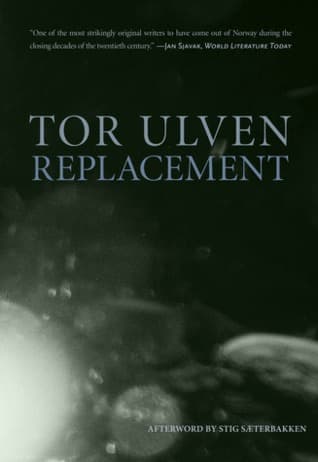
Tor Ulven (2012)
Genre
Literary Fiction
Reading Time
180 min
Key Themes
See below
Sign in to track this book
In Tor Ulven's "Replacement," fifteen different lives come together in a single, haunting story, where each character's inner world contrasts with their unchanging outer reality.
The novel begins with an unnamed old man in his apartment, watching dust motes in a sunbeam. He thinks about time passing, the quiet of his rooms, and his lack of meaningful connection. He remembers a younger self, full of promise, and how his hopes slowly faded. His thoughts go to the ordinary objects around him, each holding a sense of loss or a memory of something that never quite happened. He feels like a replacement for a life he should have lived, a shadow of a more active existence, stuck in a quiet, uneventful routine that stretches endlessly before him.
A woman stands at her window, looking down at the street. She watches the people passing by, imagining their lives, and comparing them to her own feeling of being trapped. She dreams of traveling, making spontaneous decisions, and breaking free from the daily routine that defines her days. Her mind replays past conversations and missed chances, especially a brief meeting with a stranger that, in her imagination, could have led to a very different life. She feels a deep gap between her inner desires and the fixed reality of her life, wanting a 'replacement' for her current self.
In a sparsely furnished student room, a young man sits surrounded by books, feeling the pressure of academic expectations and a widespread sense of meaninglessness. He questions the purpose of his studies, the future, and who he is. He imagines abandoning his responsibilities and disappearing, or a sudden event that would change his path. The pressure to fit in and succeed feels overwhelming, and he struggles with the idea that his life is already set, despite his inner rebellion and desire for an authentic, unplanned existence.
An office worker rides the bus, watching the other passengers with tired detachment. His thoughts are filled with the repetitive nature of his job, the lack of fulfillment, and the feeling of being just a small part of a large, uncaring system. He imagines a life where he followed his artistic passions, or simply one where his days had more meaning than spreadsheets and meetings. The scenery outside the window, the faces around him, all blend into a monotonous background against his inner thoughts of regret and longing for a different kind of existence, a 'replacement' for his current, uninspired self.
An artist sits in their studio, surrounded by unfinished canvases and discarded sketches, struggling with creative block. The initial passion has gone, replaced by self-doubt and the heavy weight of expectations, both internal and external. They remember a time when ideas flowed freely and the future seemed limitless. Now, each brushstroke feels forced, each concept empty. They want to return to that initial spark, a 'replacement' for their current artistic paralysis, or perhaps a complete change of their identity and purpose beyond art, seeking a way to break free from this creative stagnation.
A child wakes from a vivid, unsettling dream, the remnants of which linger in the quiet of their room. The dream involves feeling lost, things changing without warning, and a sense of being watched. While the details are unclear, the emotional impact is clear: a new understanding of vulnerability and the unpredictable nature of the world. This brief moment offers a glimpse into the formation of worries that will likely shape their future, suggesting that even at a young age, the seeds of 'replacement' – of wishing for a different reality – are already being sown, even if unconsciously.
An old woman tends to her garden, finding comfort in the routine of nurturing life. Yet, her thoughts often go to her deceased husband and the life they built together. Each flower, each weed, carries a memory, a ghost of the past. She feels a deep loneliness, a sense that a vital part of her has been 'replaced' by absence. While she finds a quiet strength in the garden's cycles, the longing for what was, and the impossibility of its return, underlies her reflections, showing the lasting impact of loss and the quiet acceptance of a changed reality.
A man sits alone in a busy café, watching the other customers. He creates detailed stories for them, imagining their relationships, joys, and sorrows, all while feeling very isolated himself. He projects his own unfulfilled desires onto the couples and friends around him, imagining connection and belonging. He envisions a 'replacement' scenario where he is part of such an active social scene, or where a stranger might approach him and change his life's course, a poignant illustration of his yearning for a different, more involved existence.
A woman travels by train, watching the landscape blur past the window. The rhythmic motion and temporary nature of the journey make her think about major life decisions she has made, especially those about relationships and career. She considers the 'what ifs,' imagining how her life might have unfolded if she had chosen differently at various turning points. There's a sad awareness that certain paths are now closed, yet a persistent inner desire for a 'replacement' reality, a longing for the person she might have become under other circumstances.
A night watchman makes his rounds through an empty building, the silence making his thoughts louder. He observes the dormant offices, the deserted hallways, and feels a deep sense of the world's indifference. He thinks about how brief human efforts are and how small individual lives are against the vastness of time and space. His solitude allows for deep introspection, a contemplation of his own small role and the quiet desire for a 'replacement' existence that might hold more meaning or recognition, even as he accepts the quiet dignity of his solitary watch.
An unemployed man spends his day in a cycle of aimlessness and quiet despair. The lack of routine and purpose weighs heavily on him, eroding his self-esteem. He avoids social interaction, feeling judged and inadequate. His thoughts are filled with financial worries and the feeling of being a burden. He imagines a sudden job offer, a chance meeting, or any event that would 'replace' his current stagnant reality with one of purpose and dignity. The quiet shame of his situation is clear, a constant inner monologue of regret and longing for a different life.
A musician practices an instrument, the notes filling a small room. While technically skilled, something feels missing – a spark, a connection, a deeper meaning. They reflect on their initial dreams of becoming a virtuoso or a groundbreaking artist, comparing it with their current, somewhat ordinary reality. The music itself becomes a way for their inner thoughts about unfulfilled potential and the 'replacement' of youthful idealism with the compromises of adulthood. They want a moment of true transcendence, a performance that would lift them beyond their current perceived limitations.
An elderly couple sits in their living room, sharing a comfortable, yet deep, silence. Each is lost in their own thoughts, remembering shared memories but also thinking about individual regrets and unsaid desires. While outwardly together, their inner worlds remain separate. The woman might recall a different suitor, the man a different career path. There's a quiet acceptance of their intertwined lives, but also a subtle undercurrent of 'replacement' – imagining how their lives might have unfolded differently, even together, had certain choices been altered in the past.
A writer sits with a notebook, trying to capture elusive thoughts and observations. The act of writing becomes a symbol for the struggle to express the inexpressible, the feeling that words can never truly 'replace' the lived experience or the depth of inner feeling. They reflect on the countless stories that remain untold, the fleeting moments that slip away, and the impossibility of fully capturing the complexity of human existence. There's a sense of both the power and the ultimate inadequacy of language, and a desire to find the perfect expression for the silent world within.
The final section features a character waking from a particularly vivid dream. The dream offered a glimpse into an entirely different life, a 'replacement' reality where their deepest desires were met or their greatest fears realized. The return to the waking world is jarring, leaving a lingering sense of loss or disorientation. The line between the imagined and the real feels thin, and the character is left with the deep impression of how easily their life could have been, or still could be, altered, reinforcing the novel's central theme of the tension between inner longing and outer reality.
The Protagonist (of his section)
His arc is one of quiet acceptance, finding a form of peace within his solitary reflections, even as he yearns for an alternative past.
The Protagonist (of her section)
Her arc is static in external reality but dynamic internally, as she continuously reimagines her life, finding a form of mental escape.
The Protagonist (of his section)
His arc is one of internal struggle, questioning his path and identity, seeking a way to define himself outside of societal expectations.
The Protagonist (of his section)
His arc is one of internal lament, as he grapples with the gap between his dreams and his mundane reality, finding small moments of mental escape.
The Protagonist (of her section)
Her arc is one of internal conflict, battling creative paralysis and seeking a way to reconnect with her artistic purpose or redefine her identity.
The Protagonist (of her section)
Her arc is one of quiet acceptance of loss, finding solace in routine and memory, even as she carries the weight of a 'replaced' past.
The Protagonist (of his section)
His arc is one of internal observation and projection, finding a temporary escape from his loneliness through imagined connections.
The Protagonist (of his section)
His arc is one of quiet contemplation and acceptance of his solitary role, finding a form of peace in his nocturnal observations.
The Protagonist (of his section)
His arc is one of internal struggle against despair, clinging to the hope of a 'replacement' opportunity that would restore his purpose.
The Protagonist (of his section)
Their arc is one of internal longing, seeking to bridge the gap between their artistic aspirations and the perceived reality of their talent.
The Protagonist (of her section)
Her arc is one of intellectual and creative struggle, seeking to find meaning and expression within the inherent limitations of language.
This is the main theme, exploring the deep gap between characters' rich inner worlds of desires, dreams, and regrets, and the often ordinary, unchanging realities of their external lives. Each character, from the old man in his apartment to the woman at the window, clearly imagines other existences, conversations, and choices they could have made. This inner world of 'what ifs' and 'could bes' contrasts sharply with their perceived stagnation and the feeling of being stuck in their current situations, showing the human ability to escape mentally even when physically limited. The novel shows the constant interaction between these two realms, where the inner life becomes a refuge and a source of both hope and sad longing.
“The concrete realities we think we cannot alter, and our interior lives, where we feel anything might still be possible.”
Many characters in 'Replacement' are troubled by a sense of unfulfilled potential, thinking about paths not taken or dreams that never happened. The old man regrets a younger self full of promise, while the office worker longs for an artistic life he gave up. The artist struggles with creative block, feeling disconnected from her past passion. This theme explores the quiet sadness of lives that feel like 'replacements' for the active existences they once imagined. It looks at the lasting impact of past decisions and the sad contemplation of how lives might have turned out differently, creating a widespread feeling of wistful regret.
“He felt like a replacement for a life he should have lived, a shadow of a more vibrant existence.”
The novel deeply explores themes of solitude, both chosen and forced, and the natural human desire for connection. Many characters are shown in moments of deep isolation – the old man in his apartment, the man in the café watching others, the night watchman on his rounds. Their inner thoughts often reveal a longing for understanding, intimacy, or simply a shared experience. The characters imagine chance encounters or re-imagined relationships, highlighting the basic human need for connection even when circumstances or personal choices lead to isolation. The silence between the elderly couple, while comfortable, also emphasizes their separate inner worlds.
“He constructed elaborate narratives for them, imagining their relationships, their joys, and their sorrows, all while feeling acutely isolated himself.”
Time and memory are fluid and central to the characters' thoughts. The past is not fixed but a landscape constantly revisited, re-evaluated, and re-imagined. Characters often slip into memories, replaying conversations or thinking about 'what ifs' from years ago. This non-linear approach to time highlights its subjective nature, where the past continues to shape the present and inform the characters' inner lives. The passage of time is often shown as a force that erodes hopes and solidifies realities, yet memory also offers a way to escape and to hold onto alternative possibilities, even if they exist only internally.
“Her mind replays past conversations and missed opportunities, particularly a fleeting encounter with a stranger that, in her imagination, could have led to a radically different path.”
A widespread feeling of existential stagnation affects many characters. They feel stuck, unable to change their situations or break free from monotonous routines. This feeling of being 'trapped' drives a deep desire for change, often appearing as fantasies of radical transformation or escape. The student struggles with the pressure to conform, wanting an authentic path. The unemployed man longs for purpose. This theme explores the human struggle against perceived inevitability, the quiet rebellion of the mind against a life that feels predetermined, and the constant, internal search for a 'replacement' reality or self.
“Each stuck in their respective traps, each fantasizing about how their lives might have turned out differently.”
A mosaic of distinct internal monologues, creating a collective narrative voice.
The novel employs a unique narrative structure where the reader experiences the story through the individual, internal monologues of fifteen unrelated characters. While the text flows seamlessly, giving the impression of a single narrative voice, careful reading reveals shifts in perspective, each focusing on a different character's thoughts, memories, and observations. This device allows for a comprehensive exploration of the central themes of inner life versus outer reality, unfulfilled potential, and solitude from diverse viewpoints, creating a rich tapestry of human experience without ever explicitly naming the narrators or breaking the continuous prose.
Unfiltered flow of thoughts, memories, and associations.
The narrative largely unfolds through a stream of consciousness style, mimicking the natural, often non-linear flow of human thought. Characters' minds wander from present observations to past memories, future fantasies, and abstract philosophical reflections without clear transitions or external plot drivers. This device immerses the reader directly into the subjective experience of each character, allowing for a deep exploration of their internal landscapes, desires, and regrets. It emphasizes the 'interior lives' of the characters, where anything feels possible, contrasting with their static external realities.
Recurring motifs and phrases that subtly link disparate narratives.
Ulven subtly uses repetition of certain words, phrases, or thematic motifs across different character perspectives. While not overtly stated, ideas like 'replacement,' 'silence,' 'dust,' 'windows,' and 'what if' recur, acting as leitmotifs that weave the seemingly unrelated narratives into a cohesive whole. This device creates a sense of shared human experience and universal anxieties, suggesting that despite their distinct lives, the characters are connected by common existential dilemmas and internal longings, reinforcing the novel's overarching sense of a collective human consciousness.
Mundane objects and scenes trigger profound introspection.
For many characters, mundane objects or everyday scenes serve as catalysts for deep introspection and reflection. The old man observes dust motes in a sunbeam, leading to thoughts on the passage of time. The woman at the window watches passersby, fueling her fantasies of escape. The office worker's commute becomes a backdrop for his profound dissatisfaction. This device highlights how the ordinary can spark extraordinary internal journeys, emphasizing the richness of the characters' inner lives and their capacity to find meaning, regret, or hope in the most unassuming details of their fixed external worlds.
“The world is a house where every room is empty.”
— A general reflection on the nature of existence within the narrative.
“Memory is a kind of replacement for what is lost, but it's a poor substitute.”
— Pondering the efficacy and pain of memory in the face of absence.
“Silence is not empty; it is full of all the words that were never spoken.”
— An observation on the weight and meaning embedded within quiet moments.
“We live in the space between what was and what will never be.”
— A philosophical musing on the human condition, caught between past and non-future.
“Every object holds a history, a faint echo of hands that touched it, eyes that saw it.”
— Reflecting on the residual presence of past interactions with inanimate objects.
“The day breaks like a promise that will inevitably be broken.”
— A melancholic view of the dawn, suggesting a predetermined cycle of disappointment.
“To be replaced is not to disappear, but to become a shadow in the same light.”
— A central theme of the book, exploring the nature of being superseded while still existing.
“The past is a foreign country where they do things differently, and sometimes, they simply vanish.”
— A variation on a common idiom, emphasizing the ultimate ephemerality of the past.
“Words are like stones thrown into a deep well; you hear the splash, but never see the bottom.”
— A metaphor for the limited impact and unseen depths of communication.
“The light outside the window seemed to carry a burden, a weight of unspoken stories.”
— An anthropomorphic description of light, imbuing it with emotional and narrative significance.
“Loneliness is not the absence of others, but the absence of oneself in their presence.”
— A nuanced definition of loneliness, focusing on internal disconnection rather than external isolation.
“The future is just the present stretched out, thinner and more transparent.”
— A bleak perspective on the future, viewing it as a diluted continuation of the current state.
“We try to fill the voids, but sometimes the voids are all that truly remain.”
— A reflection on the futility of trying to overcome fundamental absences.
“Every step taken is a step away from somewhere else, a small, continuous farewell.”
— A philosophical take on movement and progress, highlighting the constant process of leaving things behind.
Ready to see how well you understood this book? Take our interactive quiz with 10 questions.







