“The sea is a cruel mistress, but she rewards those who are patient and observant.”
— Mary Anning reflecting on her lifelong work of fossil hunting by the sea.

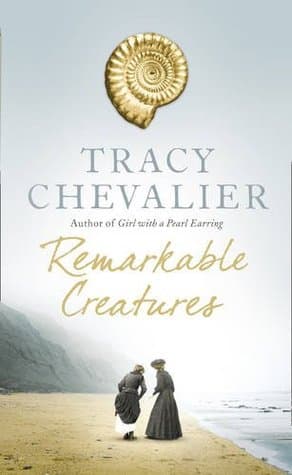
Tracy Chevalier (2009)
Genre
Historical Fiction
Reading Time
450 min
Key Themes
See below
Sign in to track this book
In a world ruled by men and rigid beliefs, a working-class fossil hunter and an eccentric spinster forge an unbreakable bond, unearthing prehistoric creatures that challenge the very foundations of creation and society.
In Lyme Regis, Dorset, young Mary Anning, from a poor family, goes with her brother Joseph on fossil-hunting trips after storms. In 1810, they find a large, complete fossilized skull with a long snout and huge eye sockets in the cliffs, which is later identified as an ichthyosaur. This discovery brings them local notice and some small income from selling their finds. Around the same time, Elizabeth Philpot, an unmarried woman from London, moves to Lyme with her two sisters, Margaret and Louise. Elizabeth, a keen amateur fossil collector, is immediately drawn to Mary's natural talent and understanding of the cliffs. Despite their different social classes and ages, a friendship begins to form, centered on their shared interest in 'curiosities' from the ancient world.
After finding the first skull, Joseph and Mary Anning continue their dangerous work on the cliffs. Over several months, with much effort, they carefully dig out the rest of the ichthyosaur skeleton. The complete specimen, many feet long, becomes a sensation in the early scientific community. Local gentlemen and some London naturalists come to see the Anning's 'crocodile' and buy other fossils from Mary. This find further establishes Mary's reputation as a skilled fossil hunter, despite her youth and lack of formal education. Elizabeth Philpot, watching Mary's work and supporting her, encourages Mary to record her finds and offers guidance, helping Mary in the male-dominated world of science.
Years pass, and Mary Anning continues to make important discoveries, including a large pliosaur skull in 1821. Her expertise and fame grow, attracting more visitors and buyers, including the wealthy Colonel Birch, who organizes a lottery to fund the sale of her finds. However, the scientific gentlemen who buy her fossils often take credit for the discoveries, publishing papers without properly crediting Mary. Elizabeth Philpot, still a close friend, sometimes struggles with Mary's growing independence and her direct, often unrefined manner. The social gap between them becomes clearer as Mary gains some celebrity, yet remains in the working class, while Elizabeth, though supportive, cannot fully close the class divide.
In 1823, Mary Anning makes another discovery: a nearly complete skeleton of a plesiosaur. This creature, with its long neck, small head, and paddle-like limbs, is unlike anything seen before and starts much discussion. Georges Cuvier, a French anatomist, initially skeptical, even suggests it might be a fake because of its unusual appearance. This skepticism frustrates Mary, who knows her work is real. Elizabeth Philpot strongly defends Mary and her findings, writing to scientists and vouching for Mary's honesty. The plesiosaur helps to confirm the concept of extinction and the reality of creatures that no longer live on Earth, but only after Mary faces much struggle and needs validation.
Professor William Buckland, a geologist and cleric from Oxford, visits Lyme Regis and takes an interest in Mary Anning's work. He sees her talent and knowledge of the local geology, often relying on her to guide him to sites and explain her finds. Buckland, however, shows the scientific attitude of the time, often treating Mary as a skilled laborer rather than a scientific equal. He buys many of her fossils and publishes on them, sometimes acknowledging her, other times not. This relationship shows the struggle Mary faces for proper recognition, as Buckland, despite respecting her skill, still upholds the social and intellectual hierarchy that places men of science above working-class women.
Mary Anning continues her search along the dangerous cliffs. In 1828, she finds the first British specimen of a pterodactyl, a flying reptile. This discovery is another contribution to the developing field of paleontology and further establishes her reputation as a fossil finder. The pterodactyl, like her previous finds, challenges ideas of the natural world and the history of life on Earth. While she still struggles with the scientific establishment for full recognition, each new discovery strengthens her position and provides her with some financial stability, though never enough to escape the constant threat of poverty.
A disagreement happens between Mary Anning and Elizabeth Philpot. The cause is often a mix of class differences, Mary's directness, Elizabeth's occasional condescension, and life's pressures. Mary, feeling unappreciated and used by the scientific gentlemen, sometimes gets angry. Elizabeth, despite her deep affection for Mary, can be hurt by Mary's perceived ingratitude or lack of social graces. This period of separation is painful for both women, as their friendship has been central to their lives and intellectual pursuits. Eventually, after some time and recognizing their bond, they reconcile, affirming their unique and lasting connection.
The dangerous cliffs of Lyme Regis are always a source of both discovery and danger. A large landslide at Cobb's Gate, a landmark, damages parts of the coastline. This event shows the constant risk Mary Anning faces in her daily work and the fragility of life. The community helps each other after the event, and both Mary and Elizabeth Philpot are affected by the destruction and loss. The shared experience of this natural disaster, and the reminder of the power of geological forces, further strengthens the bond between the two women, as they find comfort and understanding in each other during hard times.
Mary Anning's observation skills go beyond just finding fossils. She notices strange, stony lumps often found in the abdominal areas of ichthyosaur skeletons. While others dismiss them as 'bezoar stones' or simple concretions, Mary, through careful observation, figures out that they are fossilized excrement. She shares her ideas with Professor Buckland, who, initially skeptical, eventually accepts her deduction. He names these fossilized feces 'coprolite.' This discovery is important, as it gives direct evidence of the diets of ancient creatures, changing the understanding of prehistoric ecosystems and showing Mary's scientific ability, not just her skill as a collector.
As Mary Anning ages, she continues her hard work, facing financial struggles and the physical toll of her dangerous job. Despite her contributions, she remains largely uncredited by the male-dominated scientific societies, barred from membership and formal recognition. Elizabeth Philpot remains her steadfast friend, offering emotional support and intellectual companionship. Mary's health declines, and she dies in 1847. Though she never receives the formal honors she deserved in her lifetime, her discoveries change scientific understanding of Earth's history and the concept of extinction. Her legacy, supported by a few individuals like Elizabeth, slowly begins to be recognized for its true importance.
The Protagonist
Mary evolves from a child prodigy to a world-renowned fossilist, constantly battling societal prejudices to gain recognition for her scientific contributions.
The Co-Protagonist/Supporting
Elizabeth grows from a solitary collector to a steadfast advocate for Mary, learning to challenge societal norms and her own prejudices through their friendship.
The Supporting
Joseph transitions from Mary's fossil-hunting partner to pursuing a more conventional life, leaving Mary to forge her path alone.
The Supporting
Buckland remains largely unchanged in his views of Mary, representing the persistent challenge she faced in gaining full scientific recognition.
The Supporting
De la Beche consistently champions Mary's work, providing a supportive presence in her often-isolated scientific journey.
The Supporting
Molly remains a constant, worried presence, largely unchanged in her focus on family survival and Mary's well-being.
The Supporting
Birch serves as a catalyst for Mary's financial and scientific exposure but does not contribute to her intellectual development.
The Mentioned
Cuvier's initial skepticism and eventual acceptance of the plesiosaur highlights the challenges Mary faced in gaining recognition from the scientific establishment.
The Supporting
Margaret remains largely consistent in her conventional views, providing a contrast to Elizabeth's more progressive outlook.
The Supporting
Louise's character remains consistent, offering an artistic perspective without significant personal transformation.
The novel is set during a time when fossil discoveries directly challenged literal interpretations of biblical creation. Mary's finds of extinct creatures like the ichthyosaur and plesiosaur force characters like Professor Buckland, a cleric, to make scientific evidence fit with religious teachings. The debate over the age of the Earth and the concept of extinction fills the scientific discussions, setting the stage for later theories of evolution. The characters grapple with how these 'creatures' fit into a divinely created world, showing the intellectual tension of the era.
“What God would make a beast like that, only to hide it away for millions of years?”
Mary Anning's working-class status and gender are constant barriers to her recognition in the scientific community. Despite her skill and insights, she is largely seen as a 'finder' rather than a 'scientist' by the educated, middle-class men who buy her fossils and publish papers on them. Elizabeth Philpot, though also a woman, benefits from her higher social standing, which gives her more access to scientific circles. The novel shows the systemic barriers Mary faces, from being excluded from scientific societies to the condescending attitudes of gentlemen who rely on her knowledge but deny her credit.
“A woman's place was not on the cliffs, nor in the learned societies, but in the home.”
The friendship between Mary Anning and Elizabeth Philpot is central to the novel. Despite differences in age, social class, and personality, their shared interest in fossils creates a strong bond. Elizabeth gives Mary intellectual encouragement, social connections, and emotional support, while Mary offers Elizabeth a deeper, more intuitive understanding of the natural world. Their friendship goes beyond social expectations and gives both women a sense of belonging and validation in a world that often ignores them. Their shared intellectual pursuit supports them through personal and professional challenges.
“It was a strange friendship, born of mud and rock, and polished by the sea.”
The novel captures the excitement and challenges of the early 19th century, a time of change in geology and paleontology. Mary Anning's discoveries, such as the ichthyosaur, plesiosaur, and pterodactyl, are not just interesting finds; they are pieces of a puzzle that reshapes scientific understanding of Earth's deep history and the concept of extinction. The book illustrates the process of scientific inquiry, from dangerous fieldwork to the debates and skepticism within learned societies, showing how new evidence gradually changes old beliefs. It shows the collaborative, yet often competitive, nature of scientific progress.
“Every new bone was a word in a language no one yet understood.”
Mary Anning's life shows great perseverance in the face of adversity. She deals with poverty, the constant physical danger of the cliffs, the skepticism and condescension of the scientific establishment, and the social isolation that often comes with her unconventional life. Her dedication to her work, driven by curiosity and the need to support her family, is a key part of her character. Similarly, Elizabeth Philpot shows resilience in pursuing her intellectual interests despite social expectations for unmarried women and the challenges of supporting Mary.
“The cliffs gave up their secrets grudgingly, but Mary Anning was more stubborn than any rock.”
Alternating chapters told from the viewpoints of Mary Anning and Elizabeth Philpot.
The novel employs a dual first-person narrative, alternating between the perspectives of Mary Anning and Elizabeth Philpot in successive chapters. This device allows the reader to experience the story through two distinct lenses, highlighting the contrasts in their social standing, education, and personalities. It provides a nuanced understanding of their evolving friendship, the challenges they each face, and their individual contributions to the world of paleontology. This structure emphasizes the theme of class and gender inequality by showing how the same events are perceived and experienced differently by women from opposite ends of the social spectrum.
The unearthed fossils represent scientific truth, the past, and Mary's quest for recognition.
The fossils themselves serve as powerful symbols throughout the novel. They represent the undeniable truth of a deep past, challenging contemporary religious and scientific beliefs about creation. For Mary, each fossil is not only a source of income but also a tangible piece of evidence of her intellectual prowess and her connection to a world millions of years old. The act of unearthing them symbolizes the difficult process of uncovering truth and challenging established norms. The intactness and uniqueness of her finds symbolize Mary's own singular and remarkable nature, often hidden beneath a rough exterior.
The dangerous, ever-changing cliffs symbolize both opportunity and peril, and the forces of nature.
The cliffs of Lyme Regis are more than just a setting; they are a dynamic character in the story. They represent both the source of Mary's livelihood and discoveries, and the constant threat to her life. Their unpredictable nature, with regular landslides and erosion, mirrors the tumultuous scientific and social landscape of the time. The cliffs symbolize the raw, untamed power of nature and the relentless march of geological time, providing a stark contrast to the refined drawing rooms where scientific debates often take place. They are a constant reminder of the physical demands and dangers of Mary's profession.
A physical manifestation of scientific progress, personal passion, and social status.
The 'curiosity' cabinet, a common feature in Victorian homes, is a recurring motif. Both Mary and Elizabeth have their own collections, though vastly different in presentation. Elizabeth's cabinet is meticulously organized and displayed, reflecting her refined taste and systematic approach. Mary's humble shop, filled with her finds, serves a similar purpose but also functions as her livelihood. These cabinets symbolize the burgeoning interest in natural history, the personal passion for discovery, and the way in which scientific knowledge was collected and displayed, often reflecting the social status of the collector.
“The sea is a cruel mistress, but she rewards those who are patient and observant.”
— Mary Anning reflecting on her lifelong work of fossil hunting by the sea.
“It is not enough to find; you must also understand.”
— Elizabeth Philpot, another fossil collector, emphasizing the importance of scientific understanding over mere collection.
“A woman's mind is as capable as a man's, if only given the chance to prove it.”
— Mary Anning's internal thought about the societal limitations placed on women in scientific pursuits.
“Fossils are not just stones; they are stories written in the earth.”
— Mary explaining the significance of her finds to a skeptical visitor.
“The world is older than we imagine, and full of creatures we can scarcely conceive.”
— A general reflection on the groundbreaking nature of fossil discoveries and their impact on understanding Earth's history.
“Sometimes the greatest treasures are found in the most unlikely places, by the most unlikely people.”
— A commentary on Mary Anning's humble beginnings and extraordinary contributions.
“Patience is a virtue, especially when dealing with the stubborn secrets of the past.”
— Mary's approach to meticulously extracting fossils from difficult rock formations.
“To see is one thing, to truly observe is another.”
— Elizabeth Philpot's advice to Mary on developing a keen eye for detail in their work.
“Fame is a fickle friend, but knowledge is a constant companion.”
— Mary Anning's pragmatic view on the recognition she received versus her passion for learning.
“The earth holds its breath, waiting for us to uncover its ancient sighs.”
— A poetic description of the anticipation and wonder of digging for fossils.
“We are all just trying to make sense of the world, one broken piece at a time.”
— Mary Anning reflecting on the human endeavor of scientific inquiry, akin to piecing together fossil fragments.
“The true scientist does not fear what she finds, but embraces the truth, no matter how unsettling.”
— A commentary on the courage required to challenge established beliefs with new scientific evidence.
“Friendship, like a good fossil, must be carefully excavated and cherished.”
— Mary Anning's thoughts on her complex but enduring friendship with Elizabeth Philpot.
“There are more wonders beneath our feet than in the grandest of galleries.”
— Mary Anning's preference for the natural world and its hidden treasures over man-made art and society.
Ready to see how well you understood this book? Take our interactive quiz with 10 questions.

Biography coming soon.







