“It was a thing of impossible beauty and terrifying power, a perfect killing machine forged in a million years of evolution.”
— Describing the monster, the Kothoga, for the first time.

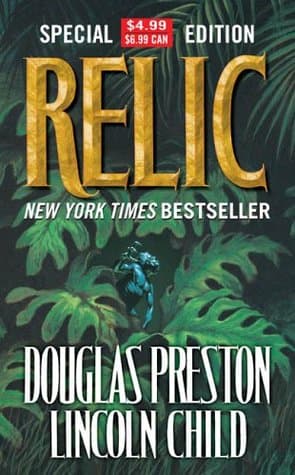
Douglas Preston (1995)
Genre
Fantasy / Science Fiction / Young Adult
Reading Time
10-12 hours
Key Themes
See below
Sign in to track this book
At the New York Museum of Natural History, a pre-exhibition gala turns deadly when a non-human predator stalks the shadows, forcing a young researcher to uncover its ancient identity before a grand opening becomes a massacre.
The novel begins with Dr. John Whitney's Iquitos expedition to the Amazon basin. After finding a lost tribe and their terrifying god, the expedition is wiped out, except for Whitney, who ships a crate of specimens to the New York Museum of Natural History before dying mysteriously on the way. Soon after, brutal murders start inside the museum. Security guards are found decapitated or dismembered, with their hypothalami removed. Lieutenant Vincent D'Agosta of the NYPD takes the case, at first believing a human serial killer is responsible, despite the extreme violence of the attacks.
Margo Green, a bright evolutionary biology graduate student at the museum, gets involved in the investigation. She studies botanical specimens from Whitney's expedition. Among them, she finds unusual plant matter and ancient artifacts that suggest a creature called the 'Kothoga' – a mythical beast worshipped by the Zenzera tribe. Her mentor, Dr. Frock, initially dismisses her ideas, but Margo's scientific curiosity and D'Agosta's frustration with the lack of human suspects lead them to consider a non-human killer.
Despite the rising death count and D'Agosta's warnings, the museum director, Dr. Cuthbert, insists on holding the 'Superstition' exhibition gala, fearing financial ruin. He orders a complete lockdown of the museum for the event, sealing all exits. This traps hundreds of high-society guests, museum staff, and police inside with the unseen killer. Margo, D'Agosta, and curator Dr. Frock realize how serious their situation is as the creature's presence becomes clear within the museum's halls and ventilation systems.
During the crowded gala, the Kothoga appears, attacking guests in the exhibit halls. Panic breaks out as the creature, a large, reptilian-like beast with sharp claws and teeth, kills people. D'Agosta and his officers try to contain the creature and protect survivors, but the Kothoga's speed, strength, and knowledge of the museum's hidden passages make it nearly unstoppable. The gala turns into a scene of carnage and desperate escape.
Amid the chaos, Margo continues her research, analyzing plant samples and the Kothoga's biology. She discovers that the Kothoga needs the hypothalamus gland from its victims, not for food, but because it contains a specific hormone that counters a metabolic problem caused by the plants Whitney brought back. She realizes the Kothoga is not a mythical beast but a mutated creature, likely a human transformed by a parasitic fungus or virus from the Amazonian plants and Whitney's experimental drug, which he took for his own illness.
As the Kothoga continues its rampage, a group of survivors, including Margo, D'Agosta, and museum employee George Moriarty, must go into the museum's vast, dark sewer system to escape the beast and find a way out. They navigate dangerous tunnels and find more gruesome evidence of the Kothoga's presence. Deep within the sewers, they discover the Kothoga's lair – a nest filled with bones and, chillingly, the remains of Dr. John Whitney, confirming his mutation into the creature they are fighting.
Margo realizes that the Kothoga, as a mutated form of Dr. Whitney, still has some of his human instincts and knowledge of the museum. They decide to lure the creature into the 'Superstition' exhibit hall, specifically the section about the Kothoga legend. Their plan involves using the exhibition's setup and the creature's own biology against it. They prepare a trap, hoping to exploit its sensitivity to cold or its need for the hypothalamic hormone, while D'Agosta coordinates with the remaining police officers.
The final fight happens in the exhibition hall. Margo and D'Agosta manage to lure the Kothoga into the trap. They use the museum's fire suppression system, dousing the creature and the exhibit in water. Margo, remembering Whitney's notes, realizes that the creature's vulnerability to cold and its mutated, plant-like biology makes it vulnerable to fire. D'Agosta, with a brave police officer, ignites the water-soaked exhibit, engulfing the Kothoga in flames. The creature shrieks as it burns, seemingly destroyed.
With the Kothoga seemingly defeated, the few remaining survivors, including Margo, D'Agosta, and Moriarty, emerge from the burning museum. The city is in shock, and the museum is a smoldering ruin. While the official story is that a deranged human serial killer was responsible and died in the fire, Margo and D'Agosta know the truth. The experience leaves them scarred, and Margo grapples with the scientific and ethical issues of Whitney's transformation. The novel ends with a sense of unease, suggesting that while this creature is gone, the line between science and myth has blurred, and such horrors could still exist.
The Protagonist
Margo evolves from a diligent researcher to a courageous survivor and a key figure in understanding the Kothoga's true nature, ultimately leading the effort to destroy it.
The Protagonist
D'Agosta transforms from a cynical detective seeking a human killer to a man forced to confront and fight a supernatural entity, broadening his understanding of the world.
The Supporting
Dr. Frock moves from an academic observer to an active participant in unraveling the Kothoga's mystery, demonstrating intellectual courage.
The Antagonist
Whitney's arc is tragic, beginning as a driven scientist and ending as the monstrous Kothoga, a victim of his own ambition and a rare biological phenomenon.
The Antagonist
Cuthbert remains largely static, his hubris leading to disaster and his eventual demise, serving as a cautionary figure.
The Supporting
Moriarty transforms from a routine security guard into a crucial survivor and guide, demonstrating unexpected heroism.
The Supporting
Waxman remains largely static, representing the bureaucratic obstacles D'Agosta faces.
The Antagonist
The Kothoga's arc is one of relentless pursuit and destruction, culminating in its fiery demise, though its origins are tragic.
The novel shows the dangers that come when scientific curiosity and ambition override ethics and caution. Dr. John Whitney's search for a rare plant and a cure for his illness, along with his experimental drug use, leads directly to his transformation into the Kothoga. The creature itself is a grotesque example of scientific ambition gone wrong. The museum's early dismissal of Margo's scientific theories also shows how established institutions can fail to see new threats or unusual truths.
““Science is a two-edged sword. It can cut away the darkness, or it can cut us to ribbons.””
At the core of 'Relic' is the conflict between scientific explanation and ancient myths. The Kothoga, first seen as a mythical beast, is later revealed as a biological mutation linked to ancient tribal stories and modern science. Margo's initial struggle to convince others of a non-human killer, and the 'Superstition' exhibit, set the scene for this clash. The book suggests that what is dismissed as myth sometimes contains a truth that science can explain, or even create.
““There are more things in heaven and earth, Horatio, / Than are dreamt of in your philosophy.””
The novel criticizes institutional failures, especially through Dr. Cuthbert and Captain Waxman. Cuthbert's focus on the museum's image and money leads him to ignore clear warnings and endanger hundreds of lives by refusing to cancel the gala. Waxman's strict adherence to police procedure and doubt about anything unusual hinders D'Agosta's investigation. This theme shows how rigid structures and self-interest can prevent effective action in a crisis, leading to disaster.
““The museum was a fortress of bureaucracy, and truth was often the first casualty.””
The characters' fight for survival against the Kothoga shows their ability to adapt under extreme pressure. Margo uses her scientific knowledge to understand the creature and plan, while D'Agosta adjusts his police tactics to fight a non-human enemy. The survivors navigating the dark, dangerous museum, especially the sewer system, demonstrate human resilience and resourcefulness. The Kothoga itself is an example of biological adaptation, mutated to survive in its new environment, though through horrific means.
““In the face of pure, primal terror, all pretenses fell away. Only the will to live remained.””
The museum acts as an enclosed, inescapable setting for the murders.
The New York Museum of Natural History, particularly during the gala lockdown, functions as a classic locked-room setting. With all exits sealed, the characters are trapped inside with the killer, intensifying the suspense and limiting escape options. This device forces the protagonists to confront the threat directly within a confined space, heightening the claustrophobic terror and emphasizing the internal nature of the threat, as the Kothoga knows the museum's secrets.
Initial evidence points to a human serial killer, diverting investigation.
Early in the investigation, the police, particularly D'Agosta, are led to believe a human serial killer is responsible for the murders. The surgical precision of the hypothalamus removal, coupled with the museum's labyrinthine structure, initially suggests a human with specialized knowledge. This misdirection serves to heighten the reveal of the Kothoga as a non-human entity and underscores the limitations of conventional investigative methods when faced with an unconventional threat.
The rare Amazonian plant, the catalyst for Whitney's transformation.
The 'folia horripilans' is the rare Amazonian plant that Dr. Whitney sought, ultimately leading to his mutation. While not directly pursued by the main characters, its properties and the parasitic fungus it carries are the central catalyst for the entire plot. It drives Whitney's initial expedition and provides Margo with the crucial scientific clues to understand the Kothoga's biology and its need for the hypothalamus, making it an essential, though indirect, driving force of the narrative.
The familiar museum transforms into a dangerous, disorienting labyrinth.
The New York Museum of Natural History, a place of learning and public access, becomes an 'unreliable environment.' Its vast, dark halls, secret passages, ventilation shafts, and especially the flooded sewer system, transform from familiar spaces into disorienting and deadly traps. The museum's grandeur and complexity, initially a source of wonder, become a source of terror, as the Kothoga uses its intimate knowledge of these spaces to hunt its prey, making escape and navigation extremely perilous for the human characters.
“It was a thing of impossible beauty and terrifying power, a perfect killing machine forged in a million years of evolution.”
— Describing the monster, the Kothoga, for the first time.
“The greatest treasures are often found in the darkest places.”
— Margo Green reflecting on the museum's hidden exhibits.
“Fear is a powerful motivator. It can make you do things you never thought possible.”
— Agent Pendergast observing the panic in the museum.
“Sometimes, the only way to understand something truly alien is to become a little alien yourself.”
— Dr. Frock discussing the challenges of studying the Kothoga.
“The museum was a tomb, and they were the unsuspecting sacrifices.”
— A character realizing the true danger within the museum.
“There are things in this world that defy all logic, all reason. And sometimes, those are the things that are most real.”
— Pendergast pondering the supernatural elements of the case.
“The human mind, when confronted with the truly horrific, often chooses to disbelieve.”
— An observation about the public's initial reaction to the murders.
“Every object tells a story, if you know how to listen.”
— Margo Green examining artifacts in the museum.
“Chaos is just order waiting to be understood.”
— Pendergast's philosophical outlook on complex situations.
“The past is never truly dead; it waits, sometimes for centuries, to reach out and touch the present.”
— Reflecting on the ancient origins of the Kothoga.
“Science is not about proving what we already know, but about discovering what we don't.”
— A scientist's perspective on the museum's research.
“In the darkness, every shadow holds a potential predator.”
— Characters navigating the pitch-black museum corridors.
“The world is full of wonders, both beautiful and terrible, and it is our job to understand them all.”
— A broader reflection on the scope of scientific inquiry.
“Sometimes, the greatest monsters are the ones we create ourselves.”
— A thematic reflection on the origins of the Kothoga and human intervention.
Ready to see how well you understood this book? Take our interactive quiz with 10 questions.
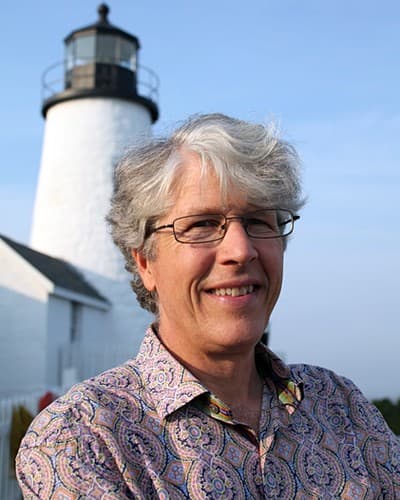
Douglas Preston is a prolific author known for his suspenseful thrillers, often co-authored with Lincoln Child. Their collaborative works, including the popular Pendergast series featuring novels like 'Relic' and 'Blue Labyrinth,' have achieved international bestseller status. Preston also co-authored the non-fiction bestseller 'The Monster of Florence,' showcasing his versatility in both fictional and true crime narratives.







