“Being a princess isn't about pretty dresses and parties. It's about responsibility. It's about your people.”
— Faelyn reflecting on her duties as a princess.

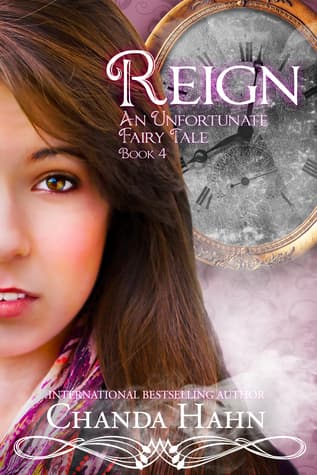
Chanda Hahn (2015)
Genre
Fantasy / Young Adult / Romance
Reading Time
6-7 hours
Key Themes
See below
Sign in to track this book
Haunted by past mistakes and armed with magical shoes, Mina Grime must journey to the genesis of a dark Fae prince's reign to save her fading family, all while racing against a ticking clock that threatens to trap her in the past forever.
Mina Grime, still affected by her previous unauthorized trip to the Fae plane, faces a new, terrifying reality: the Grimm family's magic is fading. Her mother, Ella, is weaker, and the family's magical abilities are diminishing, threatening their existence and connection to the stories they protect. Desperate to save her family, Mina turns to her Fae Godmother for guidance. The Godmother confirms Mina's fears, explaining that the Grimms' magic is tied to the Story itself, which is under threat. A solution, she hints, lies in the past, at the beginning of the dark prince's reign, a period important to the origin of the Grimm family's powers and the curse that binds them.
To prevent her family's magic from disappearing, Mina's Fae Godmother gives her enchanted shoes, like Cinderella's glass slippers but with powerful time-traveling magic. These shoes are her only way to the past and her lifeline back to the present. Mina is told to travel to the era when the dark prince, Rafe, first ascended to power, an important moment in the history of the Grimm family and the Fae. Her mission is to understand and fix the events that led to the weakening of the Story, which directly impacts her family's future. The Godmother warns her about the dangers of altering the past and the limited time she has before she might be trapped forever.
Mina activates the magic shoes and is whisked through time. She lands in a past version of her world, in the royal court of a much younger Prince Rafe. The setting is opulent but has an undercurrent of tension and political intrigue. To her surprise, she meets a younger, less jaded version of Jared, who is still loyal to Rafe and unaware of his future self's complicated relationship with Mina. Mina must navigate this unfamiliar past, trying to blend in and gather information without revealing her true identity or purpose. She observes the dynamics between Rafe, Jared, and other key figures, realizing the past is far more complicated than she anticipated.
Mina carefully observes Prince Rafe, noting that he is not yet the 'dark prince' she knows. He is burdened by the responsibilities of his new reign, facing political challenges and the expectations of his court. She sees moments of vulnerability and the seeds of the darkness that will eventually consume him. Her understanding of Rafe begins to shift, as she realizes his villainy might have been forged by circumstances rather than inherent evil. This nuanced perspective complicates her mission, making her question whether she is there to merely observe or to actively intervene and potentially change the course of history.
Mina finds herself drawn to the younger Jared, who, despite his loyalty to Rafe, has a charm and kindness she recognizes. The romantic tension from her present timeline is complicated by the fact that this Jared has no memory of their shared future. Mina must constantly remind herself of her mission and the potential paradoxes of interfering with her own past. She struggles with the desire to warn him, to change his fate, but knows such actions could have catastrophic consequences for the timeline and her own existence. Her feelings for Jared become a significant internal conflict, threatening to derail her focus.
Through careful observation and investigations, Mina begins to piece together the events that led to the Grimm family's curse and Rafe's descent into darkness. She learns about a powerful magical artifact, a betrayal, and a devastating loss that deeply affected Rafe, pushing him towards his more tyrannical tendencies. She also uncovers the true nature of the pact made between the Fae and the Grimms, realizing that the original terms were twisted over time. This revelation is important to understanding why the Grimms' magic is now fading, as the foundational agreement has been corrupted.
Mina eventually witnesses the specific event that triggers the Grimm curse and solidifies Rafe's path to becoming the dark prince. It involves a moment of profound betrayal, a broken promise from a trusted individual, and a desperate act of magic that had unforeseen consequences. This is the 'beginning of the dark prince's reign' that the Fae Godmother spoke of. Mina understands that this event fractured the balance between the Fae and human worlds, creating a ripple effect that ultimately led to the weakening of the Story and, consequently, her family's magic. She now knows what needs to be fixed, but the 'how' remains elusive and dangerous.
Against the Fae Godmother's implicit warnings about altering the past, Mina realizes that merely observing is not enough. The future of her family depends on her intervention. She devises a plan to prevent the betrayal and the subsequent magical fallout, knowing that even a small change could have drastic repercussions. This decision puts her directly in harm's way, as she must navigate the politics of Rafe's court and avoid detection by powerful Fae who might guard the timeline. Her actions are driven by love for her family and a growing understanding of Rafe's tragic past, blurring the lines between hero and meddler.
Mina's attempt to alter the past ends in a tense confrontation, where she directly intervenes in the events leading up to the curse. Her actions have immediate consequences; she draws attention to herself and faces resistance from those who benefit from the original timeline. The confrontation is chaotic, and the outcome is uncertain. She manages to prevent some aspects of the original tragedy, but whether her changes are enough to save her family's magic, or if they will create new, unforeseen problems, remains to be seen. The magical shoes begin to flicker, indicating her time in the past is running out.
As the magic shoes signal her imminent departure, Mina makes a desperate dash to return to her own time. She leaves the past in a state of flux, unsure if her intervention was successful or if she has merely created a new, potentially worse, timeline. Upon her return, she is greeted by her family, but the immediate effects of her journey are not clear. The fading magic is still present, but there's a subtle shift, a glimmer of hope that suggests her efforts were not entirely in vain. The book ends with Mina grappling with the weight of her choices and the knowledge that the future, though altered, is still unfolding.
The Protagonist
Mina evolves from a reactive protector to a proactive changer of destiny, learning that history is nuanced and that even villains have complex origins.
The Romantic Interest / Supporting
While his present arc isn't the focus, Mina's encounter with his past self reveals the foundational elements of his loyalty and character, providing context for his current personality.
The Antagonist / Supporting
Mina's journey to the past illuminates the tragic origins of Rafe's villainy, showing his transformation from a burdened prince to the dark Fae ruler.
The Supporting
Remains largely static, serving as a wise, powerful, and mysterious mentor figure for Mina.
The Supporting
Her physical decline serves as the central plot driver, highlighting the dire consequences if Mina fails.
The Mentioned / Supporting
Their collective fate hangs in the balance, their survival dependent on Mina's success in the past.
Mina's journey to the past directly confronts the idea of predestination versus the ability to alter one's fate. She grapples with the ethical implications of changing history, even for a noble cause. Her actions in the past, particularly her growing understanding of Rafe's tragic origins, force her to question whether certain events are inevitable or if free will can genuinely shape destiny. The fading Grimm magic is a direct consequence of past events, compelling Mina to decide if she is merely an observer of history or an active participant capable of rewriting it, as seen when she directly intervenes in the pivotal betrayal.
““The past is not a story to be simply read, Mina. It is a living thing, and every touch leaves a ripple.””
These powerful emotions drive many of the characters and plot points. Mina's love for her family fuels her dangerous mission, pushing her to defy warnings and risk her own existence. Her complicated romantic feelings for Jared, especially encountering his younger, loyal-to-Rafe self, add emotional conflict. The central conflict in the past revolves around a profound act of betrayal that sets Rafe on his dark path and leads to the Grimm curse. Mina's understanding of Rafe's past highlights how betrayal can corrupt even those who started with good intentions, shaping their future loyalties and actions.
““Love, like magic, has the power to build and to destroy. It is the strongest force, and the most dangerous.””
Through her observations in the past, Mina gains a more nuanced understanding of Prince Rafe. She sees him not just as the 'dark prince' antagonist she knows, but as a younger, burdened ruler whose descent into villainy was triggered by specific tragic events and betrayals. This shift in perspective challenges her preconceived notions of good and evil, creating empathy for her antagonist. It suggests that villains are not born but made, shaped by circumstances and the choices forced upon them, which complicates Mina's mission and her willingness to intervene.
““Sometimes, the monster is simply a man who has lost too much, and for too long.””
The Grimm family's existence and magic are tied to 'the Story.' The fading of their magic indicates a corruption or weakening of this foundational narrative. Mina's quest to the past is an attempt to fix the 'beginning of the Story' that went wrong. This theme explores how stories shape reality, history, and identity. It also highlights the danger of manipulating or altering these foundational narratives, as even well-intentioned changes can have unforeseen and potentially catastrophic consequences for the present and future. The Fae Godmother's warnings about the fragility of the timeline emphasize this peril.
““The Story is not just words, child. It is the fabric of our world. And when it frays, we all feel the unraveling.””
Enchanted footwear enabling journeys to the past.
The magical shoes are the primary plot device enabling Mina's journey to the past. They function as both a means of transportation and a ticking clock, as their magic has a limited duration for her return. This device allows the narrative to explore alternate timelines and the origins of the Grimm curse. The shoes also serve as a symbol of the Fae Godmother's power and Mina's desperate reliance on ancient magic. Their specific connection to Cinderella's glass slippers adds a meta-fictional layer, linking Mina's quest to classic fairy tales.
The diminishing magical abilities of Mina's family, serving as the inciting incident.
The gradual weakening and fading of the Grimm family's magic is the central inciting incident of the novel. It creates a palpable sense of urgency and threat, driving Mina's desperate quest to the past. This device establishes high stakes, as the very existence of her family and their legacy is on the line. It also serves as a tangible manifestation of a larger problem – the corruption of 'the Story' – providing a clear goal for Mina: to understand and rectify the source of this magical decay in the past.
A pivotal historical period that holds the key to the current conflict.
This specific historical era, where Prince Rafe first ascended to power, acts as a crucial plot device. It is the designated destination for Mina's time travel, serving as the setting where the original events leading to the Grimm curse and Rafe's transformation occurred. By focusing on this period, the narrative can unveil the 'origin story' of the overarching conflict, providing context and depth to the antagonist and the magical curse. It allows for exposition and character development through direct observation of past events.
The inherent dangers and complications of altering the past.
The concept of time travel introduces the inherent dangers and paradoxes of altering the past. The Fae Godmother's warnings about not interfering too much, and the potential for Mina to be trapped in the past or create unforeseen consequences, serve as a constant source of tension and internal conflict for Mina. This device raises philosophical questions about destiny, free will, and the ethical responsibility of changing historical events, even with good intentions. It underscores the fragility of the timeline and the immense power Mina wields.
“Being a princess isn't about pretty dresses and parties. It's about responsibility. It's about your people.”
— Faelyn reflecting on her duties as a princess.
“The hardest battles are not fought with swords, but with words and decisions.”
— A lesson learned by Faelyn about leadership.
“Sometimes, the greatest strength lies in admitting you need help.”
— Faelyn's realization about relying on her friends and allies.
“Love isn't a weakness. It's the most powerful weapon you possess.”
— A romantic moment between Faelyn and her love interest.
“Fear is a liar. It whispers doubts when you should be shouting your truth.”
— Faelyn overcoming her internal struggles and fears.
“A true ruler protects their people, even from themselves.”
— Faelyn making a difficult decision for the good of her kingdom.
“Destiny isn't written in the stars; it's forged by the choices we make.”
— Faelyn considering her path and future.
“Even in the darkest of times, hope can be found in the most unexpected places.”
— A moment of optimism amidst adversity.
“Forgiveness is not about forgetting, but about choosing to move forward.”
— Faelyn grappling with past betrayals.
“The crown doesn't make the queen; the queen makes the crown.”
— A conversation about the essence of true royalty.
“Sometimes, you have to break the rules to save what's truly important.”
— Faelyn defying tradition for a greater cause.
“Trust is a fragile thing, easily broken, and painstakingly rebuilt.”
— Faelyn dealing with the aftermath of a betrayal.
“A kingdom is only as strong as the bonds between its people.”
— Faelyn realizing the importance of unity in her realm.
“True courage isn't the absence of fear, but the triumph over it.”
— Faelyn facing a daunting challenge despite her apprehension.
Ready to see how well you understood this book? Take our interactive quiz with 10 questions.







