“The past, the present and the future are not discrete, but are inextricably bound together.”
— Rivers reflecting on the nature of time and trauma.

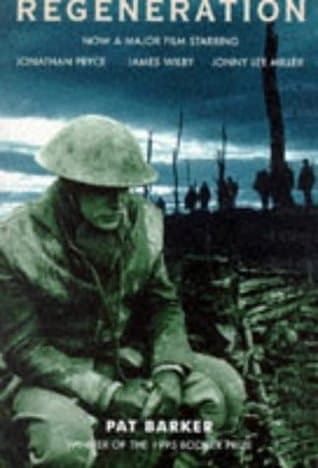
Pat Barker (1991)
Genre
Literary Fiction / Historical Fiction
Reading Time
240 min
Key Themes
See below
Sign in to track this book
After the Great War, a decorated officer's refusal to fight lands him in a psychiatric hospital, where he battles for sanity amid electroshock therapy and questions what courage truly means.
In April 1917, decorated war poet and officer, Siegfried Sassoon, is sent to Craiglockhart War Hospital in Scotland. His crime is not cowardice, but a publicly published 'Soldier's Declaration' protesting World War I, which the military sees as subversive. Rather than court-martial him, which would make him a martyr, authorities decide he has 'neurasthenia' (shell shock) and send him for treatment. Here, he is cared for by Dr. William Rivers, a pioneering psychiatrist who uses talking cures and hypnosis, rather than the more brutal electrical treatments common at the time. Sassoon resists the idea of being 'cured' of his anti-war convictions.
Dr. Rivers, a reserved and empathetic man, begins his initial interviews with Sassoon. Sassoon is articulate and firm in his anti-war stance, presenting his declaration as a moral and political statement rather than a symptom of mental illness. Rivers, though bound by duty, grapples with the ethical implications of 'curing' a man of convictions that Rivers himself finds understandable. Their conversations cover Sassoon's horrific experiences in the trenches, his grief for fallen comrades, and the disillusionment that fueled his protest. Rivers focuses on the psychological trauma, while Sassoon emphasizes the moral outrage.
While at Craiglockhart, Siegfried Sassoon meets a young, aspiring poet named Wilfred Owen. Owen is impressed by Sassoon's poetry and his public stand against the war. Sassoon recognizes Owen's talent and mentors him, offering guidance and encouragement for his writing. Sassoon's influence helps Owen refine his poetic voice and focus on the realities of trench warfare. Their shared experiences and artistic sensibilities create a strong bond, with Sassoon helping Owen express the horrors he witnessed.
Dr. Rivers's daily routine involves treating a range of shell-shocked officers. One patient is Billy Prior, a working-class officer who suffers from severe mutism, night terrors, and hysterical paralysis. Prior's case is challenging, as his symptoms are rooted in combat trauma and his complex class identity. Rivers uses hypnosis and 'talking cure' methods to help Prior regain his speech and confront repressed memories. Prior's recovery is slow and painful, marked by relapses and emotional breakthroughs, as he deals with the unspeakable horrors he witnessed.
As Billy Prior slowly recovers his speech and mobility, he begins to venture outside the hospital. He forms a relationship with Sarah Lumb, a young woman who works in a munitions factory. Their connection highlights the class differences in wartime Britain: Prior, an officer despite his working-class origins, and Sarah, a working-class woman contributing to the war effort. Their interactions offer a glimpse into the civilian experience of the war and the social dynamics of the period. Prior struggles with his identity and place in society, navigating his officer status and his roots.
The narrative introduces Dr. Lewis Yealland, a neurologist at another military hospital, who uses harsh and often cruel methods to 'cure' shell-shocked soldiers. Yealland's treatments involve electric shock therapy, often applied directly to the throat for mutism, and other forms of aversion therapy, designed to force patients out of their symptoms. His approach is driven by a belief that shell shock is largely a matter of willpower and that patients are faking. This contrasts with Rivers's empathetic, psychological approach, showing different philosophies regarding mental illness during the war.
As Sassoon's time at Craiglockhart progresses, pressure on him to abandon his protest and return to duty increases. Dr. Rivers, while understanding Sassoon's views, is tasked with ensuring his return to fitness for service. Sassoon struggles with the conflict between his moral convictions and the expectations of his rank and country. He knows that to return to the front would betray his declaration, but to refuse would mean a court-martial and public disgrace, possibly undermining his anti-war cause. His internal struggle reflects broader societal pressures on individuals during wartime.
Billy Prior experiences a relapse after a vivid nightmare, losing his voice again and suffering from anxiety. Rivers works with him, using deep hypnosis to uncover traumatic memories. Prior eventually recalls horrific details of an explosion and the death of a friend, which had been repressed. This breakthrough is agonizing but important for his recovery. He begins to speak more freely and his physical symptoms recede, showing the power of Rivers's patient-centered therapy in addressing deep psychological wounds, even if scars remain.
After much internal debate and conversations with Rivers, Siegfried Sassoon makes the decision to return to the Western Front. He realizes that his protest from within a hospital is limited in impact and that his comrades are still fighting and dying. He feels a loyalty to the men in the trenches, despite his hatred for the war. This decision is not a surrender of his beliefs but a complex choice born of duty, camaraderie, and a desire to be with his men, even if it means re-entering the hell he condemned. Rivers observes Sassoon's departure with respect and sadness.
Under Sassoon's mentorship, Wilfred Owen's poetry changes. He moves from traditional, romantic verse to stark, visceral depictions of trench warfare that would define his legacy. Sassoon helps Owen hone his craft, encouraging him to use vivid imagery to convey the realities of the front. As Sassoon prepares to leave Craiglockhart, he feels a sense of accomplishment regarding Owen's development, recognizing a new poetic voice. Owen's work becomes a record of the horrors of war, fulfilling Sassoon's hope that someone would articulate the truth.
Dr. Rivers continues his work at Craiglockhart, affected by his patients' experiences and the ethical paradox of his role. He is tasked with 'regenerating' men, making them fit to return to the conditions that caused their breakdowns. He grapples with the moral implications of sending men like Sassoon and Prior back to almost certain death or further trauma. Rivers's own health deteriorates under the strain, experiencing symptoms like stammering, mirroring his patients' conditions. He reflects on the conflict between healing and the demands of war, questioning his 'cure'.
As the novel concludes, the war continues, and the future of the characters is uncertain. Sassoon has returned to the front, Owen is still at Craiglockhart but destined for the trenches, and Prior has made progress but is also expected to return to duty. Rivers continues his work, burdened by the knowledge that his efforts to heal are ultimately in service of a destructive war machine. The book ends not with resolution, but with a poignant sense of the ongoing human cost of the conflict and the psychological scars it leaves, emphasizing the tragic cycle of war and trauma.
The Protagonist
Rivers begins as a detached professional but becomes increasingly empathetic and morally conflicted, questioning the purpose of his 'regeneration' work.
The Protagonist
Sassoon grapples with his anti-war convictions versus his loyalty and ultimately makes the difficult decision to return to the front.
The Supporting
Prior moves from severe, repressed trauma and mutism towards a fragile recovery, regaining his voice and confronting his memories.
The Supporting
Owen develops from an unpolished poet into a powerful voice against the war, inspired by Sassoon.
The Supporting
Sarah remains a stable, grounding presence for Prior, offering a glimpse into civilian life.
The Antagonist
Yealland remains static in his brutal methodology, serving as a foil to Rivers's humane approach.
The Supporting
Anderson slowly grapples with his memory loss, seeking to reconnect with his identity and family.
The Mentioned
Callan is a static character, serving as an example of the harsh treatment received by some shell-shocked soldiers.
The novel portrays the psychological and physical horrors of World War I, not through direct battle scenes, but through the shattered minds of soldiers returning from the front. Descriptions of shell shock, mutism, nightmares, and hysterical paralysis show the lasting damage inflicted by combat. The 'insanity' of war is highlighted by the paradox of 'curing' men only to send them back to the conditions that caused their illness, as Dr. Rivers deals with this ethical problem. Sassoon's protest directly challenges the sanity of continuing the conflict, arguing against the senseless slaughter.
“What Sassoon was saying, in effect, was that the only sane response to an insane situation was to behave insanely.”
The novel explores how war trauma challenges traditional ideas of masculinity. Soldiers are expected to be brave and stoic, yet shell shock strips them of these 'manly' attributes, leading to symptoms like crying, screaming, and hysterical paralysis. Rivers's patients, including Prior, struggle with the shame and emasculation associated with their conditions. The pressure to return to the front, even when psychologically broken, emphasizes societal expectations placed on men. The novel critiques the idea that emotional vulnerability is a weakness, showing it instead as a natural response to unimaginable horror.
“He'd always thought of himself as a man, but the army had shown him that he was only a boy, a boy who could be broken.”
Class distinctions are a theme, seen in the different experiences and treatment of officers and privates, and in social interactions outside the hospital. Billy Prior, a working-class officer, navigates his ambiguous position, feeling alienated from both his origins and the upper-class establishment. His relationship with Sarah Lumb highlights the divide between officers and civilians, and the different ways war impacts various social classes. The contrast between the 'talking cure' offered to officers and the brutal electric shock therapy often given to privates (like Callan by Dr. Yealland) shows class biases within the military medical system.
“He was an officer, but he was also a working-class lad, and the two didn't sit easy together.”
A central ethical problem is Dr. Rivers's role: is it right to 'cure' men of their psychological wounds only to send them back to the front to face further trauma or death? Rivers grapples with the moral implications of regenerating soldiers for a war he himself questions. Sassoon directly challenges this by refusing to be 'cured' of his anti-war convictions. The novel contrasts Rivers's empathetic approach with Dr. Yealland's brutal methods, making readers consider the responsibility of healers during conflict and the line between therapy and coercion when national interest is at stake.
“The problem was that if he cured them, they went back to the trenches. And if they went back to the trenches, they were likely to be killed, or wounded, or made mad again.”
Language, both spoken and written, is a powerful force throughout the novel. Sassoon's 'Soldier's Declaration' uses words as a weapon against the war, and his poetry, along with Owen's, expresses the horrors of the trenches. Dr. Rivers's 'talking cure' relies on language to unlock and process trauma, as seen in Prior's recovery from mutism. The struggle to articulate the unspeakable, and the power of finding the right words to convey truth and emotion, is central to the narrative, highlighting poetry as a form of witness and resistance.
“He was writing the truth, the truth that would shock them out of their complacency.”
Blends real historical figures with fictional creations.
Barker masterfully combines real historical figures like Siegfried Sassoon, Wilfred Owen, and Dr. W.H.R. Rivers with fictional characters such as Billy Prior and Sarah Lumb. This blend grounds the narrative in historical authenticity while allowing for creative exploration of psychological and social themes. The presence of known figures lends gravitas and credibility to the fictionalized events, making the exploration of trauma and war feel deeply resonant and historically informed. It allows the author to speculate on the inner lives and interactions of these real people, enriching the historical record with emotional depth.
Juxtaposes two opposing medical philosophies.
The stark contrast between Dr. Rivers's empathetic, psychological approach to treating shell shock and Dr. Yealland's brutal, coercive methods (e.g., electric shock therapy) serves as a powerful plot device. This juxtaposition highlights the ethical debates surrounding mental health treatment during the war and underscores the humanity of Rivers's methods against the inhumanity of Yealland's. It deepens the central theme of the ethics of healing in wartime and showcases the different ways individuals responded to the crisis of war, both medically and morally.
Represents the unspeakability of war trauma.
Billy Prior's mutism is a potent symbol of the unspeakable horrors of war and the psychological repression that can result from extreme trauma. His inability to speak reflects the breakdown of language in the face of such profound suffering, and the societal inability to fully comprehend or articulate the soldier's experience. His eventual recovery of speech, through Rivers's patient therapy, symbolizes the difficult and painful process of confronting buried memories and beginning to process trauma, emphasizing the necessity of giving voice to suffering.
Reveals repressed trauma and psychological states.
Dreams and nightmares are frequently used to reveal the characters' repressed traumas and subconscious fears, particularly for Billy Prior. Rivers often utilizes dream analysis as part of his 'talking cure' to help patients access and process their buried memories of combat. These vivid, often horrifying, nocturnal experiences provide direct insight into the psychological landscape of the shell-shocked soldiers, illustrating the pervasive and inescapable nature of their trauma even in sleep. They serve as a powerful narrative tool to externalize internal suffering.
“The past, the present and the future are not discrete, but are inextricably bound together.”
— Rivers reflecting on the nature of time and trauma.
“It was better to be a coward than to be dead.”
— Sassoon's internal struggle with his protest and the reality of war.
“The horror of war was not that it killed men, but that it twisted them, broke them, made them do things they would never have done otherwise.”
— Rivers contemplating the psychological damage of war.
“What was the point of getting better if you were only going to be sent back to the front?”
— A common sentiment among the shell-shocked soldiers at Craiglockhart.
“He knew that what he was doing was wrong, but he couldn't stop himself.”
— Reflecting on the compulsion some soldiers felt to return to combat.
“The real enemy was not the Germans, but the people who sent them to fight.”
— Sassoon's growing political awareness and disillusionment.
“Silence was a form of complicity.”
— Rivers considering the moral implications of not speaking out.
“The greatest cruelty was to make people hope when there was no hope.”
— A reflection on false promises and the psychological toll.
“He was a doctor, not a priest. He could heal bodies, but not souls.”
— Rivers grappling with the limitations of his medical profession in the face of profound spiritual and moral injury.
“Regeneration. That was the word, wasn't it? But what did it mean to regenerate something that was fundamentally broken?”
— Rivers' internal questioning of the possibility of true recovery from the ravages of war.
“The war was like a dream, a nightmare from which he could not wake.”
— A common feeling among the soldiers, blurring the lines between reality and psychological torment.
“He envied the dead, for they no longer had to feel.”
— A soldier's desperate wish for an end to suffering.
“The human mind, he thought, was a vast, dark forest, full of strange and terrible creatures.”
— Rivers' ongoing exploration of the complexities of the human psyche.
“He had seen too much. And what he had seen could not be unseen.”
— The indelible mark left by the horrors of war on those who experienced it.
Ready to see how well you understood this book? Take our interactive quiz with 10 questions.

Patricia Mary W. Barker, is a British writer and novelist. She has won many awards for her fiction, which centres on themes of memory, trauma, survival and recovery. Her work is described as direct, blunt and plainspoken. In 2012, The Observer named the Regeneration Trilogy as one of "The 10 best historical novels".







