BookBrief
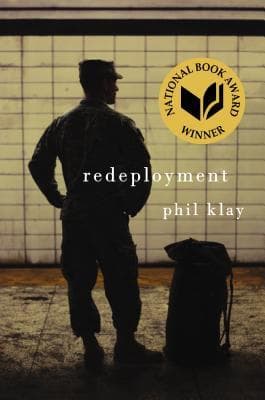
Redeployment cover
Archivist's Choice

Redeployment

Phil Klay (2014)

Genre

Literary Fiction / Historical Fiction

Reading Time

360 min

Key Themes

See below

Track Your Reading

Sign in to track this book

Through the raw voices of Marines and officers, "Redeployment" explores the moral challenges of the Iraq and Afghanistan wars, showing the brutal reality of combat and the isolating struggle of soldiers returning to a world that does not understand.

Synopsis

Phil Klay's "Redeployment" is a collection of short stories about the experiences of U.S. Marines and other service members during and after the wars in Iraq and Afghanistan. Each story has a different narrator, offering various views on the realities of combat, the bureaucratic problems of military life, and the psychological effects of returning home. From a soldier dealing with the trauma of shooting dogs that fed on human remains, to a Lance Corporal seeking to make amends for a friend's actions, and a chaplain whose faith is tested by a ruthless colonel, the characters face moral questions, violence, and the search for meaning in chaos. The collection explores themes of guilt, fear, faith, and the gap between the war zone and civilian life, showing war's lasting impact on those who fight it.
Reading time
360 min
Difficulty
Medium
Pacing
Moderate
Mood
Gritty, Reflective, Somber, Unflinching, Disillusioned
✓ Read this if...
You want a raw, unvarnished, and deeply empathetic look into the minds and experiences of soldiers during and after the wars in Iraq and Afghanistan, told through diverse voices.
✗ Skip this if...
You prefer light-hearted reads or are sensitive to graphic depictions of war, trauma, and moral conflict.

Plot Summary

Redeployment

Sergeant Price, a Marine veteran, returns home from Iraq and feels alienated from civilian life. He remembers shooting dogs that fed on human remains in Fallujah, a memory that bothers him. His wife, Jess, tries to connect with him, but he feels a huge gap between their experiences. Price struggles with everyday tasks, feels disconnected from friends who haven't served, and deals with the emotional numbness and constant alertness he developed overseas. He attends therapy but finds little comfort, feeling misunderstood by those who haven't seen the same horrors. The story shows his internal conflict and the difficulty of returning to a society that cannot understand his war reality.

After Action Report

Lance Corporal Decker talks about a friendly fire incident in Iraq where his best friend, Corporal Greg Davis, was killed by an American tank. Decker feels a huge amount of guilt, believing he should have stopped it. He describes the investigation after the incident, the attempts to blame someone, and the emotional effect it has on the unit. Decker's story explores the complex parts of friendship and the psychological impact of seeing a close friend die in such a pointless way. He struggles with the official story versus his personal truth, looking for a way to honor Greg and find forgiveness for a death he wasn't directly responsible for but feels deeply connected to.

OIF

The unnamed narrator, a Mortuary Affairs Marine, shares his experiences collecting the remains of American and Iraqi soldiers and civilians. He describes the gruesome and careful work, the emotional detachment needed, and its deep impact on him. The Marine details identifying bodies, dealing with fragmented remains, and constant exposure to death. He recounts specific events that show the brutality of war and the dehumanizing aspects of his job, but also touches on moments of unexpected humanity and friendship among his unit. The story is a clear picture of the unseen and often ignored work of war, focusing on the physical and psychological toll of dealing with the dead.

Prayer in the Furnace

Chaplain John gives spiritual guidance to Marines in Iraq, but his faith is severely tested by the realities of combat and the morally questionable actions of Colonel Michael Shelby. Shelby, a religious Christian, shows extreme aggression and justifies his brutal tactics with religious passion, pushing his men to violence while quoting scripture. Chaplain John struggles to connect the Colonel's actions with his own understanding of Christianity and finds he cannot truly comfort the soldiers, whose experiences defy simple religious solace. He questions good and evil, the role of faith in war, and his own ability to minister in such a morally compromised environment, feeling his spiritual beliefs fall apart.

Money as a Weapons System

Sergeant Major Davies, a Foreign Service Officer, is assigned to implement various reconstruction projects in Iraq, often with strange and ineffective results. He recounts the bureaucratic obstacles, cultural misunderstandings, and the absurdity of some initiatives, such as trying to teach Iraqis baseball as cultural exchange and economic development. Davies deals with corrupt officials, well-meaning but misguided American policies, and the constant threat of violence, all while trying to justify spending large amounts of money. The story shows the gap between policymakers' intentions and the realities on the ground, exposing the futility and irony of many nation-building efforts in a war zone.

Psychological Operations

Captain Miller, a Psychological Operations (PSYOP) officer, describes his job of spreading propaganda and manipulating information to influence the Iraqi population. He deals with the ethical questions of his work, questioning the line between persuasion and deception, and the long-term results of such tactics. Miller recounts specific operations, from creating leaflets to broadcasting messages, and the internal struggle he faces knowing he is actively shaping perceptions, often through partial truths or outright lies. The story explores the psychological warfare aspect of modern conflict, the moral compromises involved, and the blurring of lines between combat and information manipulation.

War Stories

This story explores the difficulty veterans have in telling their wartime experiences to civilians who lack context or understanding. Various veterans share their attempts to tell 'war stories,' often finding that the truth is too complex, too upsetting, or simply impossible for those who haven't served to grasp. They simplify, exaggerate, or even make up details to make their stories more acceptable or heroic. The story highlights the gap between the soldier's reality and civilian perception, and the pressure veterans feel to fit certain stereotypes. It shows the isolating effect of this communication barrier and the internal conflict of wanting to share while knowing it is mostly pointless.

Unless It's a Movement

Corporal David Miller, dealing with combat trauma, grapples with the moral questions of war, especially after a raid that causes civilian casualties. He seeks comfort and understanding from his chaplain, wrestling with questions of faith, sin, and redemption in a context where violence is common. Miller struggles to find a 'meaning' or 'purpose' behind the horrors he sees and commits, desperate for a framework that can justify the suffering. His internal thoughts show a deep spiritual crisis, as he tries to connect his actions with his conscience and his religion's teachings, questioning if any act of war can truly be right.

A Field of Thorns

The narrator, a veteran, describes his post-deployment struggles with Post-Traumatic Stress Disorder (PTSD), including nightmares, anxiety, and difficulty keeping relationships. He recounts the frustrating and often dehumanizing process of navigating the Veterans Affairs (VA) system to get mental health care and benefits. The story details the long waiting lists, the impersonal bureaucracy, and the feeling of being just another number. He reflects on how the war continues to affect him long after leaving the combat zone, showing up in his daily life and his interactions with family and friends. This story highlights the ongoing battle many veterans face at home, struggling with invisible wounds and systemic obstacles.

The War on Terror

Sergeant Major Davies (from 'Money as a Weapons System' but in a different context) thinks about his many deployments across Iraq and Afghanistan, detailing the total cost of continuous combat. He describes the physical exhaustion, the mental fatigue, and the gradual loss of his sense of self outside the military. Davies touches on the repetitive nature of the conflict, the changing goals, and the feeling of being constantly involved in a war without clear victory. The story emphasizes the long-term impact of sustained military service, showing a soldier who has become so used to war that civilian life seems almost strange, highlighting the idea of a 'forever war' and its effects on those who fight it.

Principal Figures

Sergeant Price

The Protagonist

Price begins as a man deeply scarred and alienated, attempting to navigate civilian life. His arc highlights the enduring difficulty of 'redeployment' and the chasm between wartime experience and civilian understanding, with no clear resolution.

Lance Corporal Decker

The Protagonist

Decker begins consumed by guilt and a need for expiation. His arc shows him wrestling with blame and the search for meaning in a tragic loss, ultimately finding some peace by carrying his friend's memory.

Chaplain John

The Protagonist

Chaplain John starts as a steadfast man of faith, but his experiences gradually erode his certainties. His arc depicts a profound spiritual crisis as he grapples with reconciling his beliefs with the atrocities he witnesses.

Sergeant Major Davies

The Protagonist / Supporting

Davies begins as a participant in seemingly absurd nation-building efforts, becoming increasingly jaded. His arc evolves into a reflection on the enduring, exhausting nature of the 'War on Terror' and its psychological cost.

Colonel Michael Shelby

The Antagonist / Supporting

Shelby remains a static character, a force of unyielding, religiously-infused aggression, serving as a catalyst for Chaplain John's crisis of faith.

Corporal David Miller

The Protagonist

Miller's arc is one of intense spiritual and moral questioning, as he attempts to find meaning and absolution in the face of brutal realities.

The Mortuary Affairs Marine

The Protagonist

The Mortuary Affairs Marine's arc is less about personal transformation and more about the enduring psychological impact of his grim duties, showcasing the profound and lasting effect of his work.

Captain Miller

The Protagonist

Miller's arc involves a continuous internal debate about the ethics of his work, highlighting the moral compromises inherent in psychological warfare.

Themes & Insights

The Trauma of Redeployment and Civilian Alienation

Many stories, especially 'Redeployment,' explore the difficulty veterans have in adjusting to civilian life after combat. Soldiers return to a world that cannot understand their experiences, leading to deep alienation, emotional numbness, and isolation. The everyday concerns of civilian life seem unimportant compared to the life-or-death situations they faced, creating a gap between veterans and their loved ones. This theme is clearly shown through Sergeant Price's struggle with daily interactions and his wife's inability to understand his changed mind.

We had been through something and they hadn’t. And trying to explain it to them was like trying to explain color to a blind man.

Sergeant Price, 'Redeployment'

The Moral Ambiguity and Psychological Cost of War

Klay consistently explores the ethical problems and psychological toll of modern warfare. Characters like Chaplain John ('Prayer in the Furnace') and Corporal David Miller ('Unless It's a Movement') deal with questions of right and wrong, faith, and the justification of violence in a chaotic environment. The stories show how war's demands force individuals to commit acts that challenge their moral beliefs, leading to guilt, spiritual crises, and lasting mental scars, whether they are directly fighting or in support roles.

It takes a certain kind of man to believe in God on a battlefield, but a different, darker kind to use God to justify the killing.

Chaplain John, 'Prayer in the Furnace'

The Absurdity and Bureaucracy of War

Several stories, particularly 'Money as a Weapons System,' highlight the often-absurd and illogical parts of modern military operations and nation-building efforts. The gap between strategic goals and on-the-ground realities, along with bureaucracy and cultural misunderstandings, often leads to ineffective or outright silly results. This theme shows the futility and waste in certain aspects of the conflict, revealing how good intentions can fail due to impracticality and a lack of real understanding.

We were fighting a war with money, and the money was going to the wrong people, for the wrong reasons, and nothing was ever going to change.

Sergeant Major Davies, 'Money as a Weapons System'

The Nature of Truth and Narrative in War

The collection explores how 'war stories' are made, shared, and often changed, by soldiers themselves and by the media and public. In 'War Stories,' veterans struggle to tell their true experiences, often simplifying or embellishing because the full, honest truth is too complex or upsetting for civilians to grasp. This theme questions the truthfulness of stories about conflict, highlighting the gap between lived experience and public perception, and the isolating effect of this communication barrier.

The problem with telling war stories is that you can’t tell the truth. You can tell a story that’s true, but you can’t tell the truth.

Unnamed veteran, 'War Stories'

Plot Devices & Literary Techniques

First-Person Narration

Each story is told from the unique perspective of a different soldier or veteran.

By employing a rotating first-person narration for each story, Klay provides an intimate and varied look into the minds and experiences of individuals across different roles and ranks in the military. This device allows readers to directly access the internal struggles, moral dilemmas, and emotional landscapes of characters ranging from combat Marines to chaplains and Foreign Service Officers. It fosters a deep sense of empathy and authenticity, making the complex psychological and ethical dimensions of war immediate and personal to the reader, rather than presenting a detached, omniscient view.

Episodic Structure (Short Story Collection)

The book is a collection of interconnected short stories rather than a single continuous narrative.

The episodic structure of 'Redeployment' allows Klay to explore the multifaceted impacts of the Iraq and Afghanistan wars from a wide array of perspectives without being confined to a single plotline or character arc. Each story acts as a self-contained vignette, focusing on a specific aspect of the war experience—be it combat trauma, bureaucratic absurdity, or moral crisis—yet collectively, they build a comprehensive and nuanced picture of the conflict and its aftermath. This structure enables the portrayal of diverse experiences and avoids oversimplifying the complex nature of modern warfare.

Juxtaposition of Combat and Civilian Life

Sharp contrasts between the brutal realities of war and the mundane struggles of homecoming.

Klay frequently uses the juxtaposition of intense combat experiences with the often-trivial concerns of civilian life to highlight the profound alienation felt by returning soldiers. Scenes of gruesome violence or moral compromise are often followed by descriptions of suburban routines, family dinners, or bureaucratic hurdles, creating a jarring effect. This device emphasizes the immense psychological chasm between the two worlds, illustrating how difficult, if not impossible, it is for veterans to simply 'redeploy' back into a society that cannot comprehend their trauma.

Dark Humor and Irony

The use of black humor and ironic situations to underscore the absurdity and tragedy of war.

Klay often injects dark humor and irony into his narratives, particularly in stories like 'Money as a Weapons System,' to cope with and highlight the inherent absurdities, frustrations, and horrors of war. This device serves to underscore the irrationality of certain situations, the disconnect between intentions and outcomes, and the grim reality that soldiers often face. The humor, though dark, provides a momentary release from the intense gravity of the subject matter, while simultaneously deepening the reader's understanding of the characters' coping mechanisms and the inherent illogicality of conflict.

Critical analysis

Notable Quotes

We are a country that has been at war for my entire adult life. It's a country of people who have sent their sons and daughters to fight, to die, to be broken, and then to come home and be forgotten.

From the story 'Redeployment,' reflecting on the civilian-military divide.

War is like a fever. You can take the temperature, but you can't really describe the heat.

From 'OIF,' a chaplain's struggle to articulate the experience of war.

The thing about war is that you don't get to choose your battles. You just get chosen.

From 'Unless It's a War,' a soldier's resignation to their role in conflict.

You come back, and you're supposed to be normal, but you're not. You're a different person. And nobody really gets that.

From 'Psychological Operations,' a veteran's struggle with reintegration.

All I could think was, This is what war does. It strips away everything but the bare essentials, and then it takes those too.

From 'Money as a Weapon System,' witnessing the destructive power of conflict.

We killed people. We broke things. We were good at it. It was our job.

From 'After Action Report,' a blunt assessment of military action.

Grief is a ghost. You don't see it, but you know it's there. It haunts you.

From 'Prayer in the Furnace,' a chaplain's reflection on loss and trauma.

You don't get to be a hero just for showing up. You get to be a hero for what you do, for who you are.

From 'Redeployment,' challenging simplistic notions of heroism.

It's hard to explain to people what it's like to be constantly scanning for threats, even when there aren't any.

From 'FRAGO,' detailing the lingering effects of combat on a soldier's psyche.

The world doesn't stop for you just because you've seen terrible things.

From 'Redeployment,' the harsh reality of returning home after war.

We were fighting for something, but it was hard to say what it was, exactly.

From 'Psychological Operations,' questioning the objectives and meaning of the war.

You can't just unsee what you've seen. You can't unfeel what you've felt.

From 'Unless It's a War,' the indelible impact of combat experiences.

The dead don't care about your politics. They just want to be remembered.

From 'War Stories,' emphasizing the human cost beyond political rhetoric.

We thought we were bringing freedom, but what we brought was chaos.

From 'OIF,' a critical reflection on the consequences of intervention.

Quiz

Test Your Knowledge

Ready to see how well you understood this book? Take our interactive quiz with 10 questions.

10
Questions
~5
Minutes
?
Best Score

Key Questions (FAQ)

'Redeployment' explores the profound disjunction between the combat experience in Iraq and Afghanistan and the difficulty of reintegrating into American civilian life. It delves into the psychological and moral toll of war, highlighting themes of brutality, faith, guilt, and the struggle for meaning amidst chaos and the aftermath of violence.

About the author







