“The price of freedom is eternal vigilance.”
— A recurring theme about the constant need for readiness against threats.

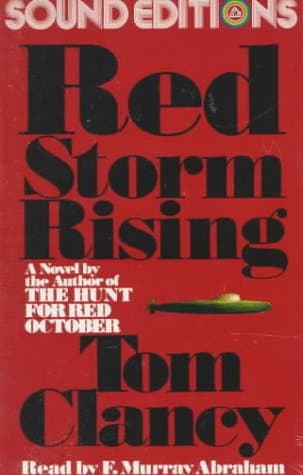
Tom Clancy (1983)
Genre
Thriller / Historical Fiction / Mystery
Reading Time
1200 min
Key Themes
See below
Sign in to track this book
After a terrorist attack cripples Soviet oil production, the Kremlin plans to seize the Persian Gulf, starting a global war that pushes humanity to the brink.
The novel begins with a terrorist attack by radical Muslim separatists on the Soviet Union's oil refinery and storage facilities at Nizhnevartovsk. The explosion, carried out with military precision using a hijacked fuel truck, causes major damage, destroying a large part of the USSR's petroleum processing and reserves. This sabotage creates an immediate energy crisis for the Soviets, threatening their economy and military. The Politburo, led by Chairman Andropov, tries to find a solution, with limited options and winter approaching. The attack's success is due to intelligence from a disgruntled former Soviet officer seeking revenge.
Facing economic and military collapse from the oil shortage, the Soviet Politburo, guided by KGB Chairman Sergetov, plans to seize the Persian Gulf oil fields. To do this, they must first neutralize NATO. The plan involves a large deception: a fabricated story about a West German terrorist attack on Soviet territory to provoke a conventional war in Europe. The goal is a quick, decisive victory that cripples NATO and allows the Soviets to turn to the Middle East, securing their energy future at any cost, even global conflict.
The Soviet plan unfolds. They stage a 'terrorist' attack on the Kremlin, using captured West German agents and explosives, making it appear the Bundeswehr is responsible. This act rallies the Soviet population and justifies their military actions. At the same time, the Soviet military begins a large, covert mobilization of forces in Eastern Europe, deploying tanks, aircraft, and infantry divisions under the guise of routine exercises. NATO intelligence, especially the NSA and CIA, starts noticing unusual activity, but the scale and speed of the Soviet buildup make it hard to know their true intentions before it is too late.
Despite initial disbelief and political hesitation, NATO intelligence confirms the imminent Soviet threat. However, before a full defense can be set, the Soviets launch a coordinated conventional assault across the Inner German Border. Thousands of tanks, supported by airpower and artillery, pour into West Germany. NATO air forces, including US Air Force F-15s and F-16s, engage in dogfights with Soviet MiGs and Sukhois, while ground forces try to hold the line. The initial Soviet offensive gains ground, overwhelming some NATO forward positions and pushing deep into West German territory, threatening key strategic locations.
Preventing US reinforcements from reaching Europe is central to Soviet strategy. Soviet attack submarines, including Akula-class boats, deploy into the North Atlantic to target NATO shipping convoys. The USS Pharris, an American frigate, and its crew, including Captain South, play an important role in anti-submarine warfare, hunting and engaging Soviet subs. At the same time, Soviet 'Backfire' bombers, flying from bases in the Kola Peninsula, launch missile attacks against NATO carrier battle groups, including the USS Nimitz. The battle becomes a desperate struggle for control of the sea lanes, with heavy losses on both sides.
Recognizing Iceland's importance for controlling the Greenland-Iceland-UK (GIUK) gap, the United States launches Operation Dagger, an amphibious assault to seize the island. A force of US Marines, supported by naval and air assets, lands on Iceland to secure Keflavik Air Base and deny the Soviets its use as a forward operating base for their naval aviation and submarines. The Marines face strong resistance from Soviet Spetsnaz forces already on the island and a later Soviet counter-landing. The battle for Iceland is brutal, but the Marines secure the island, providing a vital foothold for NATO in the North Atlantic.
The air war over Europe is intense. NATO's air forces, including pilots like Lieutenant Mike Edwards, aim for air superiority, provide close air support, and conduct Suppression of Enemy Air Defenses (SEAD) missions. F-111 Aardvark aircraft conduct deep strikes against Soviet airfields and command centers, while electronic warfare aircraft jam enemy radar. Soviet air defenses, including advanced SAM systems, are formidable, leading to significant losses for both sides. Air supremacy is important, as control of the skies dictates the ground war and the ability to stop enemy supply lines.
After initial Soviet breakthroughs, NATO forces stabilize the front lines in West Germany, though at a high cost. The battle becomes a grinding war of attrition, with both sides suffering heavy casualties. American and West German tank units engage in large armored clashes, showing the brutal reality of modern conventional warfare. NATO launches limited counter-offensives, trying to regain lost territory and disrupt Soviet logistical chains. The Soviets, despite their numerical superiority, find their advance stalled by NATO resistance, effective anti-tank weaponry, and their own logistical challenges. The fighting is fierce, with no clear victor on the ground.
As the ground war stalls, NATO decides to escalate by launching a strategic bombing campaign against Soviet territory. B-52 Stratofortresses, flying from bases in the United States and the UK, strike Soviet infrastructure, including bridges, rail lines, and industrial targets. The goal is to cripple the Soviet war machine by disrupting supply lines and industrial capacity, forcing them to divert resources from the front lines. These missions are hazardous, as the B-52s contend with Soviet air defenses and interceptors, leading to several encounters and losses for American crews.
The combined pressure of NATO's air superiority, successful anti-submarine warfare, and the strategic bombing campaign begins to affect the Soviet Union. Their logistical problems worsen, their air force suffers unsustainable losses, and their naval power in the Atlantic is severely degraded. The capture of Iceland proves a key advantage for NATO, allowing better control of the GIUK gap. Despite heavy casualties, NATO forces hold the line in Europe, preventing a decisive Soviet breakthrough. The Soviet Politburo starts to realize their plan is failing, and the war is not going as predicted, leading to internal tensions.
With resources dwindling and initial momentum lost, the Soviets launch a desperate final offensive in Europe. They commit their remaining strategic reserves, including elite Guards divisions, in a last effort to break NATO lines and achieve victory. However, NATO intelligence, having intercepted Soviet communications, is prepared. The offensive meets strong resistance and is repelled, though with heavy losses on both sides. The failure of this final push breaks the morale of the Soviet forces and signals the complete collapse of their strategic objectives in Europe, leaving them in a difficult position.
As the war turns against the Soviet Union, internal dissent within the Politburo reaches a breaking point. KGB Chairman Sergetov, seeing the catastrophic failure of their war plan and the immense cost, stages a coup against hardline Politburo members, including Chairman Andropov. Sergetov, with other pragmatic leaders, understands that continuing the war will only lead to more devastation, potentially nuclear war. They seize control of the Soviet government and immediately contact NATO, proposing a ceasefire. The war ends with a strategic defeat for the Soviet Union, having failed to achieve its objectives and suffering immense losses.
The Supporting
From a frigate commander fighting a desperate defense, Morris rises to command a destroyer and plays a pivotal role in the Atlantic victory.
The Supporting
Jackson develops from a frontline defender into a seasoned combat veteran, experiencing the brutal realities of modern air warfare.
The Supporting
Edwards matures from an eager but green pilot into a more confident and effective combat aviator.
The Supporting
McCafferty successfully navigates his carrier group through intense naval warfare, proving his strategic and tactical brilliance.
The Antagonist/Supporting
Sergetov evolves from a hawkish instigator of war to a pragmatic leader who orchestrates a coup to save his country from total destruction.
The Antagonist
Andropov remains steadfast in his war aims until he is forcibly removed from power, unable to adapt to the changing realities of the conflict.
The Supporting
Suslov experiences the full horror of modern tank warfare, his initial optimism giving way to grim determination and disillusionment.
The Supporting
Alekseyev struggles with the realities of the war, his strategic insights often ignored by the Politburo, leading to growing frustration.
The novel shows the devastating scale and brutality of a large-scale conventional war between superpowers. Clancy details the mechanics of modern combat, from tank battles and air dogfights to naval engagements and electronic warfare. The story emphasizes the immense casualties, logistical problems, psychological toll on soldiers, and destructive power of contemporary weaponry. For instance, descriptions of tank battles in Germany and anti-submarine warfare in the Atlantic highlight the unforgiving nature of such a conflict, with both sides suffering horrific losses and systems breaking down under pressure.
“There was no such thing as a fair fight, only fights to be won.”
Red Storm Rising explores how one event (the terrorist attack) can quickly escalate into a global conflict due to geopolitical pressures, miscalculation, and a desperate pursuit of national interests. The Soviet Politburo's decision to start a war in Europe to secure oil in the Persian Gulf shows the dangerous ripple effect of a crisis. The story emphasizes the constant threat of nuclear escalation, even in a conventional war, as both sides can inflict unimaginable destruction. The novel is a cautionary tale about the delicate balance of power and how easily it can be shattered by desperate gambits.
“The first rule of warfare was that you took what you could get and you never, ever, gave it back.”
Intelligence gathering and counter-intelligence are important throughout the novel. The initial Soviet plan relies on a sophisticated deception to hide their true intentions and create a reason for war. Conversely, NATO's ability to eventually detect and interpret Soviet military movements, despite the deception, is vital to their defense. The story highlights the constant game between intelligence agencies, where intercepts, satellite imagery, and human intelligence provide important, yet often incomplete, pieces of the puzzle. The success or failure of operations often depends on who has better information or who can more effectively mislead the enemy, as seen in the Soviet false-flag operation and NATO's efforts to track Soviet submarines.
“Information was power, and in wartime, it was life itself.”
The novel examines different styles and consequences of leadership at all levels, from individual combatants to national political figures. Characters like Commander Morris and Captain McCafferty show calm and decisive leadership in battle, making tactical choices that save lives and turn the tide. In contrast, the Soviet Politburo, especially Chairman Andropov, shows rigid and desperate decision-making, driven by ideology and a refusal to admit defeat, leading to catastrophic outcomes. The story illustrates how the quality of leadership, whether effective or flawed, can greatly impact the course of a war and the fate of nations.
“A commander's first duty was to his men, and his second was to the mission. The two were not always the same.”
A covert operation designed to deceive the public and attribute responsibility to a different party.
The Soviet Union orchestrates a sophisticated false flag operation early in the novel. After the terrorist attack cripples their oil supply, they stage an attack on the Kremlin, using captured West German agents and making it appear as if the Bundeswehr is responsible. This manufactured incident serves as the primary pretext for their invasion of Western Europe. The device is crucial as it provides the Soviet leadership with a morally (to their people) and politically justifiable reason to launch a full-scale conventional war, effectively masking their true economic motivations and manipulating international opinion.
A plot device that drives the story, but whose specific nature is less important than its effect.
The critical oil shortage in the Soviet Union, caused by the initial terrorist attack, functions as the primary MacGuffin in Red Storm Rising. While the details of the oil facilities and the specific impact are well-described, the core purpose of the shortage is to provide the Soviets with an existential crisis that forces them to initiate the war. The 'what' of the oil shortage is less important than the 'why' it makes the Soviets act, driving the entire plot forward as they seek to seize the Persian Gulf oil fields, which then triggers the global conflict with NATO. It's the catalyst for all subsequent events.
The uncertainty and confusion inherent in military operations.
The 'fog of war' is a pervasive element throughout the narrative, particularly in the early stages of the conflict. NATO intelligence struggles to accurately interpret the massive Soviet military buildup, initially dismissing it as exercises or bluster, leading to delayed reactions. On the battlefield, commanders on both sides frequently operate with incomplete or contradictory information, making crucial decisions under immense pressure and uncertainty. This device highlights the inherent chaos and unpredictability of warfare, where perfect information is rarely available, and tactical and strategic errors are often made due to limited visibility of the true situation.
The narrative shifts between multiple characters' viewpoints, providing a broad but often isolated understanding of events.
Clancy employs a narrative technique that, while ultimately omniscient, presents the war through numerous, often isolated, character perspectives. Readers follow pilots, tank commanders, naval officers, intelligence analysts, and politicians from both sides. This fragmented perspective creates a sense of realism, mirroring how individuals experience war – knowing their immediate surroundings but often being unaware of the broader strategic picture or events happening elsewhere. This device builds suspense and allows the reader to understand the complexity and scale of the conflict without any single character possessing a complete overview, emphasizing the vastness of the war.
“The price of freedom is eternal vigilance.”
— A recurring theme about the constant need for readiness against threats.
“The greatest enemy of a good plan is the dream of a perfect plan.”
— Reflecting on the practicalities of military strategy and the dangers of overthinking.
“Every war is a surprise to someone.”
— Highlighting the unpredictable nature of conflict, even when anticipated.
“You can't deter someone who doesn't believe you'll fight.”
— Emphasizing the importance of credibility in deterrence, particularly for NATO.
“Technology doesn't win wars. People do.”
— A reminder that human skill and courage are ultimately decisive, not just equipment.
“The problem with secrecy is that it works both ways.”
— Discussing the challenges of maintaining operational security and intelligence gathering.
“War is a matter of doing terrible things to save yourself.”
— A grim but realistic view of the necessities and moral compromises in combat.
“The first casualty of war is innocence.”
— Reflecting on the psychological toll and loss of idealism that accompanies conflict.
“You never really know what you're capable of until you're tested.”
— Examining the personal growth and revelation of strength under extreme pressure.
“In a real war, there's no reset button.”
— A stark reminder of the irreversible consequences and finality of military actions.
“Sometimes you have to break a few eggs to make an omelet, but you still need an omelet.”
— A pragmatic view of necessary sacrifices for a greater strategic objective.
“The most dangerous place in the world is between a man and his duty.”
— Highlighting the unwavering commitment and resolve of soldiers to their mission.
“Hope is not a course of action.”
— Emphasizing the need for concrete plans and decisive action over wishful thinking in combat.
“The enemy always gets a vote.”
— A critical strategic principle acknowledging that an adversary's actions influence one's own plans.
Ready to see how well you understood this book? Take our interactive quiz with 10 questions.

Biography coming soon.







