“There’s no freedom quite like the freedom of being constantly underestimated.”
— Locke's internal thoughts on his reputation.

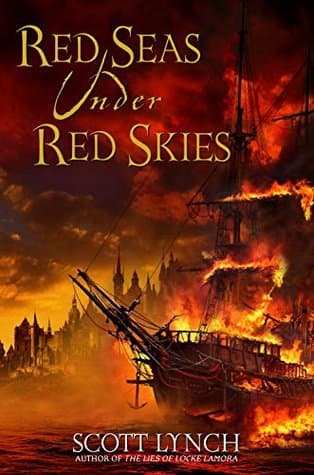
Scott Lynch (2007)
Genre
Fantasy
Reading Time
12-15 hours
Key Themes
See below
Sign in to track this book
After barely surviving a gang war, master thief Locke Lamora and his partner Jean dive into the ultimate con: swindling their way to the top of the most exclusive, death-defying gambling house in the world, only to find their past catching up to them in the most dangerous way imaginable.
After the events in Camorr, Locke Lamora and Jean Tannen arrive in Tal Verrar, a city known for its commerce and the Sinspire, the world's most exclusive gambling house. They have spent two years planning to rob the Sinspire, run by Requin. Their plan involves infiltrating the highest levels of the establishment as an affluent couple, 'Lukki and Galdo,' to gain access to the vault. They begin by establishing their false identities, making calculated appearances and cultivating a reputation for wealth and eccentric gambling habits, all while avoiding the Sinspire's strict anti-cheating protocols, enforced with deadly efficiency by Requin.
As Locke and Jean make progress with their Sinspire con, agents of the Archon of Tal Verrar, a powerful and mysterious figure known as Maxilan Agitin, capture them. The Archon reveals that he knows their true identities as the Thorn of Camorr and his associate, and that he has been watching them. Instead of exposing or executing them, the Archon offers a dangerous bargain: Locke and Jean must undertake a perilous mission to disrupt the operations of the 'Ghostwinds,' a pirate fleet terrorizing the Red Seas. In return, the Archon promises to let them keep their Sinspire gains and depart Tal Verrar unharmed, but failure means death.
Under the Archon's direction, Locke and Jean receive resources to acquire a ship and crew for their pirate-hunting mission. They purchase the 'Red Messenger,' a seemingly unremarkable merchant vessel. During this process, they meet Ezri Delmastro, a skilled ship captain who agrees to lead their crew, though she is skeptical of their true intentions. Locke, using the alias 'Brother Merrain,' and Jean, as 'Brother Merryn,' pose as religious scholars on a pilgrimage. This cover barely hides their lack of maritime experience and desperation, leading to frequent clashes with the practical Ezri.
Life at sea is challenging for Locke and Jean, who are used to urban cons, not naval warfare. They endure seasickness, learn basic sailing under Ezri's stern guidance, and deal with the crew's skepticism. Their initial encounters with smaller pirate vessels are clumsy but successful, thanks to Ezri's tactical skill and the crew's experience. Locke, despite his feigned piety, learns about naval strategy and the realities of piracy, gradually earning respect from Ezri and the crew, even as he struggles to maintain his religious scholar persona.
As they go deeper into the Red Seas, Locke and Jean uncover the true nature of the Ghostwinds. They are not a single, unified pirate fleet, but a loose group of independent pirate lords, each with their own territory and rivalries. Locke realizes that the Archon's mission is more complex than simply 'defeating' a single enemy. Instead, it requires manipulation, playing different pirate factions against each other, and understanding the balance of power that keeps the Red Seas in controlled chaos. This revelation forces Locke to adapt his con artist skills to a naval environment.
Locke and Jean, with Ezri's help, plan to infiltrate a major gathering of pirate captains, hoping to cause discord and weaken the Ghostwinds from within. Posing as new, ambitious pirate captains, they navigate the politics and rivalries of the pirate world. Locke, using his charm and audacious bluffs, tries to manipulate the pirate lords, creating distrust among them. Jean, meanwhile, uses his combat skills and intimidating presence to support Locke's claims, ensuring their survival in the cutthroat environment of the pirate council.
After disrupting the Ghostwinds, Locke and Jean return to Tal Verrar. Locke, suspicious of the Archon's true motives, confronts him. During this meeting, the Archon reveals her true identity: she is an elderly, dying woman named Selendri, who has used the Archon persona to maintain order in Tal Verrar for decades. She confesses that the 'Ghostwinds' were her own creation, a controlled threat used to justify her rule and prevent larger, more chaotic pirate organizations from forming. She had tasked Locke and Jean with dismantling her own system as a final act before her death, to ensure a stable transition of power.
With the Archon's mission complete, Locke and Jean are free to revisit their original objective: robbing the Sinspire. They resume their 'Lukki and Galdo' personas and continue their ascent through the gambling house. Their previous experiences, particularly the Archon's manipulation, have sharpened Locke's understanding of systems and human psychology, making him even more adept at their con. They navigate the final layers of security and Requin's watchful eyes, working towards the vault, determined to complete the heist they started years ago, now with the added pressure of having fulfilled their dangerous bargain.
Locke and Jean finally reach the Sinspire's vault, a masterpiece of security. However, Requin, aware of their intentions all along, anticipated their every move. He reveals that he has known their true identities and their plan for some time, allowing them to proceed only to ensnare them. Requin, a master manipulator himself, had been setting his own trap, intending to use their skills and reputation. This confrontation transforms the heist from a simple robbery into a battle of wits between two master schemers.
In a climactic confrontation, Locke, despite being outmaneuvered by Requin, uses his quick thinking and a hidden leverage point to negotiate their escape. He reveals a deeper secret about the Archon and the politics of Tal Verrar, demonstrating his understanding of the city's power dynamics. Requin, realizing the implications and potential damage to his own interests, is forced to concede. Locke and Jean secure a portion of their original Sinspire take, enough to rebuild, and are allowed to leave Tal Verrar, bruised but alive, their reputation as con artists solidified, but with a new understanding of the costs of their profession.
The Protagonist
Locke evolves from a purely urban con artist to a more adaptable schemer, learning to navigate the complexities of political intrigue and naval warfare.
The Supporting
Jean grapples with the lingering trauma of past losses, finding a new sense of purpose and a potential future beyond just cons.
The Supporting
Ezri evolves from a cautious mercenary to a trusted partner, finding an unexpected connection and future with Jean.
The Antagonist/Supporting
The Archon is revealed to be a dying woman who has meticulously manipulated the region for decades, seeking to ensure a stable legacy.
The Antagonist
Requin maintains his position as a formidable opponent, ultimately outplayed in a surprising turn of events but still retaining significant power.
The Supporting
Golos remains a steadfast and loyal servant, his motivations tied directly to the Archon's.
The Mentioned
Her reveal serves as a pivotal plot twist, demonstrating the depth of political manipulation in the world.
The book explores how identity is fluid, especially for con artists like Locke and Jean. They adopt multiple personas – Lukki and Galdo, Brother Merrain and Brother Merryn – each crafted to suit their immediate goals. This theme is central to their survival and success, blurring the lines between who they truly are and the roles they play. The Archon's own hidden identity as Selendri further shows this, indicating that even those in power rely on constructed facades to maintain control and execute their plans. The story suggests that in a world of complex politics and dangerous schemes, true identity is a luxury few can afford.
““We’re not men, Jean. We’re only what the world makes us. And what the world makes us, we make the world.””
Both Locke's Sinspire plan and the Archon's manipulation of the Ghostwinds show how precarious control is. Locke believes he has every variable accounted for, only to be blindsided by the Archon. Similarly, the Archon's elaborate system of controlled piracy, designed to prevent greater chaos, ultimately requires Locke and Jean to dismantle it, revealing the limits of even the most powerful schemer's foresight. The narrative constantly reminds the reader that even the most meticulous plans can unravel, and that every action can lead to unintended consequences, forcing characters to adapt or perish.
““There’s no such thing as a perfect plan. Only perfect execution.””
Following the events of the previous book, Locke and Jean must adapt to new environments and challenges. From the sophisticated urban con of the Sinspire to the brutal world of the Red Seas and naval combat, they must constantly learn and evolve. Locke, new to the sea, quickly learns about ships and pirate politics, while Jean deals with the emotional toll of their past. Their ability to shed old methods and embrace new strategies, often under extreme pressure, is key to their survival. This theme highlights their resilience and resourcefulness in the face of overwhelming odds and unfamiliar territories.
““We’re not built for the sea, Jean. But we’ll learn. We always do.””
The bond between Locke and Jean remains a central part of the story. Their loyalty to each other is tested by severe threats, unfamiliar dangers, and the lingering trauma from their past. Despite their frequent disagreements and Locke's tendency towards reckless ambition, Jean consistently stands by him, offering both physical protection and emotional support. Their partnership is not just a professional arrangement but a deep, enduring friendship that allows them to face seemingly insurmountable challenges. This theme emphasizes the strength found in mutual trust and unwavering commitment in a world full of betrayal.
““You’re my brother, Locke. And I’ll follow you to the bottom of the sea if I have to.””
Locke's inherent nature as a con artist colors the reader's understanding of events.
Locke's perspective as a master deceiver means that the reader is often privy to his internal machinations and elaborate lies. This creates a subtle form of unreliable narration, as the audience experiences the world through his calculated lens. We see the world as he manipulates it, and are often as surprised as the other characters when his plans take unexpected turns or when deeper layers of deception are revealed, such as the Archon's true identity. This device keeps the reader engaged, constantly questioning what is real and what is part of a larger con.
The main heist is interrupted and subsumed by a larger, more dangerous scheme.
Locke and Jean's elaborate plan to rob the Sinspire forms the initial framework of the plot. However, this con is abruptly derailed when the Archon forces them into an even more dangerous mission against the Ghostwinds. This 'con within a con' structure creates layers of suspense and complexity, forcing the protagonists to adapt their skills to an entirely different challenge. It highlights their versatility and raises the stakes, as the success of their original heist becomes dependent on their survival and completion of the Archon's demands, adding a layer of ironic necessity to their new, unwelcome task.
Brief interludes provide context and character development from earlier times.
Similar to the previous book, 'Red Seas Under Red Skies' periodically intersperses the main narrative with short flashback chapters detailing episodes from Locke and Jean's younger days as Gentleman Bastards in Camorr. These flashbacks serve multiple purposes: they offer insights into their training, reveal the origins of their skills and shared history, and subtly foreshadow elements of the current plot. They also provide emotional depth, reminding the reader of the bonds forged and losses endured, adding poignancy to their present struggles and highlighting their enduring partnership.
A highly coveted object that drives the initial plot but is not the ultimate focus.
The Sinspire's vault, brimming with unimaginable wealth, serves as the primary MacGuffin for Locke and Jean's initial plan. It is the grand prize, the ultimate target that motivates their elaborate two-year con. While the vault's contents are highly desired, the actual acquisition of the money becomes secondary to the larger political machinations and the Archon's forced mission. The vault remains a tantalizing goal, always in the background, but the journey to it and the obstacles encountered along the way become the true narrative focus, shifting the emphasis from the treasure itself to the characters' struggles and growth.
“There’s no freedom quite like the freedom of being constantly underestimated.”
— Locke's internal thoughts on his reputation.
“The only thing a man can do is to do his best, and leave the rest to fate.”
— Jean Tannen reflecting on their situation.
“Sometimes, the only way to win is to cheat.”
— Locke's pragmatic approach to challenges.
“The world is full of things that can kill you. It's just a matter of picking your poison.”
— Locke's cynical view of danger.
“Hope is a powerful thing, but it's a terrible master.”
— Locke's musings on the nature of hope.
“There are no gods left to hear you, only men to judge you.”
— A bleak observation about their world.
“Never underestimate the power of a good disguise.”
— Locke's reliance on his theatrical skills.
“The best way to hide a secret is to make sure no one knows you're looking for it.”
— Locke's philosophy on secrecy.
“A man's word is his bond, until it becomes his noose.”
— A warning about the weight of promises.
“It’s not enough to be clever. You have to be cleverer than the other clever people.”
— Locke's competitive mindset.
“Sometimes the most dangerous thing you can do is nothing at all.”
— Jean's perspective on inaction.
“Every man has a price. The trick is finding out what it is.”
— Locke's belief in human venality.
“The sea does not care for your plans.”
— A sailor's wisdom about the ocean's unpredictability.
“There's always another way. You just have to be willing to look for it.”
— Locke's persistent problem-solving attitude.
Ready to see how well you understood this book? Take our interactive quiz with 10 questions.

Biography coming soon.







