“The problem with socialism is that you eventually run out of other people's money.”
— A character's cynical observation on economic systems.

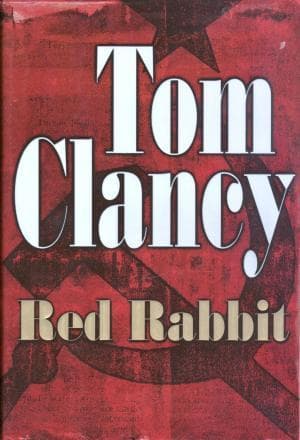
Tom Clancy (2002)
Genre
Thriller / Mystery
Reading Time
12-14 hours
Key Themes
See below
Sign in to track this book
Before he was a hero, a young Jack Ryan, fresh from the Marines, is thrust into a lethal Cold War conspiracy when he uncovers a Soviet plot to assassinate Pope John Paul II, forcing him to race against time to prevent global catastrophe.
The story opens with Colonel Oleg Penkovsky, a senior KGB officer, making a desperate decision to defect. While on a diplomatic mission in Helsinki, Finland, he slips away from his handlers and contacts a British intelligence officer. Penkovsky, disillusioned with the Soviet regime and fearing for his own safety, reveals that he possesses top-secret information concerning a plot by the highest echelons of the KGB, including Yuri Andropov, to assassinate Pope John Paul II. His defection sets off a scramble within Western intelligence agencies, particularly the British Secret Intelligence Service (SIS) and the American Central Intelligence Agency (CIA), as they attempt to verify his claims and secure the defector.
Jack Ryan, a young ex-Marine and historian based in London, is approached by Vice Admiral James Greer, Deputy Director of Intelligence for the CIA. Ryan had previously assisted British intelligence in an encounter with an IRA splinter group, drawing attention to his analytical skills and calm under pressure. Greer offers Ryan a freelance analyst position, which Ryan accepts, viewing it as an interesting supplement to his academic work. This new role puts him into the clandestine world of international espionage, far removed from his historical research, and he quickly finds himself involved in a matter of global significance.
Oleg Penkovsky, now codenamed 'Red Rabbit,' is secretly brought to a safe house in England, where a joint British-American team begins his extensive debriefing. Jack Ryan is assigned to the team, initially tasked with historical and cultural context analysis. Penkovsky, under intense questioning from experienced intelligence officers like Sir Basil Charleston of the SIS and representatives from the CIA, systematically lays out the planned Soviet plot to assassinate Pope John Paul II. He describes the motivations – the Pope's perceived role in inciting unrest in Poland and his challenge to Soviet influence in Eastern Europe – and some of the operational details, including potential methods and operatives.
The intelligence agencies, now armed with Penkovsky's alarming information, begin a frantic effort to corroborate his story. A key part of this involves scrutinizing the Pope's upcoming travel schedule, particularly any planned visits to countries or locations where a Soviet operation could plausibly be executed. Security assessments are heightened, and discreet inquiries are made through diplomatic channels without revealing the sensitive nature of the intelligence. Jack Ryan's analytical skills prove useful as he helps piece together the fragments of information, cross-referencing Penkovsky's statements with known Soviet intelligence doctrine and capabilities. The pressure mounts as time becomes a critical factor.
Despite the gravity of Penkovsky's revelations, not everyone within the intelligence community is immediately convinced. Some senior officials express skepticism, fearing a Soviet disinformation campaign or that Penkovsky might be a double agent. This internal doubt necessitates an even more stringent verification process. Jack Ryan, along with other analysts, delves deeper into Soviet political and military strategies, seeking independent confirmation of the plot. They analyze satellite imagery, intercepted communications (HUMINT and SIGINT), and historical patterns of Soviet behavior to build a robust case for the authenticity of Penkovsky's intelligence. The challenge is to prove the plot without tipping off the Soviets.
Once a significant level of corroboration is achieved, the delicate task of informing the Vatican begins. Senior British and American officials, including Sir Basil Charleston and Admiral Greer, make an extremely sensitive and clandestine approach to high-ranking Vatican officials. They present the intelligence regarding the assassination plot, emphasizing the credibility of Penkovsky and the corroborating evidence. The Vatican, while initially shocked and disbelieving, takes the threat seriously. They immediately implement enhanced security protocols for Pope John Paul II, altering his public appearances and travel plans, and discreetly bolstering his protective detail, all while maintaining absolute secrecy to avoid panic and to prevent alerting the conspirators.
Despite the heightened security, the Soviet plot proceeds. An assassination attempt is made on Pope John Paul II during a public appearance, precisely as predicted by Penkovsky. The attack, while failing to kill the Pope, leaves him seriously wounded. The incident sends shockwaves through the world and unequivocally validates Penkovsky's defection and intelligence. The immediate aftermath is chaotic, with international condemnation and a frantic search for the perpetrators. The Western intelligence agencies, though relieved the Pope survived, are acutely aware of the narrow escape and the immense danger he still faces, knowing the Soviets are unlikely to abandon their objective after one failed attempt.
The assassination attempt ignites a major international crisis. While the Soviets publicly condemn the attack and deny any involvement, Western intelligence agencies are certain of their culpability. Behind the scenes, diplomatic channels are strained, and covert operations are initiated to gather more evidence and prevent a second attempt. The Soviets, led by Andropov, launch a sophisticated disinformation campaign, attempting to pin the blame on various extremist groups. The incident significantly escalates Cold War tensions, bringing the world closer to a direct confrontation as the West grapples with how to respond to such a blatant act of state-sponsored terrorism without triggering a wider conflict.
With the plot confirmed and the Pope injured, the focus shifts to identifying and neutralizing the remaining Soviet operatives and their network responsible for the assassination attempt. Jack Ryan plays a crucial role in analyzing the intelligence gathered from the scene, linking it back to Penkovsky's original debriefing and other sources. British and American special operations teams work in concert, tracking down leads across Europe. The hunt is a high-stakes game of cat-and-mouse, with the operatives being well-trained and deeply embedded. The goal is not only to protect the Pope from future attacks but also to dismantle the Soviet assassination infrastructure and send a clear message.
Oleg Penkovsky, having successfully provided crucial intelligence, lives out his life under Western protection, though always looking over his shoulder. His defection and the information he provided not only saved the Pope's life but also exposed the ruthlessness of the Soviet regime at its highest levels. The 'Red Rabbit' affair is a covert moment in the Cold War, influencing diplomatic relations and intelligence operations for years to come. For Jack Ryan, the experience is a baptism by fire, solidifying his commitment to intelligence work and revealing the complex, dangerous realities of global power struggles, forever changing his perspective on his academic pursuits.
The Protagonist
Jack transforms from an academic observer to an active participant in global intelligence, gaining invaluable experience and a hardened understanding of geopolitical realities.
The Supporting/Key Defector
Penkovsky makes a perilous journey from loyal (albeit disillusioned) KGB officer to a vital defector, sacrificing his former life for the sake of global stability.
The Supporting
Greer continues to solidify his role as a trusted leader within the CIA, demonstrating his ability to identify and cultivate new talent like Jack Ryan.
The Supporting
Charleston successfully manages a high-stakes defection, demonstrating his mastery of intelligence gathering and inter-agency cooperation.
The Antagonist
Andropov remains a shadowy, powerful antagonist whose actions drive the central conflict, showcasing the dark side of Soviet geopolitical strategy.
The Supporting/Target
The Pope's role as a symbol of hope and a target remains constant, his survival a testament to the efforts of Western intelligence.
The novel explores the ethical dilemmas in the world of intelligence. Characters like Oleg Penkovsky grapple with the morality of betraying their country for a perceived greater good, while Western agents like Jack Ryan must decide how far they are willing to go to prevent an atrocity. The theme questions whether the ends justify the means, especially when dealing with state-sponsored terrorism and the potential for global conflict. The discreet sharing of intelligence with the Vatican, risking a diplomatic incident, highlights the difficult choices made to prevent a catastrophe.
“''Sometimes, Jack, the world isn't about right and wrong. It's about bad and worse.'”
The entire plot hinges on the value and impact of critical intelligence. Penkovsky's defection and the information he carries are the catalysts for all subsequent events. The meticulous process of debriefing, verifying, and disseminating this information shows its immense power. Jack Ryan's analytical skills are crucial in sifting through data, demonstrating how raw intelligence, once properly understood, can alter the course of history and save lives. The struggle to confirm the plot against the Pope showcases how information, even from a single source, can be a potent weapon or a shield.
“'Information, properly understood, is the most powerful weapon of all.'”
The novel is set against the backdrop of the intense Cold War, where the United States and the Soviet Union are locked in a global struggle for dominance. The Pope's assassination plot is a stark manifestation of this conflict, illustrating the lengths to which the Soviets would go to maintain their sphere of influence. The intricate dance between intelligence agencies, the subtle diplomatic maneuvers, and the constant threat of escalation highlight the precarious balance of power during this era. The 'Red Rabbit' affair is a microcosm of the larger ideological and strategic battle between East and West.
“'This isn't just about a man, Jack. It's about an idea. An idea they want to extinguish.'”
The story pits the courage of individuals, particularly Oleg Penkovsky and, by extension, Jack Ryan, against the vast, oppressive machinery of the Soviet state. Penkovsky's decision to defect is an act of immense bravery, risking everything to expose a heinous plot. The Pope himself, as a symbol of resistance, embodies this theme. The narrative celebrates the individual's capacity to stand up against overwhelming power and injustice, even when facing dire personal consequences. It shows that even a single person's actions can have ripple effects against a seemingly insurmountable system.
“'Sometimes, one man's conscience can shake an empire.'”
The central object or goal that drives the plot, though its specific details are less important than its effect.
The Soviet plot to assassinate Pope John Paul II serves as the primary MacGuffin in 'Red Rabbit.' While the details of the plot are meticulously revealed by Penkovsky and verified by intelligence agencies, the plot itself functions mainly as the driving force for the characters' actions. Its existence propels Penkovsky to defect, draws Jack Ryan into the CIA, and forces Western intelligence to act decisively. The plot's resolution (or prevention) is the ultimate goal, but the journey and the development of the characters in response to it are what truly define the narrative.
A character who changes allegiance, bringing valuable intelligence or perspective.
Oleg Penkovsky embodies the classic defector archetype. His decision to switch sides from the KGB to the West is the inciting incident of the entire novel. As the 'Red Rabbit,' he is the crucial source of intelligence, and his credibility (or lack thereof) is a central tension point. The defector device allows the author to reveal critical information from an 'insider' perspective, providing a window into the antagonist's world and motivations. His vulnerability and the efforts to protect him also add significant suspense and human drama to the espionage narrative.
A main character new to the world they inhabit, allowing for exposition and growth.
Jack Ryan's role as a novice CIA analyst is a key plot device. His inexperience allows the reader to learn about the intricate world of intelligence alongside him. Through Ryan's eyes, the complexities of debriefing a defector, verifying intelligence, and navigating inter-agency politics are explained naturally. This device facilitates exposition without feeling forced and allows for significant character development as Ryan is thrust into a high-stakes, life-or-death situation, forcing him to quickly adapt and learn the ropes of espionage.
A narrative element that creates urgency by imposing a deadline on the characters.
The 'ticking clock' device is prominently featured through the impending assassination attempt on Pope John Paul II. Once Penkovsky reveals the plot, the intelligence agencies are immediately under immense pressure to verify his claims and prevent the attack before the planned date. The Pope's travel schedule and public appearances serve as fixed points in time, constantly reminding the characters and the reader of the narrowing window of opportunity. This device effectively builds suspense and heightens the stakes, making every decision and delay feel critical.
“The problem with socialism is that you eventually run out of other people's money.”
— A character's cynical observation on economic systems.
“The most dangerous thing in the world is a man of God who thinks he knows what God wants.”
— A character reflecting on the dangers of religious extremism.
“He knew the difference between a good plan and a bad plan. A good plan was one that worked. A bad plan was one that didn't.”
— Jack Ryan's pragmatic view on strategic planning.
“The past is never dead. It's not even past.”
— A character discussing the lingering effects of historical events.
“Fear makes men do things they otherwise wouldn't.”
— Observation on the impact of fear on human behavior.
“Truth was a weapon, and like all weapons, it could be used for good or ill.”
— Reflection on the power and duality of truth.
“There was a fine line between courage and foolishness, and often, it was only visible in hindsight.”
— A character contemplating the nature of brave acts.
“Information was power, but only if you knew how to use it.”
— A character's understanding of intelligence gathering.
“Sometimes the best way to hide something was to put it in plain sight.”
— A discussion about deceptive tactics.
“The world was a dangerous place, and those who forgot that fact often paid the highest price.”
— A stark reminder of global realities.
“Loyalty was a two-edged sword; it could protect you, or it could betray you.”
— A character's thoughts on the complexities of allegiance.
“Even the most carefully constructed plans could unravel in the face of human error.”
— A reflection on the unpredictability of human involvement in operations.
“The greatest trick the devil ever pulled was convincing the world he didn't exist.”
— A character quoting a famous line, implying hidden threats.
“Diplomacy was merely war by other means, and often, far more subtle and deadly.”
— A cynical view on international relations and negotiation.
Ready to see how well you understood this book? Take our interactive quiz with 10 questions.

Biography coming soon.







